The Journey of Sea Turtles
By Aamina Gaffoor
Along the golden coastlines of Sri Lanka, a quiet yet extraordinary journey unfolds beneath the glow of the moonlight. Every year, sea turtles return to the very beaches where they were born, guided by instincts that have existed for millions of years. After travelling thousands of kilometres across vast oceans, these remarkable creatures arrive at familiar shores to begin another cycle of life. Their return is one of nature’s most fascinating phenomena, symbolizing resilience, survival, and the enduring connection between living creatures and the environment that sustains them. Yet in today’s rapidly changing world, this ancient ritual is increasingly under threat.
Sri Lanka is one of the few countries in the world blessed with an abundance of marine biodiversity, and among its most treasured inhabitants are sea turtles. The island is home to five of the world’s seven species of sea turtles: the Green Turtle, Hawksbill Turtle, Loggerhead Turtle, Olive Ridley, and the majestic Leatherback Turtle. Each species plays a vital role in maintaining the balance of marine ecosystems. These ancient mariners have survived dramatic climatic shifts, natural disasters, and changing oceans over millions of years. However, despite their incredible endurance throughout history, they now face threats unlike anything encountered before.
Sea turtles spend most of their lives travelling through the open ocean. Their migratory journeys across the Indian Ocean are long, dangerous, and exhausting. Yet despite the many challenges they encounter, female turtles continue to return to the beaches where they first emerged as hatchlings decades earlier. Scientists believe they navigate using the Earth’s magnetic fields, allowing them to locate the same shores with astonishing accuracy. Along the southern and western coasts of Sri Lanka, beaches such as Rekawa, Kosgoda, Bentota, and Induruwa have become internationally recognized nesting grounds where turtles arrive under the cover of darkness to lay their eggs.
The nesting process itself is both delicate and remarkable. Female turtles carefully crawl ashore during the night when beaches are quieter, and temperatures are cooler. Using their strong flippers, they dig deep nests in the sand where they lay around one hundred eggs at a time. Once the eggs are safely deposited, the turtles gently cover the nest with sand, carefully concealing it from predators before slowly making their way back to the sea. The mothers never return to see their young. Instead, the survival of the next generation depends entirely on nature and chance.
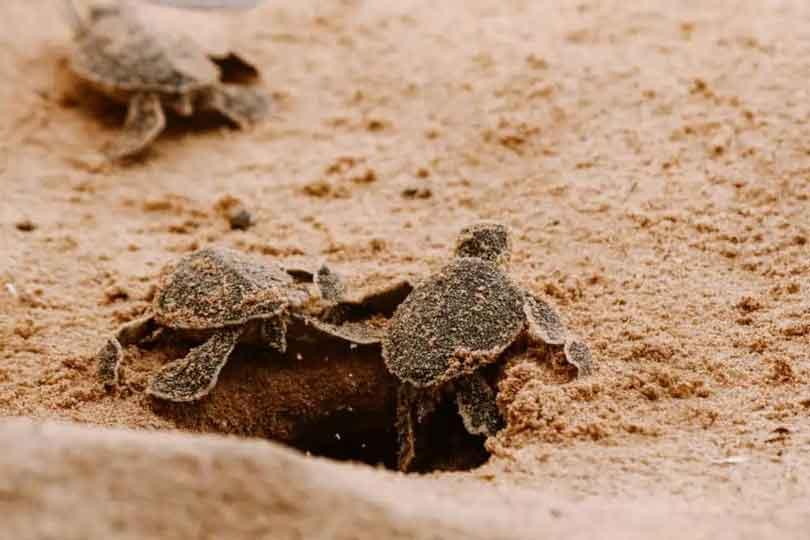
Several weeks later, an extraordinary scene unfolds beneath the sand. Tiny hatchlings begin to emerge from their shells almost simultaneously. Working together, they instinctively dig upwards until they finally break through the surface of the beach. Usually during the cooler hours of the night, these fragile creatures begin their first journey towards the ocean. Guided by the natural light reflecting from the horizon, they move instinctively towards the sea. This brief journey, often only a few metres long, is among the most dangerous moments in a turtle’s life.
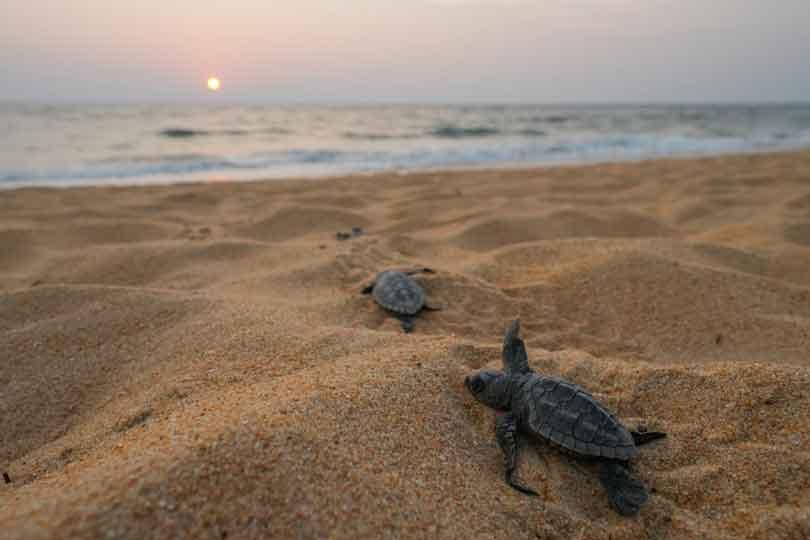
From the moment they hatch, sea turtles face countless threats. Crabs, birds, stray dogs, and other predators wait along the shore, while exhaustion and dehydration claim many hatchlings before they ever reach the water. Even once they enter the ocean, danger continues to surround them. Fish and larger marine predators consume many young turtles during their early years at sea. In fact, only a very small percentage survive long enough to reach adulthood.
Those that do may live for several decades, eventually returning to the same beaches where their lives began.
Today, however, the survival of sea turtles is becoming increasingly uncertain due to human activity. Coastal development has significantly reduced the number of safe nesting sites available to turtles. Hotels, roads, restaurants, and other infrastructure built near beaches often destroy or disrupt fragile coastal habitats. Heavy machinery used in construction compacts the sand, making it more difficult for turtles to dig nests. Increased human activity along nesting beaches also discourages turtles from coming ashore altogether.
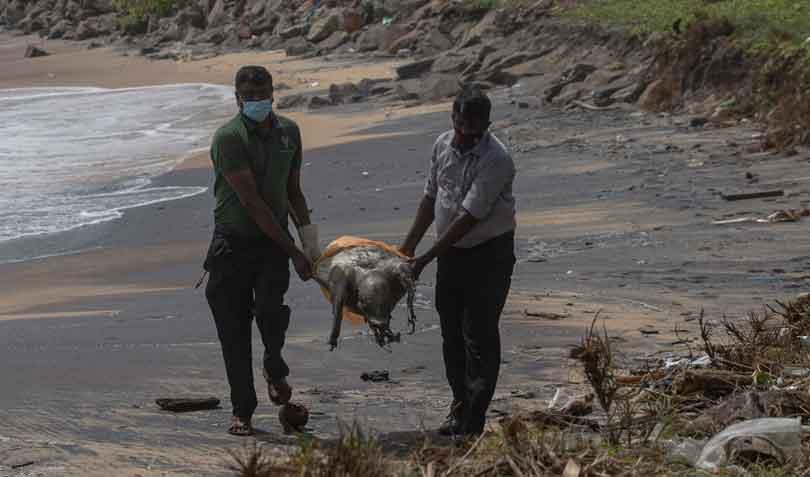
Ocean pollution has emerged as another major threat to sea turtles worldwide. Plastic waste in particular poses a silent but deadly danger. Every year, enormous quantities of plastic enter the world’s oceans, much of it eventually washing towards coastlines or floating within marine ecosystems. Sea turtles frequently mistake plastic bags for jellyfish, one of their primary food sources. Once ingested, plastic can block their digestive systems, leading to starvation, internal injuries, or toxic poisoning. Many turtles die slow and painful deaths after consuming materials discarded carelessly by humans.
Fishing activities also contribute significantly to declining turtle populations. Turtles are often accidentally caught in fishing nets, longlines, and trawling equipment. Unable to surface for air, many drown before fishermen are even aware they are trapped. Ghost nets, abandoned fishing gear drifting through the ocean, continue killing marine life long after they have been discarded. In some regions, turtles are still hunted illegally for their meat and shells, while turtle eggs continue to be poached despite legal protections. Such practices further threaten future generations and undermine conservation efforts.
Artificial lighting along beaches presents another serious challenge. Hatchlings rely on the natural glow of the horizon over the ocean to guide them towards the sea. However, lights from hotels, homes, streets, and vehicles confuse and disorient them. Instead of moving towards the water, many hatchlings crawl inland where they become vulnerable to dehydration, exhaustion, traffic, and predators. What may appear to humans as a harmless convenience can have devastating consequences for these fragile creatures struggling to survive their very first night. Climate change further intensifies the dangers faced by sea turtles. Rising global temperatures are altering the delicate environmental conditions necessary for successful nesting. The temperature of the sand in which turtle eggs incubate determines the sex of hatchlings. Warmer sand produces more female turtles, while cooler temperatures produce males. As global temperatures continue to rise, scientists fear severe population imbalances may occur in the future, reducing the species’ ability to reproduce effectively.
In addition to temperature changes, rising sea levels and increasingly powerful coastal storms threaten nesting beaches across Sri Lanka and around the world. Storm surges and erosion can wash away entire nests before hatchlings have a chance to emerge. Beaches that have served as nesting grounds for centuries are gradually disappearing beneath the advancing sea. This loss of habitat places even greater pressure on already vulnerable turtle populations. Despite these alarming challenges, there is still hope for the future of sea turtles in Sri Lanka. Across the island, conservation efforts are making a meaningful impact. Turtle hatcheries have been established in several coastal areas to protect eggs from predators, poachers, and environmental threats. Eggs collected from vulnerable beaches are carefully incubated in protected environments before hatchlings are released into the sea. While hatcheries are not a complete solution, they significantly improve the survival rates of young turtles.
Community led conservation initiatives are also playing an increasingly important role. In many coastal villages, local communities that once relied on collecting turtle eggs for income are now actively involved in protecting nesting beaches and educating visitors about marine conservation. Eco tourism programmes have created alternative livelihoods while encouraging greater awareness about the importance of preserving marine biodiversity. Volunteers, researchers, and conservationists work tirelessly throughout the year to monitor turtle populations, conduct scientific research, and protect nesting sites from harm. Education and public awareness remain essential in ensuring the long-term survival of sea turtles. Schools, environmental organisations, and media campaigns continue to educate people about the importance of reducing plastic waste, protecting beaches, and respecting marine ecosystems. Even simple actions can make a significant difference. Reducing the use of single use plastics, disposing of waste responsibly, supporting sustainable tourism, and participating in beach cleanups all contribute towards creating a safer environment for marine life.

The journey of sea turtles along Sri Lanka’s shores is far more than a natural spectacle. It is a powerful reminder of nature’s resilience and the delicate balance that exists between humanity and the environment. Sea turtles are not merely ancient creatures surviving in the oceans. They are vital indicators of marine ecosystem health. Their survival reflects the condition of the oceans themselves, which sustain countless forms of life, including human communities. Protecting sea turtles is therefore not simply about saving a single species. It is about preserving biodiversity, maintaining healthy oceans, and safeguarding the natural heritage of future generations. If marine ecosystems collapse, the consequences will extend far beyond the loss of turtles alone. Fisheries, coral reefs, coastal protection systems, and global ecological stability all depend on healthy oceans functioning in harmony.
Each of us has a role to play in ensuring that these extraordinary creatures continue their ancient journeys for generations to come. Governments, conservation organisations, local communities, and individuals must work together to address the growing threats facing marine life. Collective responsibility and environmental awareness are essential if meaningful change is to occur. If humanity fails to protect sea turtles today, one of the world’s oldest and most remarkable migrations may one day disappear forever. Yet there is still time to act. Through compassion, conservation, and responsible choices, we can help ensure that future generations continue to witness the breathtaking sight of tiny hatchlings emerging beneath the moonlight and beginning their journey towards the sea.