Cognitive Load: The Invisible Weight We All Carry

THE PR INSIDER BY FARZANA BADUEL
Like most working mothers, I juggle. I juggle being a mother, a wife, a daughter, a businesswoman who runs a strategic communications firm, and someone who sits on several charity boards. Multitasking is a constant companion. Some days I carry it with ease, other days it feels like an overpacked suitcase that refuses to close.
 It often makes me think about cognitive load, that invisible weight we carry inside our heads, the mental effort it takes to process, decide, remember and respond. We live in an age that rewards busy. The modern world celebrates the one who answers emails while stirring a saucepan, joins back-to-back calls while scrolling through a news feed, and still posts a polished photo of it all. Yet beneath that glossy surface, our brains are working harder than ever. We are running high-performance engines with no time for maintenance.
The Science of Our Mental Bandwidth
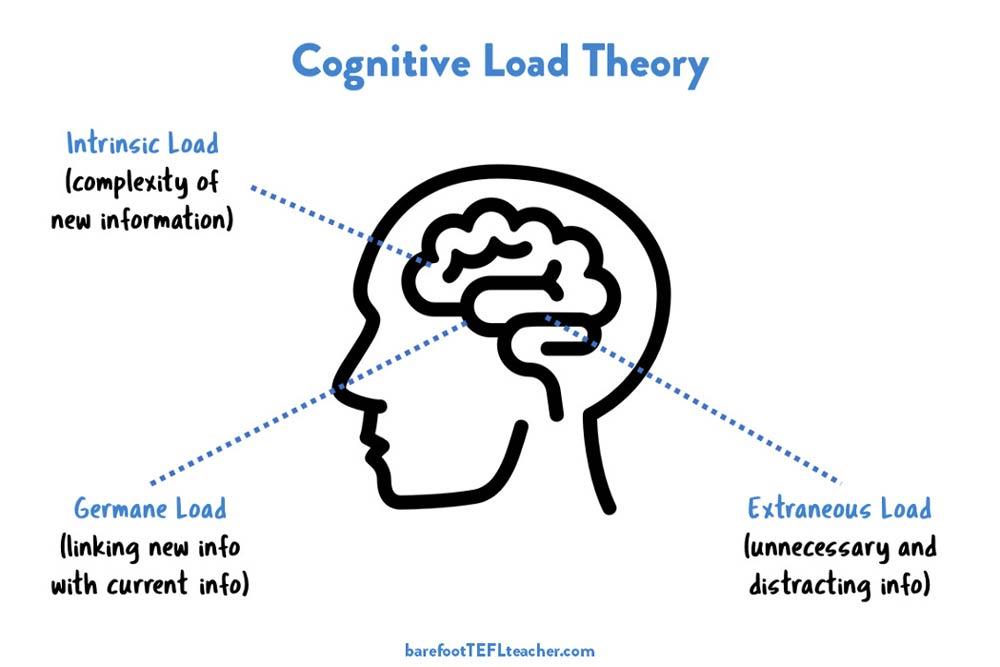
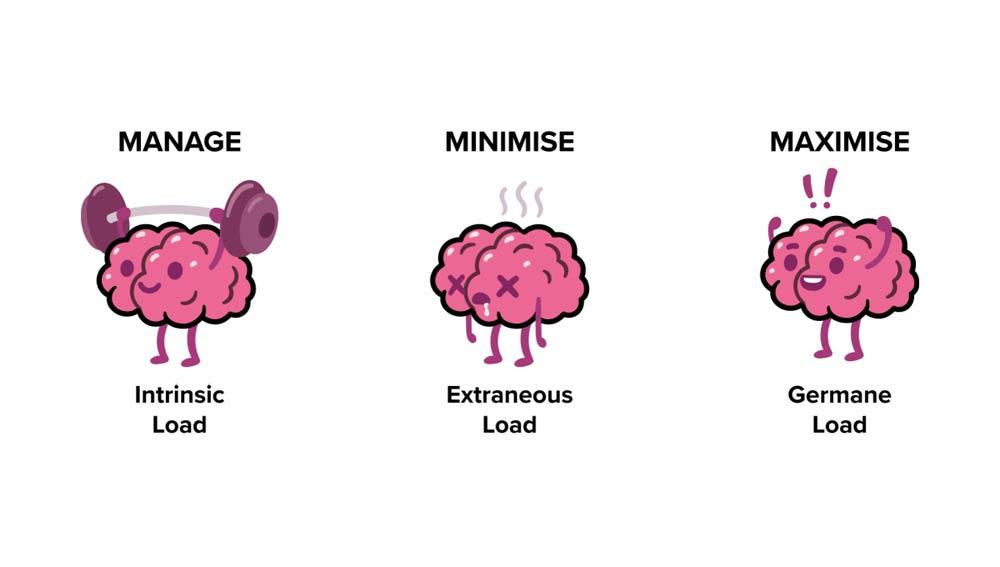
Cognitive load theory was developed by the Australian psychologist John Sweller in the 1980s. In simple terms, it tells us that the brain has a limited amount of mental bandwidth, what psychologists call working memory. This is the part of our mind that juggles information in real time. Sweller found that when our working memory is overloaded, we start to lose efficiency. We make poorer decisions. We miss details. We feel exhausted not because of physical effort, but because our mental engine has overheated. He divided this load into three types. The intrinsic load is the natural complexity of the task itself. The extraneous load is the mental clutter added by poor systems or distractions. The germane load is the effort we invest in making sense of what we are learning or doing. A well-designed day, like a well-designed classroom, reduces the unnecessary load and frees up space for the meaningful work.
Why Smart People Simplify
It is no coincidence that some of the most successful people in the world go to extraordinary lengths to simplify their daily lives. Steve Jobs famously wore the same uniform, blue jeans, white sneakers and a black turtleneck, not as a fashion statement but as a cognitive strategy. He understood that each decision, however small, consumes mental energy. By removing the trivial choice of what to wear, he freed up his mind for more consequential decisions. Barack Obama followed a similar philosophy. As president of the United States, he faced hundreds of decisions a day that could affect millions of lives. He once said he only wore grey or blue suits because he did not want to waste mental energy deciding what to wear in the morning. Both men recognised the same truth: we all have a finite amount of decision-making fuel each day. Every unnecessary choice drains the tank a little further. In psychology, this is known as decision fatigue. It is why we make worse choices late in the day, why supermarkets place chocolate bars near the checkout, and why even the most disciplined people crumble in the face of one more trivial decision after a long day.
Multitasking: The Modern Mirage
For many of us, multitasking feels like a badge of honour. We equate it with efficiency and capability. Yet study after study shows that multitasking does not make us more productive, it makes us more tired and less accurate.
When we switch rapidly between tasks, our brains pay a hidden tax. Each switch requires a mental reset, a reorientation, a tiny pause as the mind recalibrates. Do that dozens of times a day and the cost becomes enormous. The illusion of productivity masks the erosion of attention. When we try to do three things at once, we rarely do any of them well. This is particularly true for those of us managing teams or leading organisations. When our own cognitive load is too high, we unintentionally transmit that pressure to those around us. Confusion spreads downward. Clarity dissipates. We become reactive rather than strategic.
The Leadership Imperative: Reducing Load for Others
The best leaders do not simply manage their own cognitive load, they help manage the load of those they lead. That means creating systems that remove friction. It means giving clear instructions rather than vague expectations. It means standardising processes so that teams do not have to reinvent the wheel with each new project. Every unnecessary meeting, unclear email or conflicting message adds extraneous load to someone’s mental plate. A thoughtful leader removes those pebbles from the path so that the team’s attention can flow toward meaningful work. Delegation, often misunderstood as laziness or detachment, is actually a cognitive kindness. It says: I trust you to take ownership of this, and by doing so, I free both of us to think more deeply about what matters most. In my own work running a PR firm, I have learned that delegation is not merely about redistributing tasks, it is about redistributing thinking. When people know what they own, they think better. When roles blur, everyone’s cognitive load increases.
Practical Ways to Lighten the Load
Understanding cognitive load is not just an academic exercise. It is a roadmap for living and leading better. Here are some practical ways we can apply it:
1. Design your environment for ease.
Create systems that simplify repetitive decisions. Meal plans, morning routines, and pre-set wardrobe combinations are not signs of rigidity; they are acts of self-preservation. They give your brain more bandwidth for creativity and problem-solving.
2. Guard your attention like a precious resource.
Turn off notifications. Set boundaries for email and social media. The constant ping of messages fractures attention, each one a small leak in the tank of focus.
3. Batch similar tasks together.
Rather than jumping between emails, calls and creative work, dedicate blocks of time to each type. The brain thrives on rhythm and resists chaos.
4. Delegate and document.
If you find yourself explaining the same process twice, write it down. A clear system frees everyone’s mental energy from repetitive decision-making.
5. Know your cognitive prime time.
Each of us has hours when our minds are sharpest. For many people, it is early morning. Protect those hours for the work that requires deep thought and push routine tasks to lower-energy times.
6. Schedule recovery, not just work.
Rest is not an indulgence; it is a necessity for cognitive renewal. Sleep, exercise and even short walks reset the mental engine. As Sweller would say, they reduce extraneous load and restore working memory.
The Hidden Cost of Constant Connectivity
Technology, for all its blessings, has also become a thief of focus. We are reachable everywhere, all the time. Every device is a portal for cognitive intrusion. The average person checks their phone more than 150 times a day. Each glance seems harmless, but it fragments attention and prolongs mental fatigue. Even when we return to a task, a residue of distraction lingers. Leaders who set digital boundaries, for themselves and their team, create cultures that value thoughtfulness over immediacy. They understand that the best ideas often emerge in the quiet moments between meetings, not in the noise of constant notifications.
Mothers, Managers and Mental Maps
For working mothers, cognitive load takes on another dimension. It is not just professional decisions that occupy our minds. It is remembering the school forms, the birthday gifts, the doctor’s appointments, the grocery lists. It is managing not only tasks but emotions, ours and everyone else’s. Sociologists call this the mental load, the invisible labour of anticipating needs and planning ahead. It often goes unrecognised yet consumes enormous cognitive energy. The antidote is not perfection but partnership. Sharing responsibility at home, creating support systems, and allowing imperfection are all ways to redistribute that load. The goal is not to do everything, but to do the right things with presence and clarity.
Making Space for Thought
In communications, we often tell clients that silence can be strategic. The same applies to our minds. We need cognitive white space, time to think, to reflect, to connect dots rather than chase them. Sweller’s theory, though born in academia, offers a profound lesson for life. Learning, creativity and leadership all depend on freeing mental space. We cannot think deeply if we are drowning in details. One of the greatest gifts you can give yourself is simplicity. Simplicity is not about having less. It is about managing less. It is about editing your mental environment so that what remains receives your full attention.
The Power of Doing Less
There is a quiet strength in restraint. Successful people are not those who do everything, but those who know what not to do. They curate their commitments with the same precision that artists choose colours.
Every yes carries a hidden no. When we agree to every request, we mortgage our attention. When we learn to decline politely but firmly, we protect the clarity that fuels creativity and calm. As leaders, parents, and partners, we are each stewards of not only our own cognitive load but of those around us. The way we design our days, run our meetings, and manage our relationships either adds weight or lifts it.
A Lighter Mind
The next time you feel overwhelmed, imagine your mind as a desk. Is it cluttered with half-finished tasks and sticky notes of worry? Or is it clear enough to focus on one meaningful project at a time? Cognitive load reminds us that our brains are not infinite hard drives. They are living systems that thrive on clarity, rhythm and rest. Steve Jobs wore the same clothes. Barack Obama wore the same suits. Perhaps we can follow their example in our own small ways, simplifying not for the sake of austerity but for freedom. The freedom to think. To create. To connect. Because when we lighten the load, we make room for what truly matters.
About The Writer
Farzana Baduel, President-elect (2026) of the Chartered Institute of Public Relations and CEO and Co-founder of Curzon PR (UK), is a leading specialist in global strategic communications. She advises entrepreneurs at Oxford’s Said Business School, co-founded the Asian Communications Network (UK), and serves on the boards of the the Halo Trust, and Soho Theatre. Recognised on the PRWeek Power List and Provoke Media’s Innovator 25, she also co-hosts the podcast, Stories and Strategies. Farzana champions diversity, social mobility, and the power of storytelling to connect worlds.