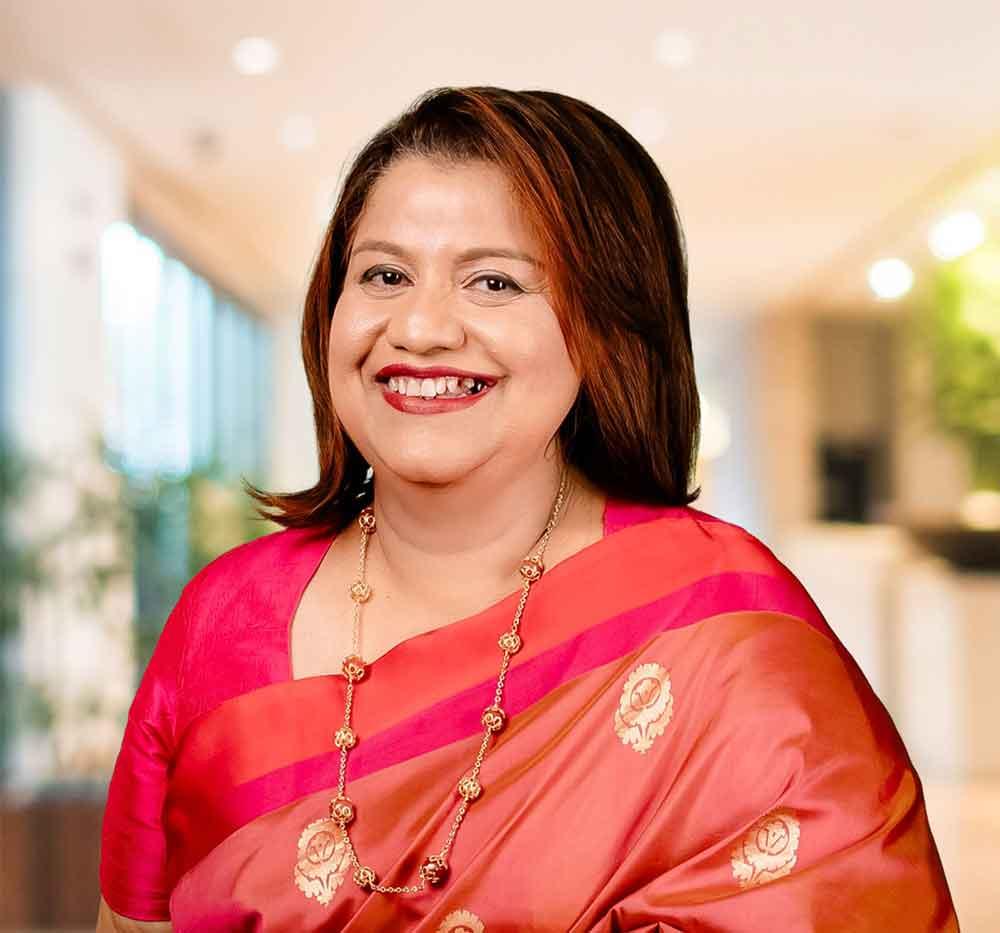
Roshani Weerasekera Head, Liability Management, LOLC Finance PLC
HER STORY, HER STRENGTH. BY: DR. SULOCHANA SEGERA
Four decades in the professional world have given Roshani Weerasekera more than an impressive career. They have given her perspective. From banking and manufacturing to marketing, public relations and finance, her journey reflects a willingness to learn, adapt and embrace change without losing sight of the values that shaped her. Today, as Head of Liability Management at LOLC Finance PLC, Roshani brings together years of experience with a leadership philosophy grounded in integrity, consistency, empathy and respect. Recognised among Sri Lanka’s Top50 Women in Management in 2015, she sees achievement not simply through titles or accolades, but through the relationships built, challenges overcome and opportunities created for others. In this edition of Her Story, Her Strength, Roshani reflects on the curious young woman she once was, the lessons of a forty-year career, the importance of resilience and why women should trust their journeys even when the path ahead is uncertain.
- Take us back to the beginning. What was the young Roshani like?
The young Roshani was curious, energetic and always eager to learn. I had a natural interest in people and communication, which eventually drew me towards marketing and related fields. I enjoyed understanding what motivated people, how relationships were formed and what made individuals connect with one another. That curiosity became an important part of who I was professionally. I was ambitious, but I never believed ambition meant rushing from one position to the next. I valued patience and wanted to understand each role properly before moving forward. I wanted to learn about the people I worked with, understand the organisation and gain meaningful experience rather than simply chase the next title. Looking back, I believe that mindset gave me a strong foundation. Taking the time to learn, observe and understand helped me develop the confidence and perspective that became increasingly valuable as my career progressed.
- What is the biggest difference you have seen in the professional world then versus now?
The greatest difference is probably the mindset surrounding work and how we understand the workplace itself. When I began my career four decades ago, workplaces were generally more structured and hierarchical. There was a clear sense of authority, and many of the conversations we have openly today were simply not part of everyday professional life. Topics such as work life balance, mental wellbeing, diversity, inclusion and women in leadership received far less attention. Technology has created another enormous shift. Communication is almost instantaneous, information is readily available and professionals have access to opportunities that would have been unimaginable when I started working. The world has become much more connected. However, those opportunities also bring greater competition and pressure. Professionals today have tremendous possibilities, but they cannot afford to stop learning. Adaptability has become essential. You must be willing to update your knowledge, acquire new skills and reinvent yourself throughout your career.
- You have worked across banking, manufacturing, finance, marketing and PR. What kept you evolving?
I would describe it as a healthy restlessness. I have never wanted to become stagnant or feel that there was nothing more for me to learn. Each industry gave me a different perspective. Banking taught me discipline, structure and the importance of accuracy. Manufacturing helped me understand operations, systems and processes. Marketing and public relations strengthened my understanding of communication, empathy, relationships and the importance of seeing situations from another person’s perspective. Finance brought many of those experiences together while also challenging me to continue developing new skills. Despite the differences between these sectors, I discovered one constant throughout my career: people. Every organisation ultimately depends on people. If you understand them, communicate effectively, build genuine relationships and focus on solving problems rather than simply identifying them, you can adapt to many different environments. That understanding has helped me move across industries and responsibilities while continuing to grow.
- You have built a 40-year career. What has been your guiding principle?
There have been three principles that have consistently guided me: integrity, consistency and continuous learning. Integrity is fundamental because trust takes years to build and can be lost very quickly. I believe in doing what you say you will do and being accountable for your commitments. Consistency matters because people need to know that your values do not change depending on circumstances or who happens to be in the room. Respect is equally important. Every person deserves to be treated with dignity regardless of their title, position or seniority. Over a long career, titles change. Organisations change. Responsibilities evolve and industries transform. What remains is your character and the reputation you have built through your actions. Ultimately, people may not remember every project you completed or position you held, but they will remember whether they could trust you and how you treated them. Credibility is one of the most valuable professional assets anyone can build.
- What is one lesson failure or disappointment taught you that success never could?
Failure taught me resilience, but it also taught me humility. Success is important because it gives you confidence and validates your efforts. Difficult experiences, however, often give you something deeper. They give you wisdom. When things do not go according to plan, you are forced to reflect, reassess and sometimes admit that your original approach needs to change. Challenges also teach you that asking for help is not a weakness. There are moments when you need another person’s perspective, guidance or support. Some of the most difficult periods of my career eventually became some of my greatest teachers. They made me stronger, more grounded and more appreciative. Most importantly, they taught me not to see a setback as the end of the journey. Sometimes the experience that initially feels like a disappointment redirects you towards something better. You may only understand its value much later.
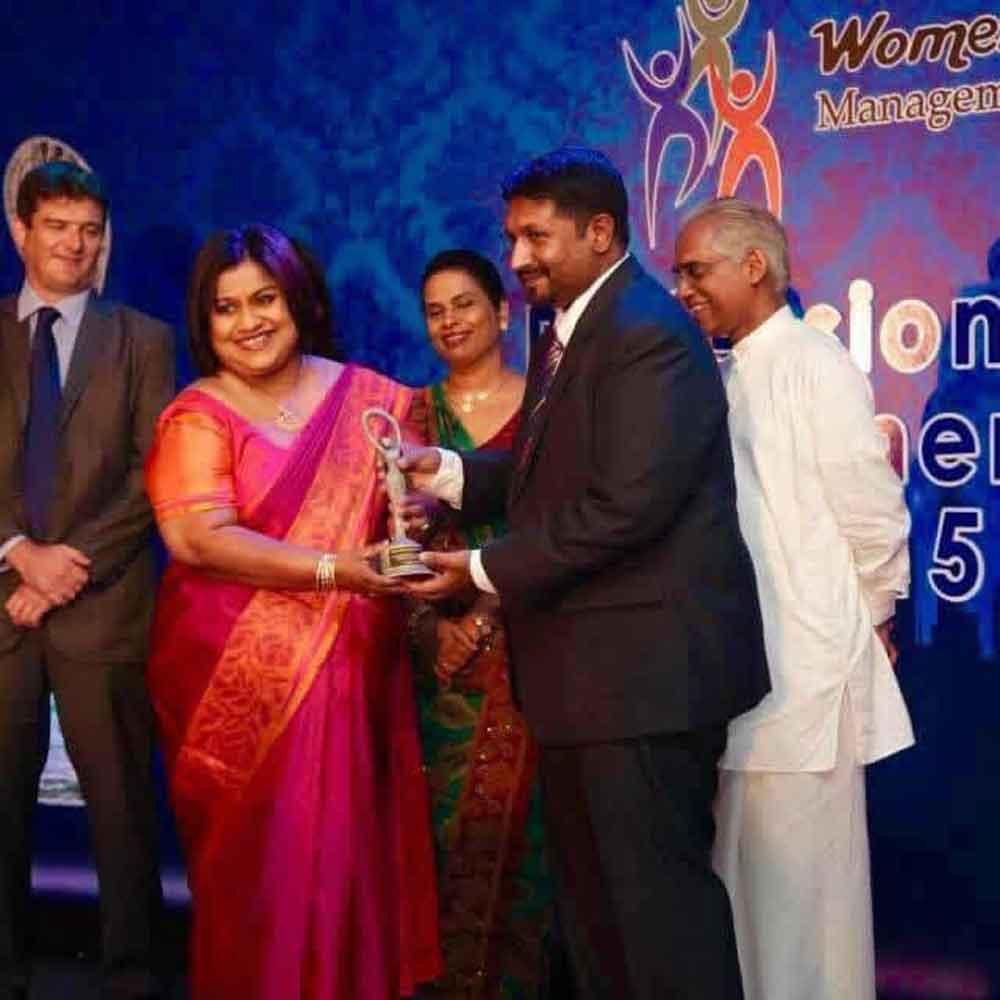
- In 2015, you were named among Sri Lanka’s Top50 Women in Management. What did that recognition mean to you?
It was an incredibly meaningful moment for me, both personally and professionally. At the same time, I never viewed it purely as an individual achievement. To me, recognition of women in leadership also acknowledges the many roles women manage throughout their lives. Women often balance demanding careers with family commitments, personal responsibilities and leadership roles, while continuing to contribute significantly to their organisations and communities. Recognition creates visibility, and visibility is powerful. When younger women see women being recognised for their achievements and occupying positions of leadership, those possibilities begin to feel more attainable. That is why such recognition matters beyond the individual receiving it. It can encourage someone else to aim higher, take an opportunity or believe that she too belongs in a leadership position. If an achievement inspires another woman to believe more strongly in her own potential, then its impact becomes far greater than the award itself.
- What do you know now that you wish you knew at the start of your career?
I wish I had understood earlier that I did not need to have everything figured out. When I was younger, I believed I needed a very clear plan for where I would be in five years and exactly how I would get there. Experience has taught me that careers rarely develop in such a predictable way. There will be opportunities you never anticipated, challenges you could not have planned for and unexpected turns that take you towards entirely new areas. Some of those detours may eventually become the most rewarding parts of your professional journey. I would tell my younger self to trust the process, remain open to opportunities and not be afraid when the path changes. I would also emphasise the importance of investing in relationships. A strong professional network is one of the greatest assets you can build. Genuine relationships provide knowledge, perspective, opportunities and support throughout different stages of your career.
- You moved to LOLC Finance in 2015. What drew you to take on that challenge?
It was fundamentally about growth and giving myself another opportunity to be challenged. LOLC Finance was a dynamic and fast-moving environment with tremendous opportunities. Having already spent many years working across banking and other sectors, I felt ready to move beyond what was familiar and enter an environment where I could learn again. Liability management was a new area for me, and rather than seeing that as a reason to hesitate, I saw it as part of the attraction. I have always enjoyed learning and discovering new dimensions of business. I believe comfort can sometimes become a limitation if we stay within it for too long. Growth often requires us to enter spaces where we do not know everything and where we have to ask questions, listen and learn. Curiosity has remained important throughout my career. As long as you retain that curiosity, there is always another opportunity to develop yourself.
- How do you balance leadership, family and personal wellbeing?
For me, balance begins with understanding your priorities and establishing healthy boundaries. One of the most important lessons I have learned is that we cannot do everything perfectly all the time. There will be periods when work requires more attention and others when family or personal responsibilities must take priority. Accepting that reality removes some of the pressure we unnecessarily place on ourselves. I have also learned to appreciate the importance of a strong support system. Family, colleagues and friends all play an important role. Leadership does not mean doing everything yourself. Knowing when to rely on others, delegate and accept support is part of effective leadership. I also consciously make time for myself. Personal wellbeing cannot continually be placed at the bottom of the list. If you are physically and emotionally exhausted, you cannot consistently give your best to the people who depend on you. Looking after yourself is therefore not separate from leadership. It helps you become a more present, supportive and effective leader.
- What advice would you give to a woman who is at a difficult point in her career right now?
My first advice would be to remember that whatever you are experiencing today will not last forever. A difficult chapter can feel overwhelming when you are living through it, but circumstances change and new possibilities emerge. Do not isolate yourself. Reach out to mentors, trusted colleagues, friends or people who have faced similar challenges. A single meaningful conversation can sometimes help you see a situation from a completely different perspective. Then focus your energy on what you can control. You may not be able to control every decision, circumstance or person around you, but you can control your attitude, the skills you develop, the decisions you make and the integrity with which you conduct yourself. Continue investing in yourself even when progress feels slow. Keep learning and remain open to change. Most importantly, do not underestimate what difficult periods can teach you. Challenges can develop resilience, clarity and courage in ways that easier experiences cannot. You may not understand the purpose of a difficult chapter while you are going through it. With time, however, you may discover that it prepared you for an opportunity, responsibility or stage of life you could not yet see. Sometimes strength is not about having all the answers. It is about continuing forward with integrity, confidence and the willingness to learn. Every chapter contributes something to your journey, including the difficult ones, and the next chapter may be stronger because of what you learned along the way.