Does Sri Lanka Need POCSO to Act on Child Protection?
By Nuha Faiz
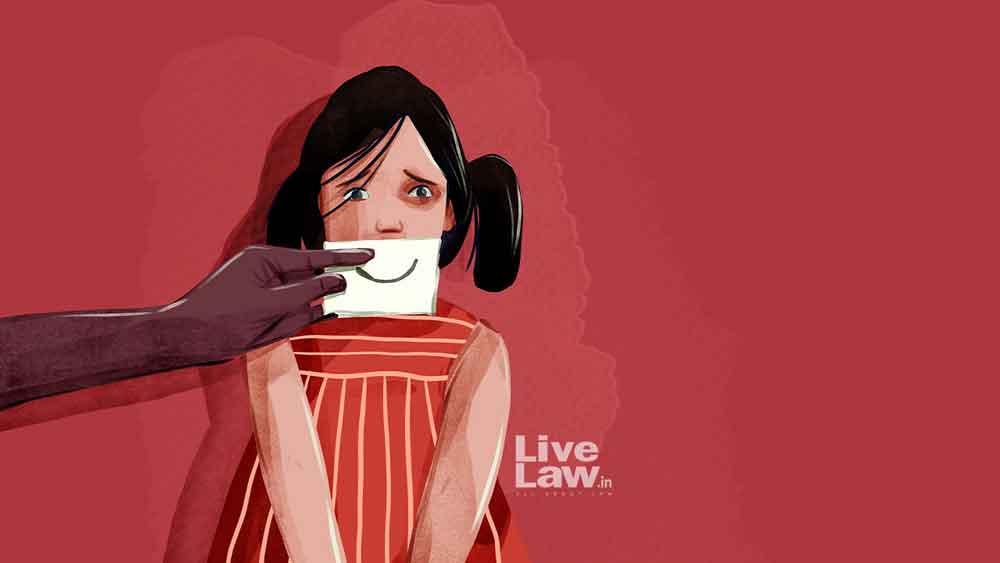
I've often wondered how long it will take Sri Lanka to build something like a special force for crimes against children, the way India has with POCSO. POCSO has its own loopholes, sure, but even a flawed law is more than what Sri Lanka has right now. And the country keeps producing statistics that should stop it cold. In 2024 alone, the National Child Protection Authority logged 8,746 cases including cruelty, neglect, sexual harassment, grave sexual abuse, trafficking, incest. The response is always the same: a task force, a policy document, a promise made at an international conference, a minister's quote about "commitment." What never arrives is a single, modern, consolidated law that doesn't leave room for a perpetrator's lawyer to argue his way out through a definitional crack.
Sri Lanka does not have a POCSO. It has a patchwork stitched together since 1939, amended in fits and starts whenever a scandal made the papers, failing the people it was written to protect.
A law that can't agree on what a child is
To begin with, Sri Lankan law cannot even agree on who counts as a child. The Penal Code generally draws the line at 18. The Harmful Publications Act draws it at 14, with a separate "young person" category running from 14 to 16. And buried inside the sexual coercion provisions is a distinction that should embarrass every lawmaker who has left it standing: coercion is only recognized as coercion if the victim is under 15. A child of 16 or 17 in the exact same situation is, on paper, treated as having had a voluntary encounter.
This is not a fringe claim from an activist trying to make a point, or an opposition backbencher looking for a headline. A sitting minister has said so publicly, admitting that the first priority has to be a clear and consistent definition of a child, as though that were still an open question in 2025, more than three decades after Sri Lanka ratified the UN Convention on the Rights of the Child.
India's POCSO Act settled this on page one. One age, 18, no exceptions, no room for a defense lawyer to argue his client's victim fell into the wrong bracket. Sri Lanka has had over a decade to borrow that one idea and still hasn't done it.
Laws that even the police don't know exist
If the definitional gap were the only problem, that would be bad enough on its own. It isn't. Sri Lanka's deeper crisis is that even when a law does get passed, the state itself often doesn't seem to know it exists. The Children and Young Persons (Amendment) Act came into force on 1 January 2024, and by most accounts, the National Child Protection Authority wasn't even aware of it. Neither, reportedly, was the police force, despite its own grave crime reports listing child abuse among the top five categories in the country. This isn't a drafting failure. It's a state that has stopped treating child protection as an operational priority and started treating it as paperwork, something that ends the moment a gazette notification gets printed.
A specialized law without specialized courts, trained prosecutors, and an institutional chain of command that actually reads its own gazette is theatre. Sri Lanka has been performing that theatre for years.
The distraction
Meanwhile, the one live legislative conversation touching child protection right now isn't really about children at all. Sections 365 and 365A of the Penal Code, the old "unnatural offences" provisions, are caught in a fight between human rights advocates who want them repealed because they criminalize consensual same-sex relations between adults, and child protection advocates warning that the same sections carry the enhanced penalties currently protecting children under 16. Both concerns can be true at once. The honest fix is obvious: separate the adult consent question from the child protection question and legislate each cleanly, instead of holding one hostage to the other. Instead, this fight has become the loudest thing in the room, pulling political attention away from the reform agenda that was supposed to produce new legislation by mid-2025, a deadline the government committed to at an international conference and has since let pass without much public accounting. If Sri Lanka can find the energy to argue about this for over a year, it can find the energy to write one clean law that protects every child regardless of what else parliament wants to fight about.
The abuse
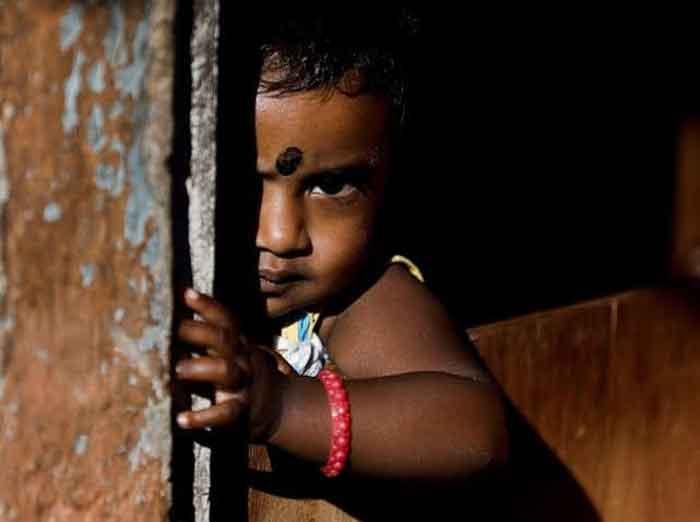
Speaking of child protection brings me back to female genital mutilation. I've already spoken about how it happens in Sri Lanka. Not somewhere else, not as an imported anxiety. It happens quietly, within specific communities, where girls as young as six or seven are cut in a ritual practice, and where infant girls are cut as early as the fortieth day after birth by traditional practitioners. Survivors have described it in their own words, in published testimonies, the confusion of realising something was taken from them without consent, the sense that a decision about their body and their future was made for them before they were even old enough to remember it happening.
For years, the official record insisted this practice didn't exist here at all. Both the World Health Organization and UNICEF reported a "zero score" for FGM in Sri Lanka for over a decade, an assessment survivors and researchers have since shown was simply wrong. When testimonies from survivors finally forced the issue into public view in 2016, the government's response wasn't a ban. It was a 2018 health ministry circular telling medical professionals not to perform the procedure, a rule that pushed the practice further underground instead of ending it, and one that carries no criminal penalty of its own.
Some community leaders responded not by abandoning the practice but by lobbying to have it medicalized, framed as a matter of hygiene rather than a human rights violation. There is still, in 2026, no standalone law in Sri Lanka that criminalizes FGM. Not one.
This is where "we need more dialogue" stops being a good enough answer. A practice that permanently alters a child's body, performed on children too young to consent or even remember it, is not a cultural nuance that needs delicate handling. It is a child protection failure, plain and simple, and it belongs in the same law that addresses every other form of sexual abuse and cruelty against minors, not left to a health ministry circular that nobody enforces, and everybody can quietly get around.
What "unapologetic" actually means here
None of this requires reinventing anything. POCSO exists. Its flaws are well documented, sentencing rigidity that has occasionally swept up consensual teenage relationships, courts and forensic systems that haven't kept pace with the law's ambition, and Sri Lanka can learn from those mistakes instead of repeating them from scratch. But the core architecture is already sitting there, tested for over a decade in a neighbouring country with a comparable legal tradition. One age definition, no ambiguity. Special courts, not the standard criminal docket. Mandatory reporting, not discretionary complaint. A single statute covering sexual abuse, cruelty, trafficking, exploitation, and yes, FGM, under one enforceable framework, instead of scattered across a 1939 ordinance, a 1995 amendment, a 1998 Act, and a health ministry circular that isn't even law.
Sri Lanka has spent years producing policies, task forces, and conference commitments. What it hasn't produced is the law itself. Every year that gap stays open is another year a 16-year-old's assault gets filed as a "voluntary encounter," another year a seven-year-old girl is cut with no one accountable to any statute for it, another year the NCPA publishes a horrifying case count and someone calls that progress simply because it got written down.
The evidence has been in for a decade. The commitments have been made and missed. What's left is the writing of the law, and the political will to stop treating that as optional.