When Rescue Becomes Risk: The Story of Timmy the Whale
There are moments in nature that stay with us long after they pass, and few are as striking as the sight of a whale where it does not belong. A creature built for the vast, open ocean suddenly appears in shallow, enclosed waters, its immense body moving with difficulty in a space too small to sustain it. That is how the world came to know Timmy, a young humpback whale who spent weeks stranded along Germany’s Baltic coast. What began as a rare and almost surreal encounter quickly transformed into an international story, one that raised profound questions about the limits of human compassion and the unintended consequences of intervention.
Timmy was not simply lost. He had entered an environment that could not support him. The Baltic Sea, known for its low salinity and restricted geography, is far from the natural habitat of humpback whales. These animals are adapted to the dynamic, saline conditions of the open ocean, where there is space to migrate, feed, and dive deeply. In contrast, the Baltic is shallow, enclosed, and ecologically distinct. Experts believe Timmy may have wandered in accidentally, perhaps following prey or becoming disoriented. Once inside, however, finding a way out proved far more difficult than entering.
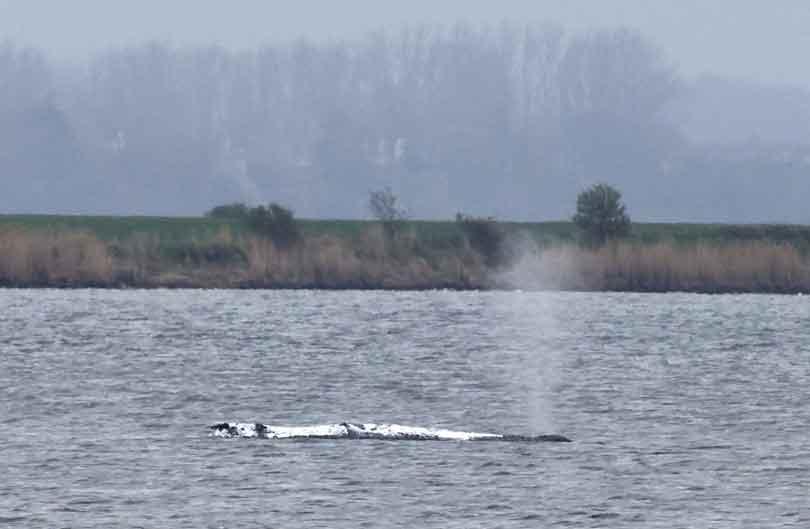
What looked calm and unthreatening from the surface concealed a dangerous reality. The very stillness of the Baltic waters masked the fact that they had become a trap. As time passed, Timmy’s condition began to deteriorate. Observers noticed that he was moving more slowly. He appeared weaker, increasingly reliant on high tides to help him navigate even short distances. While people on the shore saw only glimpses of his struggle, beneath the surface his body was under immense stress. He may have been ill. He was certainly exhausted. It was possible that he was already approaching the limits of survival.
Yet the human response was immediate and predictable. Faced with a creature in visible distress, people chose to hope. They chose to act.
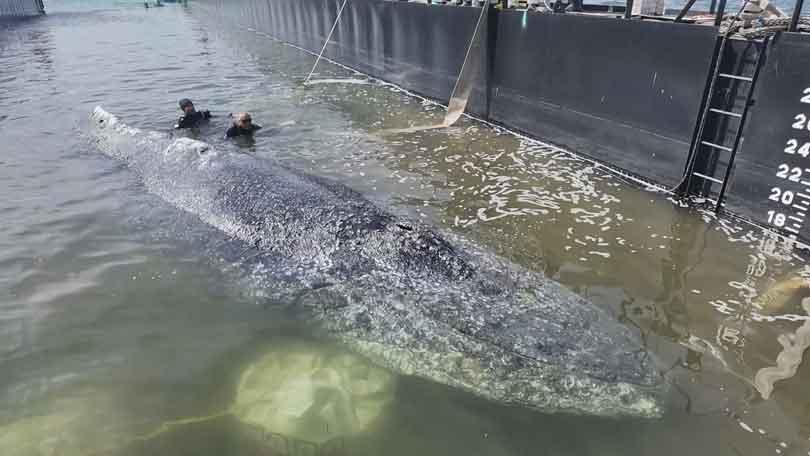
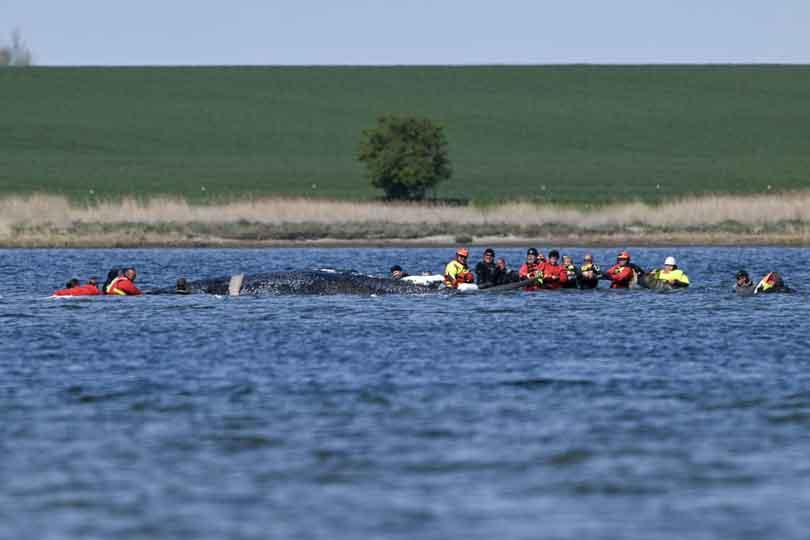
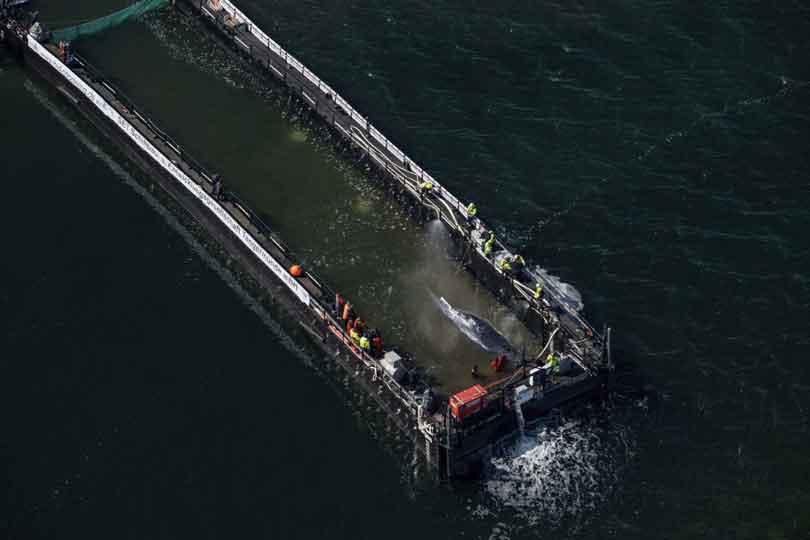
A large-scale rescue operation was soon underway. Engineers and volunteers worked together to create a pathway for Timmy, digging channels into the seabed in an attempt to guide him toward deeper waters. At the same time, a more ambitious plan took shape. A flooded barge, effectively a floating tank, was introduced as a means of transporting him out of danger. The images that emerged from the rescue efforts were powerful and, in many ways, unsettling. A whale measuring nearly ten meters in length, immense yet visibly vulnerable, surrounded by humans attempting to guide and contain him in a space entirely unnatural to his existence.
At one point during the operation, after hours of careful maneuvering and encouragement, Timmy swam into the barge on his own. It was a moment that felt almost cinematic. Those present cheered. Cameras captured the scene. For a brief time, it seemed as though the story had found its turning point, that the effort and determination of so many people had led to success.
But beneath the surface of celebration, there was unease. Many marine experts expressed concern about the very rescue that others were applauding. Their hesitation was not rooted in indifference, but in experience and understanding. Transporting a whale is an extraordinarily complex and risky endeavor. For an animal already weakened, the stress of confinement, the noise of machinery, and the disruption of its natural rhythms could prove overwhelming. Some experts questioned whether Timmy’s condition had already deteriorated beyond recovery. In such a case, intervention might not offer a path to survival but instead prolong suffering.
This is where the narrative shifts from a story of rescue to one of ethical complexity. The instinct to save is deeply human. It is difficult to watch an animal struggle and choose not to intervene. Inaction can feel like neglect, even cruelty. Yet nature does not operate according to human emotions. It does not guarantee outcomes, nor does it bend to the desire for resolution. Not every life can be saved. Not every situation can be corrected. Sometimes, the act of trying to help can unintentionally cause harm.
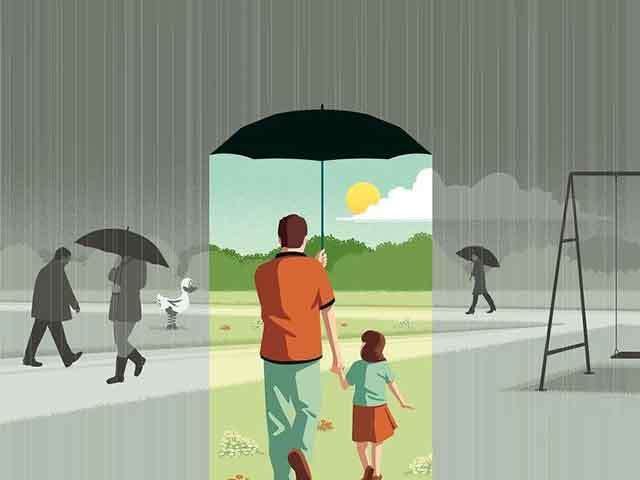
Timmy’s story forces us to confront an uncomfortable truth about compassion. The same impulse that drives us to help can also lead us to interfere. When we see distress, our immediate reaction is to respond, to fix, to restore. But rarely do we pause long enough to consider whether our intervention is appropriate or beneficial. Compassion, in this sense, is not always straightforward. It requires not only empathy but also judgment.
There is another dimension to this story that cannot be ignored, and that is attention. Timmy quickly became more than an individual animal in distress. He became a symbol. People gathered along the coast to catch a glimpse of him. Media coverage intensified, turning each development into a headline. Updates on his condition, his movements, and the progress of the rescue were followed by audiences far beyond Germany. The situation evolved into a shared emotional experience, one that invited people to invest hope in a positive outcome.
But nature does not follow narratives. It does not shape itself to meet expectations or deliver satisfying endings. It operates according to its own rules, indifferent to the stories humans create around it. The presence of cameras and crowds does not alter the biological realities faced by an animal like Timmy. Nor does it influence the outcome of a situation that may already be beyond control.
This raises a fundamental question about the role humans should play in such scenarios. There are circumstances in which intervention is clearly justified, even necessary. When animals are harmed directly by human activities, such as entanglement in fishing gear or exposure to pollution, stepping in becomes a matter of responsibility. In those cases, the cause of suffering is linked to human actions, and addressing it is part of an ethical obligation.
However, when the cause is uncertain or natural, the decision becomes far more complex. If an animal enters an unsuitable environment on its own, or if its condition is already critical, intervention may not lead to recovery. In such cases, helping does not necessarily mean saving. Acting does not always lead to improvement. The line between assistance and interference becomes blurred.
Timmy’s journey, from the moment he was first spotted to the efforts made to guide and transport him, reflects both the admirable and the challenging aspects of human nature. There is, undeniably, a willingness to care. People came together, invested time and resources, and sought to prevent suffering. At the same time, there is a persistent desire to fix what may not be fixable, to impose solutions on situations that do not lend themselves to resolution.
Perhaps the most difficult aspect of this story is not determining what was done but understanding what should have been done. It is easy to celebrate action, to equate effort with virtue. It is far more difficult to accept restraint, especially when it feels like abandonment. Yet there are moments when stepping back may be the more humane choice, even if it appears otherwise.
In the end, the story of Timmy the whale is not only about a single animal. It is about how humans perceive their place within the natural world. Are we protectors, responsible for intervening whenever we encounter distress? Are we observers, meant to witness without interfering? Or do we exist somewhere between these roles, navigating a delicate balance between action and restraint?
The answer is not simple, and it may not be the same in every situation. What Timmy’s story suggests, however, is that compassion must be guided by understanding. It is not enough to feel the urge to help. We must also consider the consequences of our actions, the limits of our knowledge, and the realities of the natural world.
Learning when to act and when to refrain is perhaps one of the greatest challenges we face in our relationship with nature. It requires humility, patience, and a willingness to accept outcomes that may not align with our hopes. It asks us to recognize that our presence, however well intentioned, does not always improve a situation. Sometimes, the most difficult question is not whether we can save something, but whether we should try.