This Isn’t a True Crime Story. It’s a Maternal Health Emergency.

There is something uncomfortable about the way we consume tragedies involving mothers. We want explanations quickly. We want a timeline, a diagnosis, a motive, a moment when everything supposedly went wrong. We want the neatness of a story that can be understood from the outside, preferably in the few minutes between scrolling past one headline and arriving at the next.
The Lindsay Clancy case has entered that machinery.
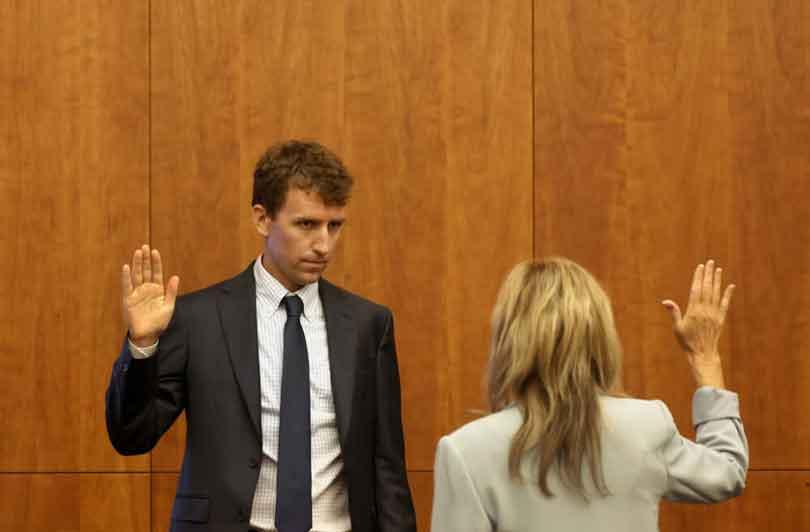
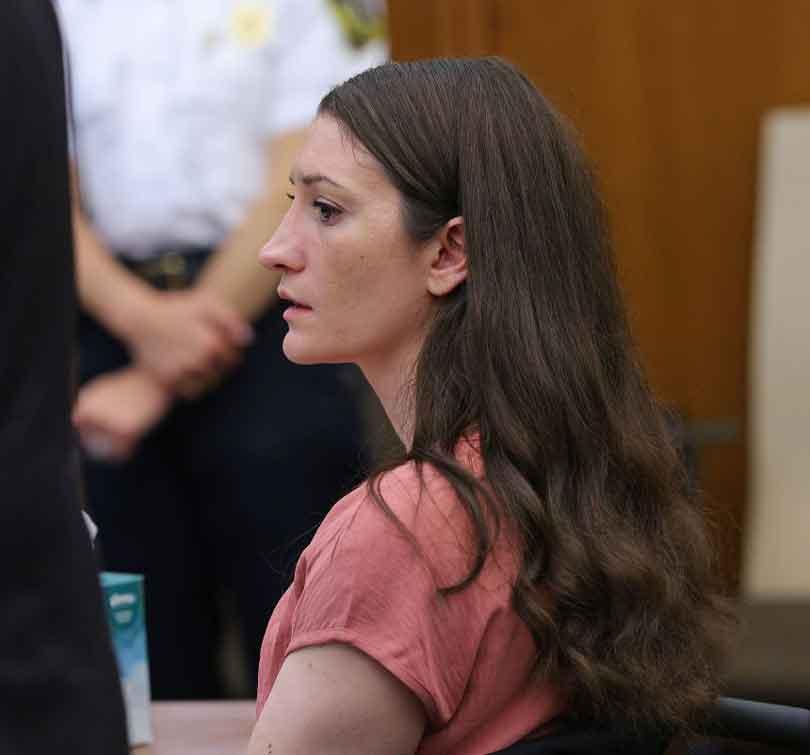
Clancy is currently on trial in Massachusetts over the deaths of her three children in January 2023. She has pleaded not guilty, and her defense has argued that she was experiencing severe postpartum psychosis and was therefore not criminally responsible for her actions. The prosecution has presented its own account of her mental state and the circumstances surrounding the deaths. The legal process is ongoing, and questions of guilt and criminal responsibility belong to the court.
There is, however, a conversation that exists outside the courtroom. It is a conversation about maternal mental health, the limits of postpartum care and the uncomfortable distance between what we know about psychiatric illness and how effectively our healthcare systems respond to it.
If this case becomes merely another true-crime story, consumed for its horror and then replaced by the next headline, we will have missed something important.
Because postpartum psychosis is not a plot device. It is a medical emergency.
It is rare, affecting approximately one to two women in every thousand births, but its rarity should not make it invisible. The condition can involve hallucinations, delusions, severe confusion and a profound loss of contact with reality. It can develop rapidly, often in the early weeks following childbirth, and the person experiencing it may not recognise that they are unwell.
That last point is critical.

We often speak about mental health as though recognizing that something is wrong is the first responsibility of the person suffering. We tell people to seek help, to speak up, to ask for support. Those messages are valuable, but they become more complicated when the illness itself affects a person's ability to understand what is happening to them.
A person experiencing psychosis may not simply be a distressed individual who knows they need a doctor. They may be experiencing a fundamentally altered perception of reality.
That is why postpartum psychiatric care cannot depend entirely on mothers identifying their own emergencies.
Their families need to know what to look for. Their healthcare professionals need to know what to look for. The systems surrounding them need to be capable of responding when something changes.
And this is where the conversation becomes larger than one case.
For decades, medicine has understood that the period immediately following childbirth is significant. We know that pregnancy and delivery place enormous physical demands on the body. We know that the transition into motherhood can involve profound hormonal, emotional and psychological changes. We know that postpartum depression and anxiety affect many women, and we know that more severe psychiatric conditions can occur.
Yet the structure of postpartum care can still leave the mother strangely peripheral.
The newborn is monitored closely. There are pediatric appointments, weight checks, vaccinations and developmental assessments. The baby's health becomes the subject of repeated observation because everyone understands that the first months matter.
The mother, meanwhile, is expected to recover.
She has just given birth, but she is expected to feed, soothe, wake, clean, organize, recover and function. She may be sleeping only in fragments. She may be physically uncomfortable. She may be dealing with pain or complications. She may be trying to understand why she no longer feels like herself.
And somewhere within all of that, she is expected to ask for help if she needs it.
The problem is not that postpartum appointments do not exist. The problem is the assumption that a small number of scheduled encounters can adequately capture the enormous physical and psychological transition that follows childbirth.
Mental health does not follow a timetable.
A woman can be struggling between appointments. Her condition can change quickly. A partner can notice that her behaviour has become unusual without understanding why. A family member can hear something alarming and assume that it is simply exhaustion. A mother can experience frightening symptoms and remain silent because she is terrified of being judged.
The consequences of misunderstanding maternal mental illness can be profound.
There is still a cultural discomfort around the idea that motherhood and mental illness can exist at the same time. We have become better at discussing postpartum depression, but even that conversation often comes wrapped in expectations about what a mother should feel.
She should be happy.
She should be grateful.
She should be exhausted but fulfilled.
She should love her baby immediately and instinctively.
She should cope.
When reality does not match that image, mothers can begin to feel that they are failing at something they were supposed to know how to do naturally.
But motherhood does not make a person immune to illness.
A woman can love her child and experience severe depression. She can be devoted to her family and develop anxiety. She can desperately want to be a good mother and still become psychiatrically unwell.
These things are not contradictions.
Mental illness is not a character flaw, and asking for help is not an admission of failure.
The language we use matters because shame can be an extraordinary barrier to care. A mother who believes that admitting she is struggling will make people question her ability to care for her child may decide that silence is safer.
Silence is rarely a good healthcare strategy.
Neither is assuming that every difficult postpartum experience is simply part of motherhood.
There is a difference between being tired and experiencing a psychiatric emergency. There is a difference between feeling overwhelmed and losing contact with reality. There is a difference between needing reassurance and requiring urgent medical treatment.
That is why maternal mental health must be treated as healthcare infrastructure rather than an optional addition to maternity care.
The conversation also needs to extend beyond the medical system.
The transition into motherhood does not happen in a vacuum. Families are shaped by employment, finances, housing, social support and access to healthcare. Some mothers have partners who can remain at home. Some do not. Some have grandparents and extended family nearby. Others are navigating the first months of parenthood almost entirely alone.
None of these circumstances should be presented as the cause of postpartum psychosis. Psychiatric illness cannot be reduced to social pressure.
But support matters.
A supported mother is not necessarily protected from illness. A woman without support is not destined to become ill. What support can determine, however, is whether a problem is noticed early, whether someone has the capacity to intervene, and whether a mother has somewhere to turn when she knows something is wrong.
There are mothers who leave hospitals with detailed instructions about feeding, sleeping and caring for their babies while receiving far less information about what a psychiatric emergency might look like in themselves.
Partners and families should know the warning signs too.
A mother experiencing severe psychiatric symptoms may not be the person who raises the alarm. Sometimes the person who recognizes the change first will be a husband, sister, mother, friend, doctor or neighbor.
That person needs to know that unusual behavior is not always simply exhaustion. That extreme confusion, hallucinations, delusions or a sudden and profound change in behavior require urgent medical attention.
This is not about turning every difficult postpartum experience into an emergency.
It is about making sure that genuine emergencies are not mistaken for ordinary motherhood.
There is also an important distinction to preserve when discussing cases such as Clancy's. Not every tragedy involving a mother can be attributed to postpartum mental illness. Not every postpartum struggle develops into psychosis. And not every terrible outcome could have been prevented by better screening or more frequent appointments. Mental illness is complicated, individual circumstances are complicated and the legal process in this case is not yet complete.
But complexity should not become an excuse for silence.
There are mothers experiencing severe mental-health difficulties today who will never become a headline. They will never be the subject of a documentary or a courtroom. They will simply sit in their homes and wonder why they cannot feel the way they were told motherhood would make them feel.
Some will tell someone.
Some will find treatment.
Some will be noticed before their condition becomes an emergency.
And some will continue to suffer because the system around them does not recognize the urgency of what is happening.
Those women matter too.
In fact, they may be the most important part of this conversation.
There is a human tendency to divide people involved in tragedies into simple categories: victim and perpetrator, good and evil, sane and insane. Those categories may feel psychologically reassuring because they allow us to place tragedy at a safe distance from ourselves.
But real life is rarely so neat.
A legal system must determine responsibility according to evidence and law.
A healthcare system must ask a different question: how do we recognize serious illness early enough to intervene?
And society must ask another: why are mothers still expected to carry so much of motherhood silently?
The children at the center of this case should not become content.
The family should not become entertainment.
And postpartum psychosis should not become a phrase we learn only because a terrible story made us search for its meaning.
If there is anything worth taking from this case, it is the opportunity to look beyond the spectacle and towards the system surrounding every new mother.
We know postpartum psychiatric illness exists.
We know it can become an emergency.
We know warning signs can be recognized.
We know treatment exists.
We know early intervention matters.
We know support matters.
The question is whether we are willing to organize our healthcare systems around that knowledge.
Because knowledge without action is a particularly painful form of failure.
We should not need a tragedy to remind us that a mother is also a patient.
We should not need a courtroom to make us discuss maternal mental health.
And we should not wait until a woman is in the deepest crisis of her life to decide that her suffering deserved our attention.
The most responsible response to a tragedy is not always another headline about the tragedy.
If we have the knowledge to recognize maternal mental-health emergencies, the treatments to respond to them and the resources to build better systems, then we have an obligation to do better.
Not because every tragedy can be prevented.
But because some can.
And because a mother should never have to become the center of a true-crime story before the world remembers that she was a human being who needed care.