Dream of Sadhna: A Dream Finally Hung on the Wall
By Thaliba Cader
There are exhibitions that ask us to admire technique. There are exhibitions that invite us to appreciate composition, color, or mastery of form. And then there are exhibitions that ask something far more difficult of us: to witness another human being's love.
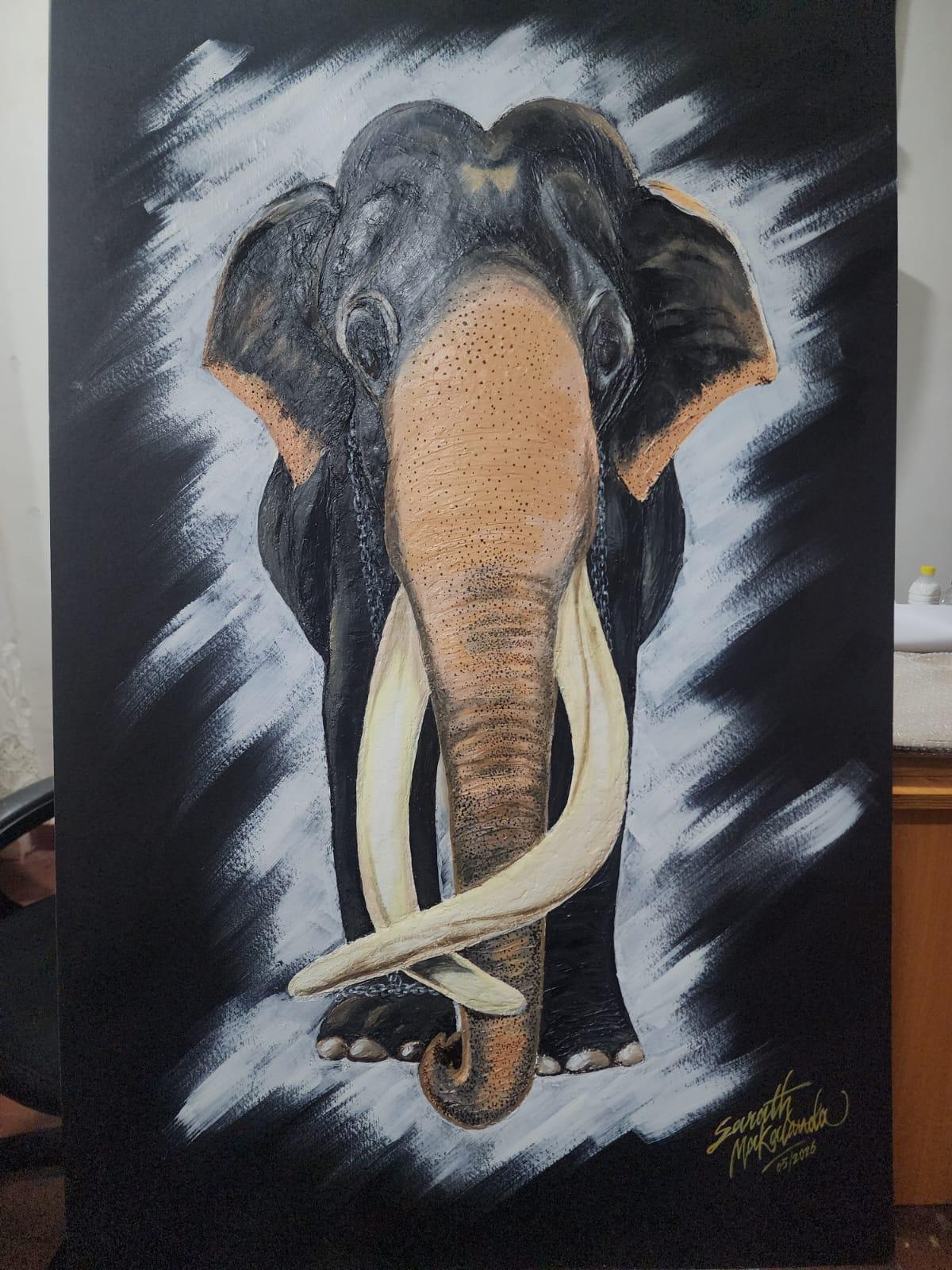
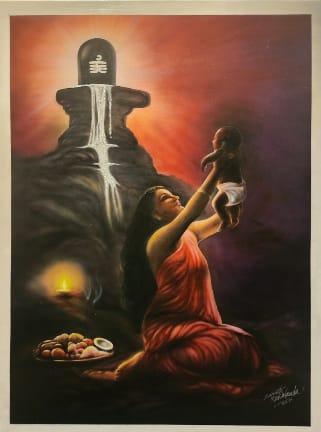
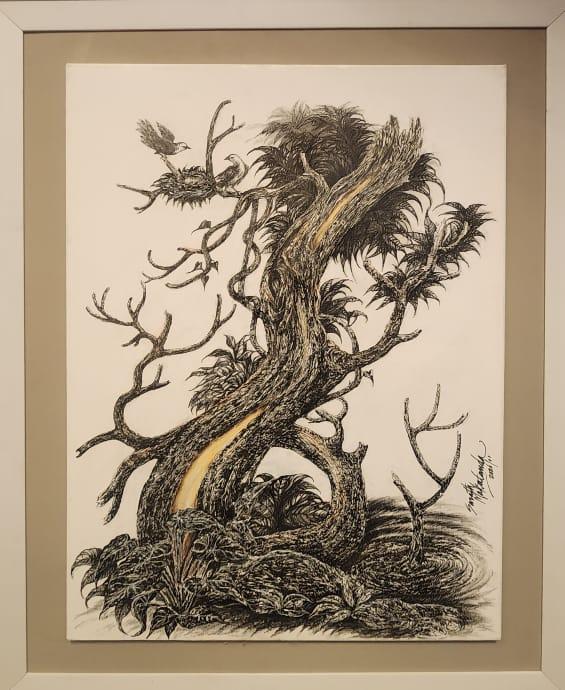
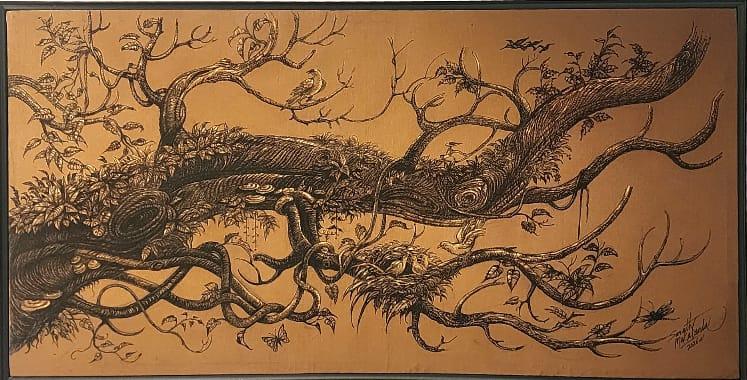
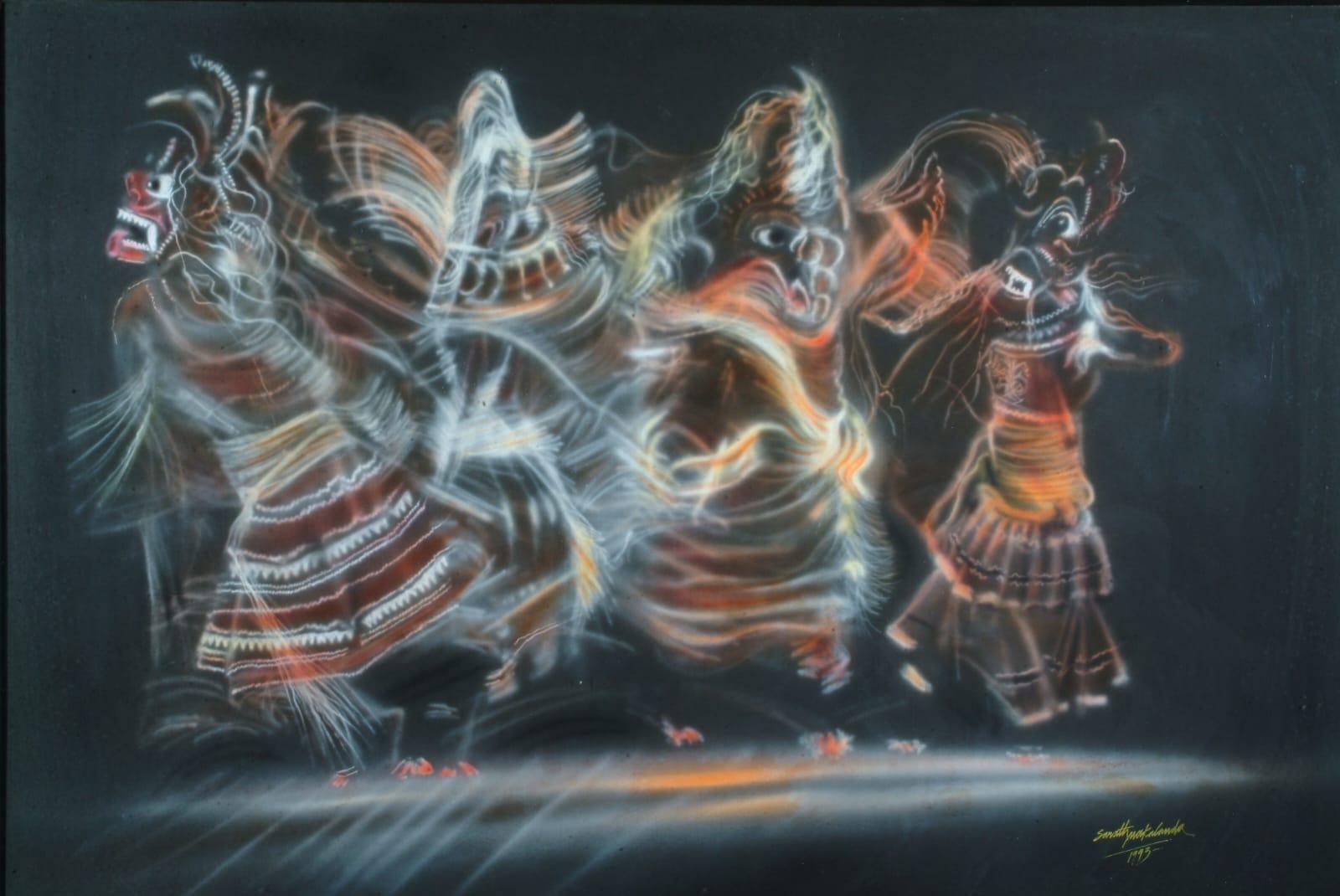
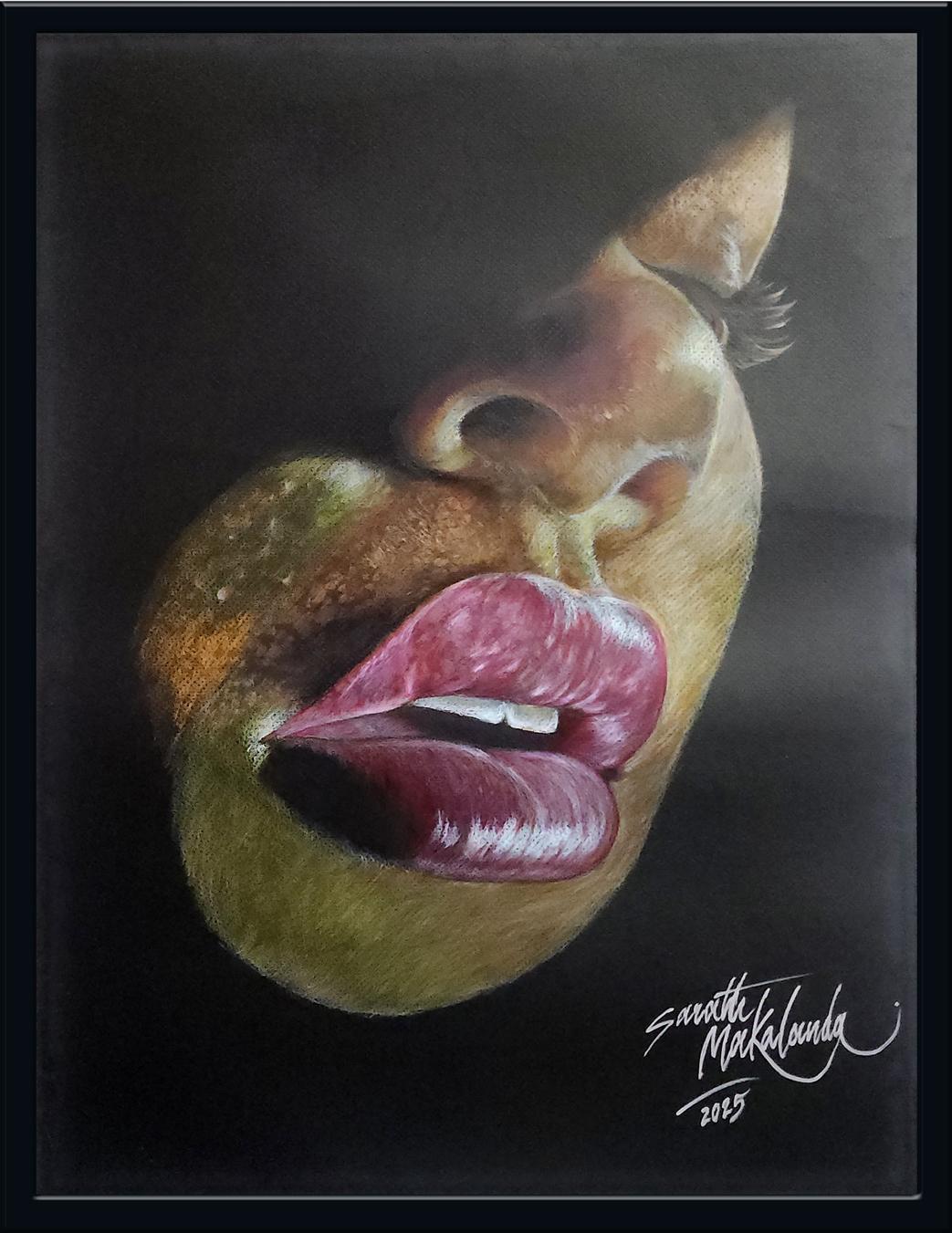
Dream of Sadhna, opening on 8 and 9 August 2026 at the Lionel Wendt Art Gallery, belongs firmly to the latter. It is not merely a collection of paintings, nor is it an exercise in memorialization. It is an exhibition born from a promise, a promise between two people whose shared life was interrupted by loss, but whose shared dream refused to end there.
The title itself offers the first clue.
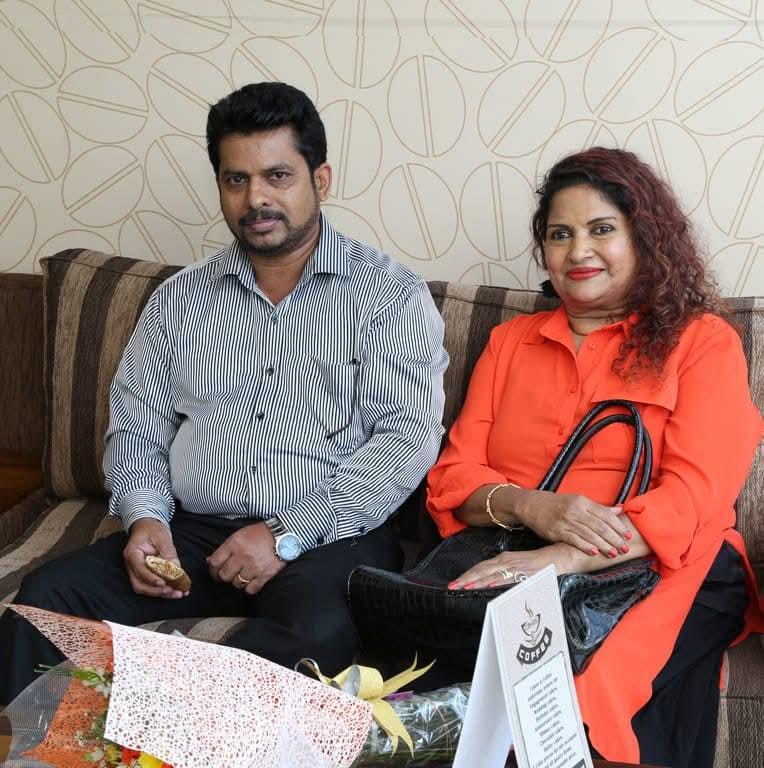
Dreams are curious things. They survive reality. They outlive circumstances. Sometimes they become the inheritance that one person leaves another. In Sarath Makalanda's case, Dream of Sadhna is precisely that: the fulfilment of a dream his late wife had long cherished. "She always had a dream of seeing us doing an exhibition together," he says simply. "Now I'm fulfilling her dream." The sentence is remarkably understated. Yet within it lies the emotional architecture of the entire exhibition. Every canvas becomes less an object to be viewed than a conversation that began years ago and somehow continues.
Before she became the inspiration behind an exhibition, Sadhna was, first and foremost, the center of a family. "Sadhna was a loving and very supportive wife, and she was always a mother first," Makalanda says. "She was my first fan and always believed in my art."
There is something quietly profound about describing someone as your first audience. Every artist remembers the people who looked at unfinished sketches before galleries ever did, who offered encouragement before critics offered reviews, who believed before anyone else found reason to. Those relationships rarely appear in exhibition catalogues, yet they shape entire artistic lives.
For Makalanda, Sadhna's faith became part of his creative foundation. When she passed away, language itself seemed to fail. "After her passing, I felt that words were not enough," he reflects. "Art became the only way I could express my feelings."
It is perhaps no coincidence that throughout history, artists have often turned to images when language reaches its limits. The vocabulary of grief has always been incomplete. A painting can hold contradictions that sentences struggle to contain. It can accommodate longing and gratitude, despair and tenderness, memory and imagination, all at once.
This exhibition understands that. Rather than documenting events, the works appear to reconstruct emotional landscapes. They are less concerned with what happened than with what it felt like to have lived those moments.
"I'd rather paint my feelings than the exact moment," Makalanda explains. "I believe emotions make a painting more meaningful." That distinction changes the way one approaches the exhibition. These are not historical records. They are emotional truths.
Memory itself is never a faithful archivist. It edits. It softens. It intensifies. It allows certain colours to become brighter while others quietly disappear. The mind does not preserve life as a camera does; it preserves significance. In that sense, Makalanda's paintings are not attempts to recreate the past, but to preserve the emotional weight the past continues to carry.
It is this philosophy that gives the exhibition its remarkable intimacy. As he painted, the process itself became impossible to separate from remembrance. "I think it's a mixture of feelings, happiness, joy, and sorrow in the journey we shared together." That emotional complexity prevents the exhibition from becoming overwhelmed by grief alone.
Instead, joy quietly coexists with absence. Asked how he balanced remembrance with celebration, Makalanda offers an answer that feels almost philosophical. "Remembrance and celebration have always been a part of life. I chose to focus on our happy memories while honouring her absence." The phrase "honouring her absence" is especially striking.
Most memorials attempt to fill absence. This exhibition does something different. It acknowledges absence as something that continues to shape presence. The empty spaces become just as meaningful as those that are filled. Love, after all, does not disappear simply because the person does. Throughout the exhibition, recurring colours, landscapes and visual motifs appear again and again, not as decorative choices, but as private languages shared between husband and wife.
"Certain elements, and even certain places, remind me of her warmth, her smile and even her smell." It is an answer that reveals how memory operates through the senses. We often imagine remembrance as visual, yet our deepest recollections arrive through textures, fragrances, fragments of light, or the atmosphere of familiar places. Art becomes capable of translating experiences that ordinary language leaves untouched.
There were even moments, Makalanda admits, when painting ceased to feel like artistic practice altogether. "Sometimes it feels like the canvas is a way of communicating with her." It is perhaps the most moving revelation of the conversation.
Not because it suggests anything supernatural, but because it recognises something artists have understood for centuries: creation itself can become dialogue. A canvas may never answer back, yet it allows questions, memories and affection to exist somewhere outside the artist's own mind. In this sense, Dream of Sadhna is not only about loss. It is about continuity. The exhibition also marks a significant turning point in Makalanda's artistic evolution.
"My art has become more emotional and meaningful," he says. "Dream of Sadhna is a very important milestone in my journey because it is more than an exhibition, it is a tribute to my wife and the fulfilment of her dream."
The statement reflects an artist who has moved beyond painting simply to create beautiful images. His work now seeks emotional resonance before aesthetic perfection. Technique remains important, but feeling has become essential. For visitors who never knew Sadhna, Makalanda hopes the exhibition itself becomes an introduction.
"I hope people leave with a feeling of love, connection, and the importance of cherishing their loved ones." Perhaps that is ultimately what distinguishes this exhibition from many contemporary art experiences. In an age where galleries often encourage viewers to decode complex theories or intellectual frameworks, Dream of Sadhna speaks through something far older and infinitely more universal. It speaks through devotion.
Love requires no translation. Neither does grief. And when those two emotions meet on canvas, they often create something that transcends both. Asked what he hopes visitors carry with them after leaving the gallery, Makalanda answers without hesitation. "I hope people leave feeling inspired and reminded that love, memories, and dreams can live on through art. If the exhibition touches their hearts, then it has achieved its purpose."
Perhaps that is the quiet miracle of Dream of Sadhna. Its paintings are undoubtedly about one woman, one marriage and one family. Yet by the time visitors leave the gallery, they may find themselves thinking not only about Sadhna, but about the people who first believed in them, the dreams that remain unfinished, and the extraordinary ways love continues to exist after those we love are no longer physically beside us. Some exhibitions end at the gallery doors. This one is likely to follow its visitors home.