Once You Understand Neuroplasticity, There’s No Going Back

By Thaliba Cader
There is something quietly revolutionary about discovering that the human brain is not a finished object.
For much of scientific history, adulthood was treated as the neurological equivalent of permanence. Childhood was believed to be the great era of learning, after which the architecture of the mind settled into something largely immutable. Personality became fixed. Intelligence stabilized. Habits hardened into character. If trauma, anxiety, addiction or learning difficulties had become woven into the nervous system, they were thought to be conditions to manage rather than circuits that could meaningfully change.
Modern neuroscience has dismantled that worldview.
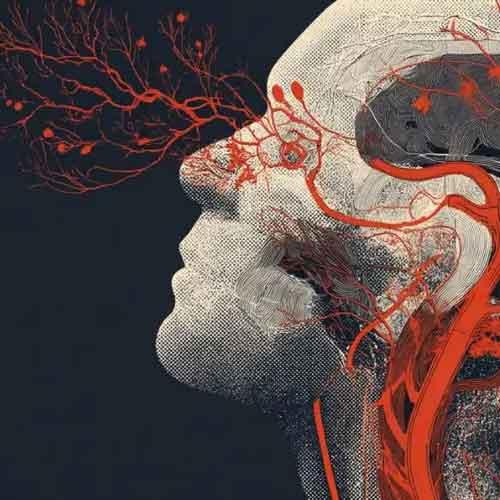
One of the most consequential discoveries of the past century is that the brain is not a static organ but an adaptive biological system, constantly modifying its own structure in response to experience. Every memory encoded, every movement rehearsed, every language learned, every fear reinforced and every habit repeated leaves measurable traces within networks of neurons. The brain is less like a sculpture carved once into permanence than a living ecosystem, continuously pruning, strengthening and reorganizing itself according to the demands placed upon it.
This capacity, known as neuroplasticity, has transformed neuroscience, medicine, rehabilitation, psychology and education. It has altered how researchers understand recovery after stroke, chronic pain, psychiatric disorders, learning disabilities and even the biology of memory itself.
Yet neuroplasticity has also become one of the most misunderstood concepts in popular science. It is often reduced to motivational slogans about "rewiring your brain," as though neural change were simply a matter of optimism or willpower. The science is considerably more complex and far more interesting.
Neuroplasticity is not evidence that humans possess limitless potential.
It is evidence that the nervous system is perpetually adapting to the life it repeatedly experiences.
A Brain That Never Stops Learning
Neuroplasticity describes the nervous system's ability to modify its own organization throughout life. Far from functioning as a fixed electrical circuit, the brain continually reshapes itself in response to experience, behavior, attention and environmental demands.
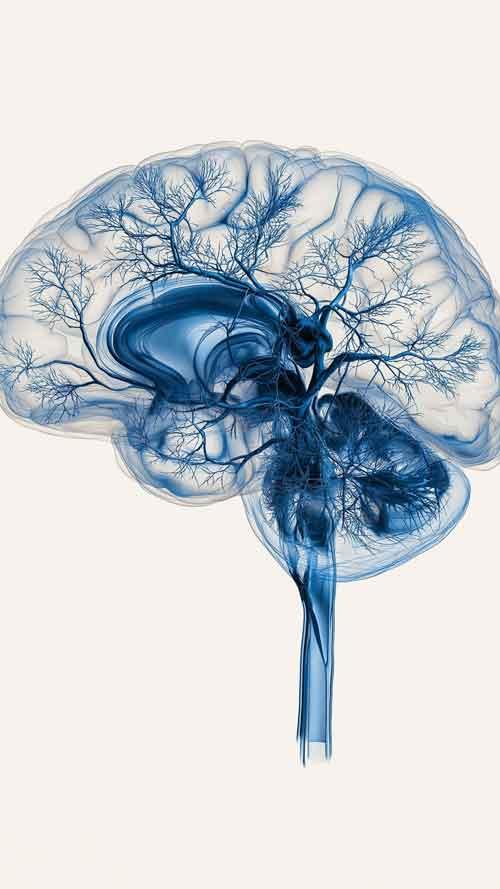
The human brain contains approximately 86 billion neurons linked through hundreds of trillions of synaptic connections. These connections are neither permanent nor equally important. Synapses that are repeatedly activated become more efficient through processes such as long-term potentiation, while those that remain inactive gradually weaken or disappear through synaptic pruning. In effect, the brain is engaged in a lifelong process of biological optimization, allocating its limited resources toward the patterns of activity that prove most useful.
This dynamic architecture explains why expertise appears effortless only after prolonged practice. A concert pianist is not merely remembering finger movements; years of repetition have altered motor networks, sensory processing and cortical organization itself. A bilingual speaker is not consciously translating every sentence but relying on neural pathways refined through thousands of hours of linguistic exposure.
Perhaps the most remarkable implication is that this capacity does not disappear with age. Although childhood represents a period of extraordinary plasticity, adulthood remains neurologically flexible. Functional MRI studies have demonstrated structural and functional changes in adults learning new languages, mastering musical instruments or recovering after neurological injury. Following stroke, entirely different regions of the brain can assume functions previously carried out by damaged tissue, illustrating that the nervous system is capable not only of learning but of remarkable biological compensation.
The adult brain is therefore not frozen in time.
It is continuously negotiating with experience.
The Brain Learns From Behavior, Not Intention
Perhaps the most psychologically unsettling implication of neuroplasticity is that the brain responds less to what we hope than to what we repeatedly do.
Human beings naturally organize their lives around intentions. We imagine that the desire to become healthier, more disciplined, more creative or more confident represents the beginning of change. Neurologically, however, intentions possess remarkably little weight until they are translated into repeated behavior.
The nervous system is fundamentally empirical.
It records experience rather than aspiration.
Every repeated action becomes biological evidence about what the environment demands. If an individual spends months practicing a musical instrument, attentional, auditory and motor circuits gradually become more specialized. If another repeatedly rehearses anxious predictions, avoids uncertainty or compulsively checks a smartphone, those behavioral patterns likewise become encoded through increasingly efficient neural pathways.
The brain does not evaluate the moral quality of repetition. It simply interprets frequency as importance.
In this sense, identity emerges less from belief than from accumulated behavior. We often imagine that confidence precedes public speaking, discipline precedes productivity or creativity precedes artistic work. Neuroplasticity suggests a reversal of that intuition. Repeated behavior gradually alters the architecture from which future thoughts, emotions and decisions arise.
We become, at least in part, the neurological consequences of what we practice.
If repetition determines which neural pathways strengthen, attention determines which experiences become available for repetition in the first place.
Attention is not simply awareness. From the perspective of neuroscience, it functions as a mechanism of biological selection. Every waking moment presents vastly more sensory information than the brain could possibly process. Neural systems therefore allocate metabolic resources toward what is repeatedly attended while allowing countless other signals to fade into irrelevance.
This makes attention one of the most powerful forces shaping plasticity.
The modern digital environment competes relentlessly for that resource. Endless notifications, algorithmically optimized feeds and perpetual novelty repeatedly activate neural systems associated with reward anticipation, vigilance and rapid attentional shifting. Over time, these patterns can reinforce fragmented concentration and shorten the duration of sustained cognitive engagement.
The opposite is equally true.
Extended reading, deliberate practice, scientific reasoning and uninterrupted conversation strengthen networks associated with executive control, working memory and cognitive flexibility. Attention is therefore not merely a psychological preference but a biological investment that determines which neural circuits receive reinforcement.
The brain ultimately becomes efficient at noticing whatever it has repeatedly been taught to notice.
Attention is the currency through which experience purchases biological change.
Neuroplasticity offers neither a promise of limitless human potential nor an excuse for simplistic optimism. The brain remains constrained by genetics, disease, development, injury, environment and countless social realities that no amount of positive thinking can erase.
What neuroscience does offer is something subtler and, perhaps, more profound.
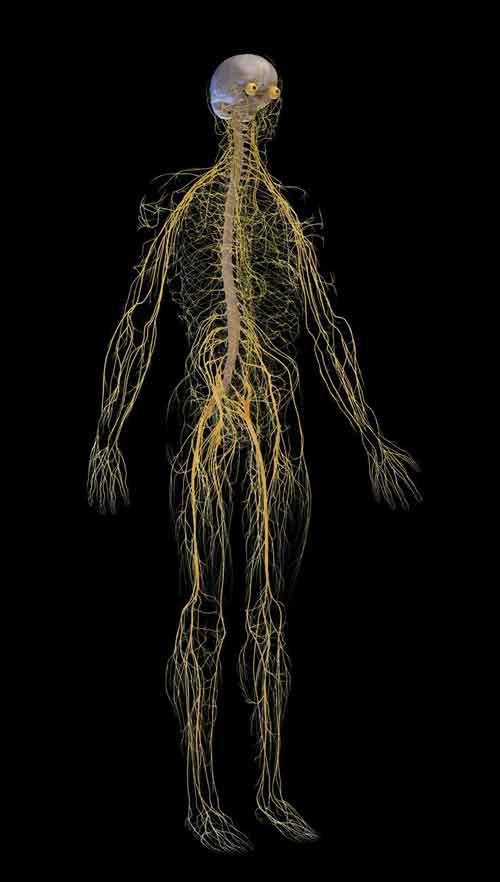
It reveals that the self is less fixed than previous generations imagined. Every experience modifies the probabilities governing future perception, memory and behavior. Every habit becomes part of the nervous system's architecture. Every repeated thought leaves microscopic alterations within networks of living cells.
The brain is not merely the organ through which we experience life.
It is an organ that is continuously being rebuilt by the life we experience.
Whether that reconstruction occurs deliberately or unconsciously is largely a matter of how we direct our attention, organize our behavior and inhabit our days. We are never entirely finished products, but neither are we infinitely malleable. Plasticity exists between those extremes, where biology meets experience.
Perhaps that is neuroplasticity's deepest lesson.
Human beings are not simply shaped by the world.
Through repetition, the world gradually becomes written into the physical structure of the brain itself.
Long before achievement becomes visible, before confidence becomes recognizable or before expertise appears effortless, the nervous system has already spent months or years quietly reorganizing itself beneath conscious awareness.
Change is rarely dramatic.
More often, it is microscopic, cumulative and almost invisible until one day the brain has become something it was not before.