The Faroe Islands
By Umasha Caldera
Most people dream of visiting places they've seen hundreds of times on postcards Paris, Bali, Santorini, or the Maldives. But hidden between Iceland and Norway lies a destination that many travelers have never heard of, yet those who visit often call it the most beautiful place they've ever seen.
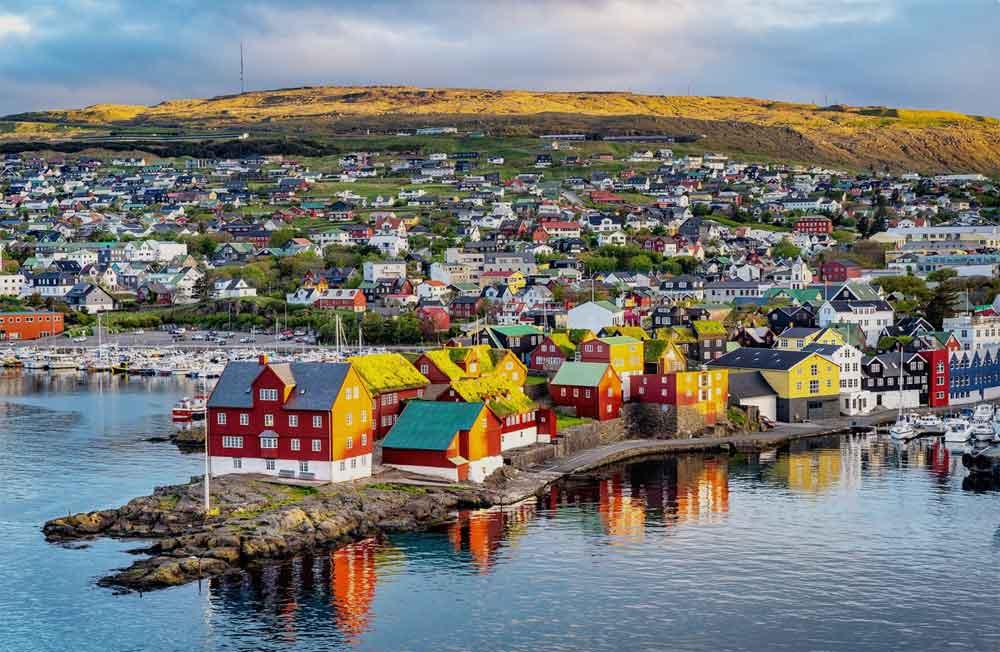
Welcome to the Faroe Islands, an archipelago of 18 volcanic islands where waterfalls tumble directly into the ocean, grass-covered cliffs rise dramatically from the sea, and tiny villages seem frozen in time. This is not the kind of place where you'll find giant amusement parks or crowded tourist streets. Instead, you'll find something much rarer: a feeling that you've discovered a corner of the world that still belongs to nature.
The first thing you'll notice when arriving in the Faroe Islands is the silence. Not the silence of an empty room, but the silence of nature. The sound of waves crashing against cliffs, sheep grazing on hillsides, and seabirds circling above the ocean replaces the noise of traffic and city life.
The islands belong to the Kingdom of Denmark but have their own unique culture, language, and identity. With a population of only around 55,000 people, there are actually more sheep than humans here.
Driving through the islands feels surreal. Roads wind through green valleys, disappear into mountains through tunnels, and emerge into landscapes that look as though they belong in a fantasy movie. At times, it feels less like a destination and more like stepping into a forgotten world.
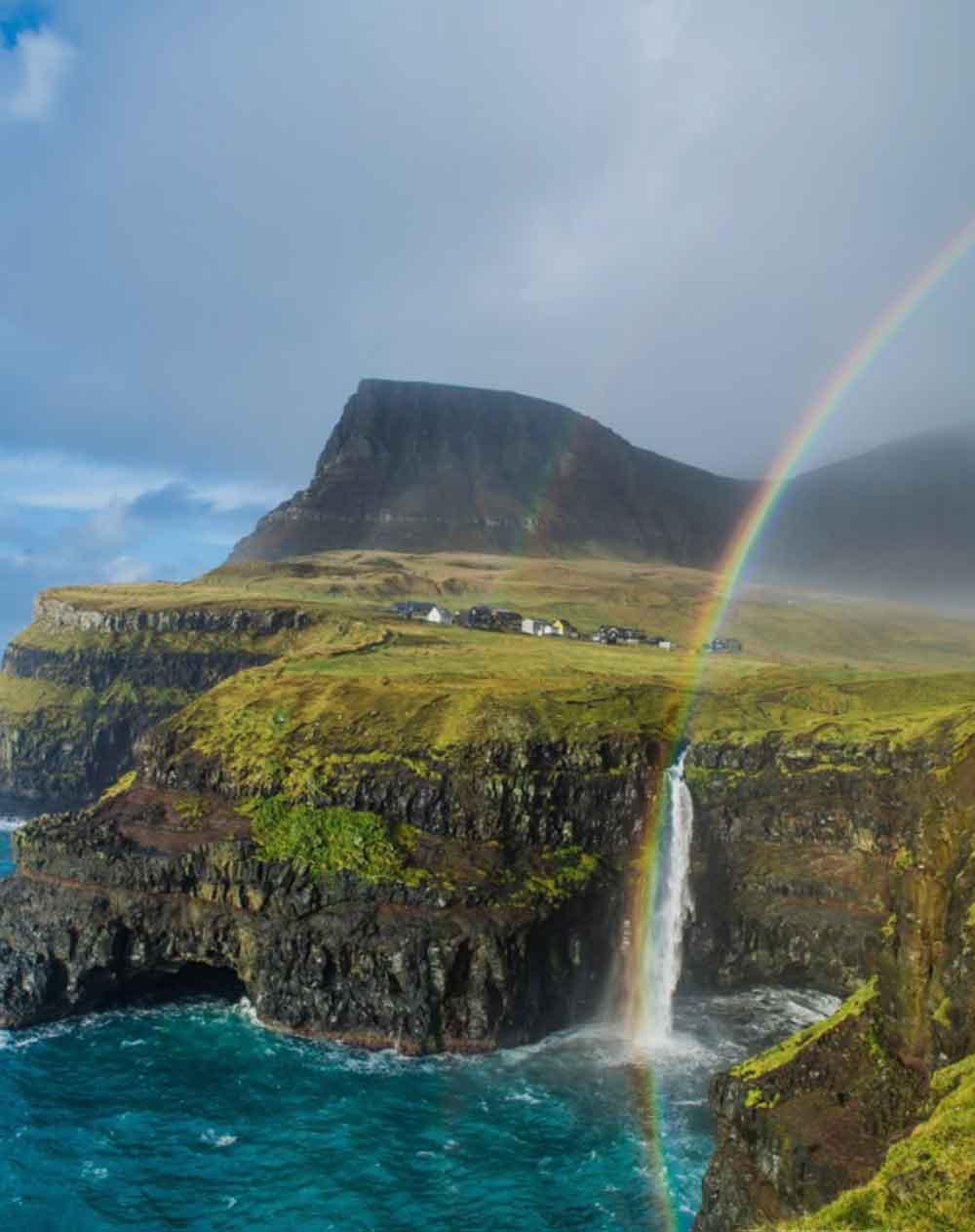
If there's one image that captures the magic of the Faroe Islands, it's the tiny village of Múlafossur Waterfall. Located near the village of Gásadalur, this waterfall has become one of the most photographed places in Europe.
Why? Because it doesn't fall into a river. It doesn't fall into a lake. It falls directly into the Atlantic Ocean. Imagine standing on a cliff as water cascades hundreds of feet downward, while waves crash below and clouds drift over distant mountains. It looks so perfect that many visitors initially assume the photos have been edited. They haven't. Nature simply decided to show off.
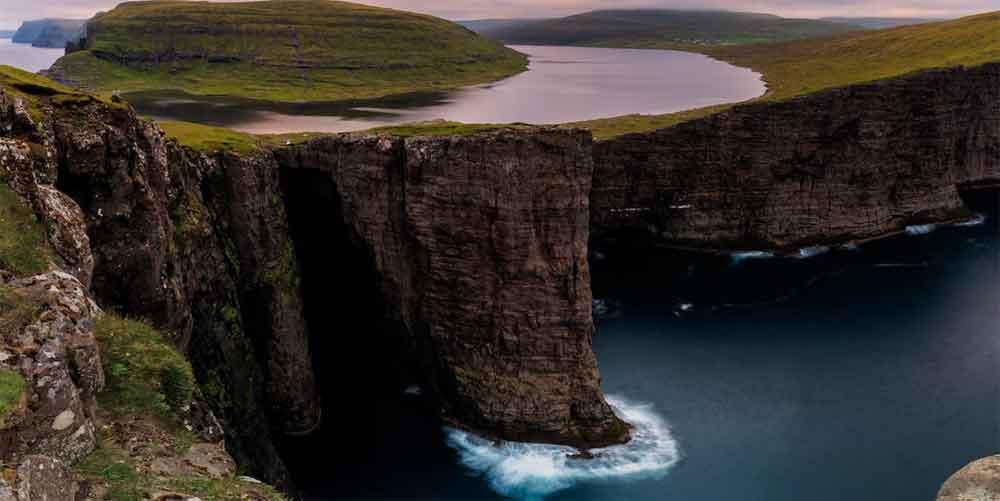
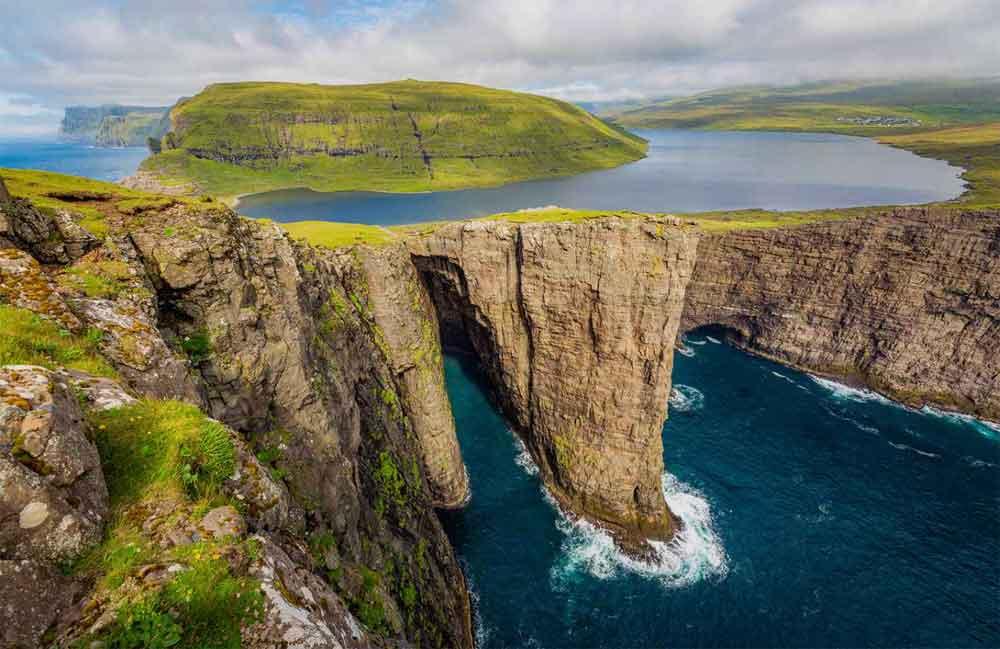
One of the most fascinating places in the Faroe Islands is Lake Sørvágsvatn. At first glance, photographs of this lake appear impossible. The lake seems to be floating hundreds of feet above the ocean. Visitors often spend several minutes staring at it, trying to understand what they're seeing.
The explanation is an optical illusion created by the surrounding cliffs and landscape. In reality, the lake sits only a short distance above sea level. Yet from certain viewpoints, it looks as though someone has lifted an entire lake and suspended it in midair. Standing there, you begin to understand why the Faroe Islands are often described as one of the most photogenic destinations on Earth.
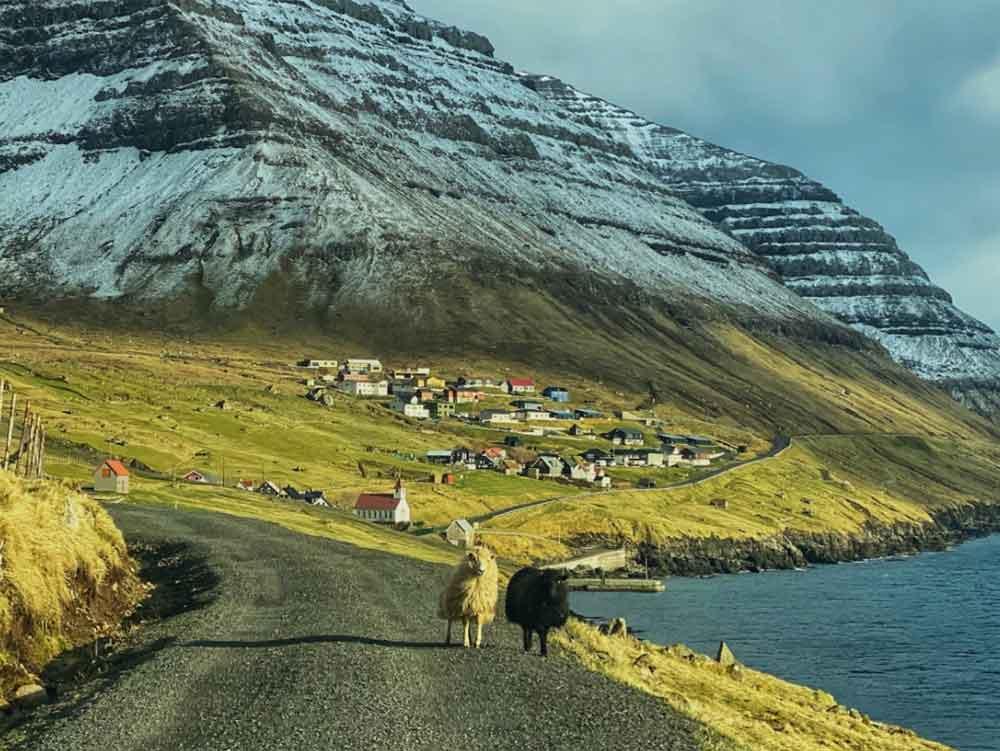
The Faroe Islands and sheep have been inseparable for centuries. In fact, the word "Faroe" is believed to originate from an old Norse word meaning "Sheep Islands." You'll find sheep everywhere. They're on mountains. They're beside roads. They're standing in places that seem impossible to reach.
Many travelers joke that the sheep act as unofficial tour guides because they appear at nearly every scenic viewpoint. Unlike crowded tourist destinations where you compete for space, here you might find yourself sharing a spectacular cliffside with nothing but a handful of sheep and the wind. It's a refreshing reminder of how simple and peaceful travel can be.
Some of Europe's highest sea cliffs are found in the Faroe Islands. The magnificent Cape Enniberg rises dramatically above the North Atlantic. Standing near these cliffs creates a feeling that's difficult to describe. The ocean stretches endlessly toward the horizon. Clouds move rapidly across the sky. Birds glide far below your feet. The scale is overwhelming. You suddenly realize how small you are compared to the forces of nature surrounding you. Yet rather than feeling insignificant, many visitors describe the experience as strangely comforting. The world feels bigger here. And somehow, that's reassuring.
Every summer, millions of seabirds arrive in the Faroe Islands. Among the most beloved is the Atlantic Puffin. With its colorful beak and charming appearance, the puffin has become one of the symbols of the islands. Watching these birds launch themselves from steep cliffs can be both hilarious and fascinating. They appear clumsy on land but become remarkably graceful once airborne. For wildlife photographers, the Faroe Islands offer opportunities that rival some of the world's most famous nature destinations. The combination of dramatic landscapes and abundant wildlife creates scenes that seem almost too perfect to be real.
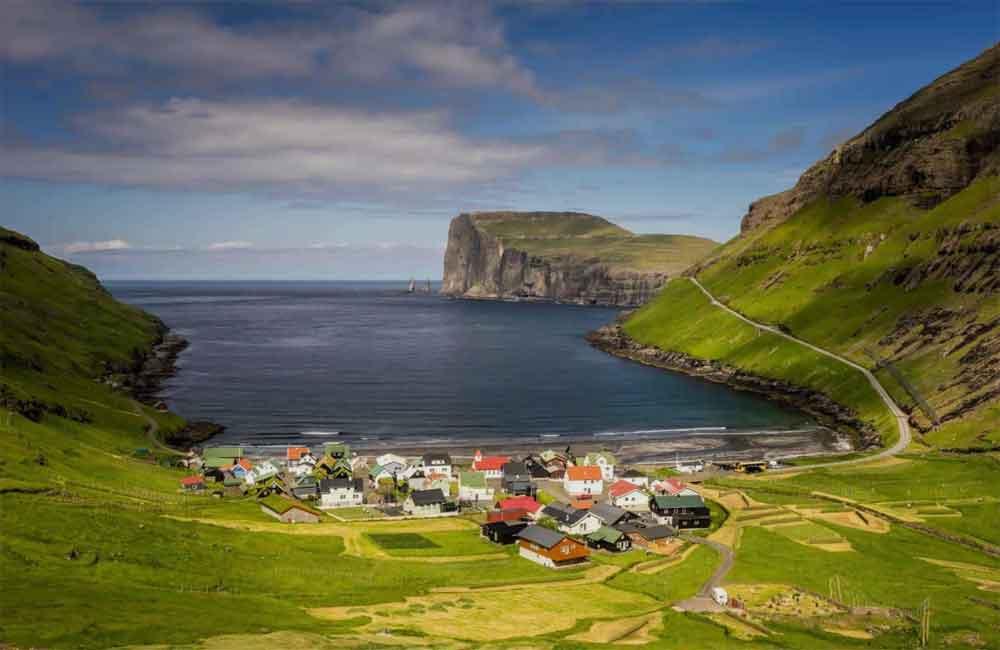
One of the most memorable aspects of the Faroe Islands is its villages. Many consist of only a few dozen colorful houses. Some have grass roofs. Others sit beside fjords surrounded by towering mountains. Perhaps the most famous is Saksun, a tiny settlement that looks like something from a fairy tale.
A small white church stands beside a lagoon, framed by green mountains that rise steeply into the clouds. When fog rolls through the valley, the entire scene becomes almost mystical. It's easy to imagine legends being born in places like this. Because unlike many modern destinations, the Faroe Islands still feel connected to their stories and traditions.
Locals often joke that you can experience all four seasons in a single day. And they're not exaggerating. One moment the sky is clear and bright. The next, a curtain of mist sweeps across the mountains. Then comes sunshine again. This constantly changing weather gives the islands a dynamic beauty.
The same landscape can look entirely different from one hour to the next. Photographers love this unpredictability because every visit feels unique. No two sunsets are identical. No two mountain views are the same. Nature continuously reinvents itself.
Unlike many heavily populated parts of Europe, the Faroe Islands have very little light pollution. On clear nights, the stars seem impossibly bright. The Milky Way stretches across the sky like a river of light. Occasionally, visitors are even fortunate enough to witness the Aurora Borealis, dancing above the islands in shades of green and purple.
Imagine standing beside a quiet fjord, hearing nothing but the distant sound of waves while the night sky performs a light show overhead. It's the kind of moment that remains with you long after the trip ends.
Many beautiful destinations impress visitors. The Faroe Islands do something more. They slow people down. In a world dominated by notifications, schedules, and endless distractions, the islands encourage something increasingly rare: presence. You notice the shape of clouds. You pay attention to the sound of the wind. You watch sunlight move across mountains. Simple moments suddenly feel important again. Perhaps that's why so many travelers leave feeling unexpectedly emotional. The Faroe Islands aren't just visually stunning they reconnect people with a sense of wonder.
The world is full of famous destinations, but every so often, you discover a place that feels like a secret. The Faroe Islands are one of those places. They offer waterfalls plunging into oceans, lakes that seem to float above the sea, dramatic cliffs, charming villages, and landscapes so beautiful they hardly seem real. Yet what makes the Faroe Islands truly special isn't any single attraction. It's the feeling they create.
A feeling of adventure. A feeling of peace. A feeling that you've found one of the last truly wild places on Earth. And once you've experienced that feeling, a part of you never really leaves.