The Children Behind Fashion’s Supply Chains: The Human Cost of Cheap Clothes
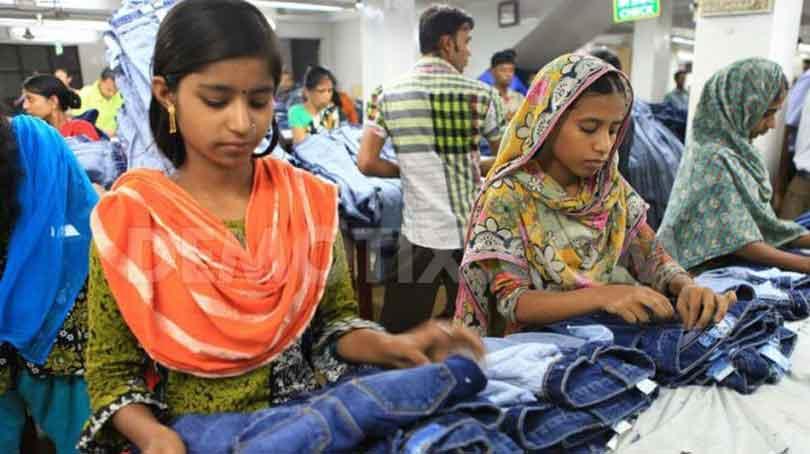
Fashion has become remarkably good at telling stories. We are invited to admire beautiful collections, celebrate designers and discover the latest trends. Brands speak proudly about craftsmanship, sustainability and ethical production. Yet there is another story that rarely appears in their advertising campaigns or glossy sustainability reports: the story of children whose labour may be hidden several steps away from the factories where our clothes are made.
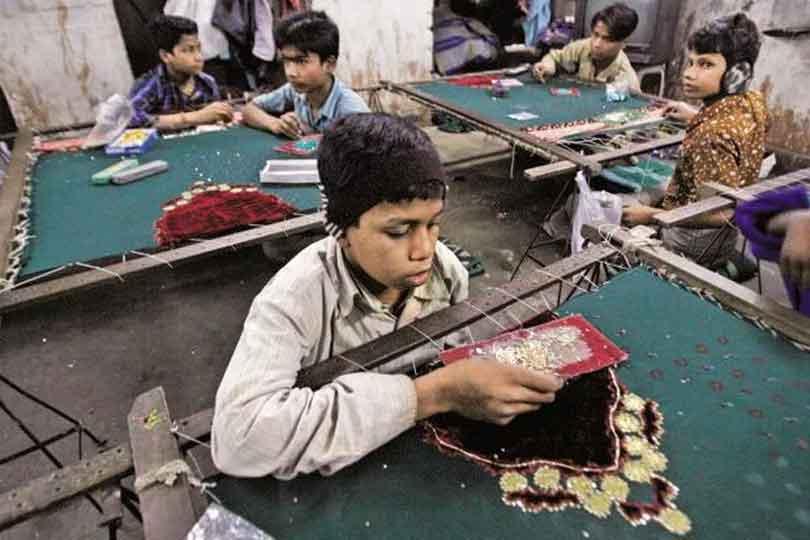
When we think about child labour in fashion, we often imagine a child sitting at a sewing
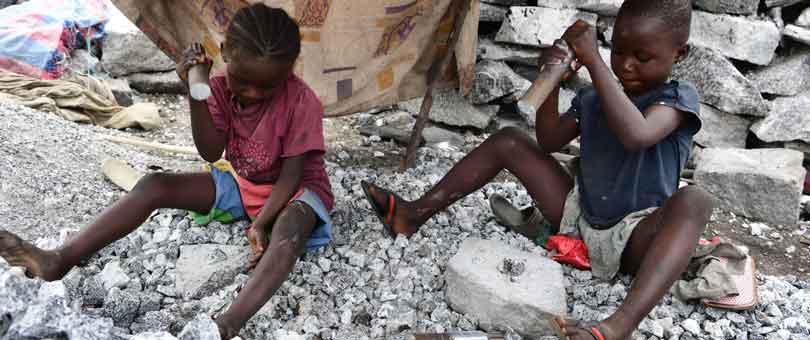
machine in an overcrowded garment factory. While this remains a serious concern, the reality is much more complicated. Child labour does not necessarily begin where a garment is stitched. It can begin much earlier, in the fields where cotton is harvested, in the extraction of raw materials and in the production of agricultural ingredients used by the fashion industry. By the time a garment reaches a shop, the children who contributed to its production may be far removed from the brand selling it.
The latest global estimates from the International Labour Organization (ILO) and UNICEF, published in June 2025 and covering 2024, reveal that approximately 138 million children worldwide are engaged in child labour. Of these, 54 million are involved in hazardous work.
Agriculture accounts for 61 per cent of all child labour globally, representing approximately 84 million children.
These figures do not mean that 61 per cent of child labour is connected to fashion. However, they highlight why looking only at garment factories gives us an incomplete picture. Cotton, one of
the world's most widely used natural fibres, begins its journey in agriculture. If we want to understand the human cost of fashion, we must follow the supply chain further back, beyond the spinning mills and sewing floors, all the way to the fields.
Cotton is often presented as a natural, comfortable and familiar material. Organic cotton, in particular, has become an important selling point for brands seeking to communicate their environmental credentials. But an environmental certification does not automatically guarantee that the people growing the cotton are working under decent conditions.

An investigation published in January 2025 by the organisation Transparentem, reported by Business of Fashion, exposed troubling labour conditions on cotton farms in India's Madhya Pradesh region. Investigators found evidence of child labour, including hazardous work,
alongside forced labour indicators, debt bondage, withheld wages and other serious violations. Some of the children identified were as young as six.
The investigation examined farms connected to three textile suppliers, with supply-chain links extending to businesses associated with major international companies, including Zara-owner Inditex, H&M Group, Gap and Amazon.
This is an uncomfortable finding for an industry increasingly dependent on words such as conscious, responsible and sustainable. A cotton field can be certified, a supplier can have a sustainability programme, and a brand can publish an impressive environmental report, while serious labour abuses remain hidden further down the chain.
The problem is partly one of visibility. Modern fashion supply chains involve farmers, traders, cotton processors, spinners, textile mills, manufacturers and subcontractors. Raw materials can change hands several times before becoming fabric. A brand may know exactly which factory manufactures its shirts but have very little knowledge of the farms supplying the cotton. And this brings us to an issue that sits at the heart of fashion's labour problem: poverty Child labour and poverty wages are deeply connected. In many agricultural communities, families depend on seasonal work and uncertain incomes. When adults cannot earn enough to feed their families, pay rent or send their children to school, children may be expected to contribute to household income. Some work alongside their parents on family farms, while others are recruited as seasonal workers. Debt and economic vulnerability can leave families with very few choices.
Removing children from workplaces is necessary, but it is not enough. If a family loses an important source of income without receiving alternative support, the underlying problem remains. Children may simply move into another form of work, perhaps somewhere even more difficult to monitor.
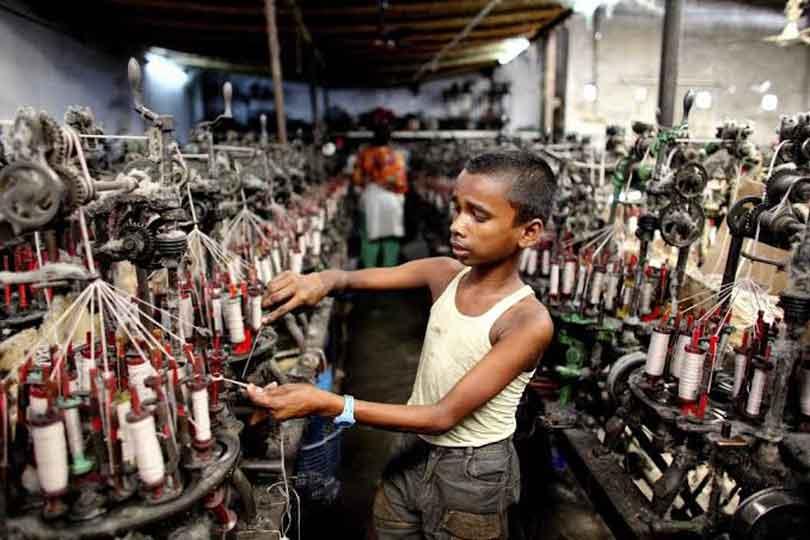
Tackling child labour therefore requires more than a company policy declaring zero tolerance. It requires adults to earn enough to support their families, access to education, social protection and safer working conditions. It also requires fashion brands to examine the commercial decisions that influence wages throughout their supply chains. Fashion's obsession with cheaper prices, faster production and larger volumes deserves particular attention. Suppliers are regularly expected to produce more for less, often within demanding deadlines. When brands negotiate lower prices, change orders or delay approvals, the financial pressure does not disappear. It travels down the supply chain. Factories may respond by squeezing labour costs. Textile suppliers may demand cheaper raw materials, while farmers receive less for their crops. Eventually, the pressure reaches the people with the least bargaining power.
This does not mean every inexpensive garment is produced using child labour. But it is equally misleading to pretend that relentless price competition has no consequences for the people making our clothes. The problem is not limited to agriculture. In August 2024, the BBC reported that online fashion retailer Shein had identified two cases of child labour among its suppliers during the first nine months of 2023. The company said it had suspended orders from the suppliers involved and strengthened its requirements. In February 2025, Shein disclosed another two cases identified during 2024, following approximately 4,300 supplier audits.
These disclosures raise an important question. If companies with established auditing systems are still identifying child labour within their supply chains, what about the cases that remain
undetected? Auditing is necessary, but it cannot be the entire solution. Inspections are generally easier to conduct at registered factories than on smallholder farms, where agricultural work may be seasonal, informal and spread across thousands of locations. Children working alongside family members can be particularly difficult to identify through conventional monitoring systems.
There is also a difference between discovering a violation and taking responsibility for correcting it. Simply terminating a supplier relationship may protect a brand's reputation, but it does not necessarily improve the lives of the children or families affected. Responsible remediation must prioritise children's safety, education and long-term wellbeing while addressing the economic
circumstances that contributed to their involvement in work.
This is where supply-chain traceability becomes essential. Fashion companies need to know
more than the name of the factory producing their garments. They need meaningful visibility into where their raw materials originate, who supplies them and what labour conditions exist at every stage. This requires longer-term supplier relationships, engagement with farming communities and credible independent monitoring.
Consumers also have a role, although responsibility should not fall entirely on the person buying a T-shirt. Most shoppers cannot investigate a cotton farm or independently verify the conditions behind a garment. They depend on companies to provide honest information and governments to enforce meaningful standards. However, we can look beyond attractive sustainability claims and question brands whose business models depend on selling enormous quantities of clothing at extraordinarily low prices.
Perhaps the most uncomfortable part of this conversation is that child labour is not always hidden because nobody knows it exists. Sometimes the risks are documented, investigations have been published and supply-chain connections are already established. What is missing is the
willingness to confront the commercial systems that allow exploitation to continue.
The fashion industry cannot celebrate sustainability while overlooking the people who grow its raw materials. It cannot speak about responsible production while expecting suppliers to operate at prices that make decent wages impossible. And it cannot claim that its responsibility ends at the factory gate when its products depend on a much longer chain of human labour. The next time we see a T-shirt advertised for the price of a cup of coffee, perhaps we should pause before celebrating the bargain. The question is not simply how much we are paying for our clothes. It is how little someone else may have been paid to make them possible. Fashion has spent decades teaching us to look at the label to understand what we are buying. It is time we learned to look beyond it, too. Somewhere between the cotton field and the shop floor, there may be a child whose name we will never know, whose work we will never see, and whose childhood has become part of the price of our clothes.