She Works After Dark. Why Does It Still Surprise People?

By Yashmitha Sritheran
When a man says he works late, the conversation usually moves on quickly. Someone might ask what industry he works in or what position he holds, but rarely does anyone stop to question whether he should be doing that work at all. When a woman says she works at night, the response is often very different.
People ask whether it is safe. They ask why she needs to work those hours. They ask whether her family is comfortable with it. Sometimes they ask if she could not find a job during the day instead. The questions are often well intentioned, but they reveal something deeper about the way society still views women and work.
The shift may be the same. The workplace may be the same. The responsibilities may be exactly the same as those of her male colleagues. Yet the reaction is often entirely different. For many women, working after dark still requires an explanation. That alone says a great deal. Sri Lanka in 2026 is very different from the country many people grew up in. The traditional image of work beginning in the morning and ending in the late afternoon no longer reflects reality for a large part of the workforce.
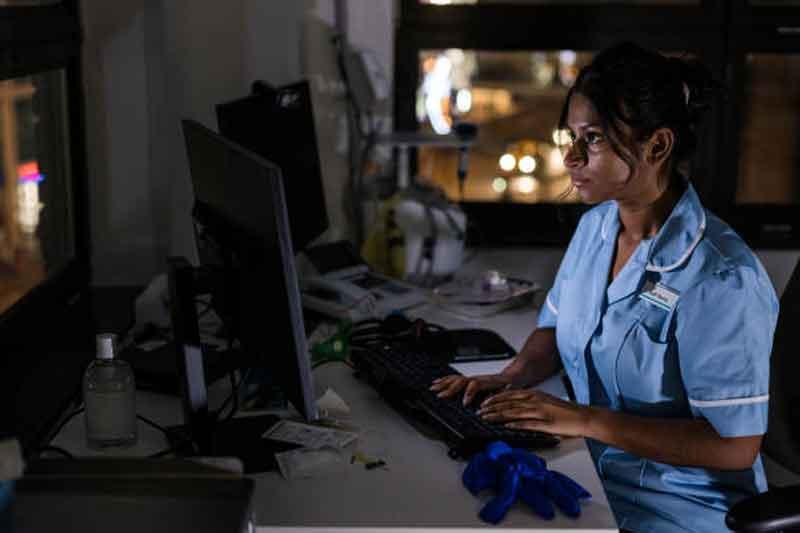
Modern economies do not operate according to daylight. Hospitals continue to function through the night because illness does not follow office hours. Airports remain open because flights arrive and depart at every hour of the day. Hotels welcome guests long after midnight. Newsrooms stay active because stories break without warning. Technology companies support clients and customers across continents and time zones. Manufacturing plants operate continuously to meet demand. Customer service teams answer calls from overseas markets while most of the country sleeps.
Entire industries rely on people who work when others are at home. Night shifts are not unusual anymore. They are part of modern working life. What remains unusual, at least in the eyes of some people, is seeing women participate in them. For many women, working at night is not an act of rebellion or a challenge to tradition. It is simply part of the profession they chose. A nurse monitoring patients, through the early hours of the morning is doing her job. A journalist covering a developing story late at night is doing her job. An information technology professional working with clients in Europe or North America is doing her job. A hotel receptionist welcoming guests arriving on delayed international flights is doing her job. A customer service executive supporting another market across a different time zone is doing her job. None of these women are making statements about social expectations simply by showing up for work.

They are professionals fulfilling their responsibilities. Yet many still find themselves having to justify decisions that men in similar positions are never asked to explain. The assumption often seems to be that if a woman is working late, there must be an unusual reason behind it.
- Perhaps she had no alternative.
- Perhaps she had financial pressures.
- Perhaps she was forced into it.
The possibility that she simply wanted the opportunity, accepted the role, and pursued the career she wanted is sometimes overlooked. Women work night shifts for the same reasons men do.
- To build careers.
- To gain experience.
- To develop specialised skills.
- To improve their financial independence.
- To access opportunities that may not exist elsewhere.
- To create better futures for themselves and their families.
Ambition does not operate according to office hours. Neither does professional growth. Of course, conversations about women working at night often return to one issue above all others. Safety. Unlike many of the assumptions surrounding women and work, concerns about safety are real and legitimate.
- Travelling late at night can present risks.
- Reliable transportation matters.
- Safe public spaces matter.
- Strong workplace security matters.
Employers have responsibilities to ensure their staff are protected, especially during non-traditional working hours. Families worry because they care. These concerns should not be dismissed. But perhaps society has been asking the wrong question for too long. Instead of asking why women are working at night, perhaps we should be asking why we have not yet created a society where women can work any shift safely. That is a very different conversation. One approach places responsibility on women to avoid certain opportunities. The other places responsibility on society to remove unnecessary barriers. The first response limits possibilities. The second creates progress. For generations, men have worked overnight without their schedules becoming subjects of public debate.

- Security officers have worked through the night.
- Drivers have travelled long distances after dark.
- Healthcare workers have completed overnight shifts.
- Factory employees have operated machinery until dawn.
- Emergency service personnel have remained on duty while entire cities slept.
The conversation surrounding these professions has usually focused on the work itself.
- People ask what they do.
- They ask whether the hours are difficult.
- They ask whether the pay is worthwhile.
- Rarely do they ask whether men should be doing these jobs in the first place.
- Women often experience something different.
Their working hours can become discussions about their personal choices, their family circumstances, or even their character.
A woman arriving home late from work may find herself answering questions before anyone asks about her achievements.
- Where were you?
- Why are you home so late?
- Do you have to work those hours?
- Is that really suitable?
Sometimes the questions come from strangers. Sometimes they come from neighbours. Sometimes they come from relatives. Occasionally they come from people who genuinely care and simply do not understand how much the world has changed. But regardless of where they come from, the effect can be the same. The work becomes secondary. The timing becomes the headline. This reflects a mindset that still exists in parts of society, particularly among generations raised with different expectations about the roles men and women should play. For many years, women were expected to work close to home, avoid late hours, and prioritise responsibilities that existed outside the workplace. Those expectations did not disappear overnight. Cultural attitudes rarely change as quickly as economies do. Workplaces may modernise in a few years. Social perceptions often take much longer. Yet change is happening. The younger generation is already reshaping these conversations. Many young Sri Lankans understand that the modern world functions very differently from previous generations.
- Global companies operate across multiple time zones.
- Digital industries run continuously.
- Financial markets open and close around the world at different times.
- Healthcare never pauses.
- Hospitality never sleeps.
- International business does not wait for local office hours to begin.
- Young professionals have grown up understanding this reality.
For them, the question is not whether a woman should work at night. The question is whether the opportunity is worthwhile.
- Does it offer experience?
- Does it provide career progression?
- Does it open doors for future growth?
- Does it align with long term goals?
Those are the questions many young women are asking themselves. Increasingly, the opinions of others are becoming less important than the futures they are trying to build. This does not mean they are unaware of the challenges. It does not mean they ignore risks. It does not mean they believe the world is perfectly fair or perfectly safe. It means they are refusing to allow outdated assumptions to determine the boundaries of their ambition. For many women, the thinking is straightforward. If an opportunity helps me grow professionally, why should the time on the clock determine whether I deserve it? It is a reasonable question. Few people would tell a young doctor to reject a hospital placement because it includes night duty.
Few would suggest that an airline employee turn down a promotion because flights arrive after midnight. Few would expect a journalist to ignore an important story because it happened outside office hours. The same principle should apply everywhere else. A career opportunity should be judged by its value, not by whether it begins before sunset. Over time, this shift in thinking has slowly started changing perceptions. What was once considered unusual is becoming increasingly ordinary. Women working in hotels, hospitals, technology companies, airports, media organisations, and customer service centres during late hours is no longer a rare sight in urban Sri Lanka. For younger generations entering the workforce, it often feels completely normal. Progress rarely arrives all at once. It arrives gradually. It becomes visible in small moments.

A family supporting a daughter's decision to work overseas hours. An employer investing in transport and security for staff. A community viewing a woman returning home from work at midnight no differently from a man doing the same. These changes matter. They represent more than practical improvements. They represent cultural progress. Of course, not everyone wants to work nights. Some people prefer daytime schedules because they fit family responsibilities. Others value evenings spent at home. Some simply function better during traditional working hours. These preferences are valid. Others may choose night shifts because they offer flexibility, higher earnings, faster career progression, or opportunities that daytime positions cannot provide. These choices are equally valid. There is no universally correct schedule. There is only the schedule that works best for the individual. A night shift does not define a person's values. It does not define their character. It does not define their priorities. It certainly does not define their morality. It defines only one thing. Their working hours. Perhaps that is what society needs to remember.
The conversation should move away from questioning why women work at night and move towards understanding how we can better support everyone who does.
- How do we improve transport?
- How do we strengthen workplace protections?
- How do we create safer public spaces?
- How do employers ensure staff welfare?
- How do communities become more supportive rather than more suspicious?
These are productive conversations. These are conversations that lead to solutions. Questioning whether women should work at night solves nothing. Creating conditions where they can do so safely changes everything. Ultimately, the true measure of progress is not simply giving women opportunities. Progress means ensuring they can accept those opportunities without facing unnecessary judgement. A society cannot claim to support equality while continuing to question whether women belong in certain spaces after certain hours. Opportunity means little if people are punished socially for accepting it. In today's world, ambition should not be limited by the clock. Talent does not disappear after sunset.
Dedication does not become less valuable after midnight. Professionalism does not depend on daylight. Whether someone begins work with the sunrise or starts a shift as the city falls asleep, the value of their contribution remains exactly the same. The patients cared for overnight matter just as much as those treated during the day. The customers assisted at midnight matter just as much as those served at noon.
The code written at two in the morning matters just as much as the code written at two in the afternoon. The work matters. The person doing it matters. The hour itself does not. Women have always worked hard. The only thing changing is that society is beginning to see that work happening at every hour of the day. The night shift was never the problem. The judgement surrounding it always was.