President Donald Trump Issues Explicit Threat to Strike Iran Infrastructure as Strait of Hormuz Crisis Escalates.
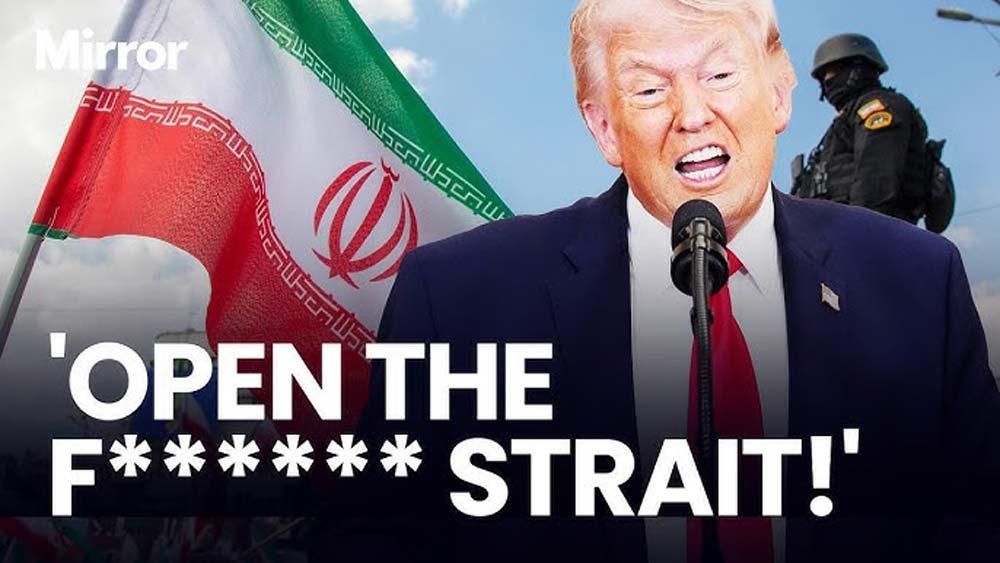
The escalation between the United States and Iran entered a dangerous new phase on Easter Sunday after President Donald Trump issued a stark and unusually explicit threat on social media, warning that Iran could face direct attacks on its infrastructure if it does not reopen the Strait of Hormuz. The message, posted on Easter Sunday, has intensified already high tensions in a region that has been on edge for weeks amid a widening conflict involving Iran, the United States and Israel.
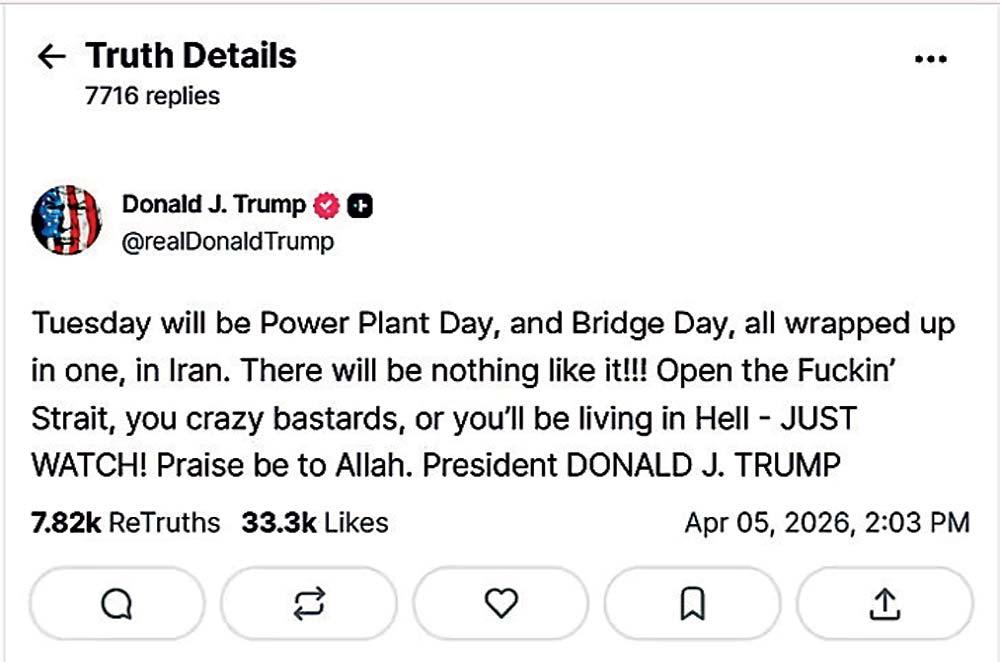
 In the post, President Trump demanded that Iran immediately restore access to the Strait of Hormuz, one of the most critical maritime chokepoints in the global energy system. He warned that failure to comply within a matter of days would result in U.S. military action targeting key infrastructure inside Iran, including energy and transportation facilities. The language used in the message drew particular attention, as it included profanity and a tone that many analysts described as unprecedented for a sitting U.S. president in an official communication.
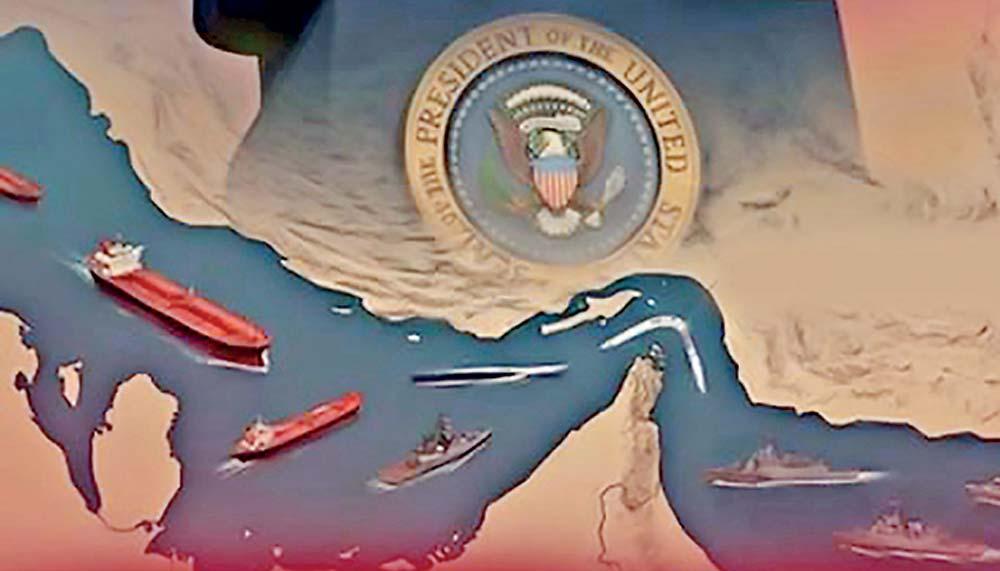
The Strait of Hormuz, which lies between Iran and Oman, is a narrow waterway through which roughly a fifth of the world’s oil supply passes. Any disruption to shipping in the strait has immediate and far-reaching consequences for global energy markets. In recent days, Iran has taken steps that effectively restrict or halt passage through the strait, citing security concerns and ongoing hostilities in the region. These actions have already led to sharp increases in oil prices and heightened fears of a broader economic impact.
President Trump’s ultimatum appears to mark a shift from deterrence to direct coercion. While previous statements from U.S. officials had warned of consequences if Iran continued to interfere with maritime traffic, the explicit reference to bombing infrastructure represents a significant escalation. Analysts note that targeting civilian infrastructure such as power plants and bridges raises serious legal and ethical questions under international law, particularly if such actions are not directly tied to military objectives.
Iran responded swiftly and forcefully. Officials in Tehran rejected the U.S. demand outright and indicated that the closure of the Strait of Hormuz would remain in place until Iran’s own conditions are met. While Iranian authorities have not publicly detailed all of those conditions, they are believed to include the cessation of U.S. and Israeli military operations in the region and the lifting of certain economic and strategic pressures on Iran.
In addition to rejecting the ultimatum, Iranian officials issued their own warnings. Senior figures suggested that any attack on Iranian infrastructure would trigger a broader regional response. This could include strikes on U.S. military assets in the Middle East as well as on energy infrastructure in neighbouring Gulf states. Such threats are consistent with Iran’s longstanding strategy of signalling that escalation will not be contained within its borders.
The exchange of threats comes against the backdrop of an already intensifying conflict. Since February, hostilities involving Iran, Israel and the United States have expanded beyond isolated incidents into a sustained military confrontation. Airstrikes, missile attacks and proxy engagements have been reported across multiple countries in the region. Civilian casualties have risen, and humanitarian concerns are mounting as infrastructure damage disrupts access to basic services.
 Within the United States, Trump’s message has sparked a strong political reaction. Critics from both major parties expressed concern about the tone and substance of the statement. Some lawmakers described the language as reckless and argued that it could further inflame tensions at a moment when diplomatic efforts are urgently needed. Others raised alarms about the potential legal implications of targeting civilian infrastructure, warning that such actions could violate international humanitarian law. Supporters of the administration, however, framed the message as a necessary show of strength. They argued that Iran’s actions in the Strait of Hormuz constitute a direct threat to global economic stability and that decisive measures are required to restore freedom of navigation. From this perspective, the ultimatum is intended to deter further escalation by making clear that the United States is prepared to act if its demands are not met.
International reactions have been mixed but generally cautious. Several U.S. allies called for restraint on all sides and emphasized the importance of keeping the Strait of Hormuz open. European leaders in particular have urged renewed diplomatic engagement, warning that further escalation could have severe consequences not only for the region but for the global economy. Countries that rely heavily on energy imports have expressed concern about the impact of sustained disruption in the strait. Legal experts have also weighed in on the implications of the threat. Under international law, the deliberate targeting of civilian infrastructure is highly restricted. While certain dual use facilities may be considered legitimate military targets under specific conditions, attacks must meet strict criteria related to necessity, proportionality and distinction. The broad language used in Trump’s statement has raised questions about whether those criteria would be met in the event of military action.
Beyond the immediate legal and political concerns, the situation underscores the fragile nature of the current geopolitical environment. The Strait of Hormuz has long been recognized as a flashpoint, and tensions involving Iran have repeatedly brought the region to the brink of conflict. What distinguishes the current moment is the convergence of multiple crises and the apparent willingness of key actors to escalate rather than de-escalate. The economic stakes are particularly high. Even limited disruption in the flow of oil through the strait can have significant ripple effects across global markets. Energy prices have already shown volatility in response to recent developments, and further instability could exacerbate inflationary pressures in many countries. For nations still recovering from recent economic shocks, the prospect of a prolonged energy crisis is a major concern.
Military analysts are closely watching the timeline outlined in President Trump’s message. The reference to a specific deadline suggests that the coming days will be critical in determining the next phase of the crisis. If Iran does not alter its position and the United States follows through on its threat, the result could be a rapid escalation into direct conflict between the two countries. Such a scenario would carry significant risks, including the potential for miscalculation and unintended consequences. At the same time, there remains a possibility that diplomatic channels could still play a role. Historically, even during periods of intense tension, backchannel negotiations and international mediation have sometimes helped to prevent full scale conflict. Whether such efforts are underway in the current situation is not yet clear, but many observers believe that they will be essential if escalation is to be avoided. The rhetoric on both sides suggests that neither is willing to back down easily. For the United States, maintaining open access to the Strait of Hormuz is framed as a core strategic interest with global implications.
For Iran, resisting external pressure and asserting control over its own regional environment is equally central. This clash of priorities creates a dynamic in which compromise becomes increasingly difficult.
As the situation continues to evolve, the focus will remain on the immediate actions of both governments. Any signs of de-escalation, such as a partial reopening of the strait or a softening of rhetoric, would likely be welcomed by the international community. Conversely, further threats or military movements could signal that the crisis is entering an even more dangerous phase. In the meantime, the people of the region face growing uncertainty. The expansion of conflict has already disrupted daily life in multiple countries, and the prospect of further escalation raises fears of wider instability. Humanitarian organizations have warned that additional strikes on infrastructure could worsen conditions for civilians, particularly in areas where essential services are already under strain.
 The events of the past twenty-four hours highlight how quickly tensions can escalate in a volatile environment. A single message, particularly one issued by a head of state, can have far reaching consequences when it intersects with existing conflicts and strategic interests. In this case, President Trump’s post has not only intensified the immediate crisis but also underscored the broader challenges of managing conflict in an interconnected world. With a deadline looming and positions hardening, the coming days will be decisive. Whether the situation moves toward confrontation or containment will depend on a complex interplay of military calculations, political decisions and diplomatic efforts. What is clear is that the stakes are exceptionally high, and the outcome will have implications that extend far beyond the region.