Artemis II To the Moon and back for all of humanity
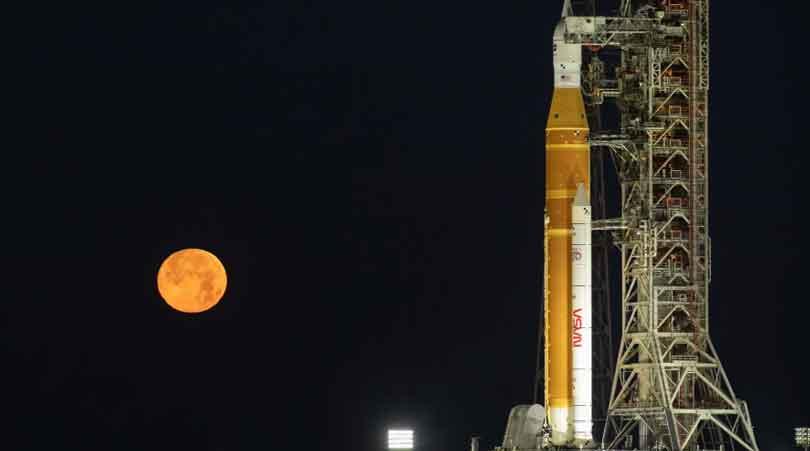
For the first time since Apollo 17, human beings have crossed the invisible boundary that separates Earth from the rest of the solar system, a column of fire rose from Florida’s coast and carried with it more than four astronauts and a spacecraft. It lifted a quiet, curious idea that has followed humanity across centuries. No matter how divided we are on Earth, we remain a single species looking up at the same sky.
The Artemis II mission, NASA’s first crewed journey toward the Moon in more than half a century, was on its surface a technical demonstration. Engines ignited, trajectories calculated, systems tested. Yet beneath the machinery and mathematics, something far less measurable traveled alongside the Orion spacecraft. A shared human story, compressed into a fragile capsule and sent outward.
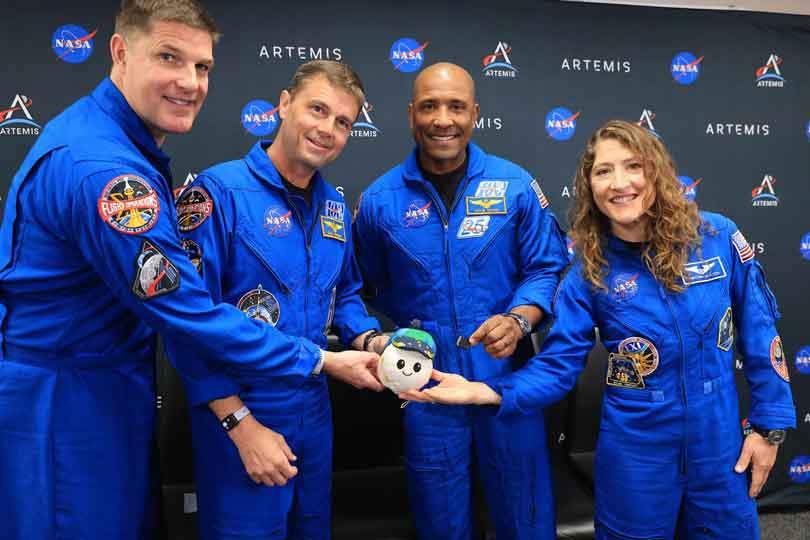
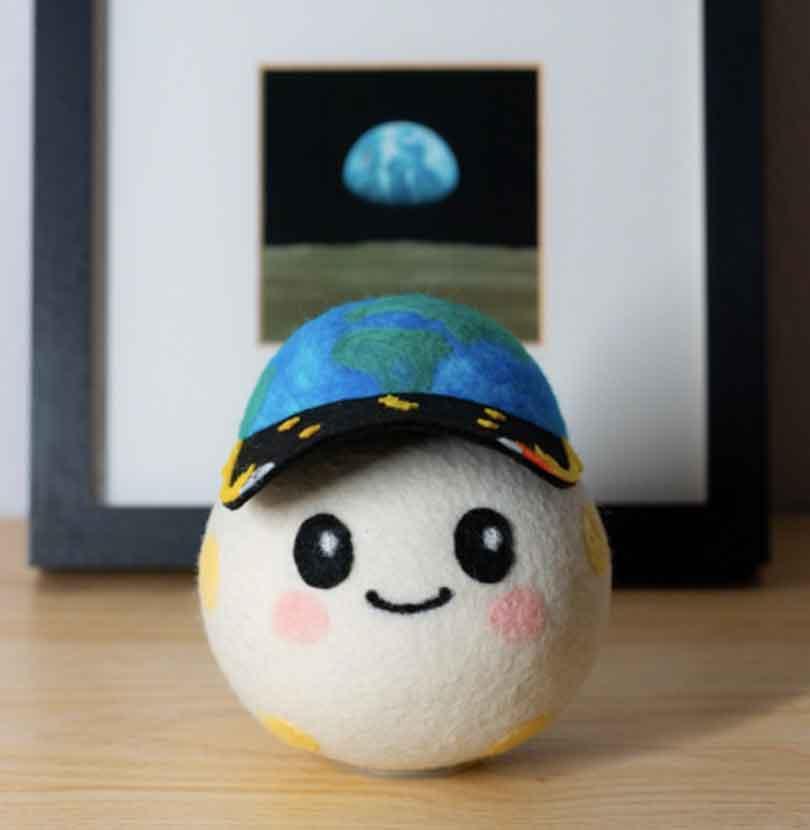
Inside Orion were four astronauts, Reid Wiseman, Victor Glover, Christina Koch, and Jeremy Hansen, representing different nations, backgrounds, and histories. Also aboard, tucked into a small plush toy named Rise, were the names of more than five million people from across the globe. Each name a whisper. Each whisper a reminder that this mission belongs not only to those who fly, but to those who watch, hope, and imagine.
The last time humans left Earth orbit, in 1972, the world was equally fractured. Wars raged. Societies strained. And yet, when Apollo 17 returned, it left behind a strange and enduring inheritance. The image of Earth as a small, luminous sphere, suspended in darkness. That image did not solve humanity’s problems, but it reframed them.
Artemis inherits that legacy in a different age. Today’s world is louder, faster, more connected, and yet often more divided. Information travels instantly, but understanding does not. The Moon, once a destination of geopolitical rivalry, now feels like a mirror reflecting both our ambitions and our contradictions. When Orion fired its engine for nearly six minutes to escape Earth’s orbit, it marked more than a change in velocity. It marked a threshold. For the first time in over fifty years, human beings crossed the invisible boundary between Earth and deep space. Twenty-four people have ever done so. Now four more joined them.
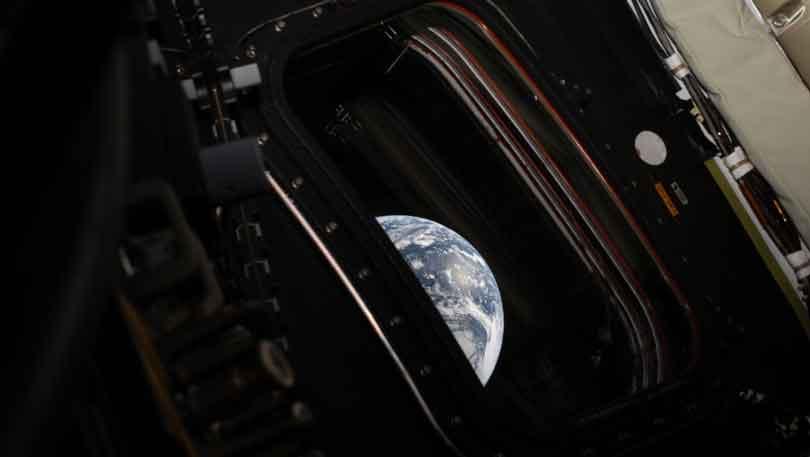
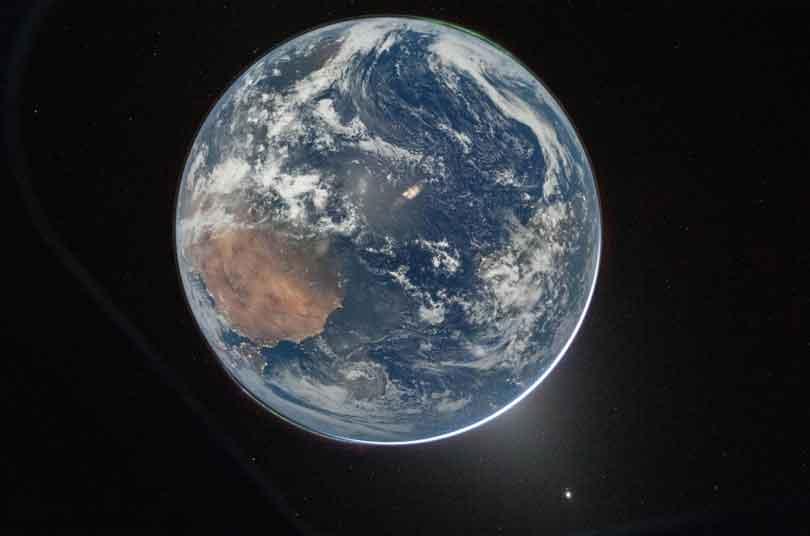
What does it mean to leave Earth, not metaphorically, but physically, to watch continents shrink, oceans merge into a single blue field, and borders dissolve into irrelevance? From nearly 100,000 miles away, the astronauts of Artemis II looked back at a planet that contains every argument, every culture, every memory humanity has ever produced. In the images they captured of Earth, they captured all of us, humans together from every corner. Then they turned toward the Moon.
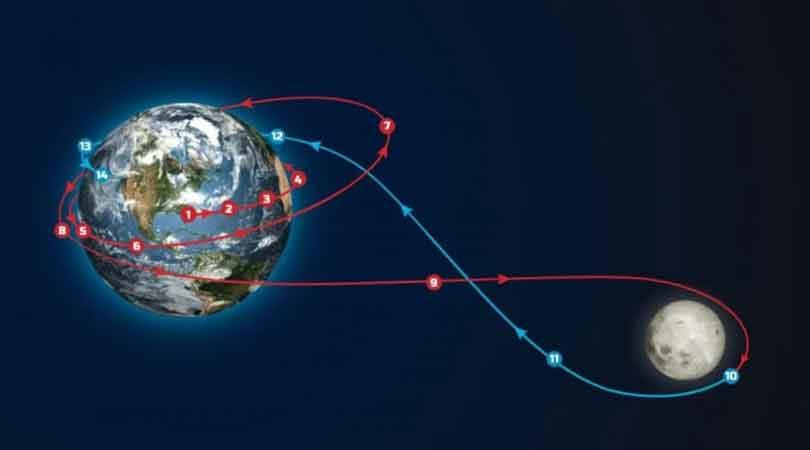
During their flyby, they will see something no human eyes have directly witnessed. Portions of the lunar far side illuminated in shadow and light, craters stretching into darkness, ridges etched by ancient forces. The Moon is not just a destination. It is a record of impacts, of time, of the early solar system’s violence and formation. But it is also something else. It is familiar. It has been with us every night of our existence as a species. Children have pointed to it. Poets have written about it. Entire calendars have been built around it. And now, once again, we approach it not as a distant companion, but as a place we intend to visit, study, and eventually inhabit.
Among the instruments, sensors, and carefully engineered systems aboard Orion, Rise seems almost out of place. It is soft where everything else is metallic. It is symbolic where everything else is functional. Rise was designed by an eight-year-old child named Lucas, selected from more than 2,600 entries submitted from over 50 countries. The design was inspired by the famous Earthrise photograph taken during the Apollo 8 mission. In that image, Earth appears small and luminous above the Moon’s horizon, a reminder that everything we are exists on that distant sphere.
The plushie is simple in form, but its meaning is layered. It represents curiosity at its earliest stage, before specialization, before expertise, before the world teaches limits. A second grader looked at one of the most iconic scientific images in history and translated it into something soft, something human, something that could travel with our stories and strong enough to carry humanity. Inside Rise is a microSD card carrying the names of more than five million people who joined NASA’s Send Your Name with Artemis campaign. Each name is reduced to data, yet each one represents a life filled with complexity, memory, and identity. Together, they form an archive of humanity.
Astronaut Christina Koch said, "Seeing Rise float in zero gravity is almost like seeing the dreams of millions take flight. It is a reminder that exploration belongs to everyone."
Lucas, the designer, said, "I am very, very, very, very, very, very surprised and happy. I never thought my small drawing would travel so far. I just wanted to make something that showed people Earth from space. It is exciting that everyone who sent their names is part of the journey."
During the mission, Rise also serves as the zero-gravity indicator. When the spacecraft reaches microgravity, the plushie begins to float. It drifts gently inside the cabin, a visual signal that the crew has left the pull of Earth behind. It connects generations of exploration in a single moment.
The astronauts have described the feeling of seeing the Moon through Orion’s windows as both technical and emotional. At the same time that they monitor systems and follow procedures, they are also aware that they are witnessing something rare. Only a small number of humans have ever seen the Moon from this distance with their own eyes. On day six of this 10-day lunar trip, the crew will temporarily lose contact with NASA’s ground control, when Orion flies behind the Moon. This is fairly normal and inevitable since the Moon blocks radio signals. The crew will orbit around the Earth for a day before meeting the required criteria to launch into trans-lunar injection.
The period of loss is not just a limitation. It is also a test. Artemis II is the first crewed mission beyond low Earth orbit in over fifty years, and operating without continuous ground support is a key capability for future missions. As NASA moves toward long-duration missions to the Moon and eventually Mars, communication delays and blackouts will become more common. Artemis II provides an opportunity to evaluate how crews and systems perform under these conditions.
Artemis II will not land on the Moon. Its purpose is more subtle, but no less important. It is a mission of observation, of rehearsal, of learning how humans and machines operate together in deep space. Astronauts will photograph the lunar surface, describe what they see, and relay that information back to Earth, where teams of scientists will interpret it in real time. This may sound simple, but it represents a sophisticated integration of human perception and scientific analysis.
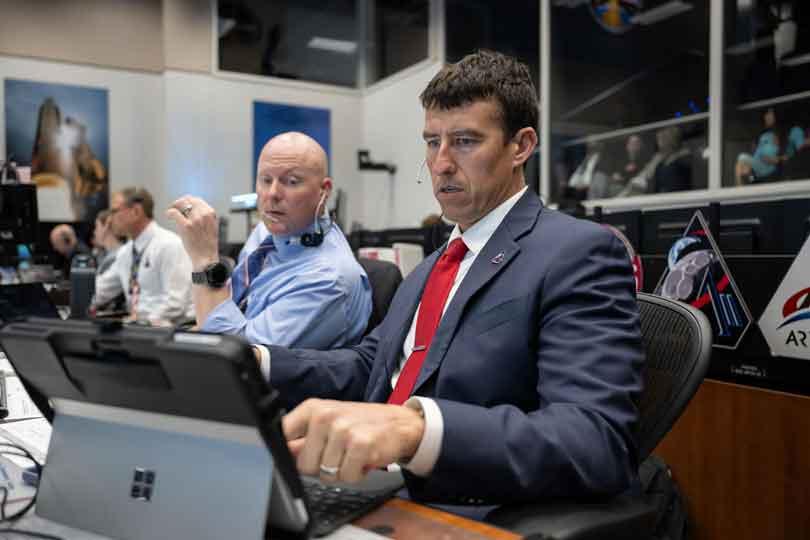
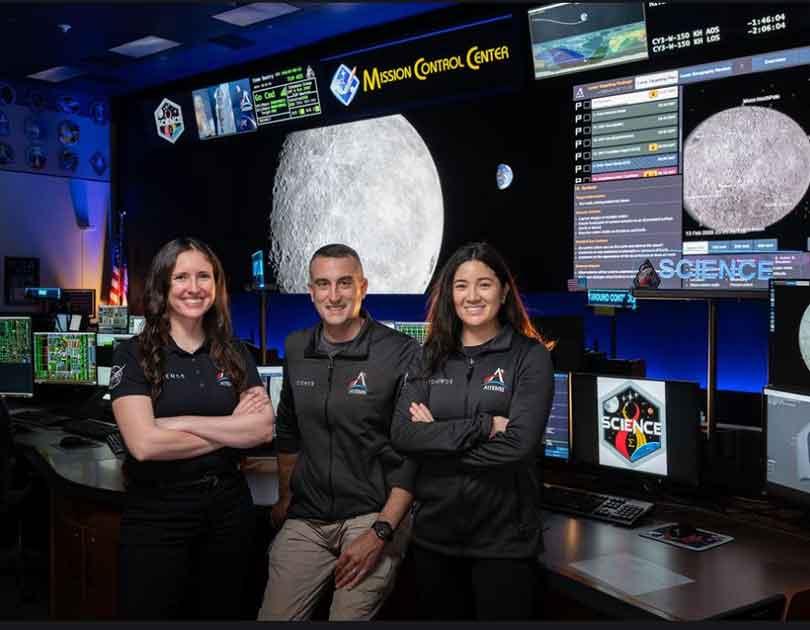
Human eyes are uniquely sensitive to patterns, contrasts, and textures. A trained observer can notice details that automated systems might overlook. During Apollo, astronauts’ descriptions of the lunar surface provided insights that complemented photographic and instrument data. Artemis builds on that idea. It formalizes it. It places science not just in laboratories or back rooms, but directly into mission control, with dedicated science officers guiding what is observed and how it is interpreted. In other words, the mission is not just about going to the Moon. It is about learning how to see it better.
Apollo was about proving that we could reach the Moon. Artemis is about deciding what it means to stay. Future missions aim to explore the lunar south pole, where water ice may exist in permanently shadowed regions. That ice could be used for life support, drinking water, oxygen, and even converted into fuel. The Moon becomes not just a destination, but a resource and a stepping stone. From there, the path leads outward, to Mars, and beyond.
Yet every step away from Earth raises the same question: what do we carry with us? Technology, certainly. Knowledge, undoubtedly. But also culture, memory, identity, the intangible aspects of being human that can only be expressed.
The crew of Artemis II reflects a quiet but profound truth: humanity is diverse, but not divided at its core. Reid Wiseman commands the mission. Victor Glover becomes the first Black astronaut to travel to the Moon. Christina Koch brings experience shaped by endurance and precision. Jeremy Hansen represents Canada, marking the first time a non-American astronaut will journey to the Moon. Four individuals. Four perspectives. And yet, from the vantage point of space, those differences compress into something simpler. Human beings traveling together, dependent on one another, sharing risk and responsibility. From home to the home.
Back on Earth, the launch of Artemis II briefly captured public attention. Crowds gathered. Screens flickered with live feeds. For a moment, the usual noise, politics, conflict, and division faded into the background. But only for a moment. History suggests that such unity is fleeting. The Apollo missions inspired awe, but they did not resolve the conflicts of their time. Likewise, Artemis will not solve the problems of today. And yet, that may not be its purpose. Exploration does not fix humanity. It reminds humanity of what it is capable of. The value lies not in eliminating division, but in offering a counterpoint to it. A demonstration that large, complex, cooperative efforts are still possible. That we can still build something together. That we can still reach beyond ourselves.
In these images of Earth, the astronauts have captured all of us humans without exception, a reminder that we are united by a single home. In their own words, Victor said, "We are going for our families." Christina said, "We are going for our teammates." Jeremy said, "We are going for all humanity."
In the coming days, Orion will loop around the Moon and begin its journey home. The astronauts will re-enter Earth’s atmosphere, parachute into the Pacific Ocean, and be recovered. The mission will be declared a success or failure based on technical criteria: trajectory accuracy, system performance, and data collection. But its deeper impact will be harder to quantify. Somewhere, a child will watch the footage and decide to become a scientist, an engineer, an explorer. Somewhere else, someone will see Earth from afar and reconsider what divides us. And in millions of quiet, almost imperceptible ways, the mission will leave traces, ideas, encouragement to be curious, questions, and inspirations that ripple outward.
When Rise returns to Earth, it will carry with it the silent record of its journey. Millions of names traveled to the Moon and back. Because in the end, Artemis is not just about the Moon. It is about us. A species capable of conflict, yes, but also of curiosity, cooperation, and creation. A species that, despite everything, continues to look up. And occasionally, to go. To the Moon and back for all of humanity.