A Wedding on the Brink: Inside ‘The Drama’ 2026’s Most Unsettling Love Story
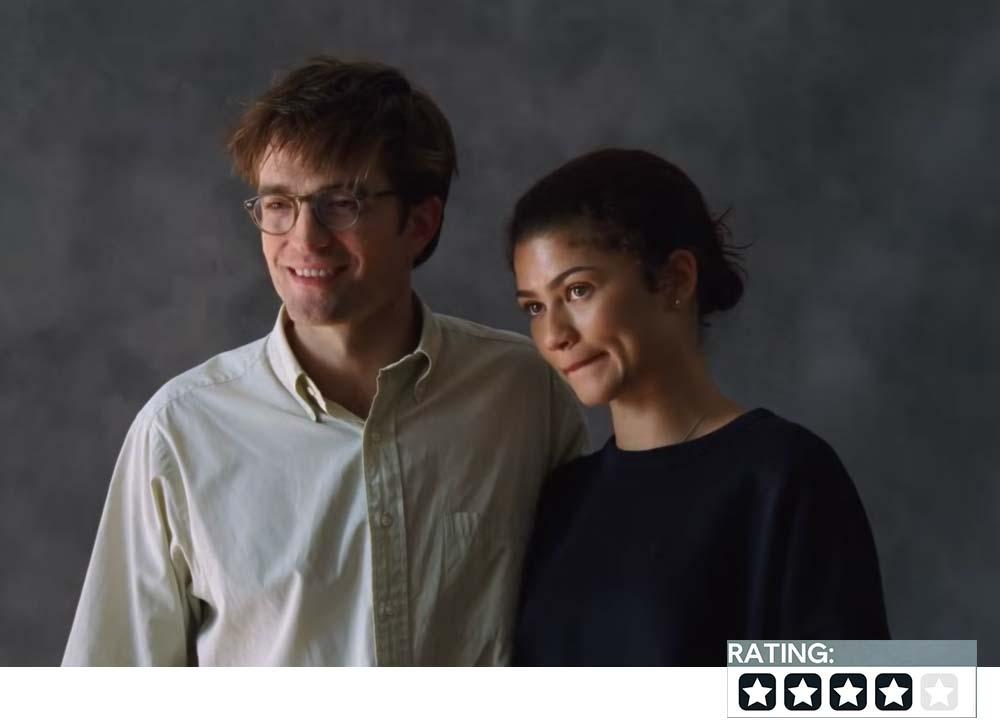

Few films in recent years have generated as much intrigue and discomfort in equal measure as The Drama. Written and directed by Kristoffer Borgli, the film brings together Zendaya and Robert Pattinson in a story that begins with familiar romantic territory but quickly veers into something far more provocative and psychologically complex.
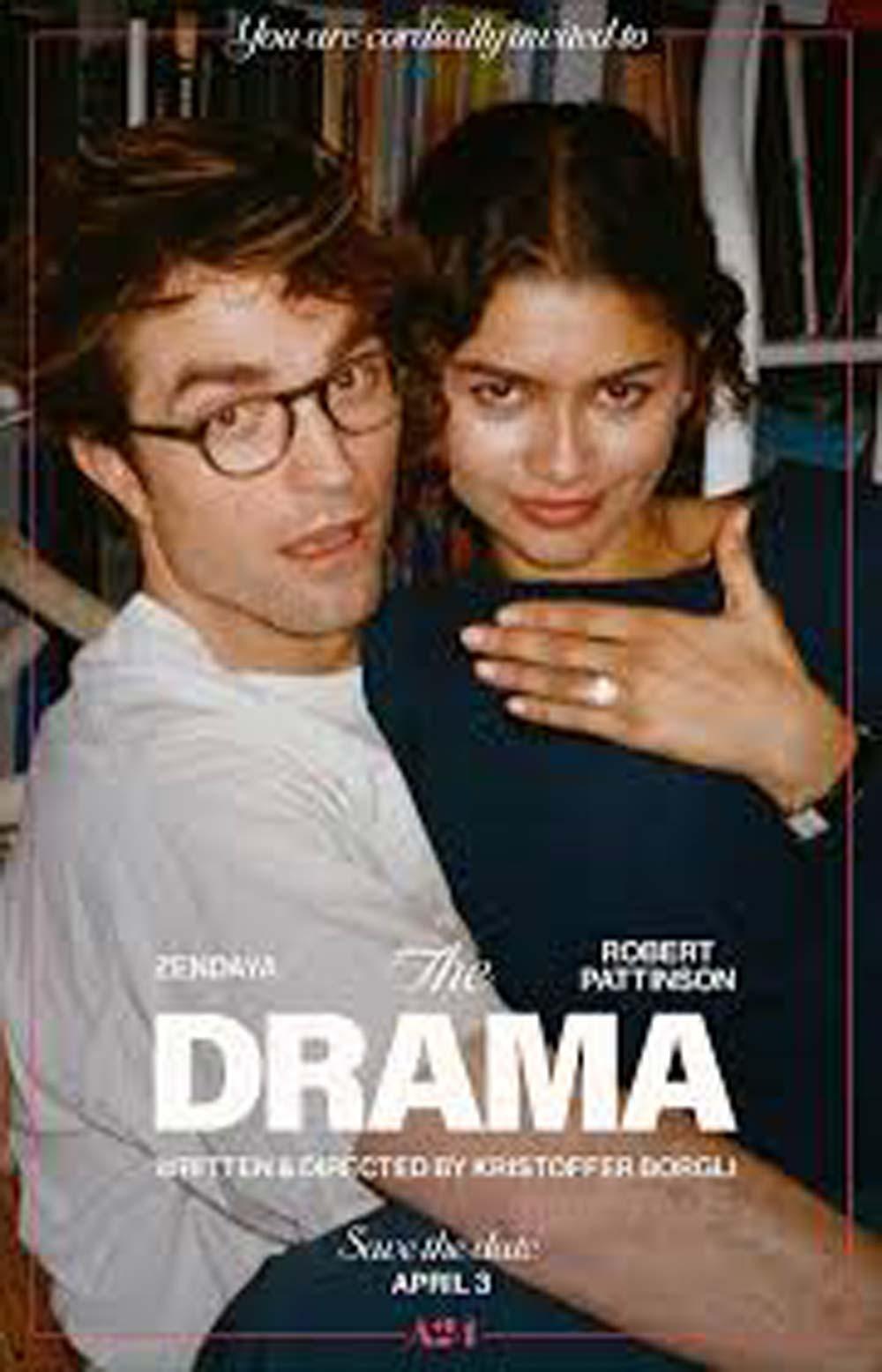 At first glance, The Drama appears to follow a well-worn cinematic path. A young couple stands on the brink of marriage, surrounded by the rituals and expectations that accompany such a milestone. The setting is intimate, the tone initially warm, and the relationship between the central characters seems grounded in affection and shared history. Yet Borgli has little interest in delivering a conventional romantic narrative. Instead, he constructs a film that challenges the very foundations of intimacy, forcing both its characters and its audience into deeply uncomfortable territory.
Zendaya plays Emma Harwood, a woman whose composure and intelligence make her immediately compelling. Opposite her, Robert Pattinson plays Charlie Thompson, her fiancé, whose quieter demeanour masks a steady emotional presence. Together, Emma and Charlie appear to embody a modern, stable partnership. Their wedding is imminent, and the early moments of the film capture the subtle anxieties and excitement that accompany such a life changing event.
However, The Drama pivots sharply when Emma makes a confession that fundamentally alters the trajectory of the story. She reveals that as a teenager, she once planned a school shooting. Though the act was never carried out, the admission lands with devastating force. It is not merely a shocking detail but a revelation that fractures the emotional core of the relationship.
From this point forward, the film becomes an intense examination of trust, morality, and the limits of forgiveness. Charlie is left to grapple with the implications of Emma’s past. The woman he believed he knew is suddenly rendered unfamiliar, even unknowable. Borgli does not allow for easy resolution or moral clarity. Instead, he lingers in the ambiguity, exploring how such knowledge reshapes perception and intimacy.
The narrative unfolds over the course of the wedding week, with each scene deepening the tension between Emma and Charlie. Conversations become charged, silences grow heavier, and the rituals of celebration take on an almost surreal quality. Friends and family continue to move through the expected motions of pre wedding festivities, largely unaware of the emotional rupture at the center of the couple’s relationship.
What makes The Drama particularly compelling is its refusal to sensationalize its central revelation. Borgli does not treat Emma’s confession as a simple plot device or a means of generating shock. Instead, it becomes the foundation for a nuanced and often unsettling exploration of identity. Emma is not reduced to her past, nor is she absolved by the passage of time. She exists in a morally complex space that resists easy categorization.
Zendaya delivers a performance of remarkable restraint and depth. As Emma, she navigates a character who is both vulnerable and disconcerting.
Her portrayal captures the tension between self-awareness and emotional distance, allowing the audience to see both the sincerity of her present self and the shadow cast by her past. It is a performance that demands attention not through grand gestures but through subtle shifts in expression and tone.
Robert Pattinson’s Charlie serves as the emotional counterpoint to Emma. His performance is grounded and deeply human, capturing the confusion and turmoil of a man confronted with an unexpected truth. Pattinson excels in conveying internal conflict, often communicating more through silence than dialogue. As Charlie struggles to reconcile his love for Emma with the weight of her confession, the audience is drawn into his perspective, sharing in his uncertainty and discomfort.
The supporting cast adds further dimension to the film’s world. Mamoudou Athie, Alana Haim, Zoë Winters, and Hailey Gates appear as friends and figures within the couple’s orbit. While their roles are not the central focus, they provide important context, reflecting the social environment in which Emma and Charlie exist. Their presence underscores the contrast between outward normalcy and internal upheaval.
Visually, The Drama embraces a style that emphasizes intimacy and discomfort. The camera frequently remains close to the actors, capturing minute changes in expression and body language. This proximity creates a sense of immediacy, as though the audience is witnessing private moments that were never meant to be observed. The film avoids excessive stylistic flourishes, instead relying on composition and performance to convey its emotional weight.
Borgli’s direction is marked by a careful balance of tones. Elements of dark humour emerge throughout the film, often in moments where tension reaches its peak. This humour does not diminish the seriousness of the subject matter but rather highlights the absurdity and unpredictability of human behaviour. The result is a film that feels both grounded and unsettling, capable of shifting between emotional registers without losing coherence.
One of the most striking aspects of The Drama is its engagement with contemporary cultural anxieties. The film arrives in a time when questions of identity, accountability, and personal history are increasingly central to public discourse. Emma’s confession forces both Charlie and the audience to confront difficult questions. Can a person be defined by their past actions or intentions? To what extent can individuals change, and how should that change be measured? These questions are not answered definitively, leaving viewers to wrestle with their own interpretations.
The film’s structure reinforces this sense of uncertainty. Rather than building toward a clear resolution, Borgli allows the narrative to unfold in a way that feels organic and unresolved. The wedding itself becomes less a focal point and more a backdrop against which the characters’ internal conflicts play out. The traditional expectations associated with marriage are contrasted with the instability of Emma and Charlie’s relationship, creating a tension that permeates the entire film.
Critically, The Drama stands out for its willingness to take risks. It is not a film designed to comfort or reassure. Instead, it challenges its audience, asking them to engage with material that is both emotionally and ethically complex. This approach may prove divisive, but it is precisely this boldness that gives the film its power.
Zendaya and Pattinson’s performances are central to the film’s success. Their chemistry is palpable, but it is the strain placed upon that chemistry that drives the narrative. They do not simply portray a couple in love. They embody the fragility of that love when confronted with truths that cannot be easily reconciled.
In the end, The Drama is less about a wedding than it is about the stories people tell themselves about who they are and who they love. It examines the delicate balance between past and present, between perception and reality. Borgli’s film does not offer easy answers, nor does it attempt to resolve the tensions it introduces. Instead, it leaves its audience with lingering questions, inviting reflection long after the final scene.
For viewers seeking a film that pushes beyond the boundaries of conventional romance, The Drama offers a compelling and deeply thought-provoking experience. It is a film that dares to unsettle, to provoke, and ultimately to challenge the very notion of what it means to truly know another person.