Another Day, Another Solla Marketing Campaign

Everyone has been asking the same question lately. What actually happened there? The truth is simple. Nothing happened. And that is exactly the point. What people witnessed was not an incident or an accident. It was not a mistake or an uncontrolled situation that spiralled out of hand. It was a carefully designed, controlled, and intentional piece of content. Every element of it was built with one purpose in mind, which was to provoke a reaction before revealing its true meaning. Judging by how people responded, it worked even better than expected.
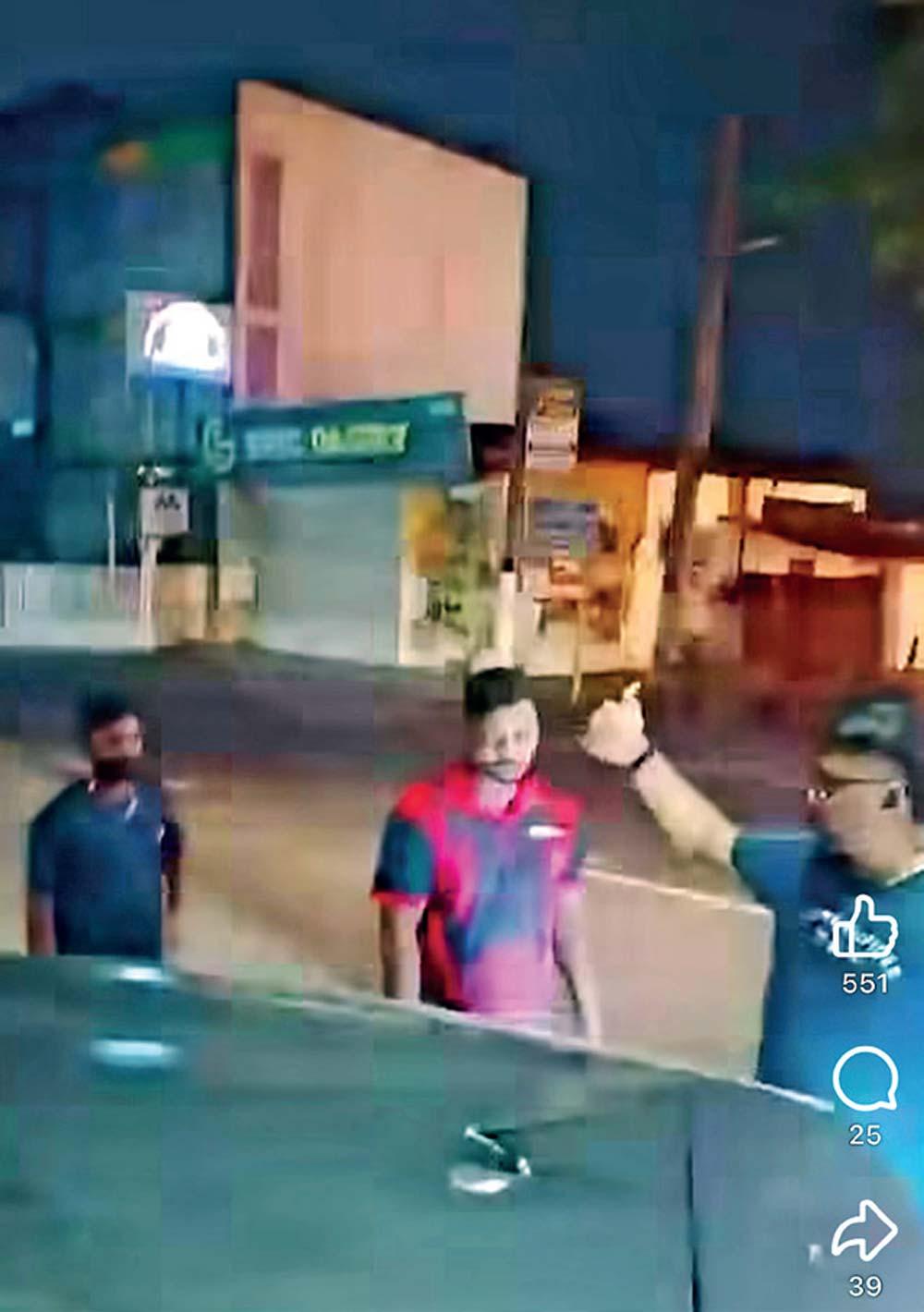 To really understand what happened, it is important to break it down properly. This is where most people misunderstand marketing. They focus only on what they see on the surface without thinking about the strategy behind it. The entire campaign began with a clear objective, not with the content itself. The client did not approach us asking for leads or immediate conversions. There was no request for complex sales funnels or detailed performance dashboards. The brief was much simpler, but also far more challenging. They wanted awareness.
At first glance, awareness might sound like an easy goal. In reality, it is where many marketers fail. There is a common tendency to jump straight into selling. Brands often ask how they can push their product or service, without first asking a more fundamental question. Does anyone even care yet? Awareness is not about numbers on a report. It is not about impressions or reach metrics that look impressive in presentations. True awareness is about being talked about. It is about entering conversations naturally, without forcing attention.
From the very beginning, it was clear that this could not look like a traditional advertisement. The moment something feels like an ad, people instinctively ignore it. So, the approach had to be different. Instead of creating a polished, highly produced campaign, the focus shifted toward building a moment. Something raw, slightly uncomfortable, and even a little chaotic. The kind of content that feels real rather than manufactured.
The video itself reflected this decision. It was shot on a low-quality camera. There was no obvious branding, no explanation, and no context provided. It did not try to guide the viewer or make things easy to understand. Instead, it did the opposite. It removed clarity. That choice was deliberate. Most brands try to answer every possible question upfront. They aim to make everything clear and structured. In this case, confusion was used as a tool.
Curiosity spreads faster than clarity. When people do not fully understand what they are seeing, they feel compelled to figure it out. They pause, they rewatch, and they start asking questions. That behaviour is far more powerful than passive viewing. More importantly, people do not share advertisements. They share things that make them feel something. It could be shock, confusion, concern, or even second-hand embarrassment. Emotion is what drives sharing, not information.
That emotional trigger was engineered into the content. It was not random. It was intentional.
There is also a more uncomfortable truth about human behaviour that plays a role here. People are naturally drawn to negativity. They are more likely to engage with something that hints at conflict or failure than something that simply celebrates success. A clean success story often gets ignored. A hint of drama, on the other hand, immediately captures attention.
In this case, seeing me, Amantha, involved in what appeared to be a fight was enough to spark interest. That single visual triggered instant assumptions. People did not wait for context or clarification. They created their own interpretations. That is when the campaign truly began to take off. It stopped being just a piece of content and became a conversation. Once people start talking, the dynamic changes completely. The audience is no longer just consuming the content. They are actively participating in it.
 Distribution also played a critical role, and it was far from random. The video was not simply uploaded and left to chance. It was strategically placed across platforms where reactions are amplified. This included news pages, gossip platforms, and even spaces known for criticism and negativity. Most brands avoid these environments because they are difficult to control. There is always a risk that the narrative could turn against them.
In this case, that risk was embraced rather than avoided. Those platforms thrive on engagement, and engagement often comes from strong reactions. That was exactly what the campaign needed. The goal during the initial phase was not to protect the brand’s image. It was to maximize attention. Attention rarely grows in safe, controlled environments. It grows in spaces where people feel free to react, debate, and share.
Another key part of the strategy was silence. Once the video was released, there was no immediate response. No clarification was offered. No attempt was made to guide the narrative or correct assumptions. The audience was left to interpret the content on their own. As expected, people began to speculate. They exaggerated details, formed opinions, and shared their perspectives. The story spread far beyond what any paid promotion could have achieved. In many ways, the audience did the work themselves. They believed they were uncovering or exposing something, but in reality, they were amplifying the campaign. Every comment, every share, and every discussion pushed the content further. The internet itself became the distribution engine.
This effect was particularly noticeable within Sri Lankan audiences, who tend to be highly reactive. When given partial information, they naturally fill in the gaps. That tendency accelerated the spread of the content. After approximately forty-eight hours, the second phase of the campaign was introduced. This is where everything shifted. The same video was presented again, but this time with full context. Clear branding was added, along with a defined message and offer. Suddenly, what once seemed chaotic became understandable. The confusion that initially drove curiosity now transitioned into clarity. The audience, already invested, was ready to receive the message. This is a critical moment in any awareness driven campaign. Attention alone is not enough. It needs direction. Without it, interest fades quickly.
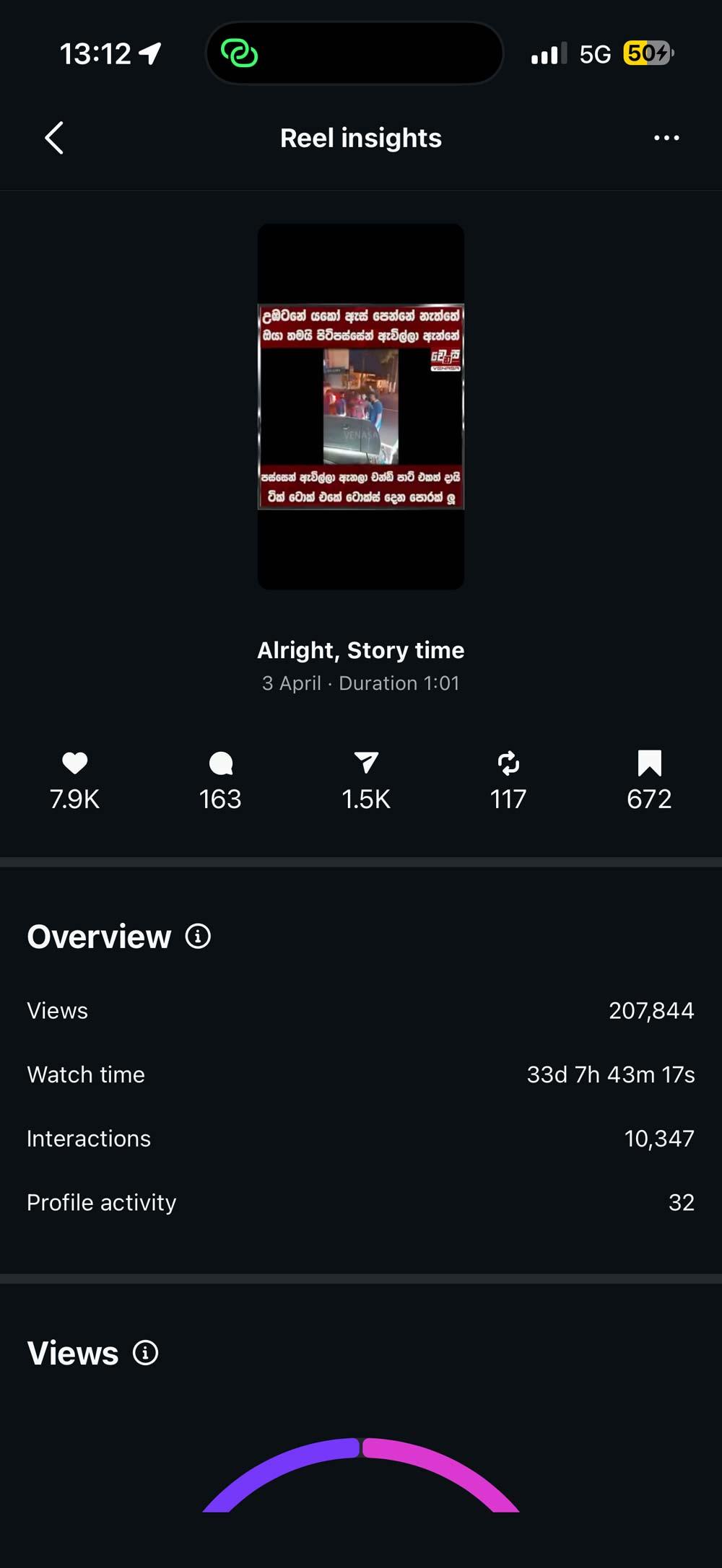
By introducing clarity at the right time, the campaign converted curiosity into genuine interest. People who had already watched, discussed, and shared the content now wanted to learn more. The results reflected the effectiveness of this approach. The campaign achieved over three hundred thousand views without any paid promotion. It generated more than two thousand shares and hundreds of direct messages. These numbers were not the result of aggressive distribution or advertising spend. They were the outcome of content designed to move organically.
There is a clear distinction between forced reach and natural spread. Forced reach relies on budget and constant promotion. Organic spread relies on human behaviour and emotional engagement. This campaign leaned entirely into the latter. Despite this, many marketers still misunderstand the core principle behind such strategies. Marketing is not about looking perfect. It is not about flawless visuals, professional lighting, or carefully polished messaging. Those elements can enhance a campaign, but they are not what drive results. At its core, marketing is about understanding people. It is about recognizing how they think, what they feel, and what motivates them to act. People respond to emotion far more than they respond to information. Logic may justify a decision, but emotion initiates it. Not all effective emotions are positive. Confusion can be powerful. Curiosity can be powerful. Even negativity can drive engagement if used carefully. The key is not to avoid these emotions, but to understand how to use them responsibly.
One of the biggest challenges for brands is the desire to control perception. There is a constant effort to manage how the audience views them, to ensure that every piece of content aligns perfectly with a desired image. However, the reality is that control often limits reach. When everything is overly managed, it becomes predictable. Predictability leads to disengagement. Letting go of control, at least temporarily, allows content to evolve naturally through audience interaction. That is when it gains momentum. The final takeaway is simple. Success in marketing does not always require larger budgets or more advertising. It requires better thinking. Instead of focusing on creating content that looks like marketing, the goal should be to create content that people cannot ignore. Something that interrupts patterns, sparks emotion, and encourages participation. This campaign was not the result of luck or coincidence. It was carefully planned and executed from beginning to end. For those who take the time to analyse it, there are valuable lessons embedded within it. And for those paying close attention, this is only the beginning of what is possible.