PRASL and SLPI Launch Comprehensive Certificate Course in Public Relations and Corporate Communications.

The Public Relations Association of Sri Lanka and the Sri Lanka Press Institute have jointly launched a new Certificate Course in Public Relations and Corporate Communications, creating a significant new learning opportunity for aspiring communications professionals in Sri Lanka. The programme, which will commence on the 23rd of June 2026, has been designed as a practical and industry focused initiative aimed at developing the next generation of public relations and corporate communications professionals in the country. Organisers describe the course as a timely response to the increasing demand for skilled communicators who can navigate the rapidly evolving media and corporate landscape.
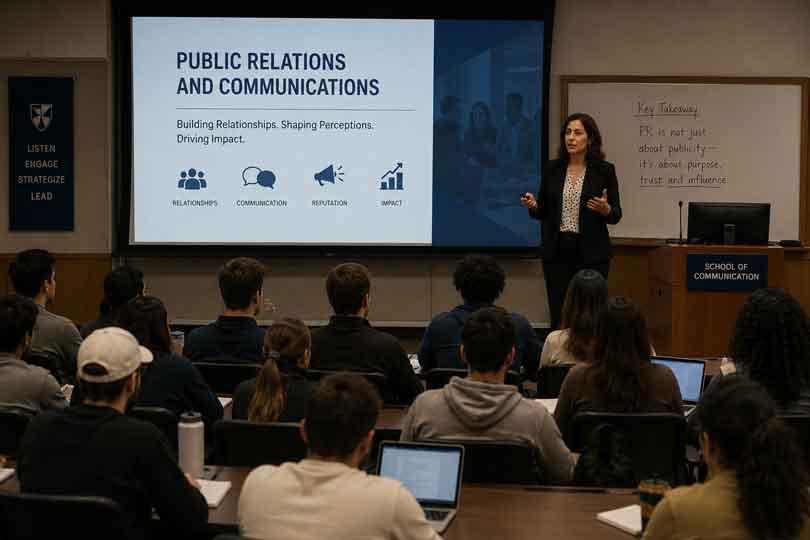
The twelve-week course will be conducted at the Sri Lanka Press Institute premises on Kirula Road in Colombo 05, with sessions held every Tuesday and Thursday. Each session will run for approximately two hours and will be conducted in English. The programme is expected to attract school leavers, university students, young professionals, and individuals seeking to transition into communications related careers. The organisers say the initiative is intended to bridge the gap between academic theory and the practical realities of the communications industry. Over the past decade, public relations and corporate communications have expanded far beyond traditional media engagement and publicity generation. Modern communication professionals are now required to manage stakeholder relationships, respond to crises, oversee digital engagement, develop strategic messaging, and contribute to broader organisational goals.
The Public Relations Association of Sri Lanka, established in 2023, is recognised as the country’s first official representative body dedicated specifically to the public relations profession. Founded by experienced communications practitioners and agency professionals, the organisation was created to promote professional standards, ethics, collaboration, and innovation within the industry. Since its inception, PRASL has actively worked to strengthen the professional identity of communications practitioners while encouraging networking opportunities and professional development initiatives.
The Sri Lanka Press Institute, established in 2003, has long been recognised as one of Sri Lanka’s leading media development institutions. Through its work in journalism training, media ethics, and professional education, the institute has contributed significantly to the development of the country’s media sector. Its operational divisions, including the Sri Lanka College of Journalism and the Press Complaints Commission of Sri Lanka, have played important roles in promoting responsible journalism and strengthening professional media standards.
Organisers describe the collaboration between PRASL and SLPI as a strategic partnership that combines industry expertise with an established media training infrastructure. They believe the programme will provide participants with a balanced understanding of both theoretical concepts and practical industry applications while helping them understand the influence communication strategies have on stakeholder trust, corporate reputation, media narratives, and public perception.
A major strength of the programme lies in the experience and diversity represented by its faculty. The course will be delivered by a panel of communications professionals from leading corporations, agencies, consultancies, universities, and media organisations in Sri Lanka. Collectively, the lecturers bring decades of experience in strategic communications, branding, public affairs, media relations, advocacy, digital storytelling, and crisis management. The faculty includes several respected names within Sri Lanka’s communications industry, including Rezani Aziz of AdFactors PR, Nimal Gunewardena of NGage Goodvocacy, Ashan Jayatilake of the Hayleys Group, Druvinka Moraes of MSL, Dasini Madurasinghe of the University of Kelaniya, Cathy Chang of Rockland Distilleries, Kithunika Nawalage of Roar Global, Channa Fernandopulle of AdFactors PR, Nadiya de Lanerolle of The Radical Agency, Uma Rajamantri of Verité Research, Sheranga Rajasuriya of the Hirdaramani Group, Shehara de Silva of Optima Design, Nevindee Amarasinghe of Good PR, Mushthak Ahamed of Hard Talk, Anjuu Bakshani of PR Wire, and Rajiv David of United Motors. Organisers believe that the diversity of expertise represented by the faculty will provide participants with exposure to multiple dimensions of the communications industry.
The curriculum has been carefully structured to provide a comprehensive introduction to public relations and corporate communications while also exposing participants to specialised areas within the profession. Topics covered during the programme include, Introduction to Public Relations, Corporate Communications and Corporate Affairs, Corporate Social Responsibility and Ethics in PR, Skills and Career Paths for PR and Corporate Communications Professionals, Account Management, Understanding Communications and Media, Understanding Stakeholders and Target Audiences, Media Relations, Writing for PR, Introduction to Social Media and Digital PR, Content Development, Internal Communications, Event Management, Research Public Opinion and Behaviour Change, Campaign Development, Campaign Execution, Campaign Evaluation, Issues Management, and Crisis Management and Preparation.
The programme outline also includes practical components such as project briefing sessions, group work, project presentations, soft skills demonstrations, faculty feedback sessions, and an evaluation examination. Organisers say these components are intended to strengthen participants’ practical understanding of communications strategy while encouraging teamwork, creativity, critical thinking, and presentation skills. In addition to theoretical learning, the programme places strong emphasis on practical application and industry relevance. Students will engage in communication planning exercises, case study analysis, campaign development discussions, and professional insights drawn directly from the lecturers’ industry experience. Organisers say this practical focus is essential given the growing complexity of the communications environment in Sri Lanka and internationally.
Industry experts note that communication professionals today operate in highly interconnected environments where decisions can have immediate and long-term consequences for organisational credibility and public trust. Businesses and institutions are increasingly required to respond rapidly to media scrutiny, stakeholder concerns, digital narratives, and reputational risks. Communication professionals are therefore expected to possess not only technical communication skills but also strategic awareness and crisis management capabilities.
The rapid expansion of digital media has further transformed the profession. Social media platforms, podcasts, influencers, digital communities, and online news ecosystems have reshaped how organisations engage with audiences. Modern communicators are now expected to understand audience behaviour, develop engaging content, and execute communication strategies across multiple digital platforms. Organisers say the programme aims to help participants build the adaptability and technical awareness needed to succeed in this changing environment. Beyond technical skills, the course also seeks to nurture ethical awareness, creativity, strategic thinking, and relationship building capabilities. Organisers emphasise that effective communication extends beyond publicity and media exposure, focusing instead on building trust, maintaining credibility, and fostering meaningful engagement with diverse stakeholders.
Accessibility has also been identified as an important aspect of the initiative. The organisers have announced a course fee of Rs. 45,000 while offering concessions of Rs. 10,000 for students and members of PRASL and SLPI. They say this reflects an effort to make professional communications training more accessible to young people and emerging professionals who may otherwise face barriers to entering the industry.
Communications experts have often highlighted the need for more structured professional training pathways within Sri Lanka’s public relations industry. While many practitioners enter the field through backgrounds in journalism, marketing, media studies, or business management, opportunities for specialised education in strategic communications and public relations have remained relatively limited. Organisers believe this new certificate course will help address that gap while creating stronger connections between aspiring professionals and experienced industry practitioners. The launch of the programme also reflects the increasing professionalisation of Sri Lanka’s communications industry. Public relations is now widely recognised as a strategic discipline that contributes directly to organisational resilience, policy advocacy, stakeholder engagement, reputation management, and business growth. For young people exploring career opportunities, the sector offers diverse pathways including agency consultancy, corporate communications, media relations, digital communication, internal communications, sustainability communication, public affairs, and content strategy. Participants who successfully complete the programme are expected to gain both a strong understanding of communication principles and practical skills that can support future employment and professional development. Organisers believe the initiative could become an important stepping stone toward building a more skilled and professionally trained communications industry in Sri Lanka while contributing meaningfully to the development of the country’s future communications leaders.