PARENTING 101: WHEN LOVE ISN’T ENOUGH - AND LENIENCY ISN’T LOVE

BY SHALEEKA JAYALATH
There is a quiet crisis unfolding in our homes, and it is not one that can be blamed on syllabi, social media, or even the seductive pull of screens (at least, not entirely!). It is a crisis of parenting. And before we rush to soften that statement, let us be honest: something has gone wrong.
This generation of children is not inherently flawed. Children never are. They are, as they have always been, a reflection of what we allow, what we ignore, what we excuse, and what we fail to teach. And increasingly, what they reflect back at us is unsettling.
We see children who cannot sit with discomfort. Teenagers who collapse at the first sign of challenge. Young adults who mistake entitlement for confidence and defiance for individuality. There is a startling absence of social awareness - basic courtesies feel optional, boundaries negotiable, respect conditional. And underpinning it all is something deeper: a kind of emotional hollowness. A gap that no number of devices, privileges, or carefully curated opportunities seems to fill.
It is tempting to point fingers at technology, and yes, the overexposure to devices has played its part. But screens are not parents. They do not set boundaries. They do not teach restraint.
They do not model empathy. That responsibility rests, unequivocally, with us.
And somewhere along the way, many of us have stepped back from it.
Perhaps it is guilt. The working parent who compensates for absence with indulgence. The exhausted mother who chooses silence over confrontation because she simply does not have the energy for another battle. The father who mistakes being liked for being respected. Perhaps it is confusion - an era so saturated with parenting advice that we have become paralysed, unsure whether firmness is guidance or cruelty, whether discipline is shaping or scarring.
I say this not as an outsider looking in, but as both a mother and a school principal who stands at the intersection of home and consequence.
I have grounded my own children. I have confiscated privileges. I have enforced rules that were met with slammed doors and cold silences. And yes, I have sat outside their rooms afterwards, questioning myself, wondering if I had been too harsh, too unyielding, too distant. I have cried when they could not see me.
But here is the uncomfortable truth: parenting is not a popularity contest.

At school, I encounter a different version of the same dilemma - one that is, frankly, more alarming. Parents who ask whether they should confiscate their child’s mobile phone mere weeks before a public examination. Mothers who message asking if I might persuade their child to eat the food they have lovingly prepared. Parents who are reduced to tears because their child has told them not to speak during a movie, as though the parent were the intruder in their own home.
These are not complex moral dilemmas. They are, quite simply, moments that require a parent to parent.
And yet, increasingly, adults are outsourcing that responsibility to schools, to teachers, to anyone willing to step in and draw a line they are hesitant to draw themselves. I have, on more than one occasion, found myself correcting a child not because I wanted to, but because the adult in their life had chosen not to.
So what is the alternative? Is it “tough love” - that oft-invoked, poorly understood phrase?
Tough love is not about severity. It is not about punishment for the sake of authority. It is about clarity. It is about consistency. It is about understanding that love is not measured by how comfortable we make our children feel in the moment, but by how capable we make them for the world beyond us.
A child who has never been told “no” does not grow into a confident adult. Rather, they grow into a fragile one because the world will not mirror the permissiveness of their home. A child who has never been held accountable does not become independent; they become dependent on exceptions.
But here lies the paradox that every parent must wrestle with: in choosing structure, do we lose softness? In enforcing discipline, do we risk distance?
The answer is not as binary as we would like it to be.
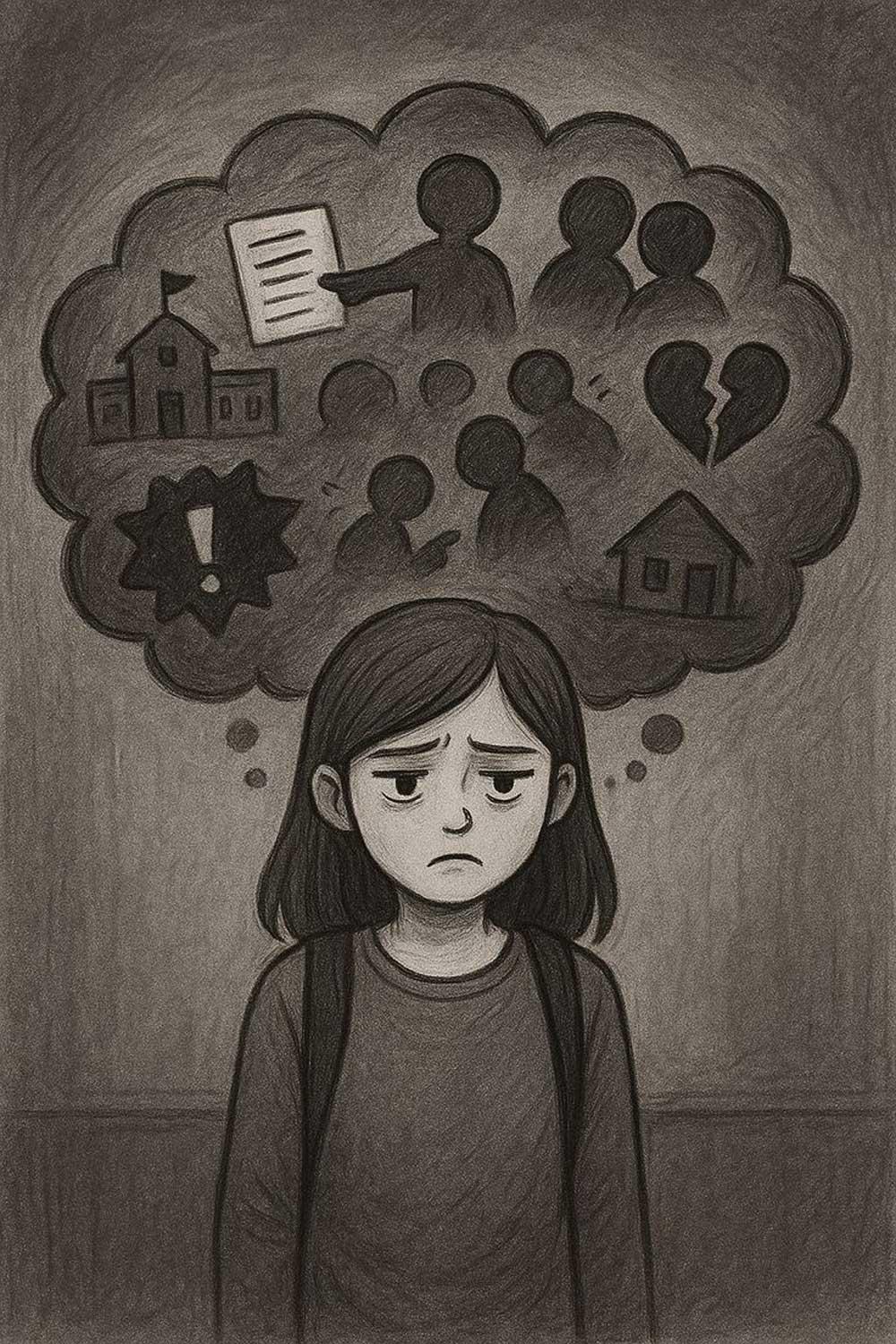
Children do not need parents who are either authoritarian or indulgent. They need parents who are present. Present enough to notice when boundaries are slipping. Present enough to step in, even when it is inconvenient, even when it is exhausting, even when it means being misunderstood.
Because yes, there will be moments when your child does not like you. There will be evenings that end in silence rather than affection. There will be days when you question whether the harder path was the right one.
And on some of those days, you will be tired. Deeply, bone-weary tired. You will want, quite simply, a shoulder to lean on rather than a standard to uphold.
That, too, is part of parenting.
We speak often of a parent’s love, but perhaps not enough about a parent’s responsibility. Love, on its own, is instinctive. Responsibility is deliberate. It requires us to choose what is right over what is easy, what is necessary over what is immediately gratifying.
So no, there is no universal blueprint for parenting. No definitive answer that separates right from wrong with comforting clarity. But there is a guiding principle, if we are willing to accept it:
Our duty is not to raise children who feel endlessly validated. It is to raise children who are equipped, emotionally, socially, and intellectually, to navigate a world that will not bend for them.
And that begins, quite simply, with us having the courage to not bend first.