IN CONVERSATION WITH AMANDA PERERA
NEW GENERATION BY MALINDA PERERA
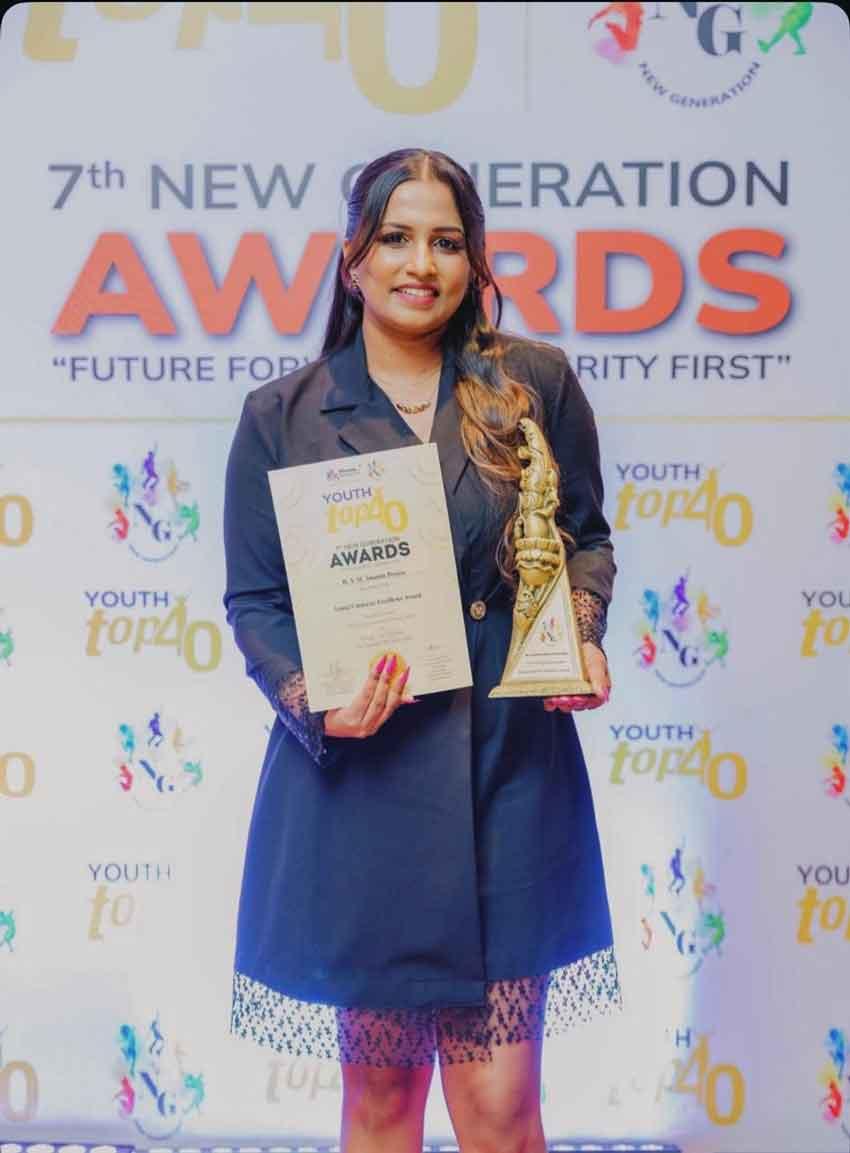
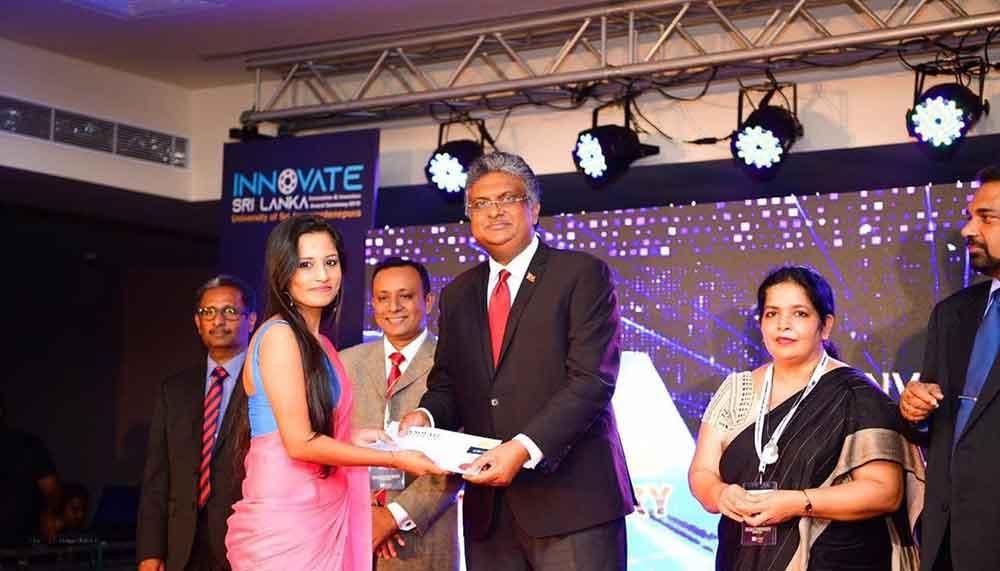
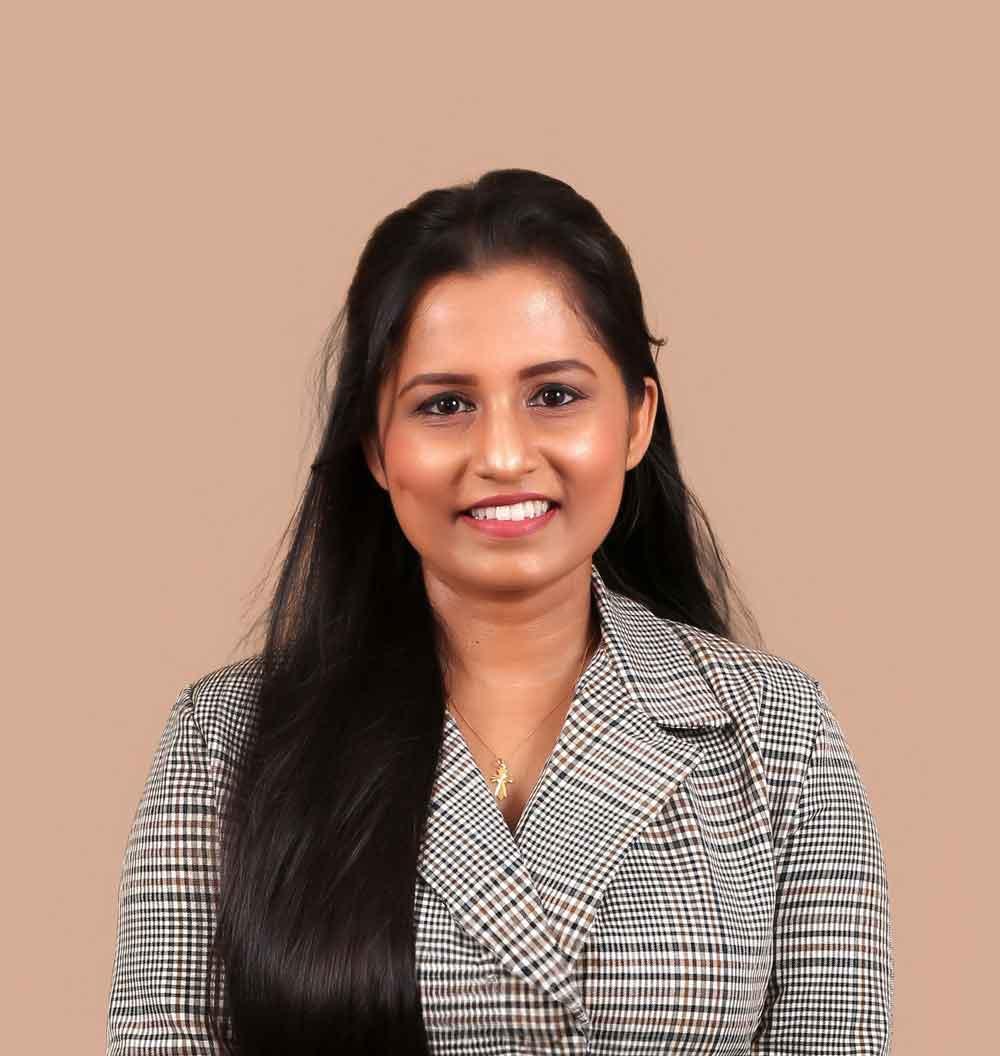
Amanda Perera’s recognition with the Young Corporate Excellence Award at the 2026 Youth Top40 Awards reflects a career defined by curiosity, adaptability and a strong commitment to creating meaningful impact. With an academic foundation in Applied Science, Mathematics and Statistics, she has built an unconventional path into digital transformation, gaining experience at MAS and Hayleys. At Hayleys, her work has extended across 16 sectors and industries, exposing her to artificial intelligence, IoT, automation, data analytics, computer vision and process digitisation. Yet her philosophy is firmly rooted in people rather than technology alone. From engaging employees and operational teams to understanding the realities faced by farmers and suppliers, Amanda believes transformation begins with listening. Her experience in virtual prototyping at MAS Linea Aqua and her success as a Global Top 6 finalist at the Unilever Future Leaders’ League have further shaped a leadership approach that combines analytical thinking, commercial awareness and purposeful innovation.
Q: Winning the Young Corporate Excellence Award and being named among the Youth Top40 for 2026 is a significant milestone. What does this recognition mean to you?
A: These recognitions are among the most significant milestones of my career so far. Beyond the titles themselves, what makes them meaningful is what they represent: a journey of continuously challenging myself, moving outside my comfort zone and trying to create meaningful impact through my work. My journey has taken me from a background in Statistics and Mathematics into digital transformation, with experiences at MAS and now Hayleys. Throughout that journey, curiosity, humility and resilience have kept me grounded. I believe that regardless of how much you achieve, there is always more to learn. I am also conscious that meaningful achievements are rarely accomplished alone. Every milestone has been influenced by people who believed in me, challenged me, guided me and gave me opportunities to lead. I therefore see these recognitions as reflecting the collective contribution of the teams and mentors who have been part of my journey. Most importantly, they remind me that success is not simply about personal progress. It is also about the positive change you create around you.
Q: Taking on an Assistant Manager role at Hayleys at a relatively young age meant working with highly experienced teams. How did you establish credibility?
A: I have always focused on ensuring that the value I bring to the table speaks louder than my years of experience. Working across 16 sectors means engaging with people who possess deep industry expertise, and, in many instances, considerably more experience than I do. I approach those relationships with respect and curiosity. Instead of entering a conversation assuming that technology has the answer, I first try to understand the business and listen to the people who know the processes best. Credibility develops through consistency and execution. When people see that you understand their challenges, respect their perspectives and deliver what you commit to, trust begins to grow naturally. I have also learnt that transformation is not about telling people what they need to change.
It is about bringing people into the journey, creating a shared understanding of the problem and demonstrating why a particular change matters. Preparation, reliability and the ability to create tangible impact can help you earn your place at the table regardless of age.
Q: How do you quickly understand unfamiliar industries when managing digital transformation initiatives across very different sectors?
A: My approach is simple. I learn the business before I learn the technology. I begin by understanding how the business operates, how it creates value, who its customers are, what its key processes look like and where its main challenges exist. I then spend time with the people closest to those processes because they can often explain operational realities more effectively than a report or presentation. Once I understand the context, I consider where technology can genuinely create value. I am also comfortable asking simple questions, even when they may initially appear basic. Working across multiple industries has shown me that although business models can be very different, the fundamentals of successful transformation are often similar. You need to understand the problem, involve the right people, use technology purposefully and measure the resulting impact.
Q: How do you ensure that digital solutions genuinely address the needs of employees, farmers, suppliers and other users?
A: I believe the true measure of a digital solution is not how advanced the technology appears, but the value it creates for the people who actually use it. This becomes particularly important when working with farmers, suppliers and field teams because their everyday realities can be very different from what someone might see from an office or boardroom. You need to understand how people really work, the difficulties they experience and what would make a solution practical in their environment. That requires spending time with users, understanding their workflows and involving them throughout design and implementation. At Hayleys, the focus has been on ensuring that technology responds to a genuine operational requirement rather than simply converting an existing process into a digital format. Whether the objective is reducing manual effort, improving visibility or providing better information for decision making, the solution must create tangible value. For me, meaningful transformation should benefit both the organisation and the people connected to it.
Q: At MAS Linea Aqua, you worked on virtual prototyping for global brands. What was the greatest challenge in moving from physical sampling to 3D digital workflows?
A: The biggest challenge was not the technology itself. It was changing the mindset around how products should be developed. In a traditional environment, physical samples are tangible. Teams can see them, touch them and evaluate them. Moving towards 3D digital prototyping required people to become comfortable with a different way of working and to trust digital representations when making important decisions. The transformation therefore involved much more than introducing a new tool. We needed to demonstrate its value through practical applications, build confidence among users and show how digital workflows could reduce sampling time, improve collaboration and contribute to more sustainable product development. That experience taught me a lesson that continues to influence my work today.
Technology adoption is ultimately a people challenge. Even the best technology will struggle to create value if people do not understand it, trust it or see a meaningful reason to change their established ways of working.
Q: What did becoming a Global Top 6 finalist at the Unilever Future Leaders’ League teach you about strategy?
A: That experience taught me to look beyond the immediate problem and consider the bigger picture. Competing internationally exposed me to people from different countries, cultures and perspectives. It demonstrated that there can be several valid approaches to the same challenge and that strong ideas often become stronger when they are questioned and challenged. One of my biggest lessons was the importance of balancing creativity with commercial thinking. Having an exciting idea is not enough. You also need to determine whether it is practical, scalable and capable of creating sustainable value. I continue to apply that thinking to digital transformation. When considering an initiative, I ask what problem we are solving, who will benefit, whether the solution can scale, what value it will create and whether the change can be sustained after implementation. Those questions help ensure that innovation remains connected to meaningful business outcomes.
Q: Your transition from Applied Science into corporate digital transformation is unconventional. What advice would you give young graduates considering a similar path?
A: I would encourage graduates not to see their degree as defining the boundaries of their career. A degree should be viewed as a foundation from which you can continue learning, growing and exploring new possibilities. My Applied Science background gave me a strong grounding in Mathematics, Statistics, analytical thinking and structured problem solving. Those capabilities have been extremely useful in my career, particularly when working with data and approaching complex business challenges logically. I then built on that technical foundation by developing my understanding of business, technology and stakeholder management. I realised that technical knowledge becomes much more powerful when you understand where and how to apply it to solve genuine business problems. My advice is to stay curious, develop capabilities beyond your academic discipline and actively seek opportunities that move you outside your comfort zone. Your qualification may provide the starting point, but your willingness to keep learning ultimately shapes where your career can take you.
Q: Looking towards the next decade, what role should young leaders play in shaping Sri Lanka’s digital economy?
A: I believe young leaders have a responsibility to think beyond building successful individual careers and consider how they can contribute to the wider development of the country. Sri Lanka has many talented and creative young people. Over the next decade, I hope more young professionals will use technology and innovation to help businesses become more productive, competitive and better connected to global markets. Digital transformation should not be about adopting technology simply because it is new. It should be about solving genuine problems, improving the way people work and creating meaningful value for businesses and communities. I hope to contribute by helping organisations use technology more effectively and by encouraging young people to see technology as a tool for positive change.
When businesses become stronger and more competitive, the benefits can extend to employees, customers and communities. If young leaders can combine ambition with responsibility, curiosity with practical thinking and innovation with a genuine desire to create value, I believe we can play an important role in building a stronger, more connected and more competitive digital future for Sri Lanka.