IN CONVERSATION WITH DAMSI DHARMARATNE
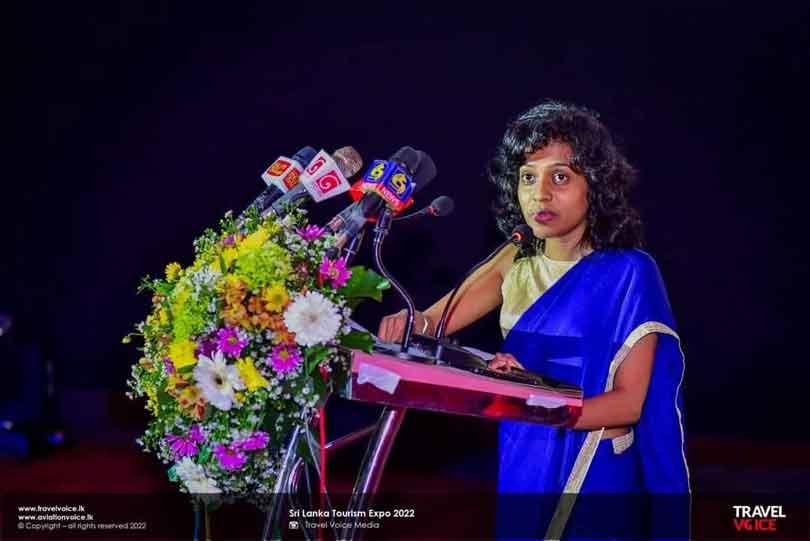
At an age when many young professionals are still discovering their path, Damsi Dharmaratne has already built an impressive career spanning academia, tourism, hospitality and leadership. Recently honoured with the Young Tourism and Hospitality Leadership Award at the 7th Youth Top40 Awards 2026, she has become one of Sri Lanka's emerging voices in the industry. A lecturer at the University of Colombo and PhD researcher at the University of Plymouth, Damsi believes leadership is measured not by titles or awards but by the opportunities we create for others. She speaks to us about resilience, education, mentorship, innovation and why the future of Sri Lankan tourism belongs to those willing to embrace change.
You were recently honoured with the Young Tourism and Hospitality Leadership Award at the 7th Youth Top40 Awards 2026. What does this recognition mean to you?
Receiving this award is one of the most meaningful moments of my career. While it is naturally rewarding to be recognised nationally, for me the significance goes far beyond the trophy itself. It represents every stage of my journey, from being an energetic schoolgirl eager to take part in every activity, to becoming an undergraduate passionate about hospitality, then an industry professional, lecturer, researcher and now a PhD candidate. The journey certainly has not been linear. Like many people in hospitality, I experienced uncertainty during the pandemic. COVID 19 completely changed the direction I expected my career to take. Looking back, what initially felt like an interruption became an opportunity to explore academia, research and leadership in ways I had never imagined. This recognition also belongs to many others. My parents, teachers, mentors, colleagues, students and friends all contributed to my growth by trusting me with responsibilities and encouraging me to step outside my comfort zone. I am also grateful to New Generation Sri Lanka for creating a platform that celebrates young leaders because recognition often gives people the confidence to continue contributing. If this award inspires another young Sri Lankan, I hope it reminds them that careers do not have to follow a perfect plan. Sometimes the unexpected path becomes the most rewarding one. Leadership begins long before you receive a title. It begins with integrity, responsibility and the willingness to help others grow.
Your school years at Sirimavo Bandaranaike Vidyalaya clearly shaped you. Looking back, what experiences had the greatest influence?
School was where I discovered that growth comes from participation. Sirimavo Bandaranaike Vidyalaya gave me far more than academic knowledge. It encouraged me to explore every opportunity available. I was actively involved in leadership, serving as General Secretary of the Media Unit, while also participating in chess, swimming, badminton and athletics. Music was equally important through the Western Band, orchestra and choir. I also enjoyed drama, speech and language competitions. Each activity taught me something different. Sport taught resilience and how to recover from disappointment. Music showed me the importance of teamwork, discipline and listening to others. Public speaking developed confidence that later helped me moderate conferences and international discussions. Perhaps the most valuable lesson was learning not to limit myself to one identity. I could enjoy academics while embracing creativity, leadership and sport. That willingness to say yes to new experiences has remained with me throughout my career. Every new opportunity begins with the courage to simply try.
Your academic journey has taken you from First Class Honours at the University of Plymouth to postgraduate studies at the University of Colombo and now a PhD. What advice would you give students?
My advice is to stop separating education from professional ambition because they strengthen one another. Throughout my studies I continued working, organising events, teaching, conducting research and taking on leadership roles. The classroom gave me theoretical understanding while industry experience helped me apply those concepts in real situations. Each made the other more meaningful. Students should view university as more than a place to earn a qualification. It is a platform for personal development. Volunteer, attend conferences, join associations, participate in competitions and speak with lecturers outside the classroom. Those experiences often shape careers more profoundly than examinations alone. Balancing study and professional ambitions is not always easy. There are sacrifices, long evenings, deadlines and moments of self-doubt. What helps is having a clear purpose and remembering that everyone follows a different timeline. Success is not about comparing yourself with others. It is about continuing to grow every year.
You became the first female General Secretary of the Alumni Association of Tourism Economics and Hotel Management at the University of Colombo. What did that achievement mean to you?
Being the first woman to hold that position was certainly significant, but I always wanted the focus to remain on the contribution rather than the title itself. Representation matters because seeing another woman in leadership quietly tells others that they belong there too. At the same time, leadership is never about simply occupying a position. It is about serving people, bringing different perspectives together and leaving the organisation stronger than you found it. My message to young women is not to wait for permission before stepping into leadership. Many capable women hesitate because they feel they need to know everything before accepting responsibility. In reality, leadership develops through experience. Nobody begins knowing all the answers. Prepare well, work hard, remain authentic and let your actions build credibility. Most importantly, support other women. Leadership becomes far more meaningful when we create opportunities for others rather than viewing success as a limited resource.
As Editor of Alumni ATEHM, you launched Vision2Voice, the association's first tourism magazine. What inspired that initiative?
The idea came from recognising that there were many talented people with valuable knowledge but no common platform to share their ideas. The tourism community includes academics, researchers, students, industry professionals and alumni, each bringing a different perspective. I wanted to create something that connected those voices. The title Vision2Voice reflects exactly that philosophy. Many people have vision, but without a platform their ideas remain unheard. The magazine became a bridge between generations and different sectors of the industry. Creating opportunities for younger voices has always been important to me because I know how transformative encouragement can be. Throughout my own journey, people trusted me before I had extensive experience. That confidence changed my life. Leadership should never focus solely on personal achievement. It should create more opportunities, amplify more voices and inspire future leaders. If Vision2Voice encouraged even one young person to share an idea with confidence, then it achieved its purpose.
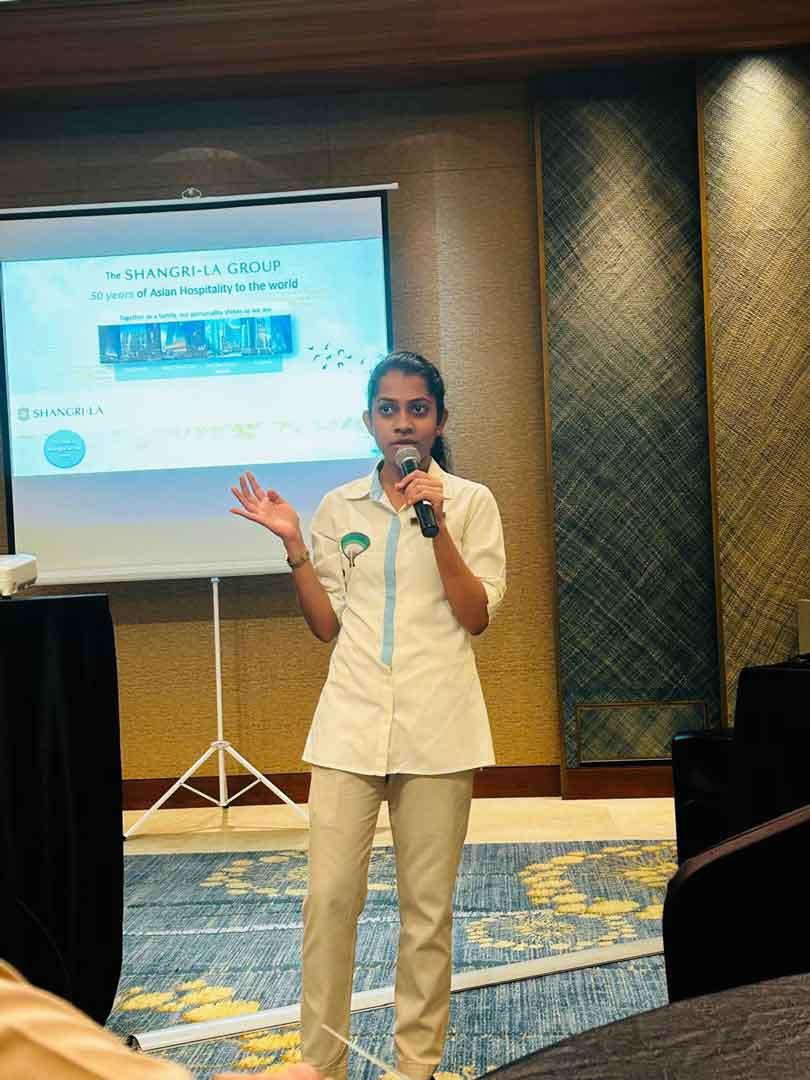
You have worked with leading hospitality brands including Cinnamon Hotels and Resorts and Shangri La Sri Lanka while also lecturing. How can young professionals bridge the gap between theory and practice?
Theory provides understanding while industry provides perspective. Hospitality cannot be fully learned from textbooks because it is ultimately a people centred profession. Working with guests, solving problems under pressure and understanding operational realities teach lessons that classrooms cannot fully replicate. Equally, academic knowledge helps us analyse why organisations succeed and how they can improve. Students should actively seek internships, attend conferences, build relationships with professionals and remain curious. Observe how leaders communicate, how departments collaborate and how challenges are solved. Soft skills are equally important. Communication, adaptability, emotional intelligence, professionalism and respect for others often determine long term success as much as technical knowledge. The strongest professionals never stop learning. They combine academic understanding with practical experience and remain open to new ideas throughout their careers.
You often speak about the importance of your parents and mentors, particularly Professor Suranga Silva and Mr Sampath Siriwardena. How important has mentorship been?
I genuinely believe nobody succeeds alone. My parents have always supported every decision I have made, regardless of how challenging the journey appeared. Their belief in me gave me confidence to pursue opportunities without fear of failure. Professor Suranga Silva has been one of the most influential figures in my life. He continually challenged me to move beyond what I believed I was capable of. Instead of simply encouraging me, he entrusted me with meaningful responsibilities that allowed me to discover my own potential. Mr Sampath Siriwardena also changed the direction of my career by recommending me for an academic opportunity that eventually led me deeper into higher education. Great mentors do more than teach. They recognise potential before we recognise it ourselves. At the same time, mentorship only works when the individual is willing to embrace opportunities. Someone may open a door, but you must be prepared to walk through it. That is a principle I continue to follow today, while also trying to support the next generation in the same way my mentors supported me.
You are known for moderating conferences and professional discussions. What advice would you give young people who lack confidence in public speaking?
Confidence is rarely something people are born with. It develops through repeated experience. Every speech, presentation and moderation I have undertaken built upon earlier experiences that began during my school years. Preparation has always been the foundation of confidence. When you truly understand your subject, you no longer need to memorise every word. I also encourage people to focus less on themselves and more on the audience. Instead of worrying about making mistakes, think about the value you are providing. That shift in perspective reduces anxiety considerably. Communication is also about listening. Great moderators create conversations rather than trying to dominate them. Listening carefully often matters as much as speaking confidently. Begin with small opportunities, ask questions during seminars, volunteer for presentations and continue practising. Every experience builds confidence for the next.
You believe leadership is measured by inspiring others rather than collecting titles. How can young professionals embrace that philosophy?
Leadership begins with everyday actions rather than formal authority. You do not need to become a manager before supporting colleagues, sharing knowledge or recognising someone else's contribution. Those small behaviours create healthier workplace cultures. The most effective leaders help others become successful. They celebrate talent rather than feeling threatened by it. They encourage questions, support learning and create environments where people feel respected. I have benefited enormously from leaders who opened doors for me. That experience shaped my own understanding of leadership. Whenever we have the opportunity to recommend someone, create a platform or encourage another person, we should do so generously. Ultimately, your greatest legacy will never be the position you held. It will be the people who became stronger because of your influence.
Sri Lanka's tourism industry continues to evolve rapidly. Where do you see the greatest opportunities for young people?
This is one of the most exciting periods to enter tourism because the industry has become far more diverse than many people realise. Beyond hotels and airlines, there are opportunities in wellness, Ayurveda, cultural tourism, adventure travel, events, digital marketing, sustainability, research, technology and entrepreneurship. Travellers increasingly seek authentic experiences, meaningful cultural connections and environmentally responsible travel. Sri Lanka is uniquely positioned to meet those expectations through its extraordinary natural beauty, heritage, hospitality and diversity. Technology will also play a major role. Artificial intelligence, data analytics, digital storytelling and personalised travel experiences are transforming how destinations engage with visitors. I encourage young people to think beyond finding employment. Instead, ask what problems you can solve, what experiences you can create and how your ideas can contribute to Sri Lanka's future. The next generation has an opportunity not simply to work in tourism, but to redefine what Sri Lankan tourism becomes. That is an exciting responsibility, and one I believe young people are more than capable of embracing.