In Conversation with Aysha Hazri
NEW GENERATION BY MALINDA PERERA
On policy, purpose and building a career without letting her beginnings define her.
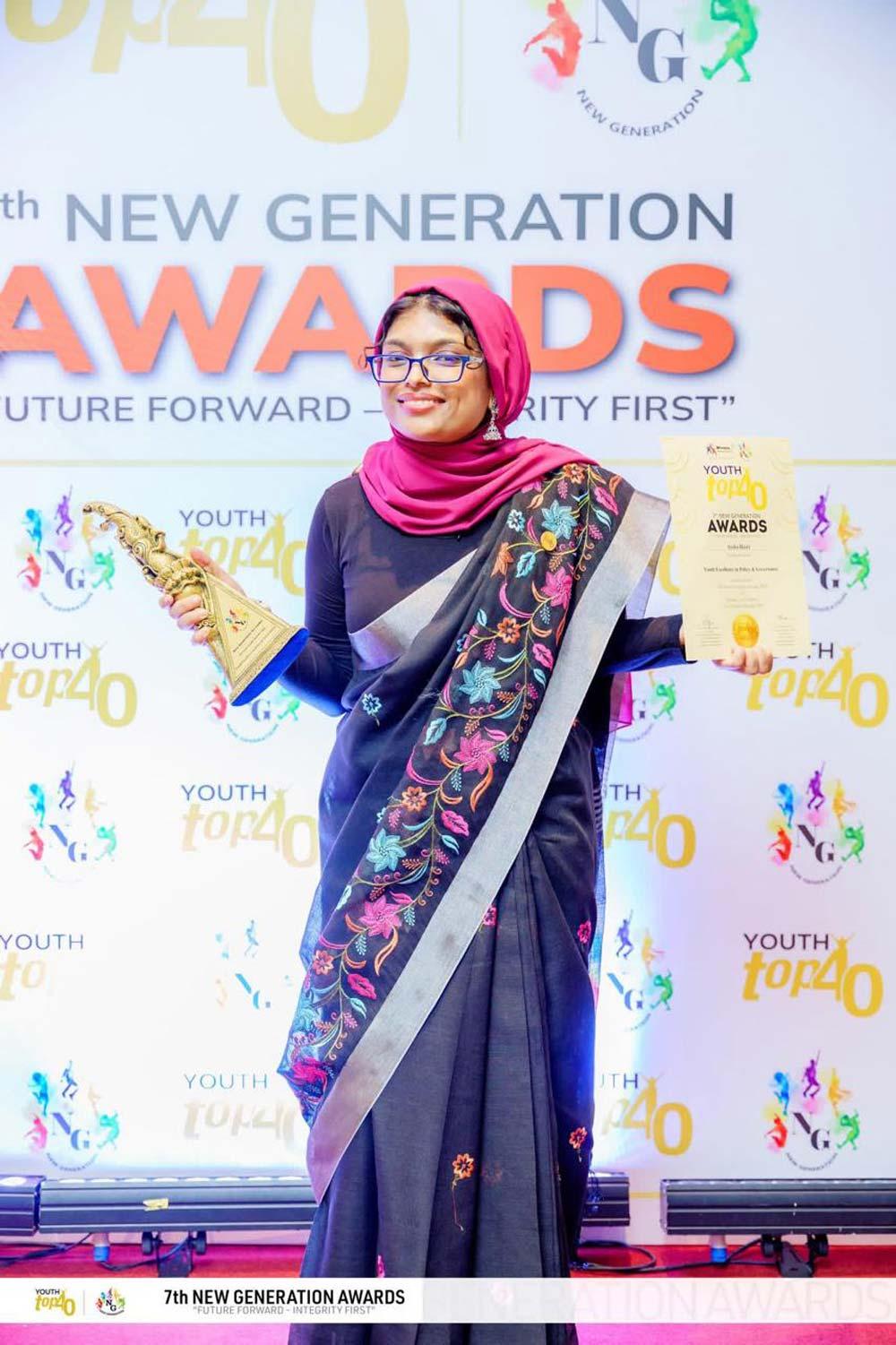
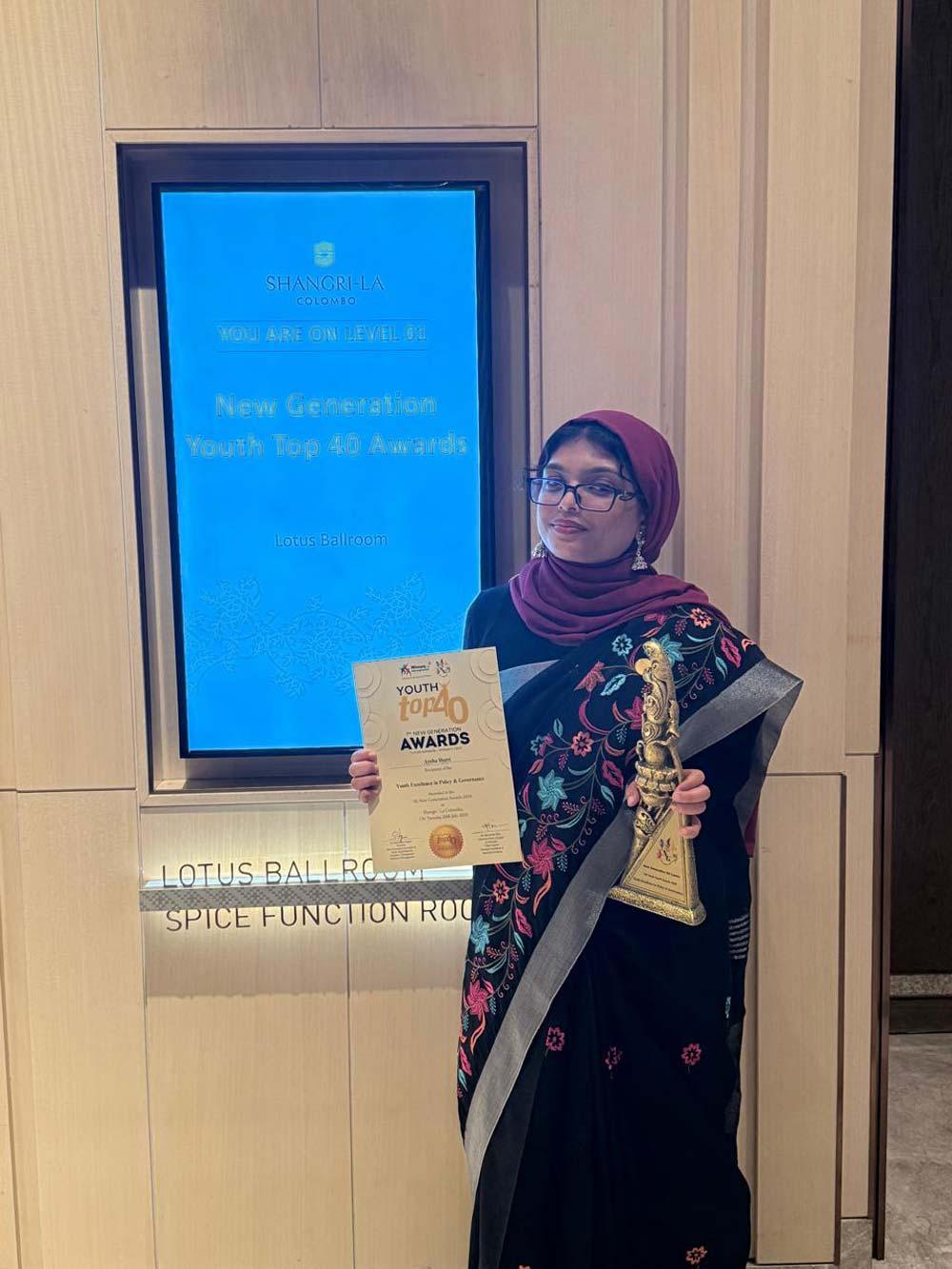
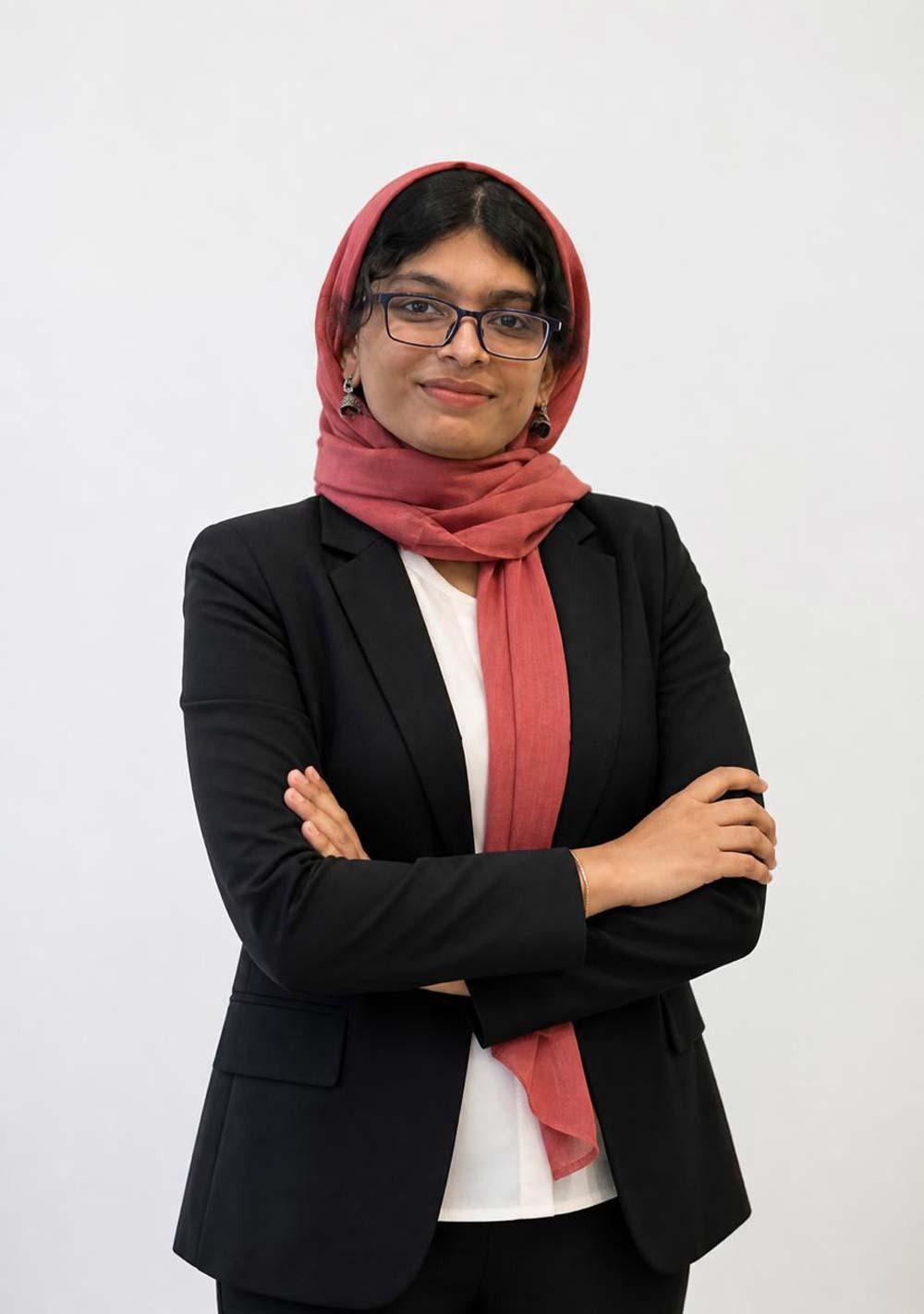
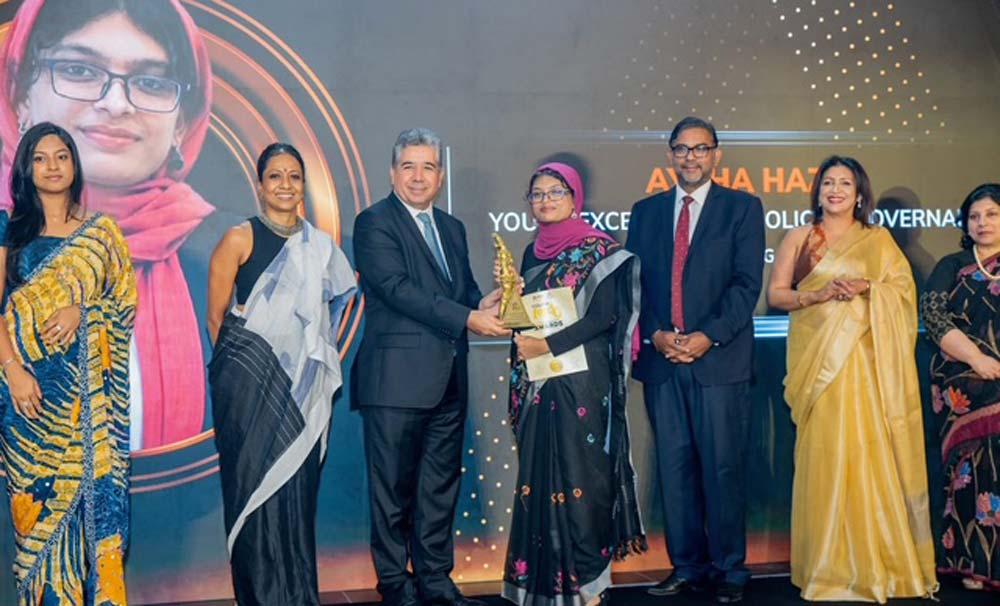
For Aysha Hazri, the journey from Puttalam to the national and international development space has been shaped by family, purpose and a strong belief in the power of good governance. Inspired by her grandfather’s public service and her father and brother’s entrepreneurial journeys, she pursued law before moving into policy, sustainable development and international development. Her experience spans work with organizations including the ILO, UNICEF and the High Commission of Canada, alongside initiatives focused on SME development, biodiversity, climate governance, AI and women’s economic empowerment. As Policy Lead at the Global Youth Biodiversity Network, she has championed youth participation in environmental policy and contributed to Sri Lanka’s National Biodiversity Strategy and Action Plan. Her achievements were recognized at the New Generation Youth Top40 Awards, where she received the Youth Excellence in Policy & Governance Award. For Aysha, the honor represents both a continuation of her grandfather’s legacy and a responsibility to keep policy work evidence-based, people-centered and accessible to the next generation of young leaders.
 Q: Growing up in a small town in Puttalam with limited access to technology and professional opportunities, how did those early experiences shape the person you are today?
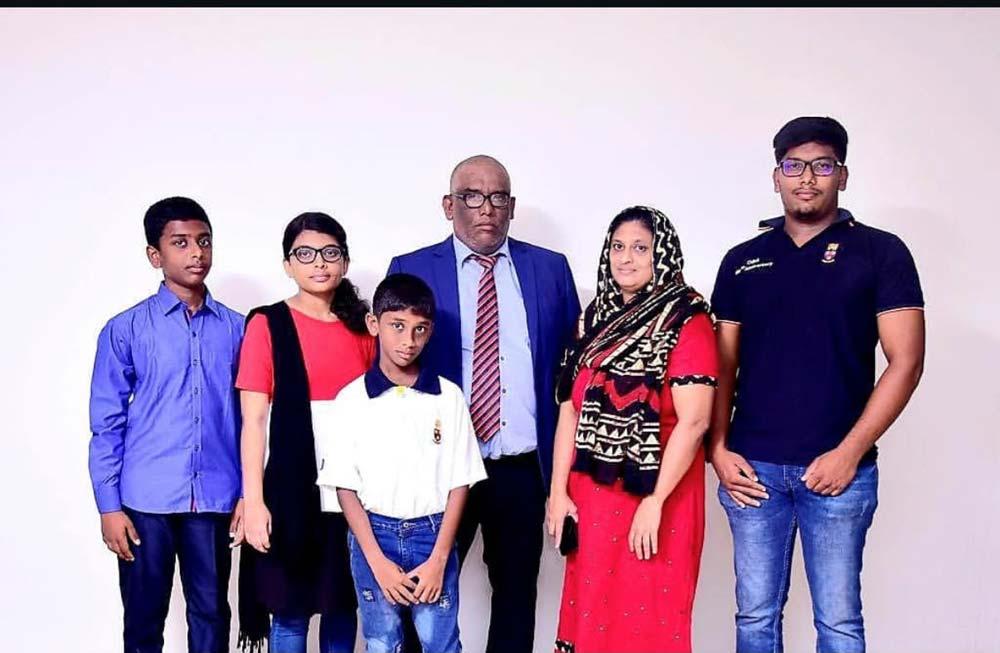
Growing up in Puttalam, a career in the development sector felt like something that belonged to someone else, far away and, honestly, unrealistic. Women in particular rarely left the town to pursue that kind of path. What made the difference for me was my family. My parents and my brothers gave me the space to pursue my own path and the confidence to believe I could go further than what was around me.
Two people in particular shaped how I think about ambition. My grandfather, Mohamed Ibrahim Bishrul Hafi, served as Chairman of the Puttalam Urban Council from 1979 to 1994 and later as a Provincial Council member and Deputy Speaker from 1994 to 2004. He delivered major public projects for the town, the water supply scheme, housing schemes, and community infrastructure that people still remember today. Watching him work taught me, from a very young age, how governance can genuinely change people's lives.
The second is my father, Prinz Hazri Haffi, who founded Prinz Salt Industry in Puttalam, and my brother, Haizam Ibrahim Haffi, who grew up watching him build it and stepped into a leadership role at just sixteen. He's now the company's CEO, eleven years into that journey one of the youngest people in our town to take on that kind of responsibility so early. Watching my father build the business, and then watching my brother carry it forward and grow it further, showed me that you don't have to leave Puttalam to think big, and that age is never a real barrier to leadership if you're willing to put in the work. Between my grandfather's example in public service and my father and brother's example in enterprise, I grew up seeing several different but equally powerful ways of contributing to a community and that combination is really what led me to law, and then to development work that sits at the intersection of all of it.
Q: You have built an impressive journey across law, public policy, sustainable development and international development. What motivated you to explore such diverse fields?
It happened quite organically, through the work itself. Being in the room with organizations like the ILO, UNICEF and the High Commission of Canada drafting policy inputs for government and watching international agencies operate pushed me to bring the best of my ability to every project, and to keep asking what the next step in the journey should be. My work with the Global Youth Biodiversity Network on the National Biodiversity Strategy and Action Plan is a good example: it let me combine my interest in policy with a much larger purpose. At every stage, what has stayed with me is that solving problems for government and for young people matters, and that I'm someone who's good at finding those solutions. That's carried me into work with communities as far afield as Pakistan and parts of Africa, and it's been one of the most meaningful threads running through my career.
Q: From representing Sri Lanka at the Willem C. Vis Moot to working with international organizations, which experience has had the greatest impact on your professional journey?
Representing Sri Lanka at the 28th Willem C. Vis International Commercial Arbitration Moot was a genuine turning point. I competed as part of the arbitration bench and also served as Vice President of the Moot, Debate and Mediation Society at APIIT, so it wasn't only about the competition itself, it was about being immersed in a diverse group of people from different backgrounds, competing and collaborating with participants from around the world. The coaching and mentorship I received during that period shaped how I think and how I communicate, in ways that are hard to put into words. It gave me a platform and an appetite for cross-cultural engagement that has stayed with me ever since.
Q: Your work has touched areas including SME development, climate change, biodiversity, AI governance and women's economic empowerment. What drives your interest in issues that have a wider social impact?
What draws me to these areas is the common thread running through all of them: they each have the power to change lives at scale when the policy is right. Whether it’s helping small businesses access the support they need, protecting biodiversity for the next generation, or making sure emerging technologies like AI are governed responsibly, I'm drawn to the point where good policy meets real people. I want my work to leave the earth and its communities human and otherwise in better shape than I found them.
Q: As a young professional working alongside international organizations and public-sector stakeholders, what have you learned about the role young people can play in shaping policy?
I've noticed that youth involvement in the development sector is still limited, and I believe more young people need to step into this space rather than following more traditional career paths. It hasn't always been easy as a young professional, I've had to hold my own alongside far more experienced colleagues. A good example is my time at EY Sri Lanka.
When the Sustainable Development division was newly established and members of the team moved on, I had to step up well beyond my official title of Project Associate, taking ownership of entire projects and workstreams. My engagement partners trusted me with that responsibility, and that trust created the space for me to grow into the role. That same spirit carried into my work with EY Ripples, where I represented Sri Lanka on a global initiative and contributed to "Artificial Intelligence for Social Innovation" under the Schwab Foundation's Global Alliance for Social Entrepreneurship, looking at how AI could support development outcomes in Sri Lanka and Vietnam, work that later led to my selection as one of twenty fellows on the CADE Fellowship, a European-backed programme exploring AI governance in Sri Lanka. Beyond EY, I've also volunteered as a Funding Specialist with the RefugeRoot Foundation of Canada, supporting refugee, children's and women's programming with government partners in Uganda, Benin, Nigeria and Togo. My experience across all of this has convinced me that when young people are given real trust and real responsibility, they rise to meet it.
Q: You have also been actively involved in youth policy through the Global Youth Biodiversity Network. How important do you believe youth participation is in decisions that will shape Sri Lanka's future?
I consider it essential. Through my role as Policy Lead at the Global Youth Biodiversity Network, I've led youth-driven advocacy on biodiversity conservation, environmental justice and climate governance, and I've conducted youth consultations that fed directly into Sri Lanka's National Biodiversity Strategy and Action Plan. I've also worked on treaty body reporting, organised awareness programmes and capacity-building sessions for young people, and advocated for the inclusion of Indigenous rights and traditional ecological knowledge including with the Aadiwasi community in Sri Lanka in national climate and biodiversity discussions. This is also the work I later wrote about in my paper on the terms "equitable" and "fairness" in biodiversity policy, presented at the 4th Citizen Scientists' Symposium organised by the Young Zoologists' Association of Sri Lanka. Young people bring urgency and fresh thinking to these conversations. If we're serious about protecting Sri Lanka's environment for the long term, youth voices can't be an afterthought in that process, they need a seat at the table from the start.
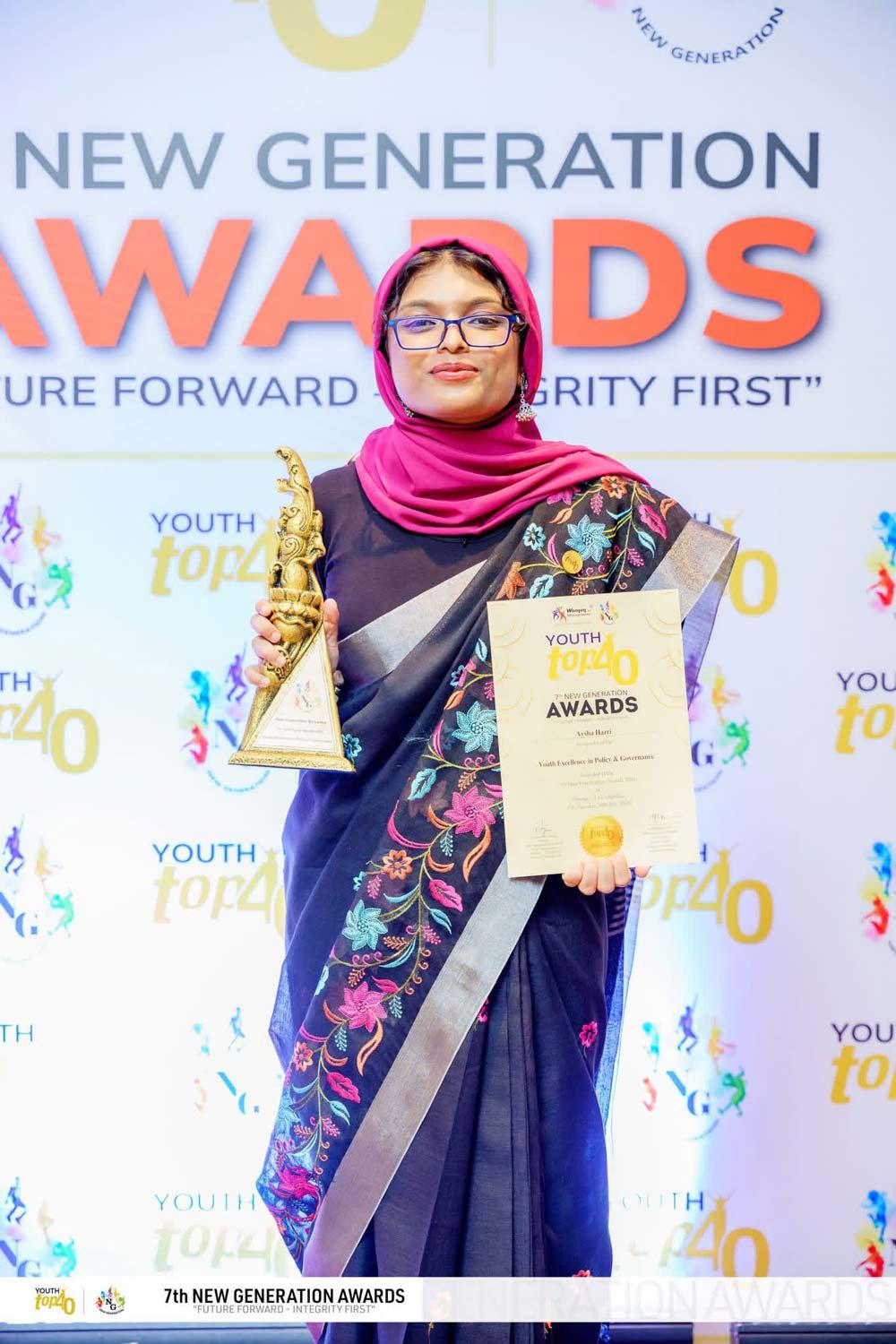
Q: You were honoured with the Youth Excellence in Policy & Governance Award. What does this recognition mean to you, particularly given your work across policy, governance and youth participation, and what responsibility do you feel comes with receiving this award?
This award means a great deal, precisely because it recognizes governance and policy, the exact space my grandfather worked in decades ago, and the space that first inspired me to study law. Receiving it feels like a continuation of that legacy, but on a national and international stage, built through years of hands-on policy work from the SME policy process, NBSAP and CBD policy involvement with GYBN, to legal research on counter-wildlife-trafficking policy with the Environmental Foundation Limited. With that recognition comes responsibility: to keep the work honest, evidence-based and rooted in the people it's meant to serve, and to use whatever platform this award gives me to open doors for other young people who want to work in policy and governance.
Q: If your story could inspire one young person from a rural or underserved community who feels that opportunities are beyond their reach, what would you want them to know?
I would want them to know that the distance between where they are and where they want to be is real, but it isn't fixed. Opportunity doesn't always arrive at your doorstep, sometimes you have to go looking for it, ask the difficult questions, and be willing to start small. Find people who believe in you, whether that's family, mentors or a community around you, and let that belief carry you through the moments of doubt. My journey started in a rural town with very little in the way of resources or role models in this field, and it has led to work with international organizations across the world. If it happened for me, it can happen for anyone willing to put in the work.