Chamindri Pilimatalauwe: Vice President & Head of Marketing, Softlogic Life
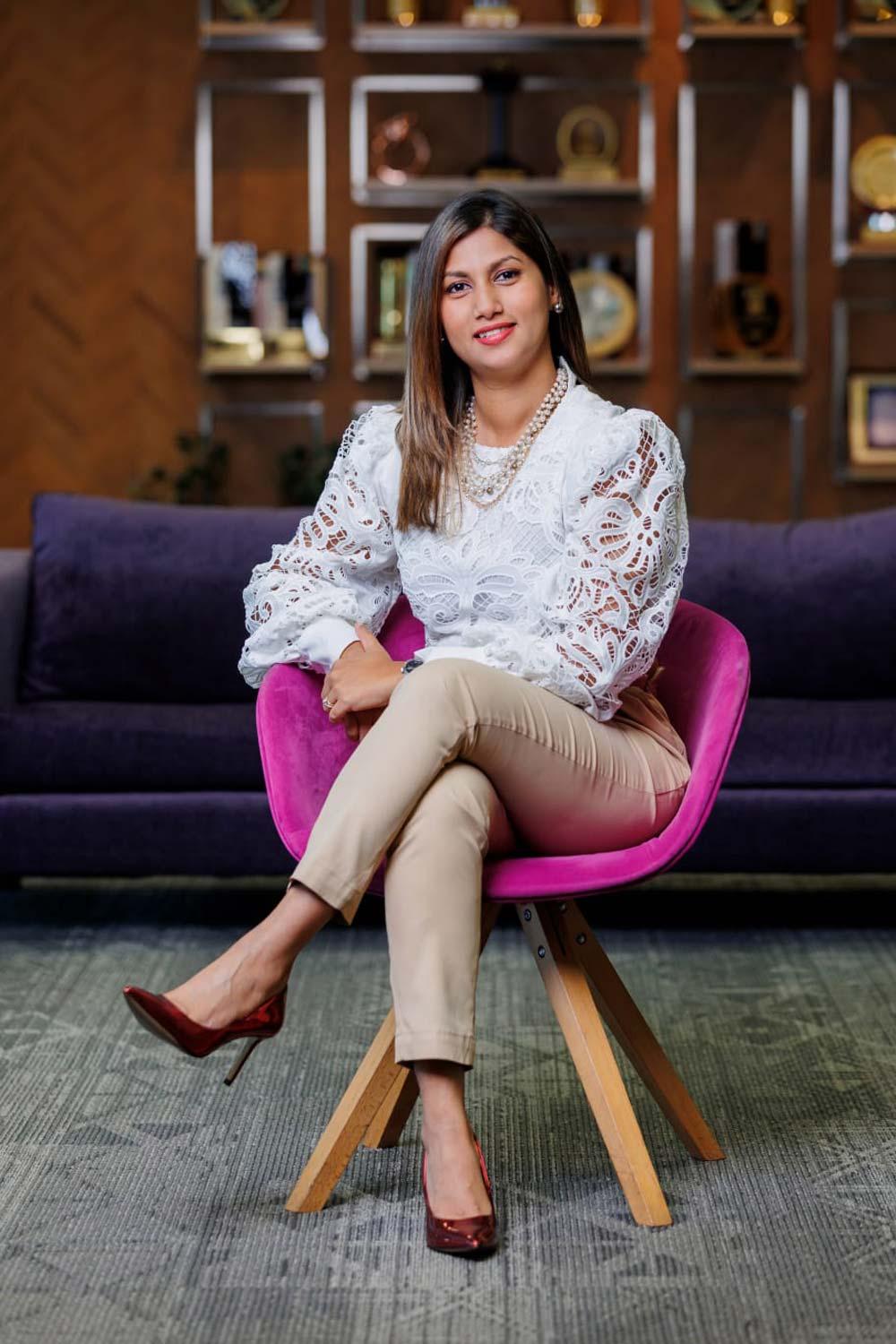
Chamindri Pilimatalauwe, Vice President and Head of Marketing at Softlogic Life, has built a career around a compelling combination of creativity, strategic thinking, consumer understanding and purpose. With experience spanning Learning and Development, business development, brand development and marketing, she has played an integral role in shaping Softlogic Life into one of Sri Lanka’s most distinctive insurance brands.
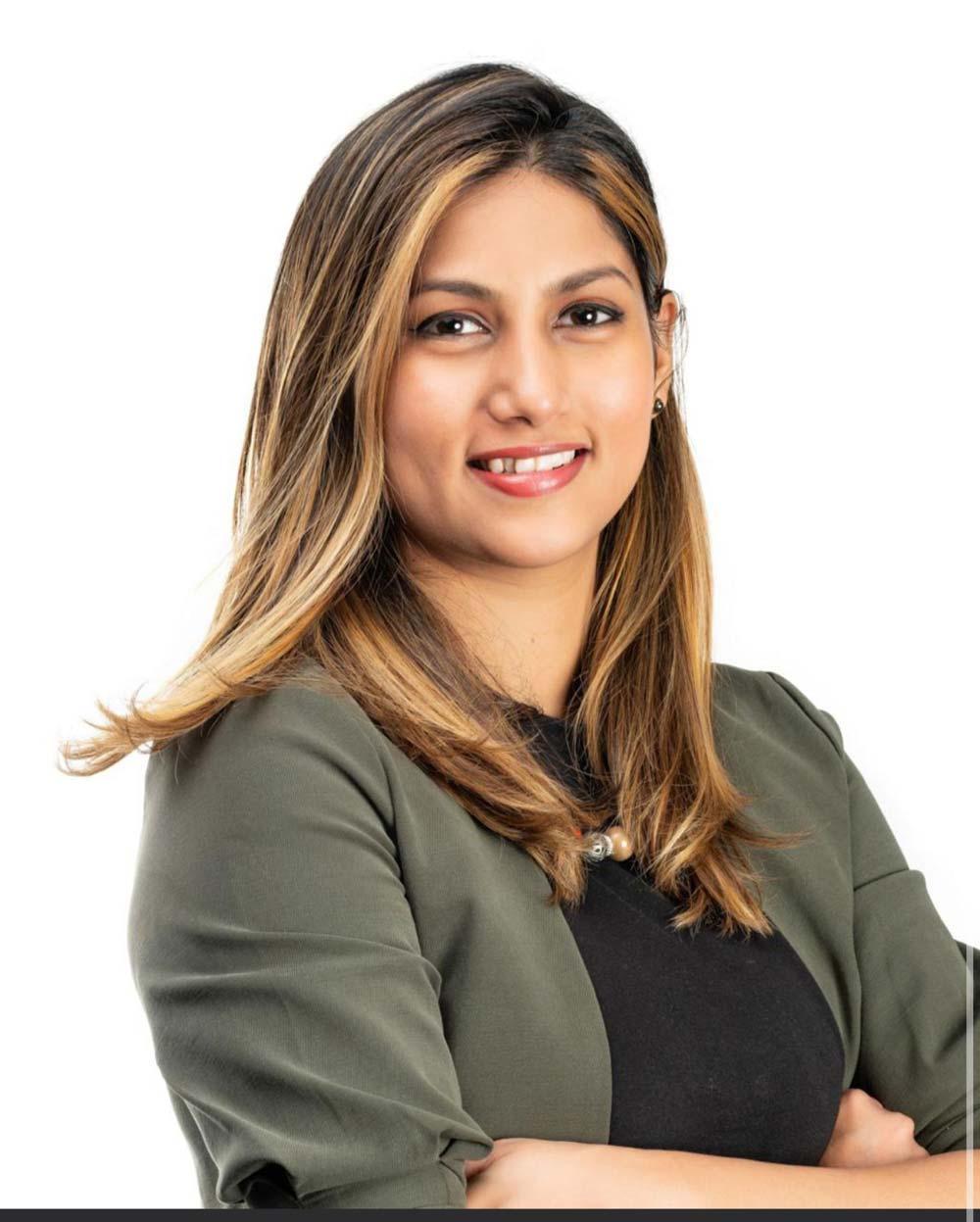 Yet her approach to leadership extends well beyond marketing. Motherhood, family, creativity, adventure and a deep connection with nature have all influenced how she thinks about people, ambition and success. A strong advocate for creating structured opportunities for women, she also leads 4HER, Softlogic Life’s women focused development programme. In this conversation, Pilimatalauwe reflects on the experiences that have shaped her, the discipline behind bold brand building, the human judgement required in an age of AI, and why embracing discomfort is often essential for growth.
Q: You describe yourself first as a mother, wife, marketer and leader. How have these different identities shaped the woman you are today?
I am who I am today because of what each of these roles has contributed to me. None of them limit me. They complete me. Each identity has built on the one before it far more than they have ever competed with one another. I think of it like a puzzle. When you allow your many roles to shape you, you become more whole and begin to see the world through multiple perspectives at once. Motherhood taught me that almost anything is possible. Your only real limit is how far your mind is willing to go. Everything else is figureoutable. Being a marketer taught me to always chase the why. Almost every problem has a solution if you are willing to look at it creatively and are brave enough to take the leap. Being a wife and a leader taught me something equally important. You do not always have to have the answers. Leadership sometimes requires putting your ego aside and surrendering the authority that comes with your title. A team, much like a family, performs on trust, not fear. When you respect the role each person plays and earn genuine trust in return, you can build something incredibly powerful.
Q: Your career has taken you through HR, consulting, brand development and marketing. What did those early experiences teach you about people and leadership?
I started in Learning and Development at Brandix, and long before I wrote a marketing brief, I was sitting with people trying to understand what made them stay, what made them leave and what brought out their best work. When I eventually moved into business development, first at Capital Maharaja and later into brand development at Softlogic Life, I already understood that a brand is really two things. It is a distinct proposition designed to convince a customer to choose you, but it is also a promise that people within the organisation must buy into, believe in and collectively keep.
If that internal belief fails, everything falls apart and the proposition becomes an empty, short-lived promise. HR teaches you people. Marketing teaches you how to speak to them, and to the outside world, at scale. I needed both perspectives when I stepped up as a leader.
Q: You have been part of transforming a brand and taking it to new heights in a highly competitive industry. What does it take to successfully challenge the status quo?
Evidence and nerve, in that order. When we rebuilt Asian Alliance into Softlogic Life in 2016, we were fifth in the market and had no room for a soft launch. Every decision needed to be backed by research. As the youngest company in the industry, carrying a completely new name, we did not have the equity to survive a wrong guess. That discipline is what still allows us to take meaningful risks today. Softlogic Life is now an 11-year-old brand that others study as a case study. Having been there from the beginning and now leading it presents a different challenge. How do we continue innovating while keeping the novelty and innovative edge alive without losing what the brand stands for? Getting there is hard, but staying there is harder. Challenging the status quo is not about being the loudest brand in the room. It is about discovering something true about the consumer that the rest of the market has not explored, then having the patience to build proof before building anything around it. At the same time, you must remain disciplined about the brand’s core code. Innovation should strengthen your distinctive space, not dilute it.
Q: Your work is known for being bold, unconventional and deeply connected to consumers. Where do you find the courage to pursue ideas others may consider risky?
Most of what looks like courage from the outside is really conviction backed by research and logic. Before launching Health Score, Sri Lanka’s first AI based, prevention led insurance proposition, with Jonty Rhodes on “Score Eka Keeyada?”, or introducing Sri Lanka’s first health insurance with no age limit with Wasim Akram, we had already tested the insight, understood its relevance to the business and our brand DNA, and established that it connected with consumers. That is how we approach campaigns. We start with consumers, their lives, behaviour, needs and tensions, then ask how the brand can create a meaningful connection. Our purpose, “We are here to enhance the quality of life of every Sri Lankan,” guides that thinking. Once we identify an insight we truly believe in, we search for the most distinctive way to bring it to life. That is where boldness enters. We want ideas that feel fresh, unexpected and memorable, but they must still be honest expressions of the story. We never set out to be unconventional simply for the sake of it. Boldness is the outcome of combining a strong consumer insight, clear purpose and the conviction to see an idea through.
Q: Motherhood has influenced your leadership style. What has being a mother taught you about patience, resilience, empathy and ambition?
Everything, really. My leadership style comes directly from my style as a mother. You build people in much the same way you build a family and raise a child, with patience, honesty and the belief that they can do more than they think they can.
Motherhood also recalibrated my relationship with ambition. I did not become less ambitious. I became more decisive about which battles deserved my energy, which needed my undivided attention, and which could be delegated. It taught me not to chase balance, but to prioritise what truly matters in each moment and know when to switch off one role and fully show up for another. I have never labelled myself a perfect mother or a perfect leader. Being imperfect is human. Having the humility to accept that, learn and keep trying to become better is resilience in itself. Empathy at work often begins with the same question I ask at home: what does this person genuinely need right now? But empathy cannot simply mean telling people what they want to hear. Sometimes caring about someone’s growth means being honest enough to tell them an uncomfortable truth.
Q: You lead a women focused development initiative within your organisation. Why is creating opportunities for other women important to you personally?
I would not be where I am today without women to look up to, learn from and be inspired by. Someone paved the way for us first. Even before Softlogic Life, at Brandix, I saw how much difference it makes when opportunity is not left to chance. I also grew up in a family where women led, both in corporate environments and elsewhere. From a young age, I saw what was possible when women were given opportunities to lead. Today I lead 4HER, Softlogic Life’s women focused development programme, for that same reason. I strongly believe talent is not the scarce resource in most organisations. Structured opportunity is. My advocacy also goes beyond programmes. I particularly encourage young women entering motherhood to create an ecosystem around themselves that allows them to continue pursuing their dreams and ambitions. We often see women enter the workforce in significant numbers, yet far fewer progress into leadership. We rarely talk enough about how motherhood can be a catalyst for leadership rather than a limitation. If I can help build even one part of the structure that enables women coming behind me to progress, that is time as well spent as any campaign I have ever run.
Q: As a woman in a demanding leadership role, how have you learned to balance ambition with family, personal time and your own wellbeing?
I have stopped pretending balance means an even split. It rarely does. Some weeks work wins and some weeks family does. I have made peace with that unevenness as long as it evens out over time. What I do not compromise on is myself. I believe in taking care of myself first and ensuring that I am content, particularly where my mind is concerned, because you cannot give to others from an empty glass. Protecting my wellbeing is not indulgence. It is essential. I have also become intentional about where I give my time and energy. When my family needs me, or when work needs me, I am fully present. For things that do not require me personally, I have created structures that allow me to delegate. My floors do not need me to personally attend to them. My walls do not need me. My children do. For me, it is not about doing everything. It is about understanding what genuinely matters and being fully present for it.
Q: With technology and AI rapidly transforming marketing, what human qualities do you believe will remain irreplaceable?
Instinct and judgement remain deeply human. Understanding emotions, culture and behaviour is something AI still cannot fully replicate.
I am not wary of AI. I fully endorse it. We have created some of Sri Lanka’s most AI forward work, from Health Score to the country’s first deepfake led campaign. But each idea began with a human insight and a human judgement about what would genuinely resonate. AI can help us execute faster, work at greater scale, shape messages and bring complex concepts to life. But it cannot always tell us whether a message is genuinely true to how a Sri Lankan family feels, thinks or behaves. That instinct remains human. Our recent Honda Ledakata Young campaign is a good example. We featured Wasim Akram at 60 taking on physically demanding activities that even a 20-year-old might hesitate to attempt. We could have created those scenes using AI but deliberately chose not to because authenticity was central to the message. We wanted to inspire Sri Lankans with the idea that there is no age limit to good health. Using AI to manufacture those moments would have undermined the truth we wanted to communicate. Human instinct decides what we should create. Sometimes knowing when not to use AI is as important as knowing how to use it.
Q: If you could speak to the younger Chamindri who was just beginning her career, what would you tell her today?
I would tell her that nobody ever truly feels ready. That is not a warning sign. It is often simply what standing at the edge of something worth doing feels like. When I shifted my career and stepped into brand development for the first time, I was terrified on many days and unsure about how to approach things. I would tell my younger self to stop reading that fear as proof that she is in over her head and start seeing it as proof that she has found the right room to grow. The people who wait for fear to disappear before they act can spend their entire careers waiting. Walk in anyway. Walk in with the shaky hands and racing heart. Whatever sits on the other side of that fear is often the work you eventually become proudest of. Growth rarely arrives when you are completely comfortable. Sometimes the fear itself is telling you that you are exactly where you need to be.