Laughter Has a Passport: What My First Edinburgh Fringe Taught Me About Comedy, Culture and Connection.
By: Rishini Weeraratne
They say laughter is the best medicine. But as I sat in a packed room at the Edinburgh Fringe, surrounded by people laughing uproariously, including my friend Farzana Baduel, I found myself wondering: why wasn't I laughing? Nothing was wrong with the performance. The audience clearly thought it was hilarious. Farzana certainly did. A punchline would land, the room would erupt, and I would sit there slightly bewildered, wondering what exactly I had missed. Then, at another show, the opposite would happen. I would find something extremely funny, turn towards Farzana expecting to find her equally amused, only to discover that she was completely unmoved. After a while, observing each other's reactions became almost as entertaining as watching the performances. It was one of the unexpected pleasures of my first Edinburgh Festival Fringe, and ultimately one of its most interesting lessons. Laughter may be universal, but humour, I discovered, has a passport.
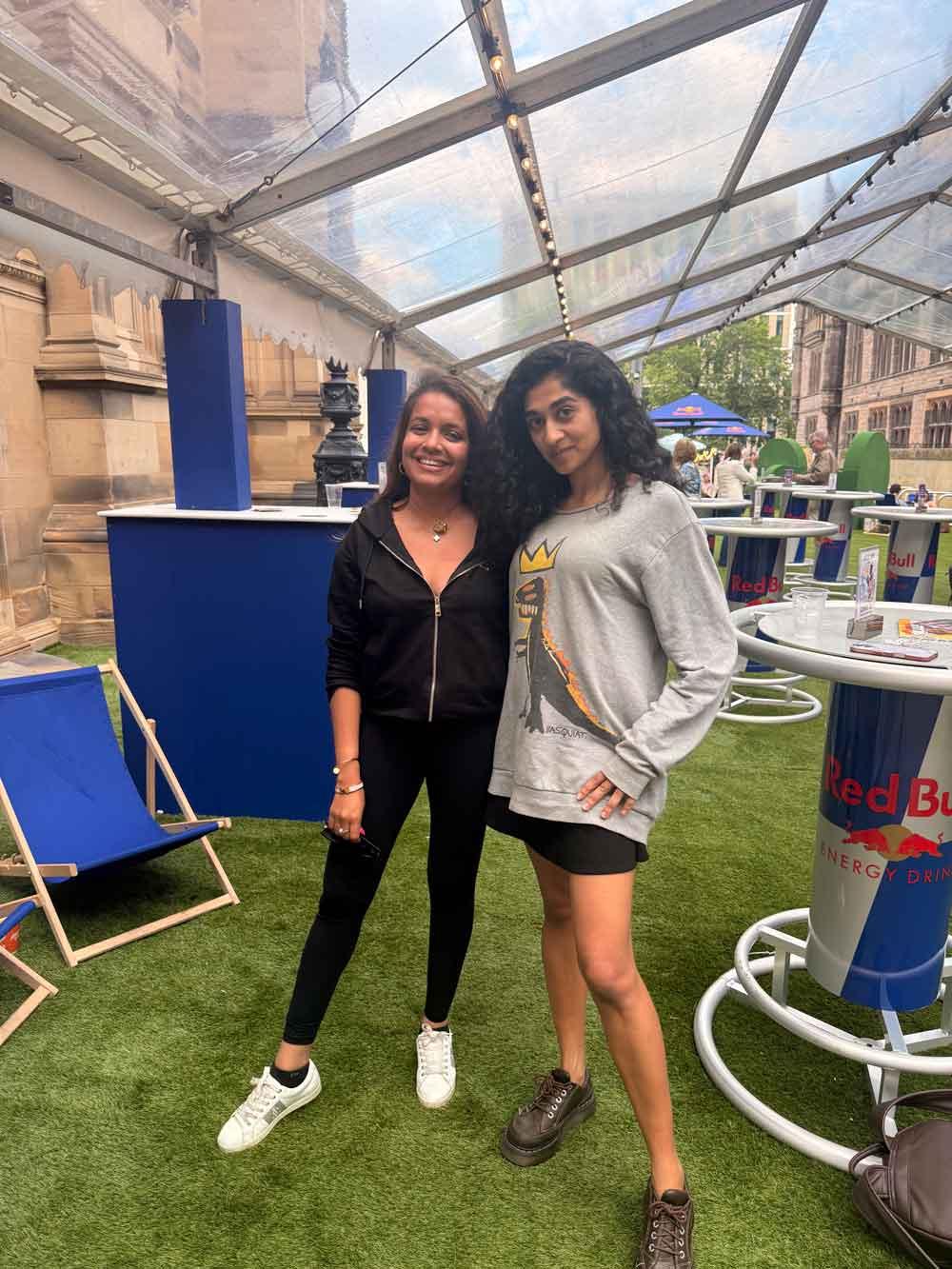
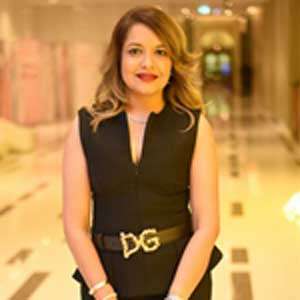
I travelled from London to Edinburgh by train with my friend Farzana Baduel, a trustee of Soho Theatre. Farzana had arranged for us to see a number of productions connected with Soho Theatre, giving me a wonderful introduction to the glorious madness that descends on Edinburgh every August. Farzana is British Pakistani and grew up in London. I am Sri Lankan and grew up in Colombo, although London is now my home. She is married to a British Italian, so hers is a family in which cultures naturally overlap. Her professional life is equally international. Farzana is the CEO and co-founder of Curzon PR, a global strategic communications consultancy, and President of the Chartered Institute of Public Relations. She sits on the boards of Soho Theatre and The HALO Trust and co presents BBC Radio 4's When It Hits the Fan with David Yelland, the former editor of The Sun (UK), examining the communications strategies and reputational battles behind major news stories. She is, in every sense, a global communications strategist. She spends much of her professional life thinking about how people, organisations and cultures communicate. Inevitably, that gives her a particular way of looking at the world. I thought travelling to the Fringe with her would be fun. I had not anticipated quite how fascinating it would be.
There is something wonderfully evocative about taking the train from London to Edinburgh. London gradually recedes, the landscape opens up and, as you travel further north, there is a growing sense of leaving the everyday behind. By the time the dramatic coastline comes into view and Scotland draws closer, the journey itself feels like the beginning of an adventure. And then you arrive in Edinburgh. Nothing quite prepares you for the city during the Fringe.
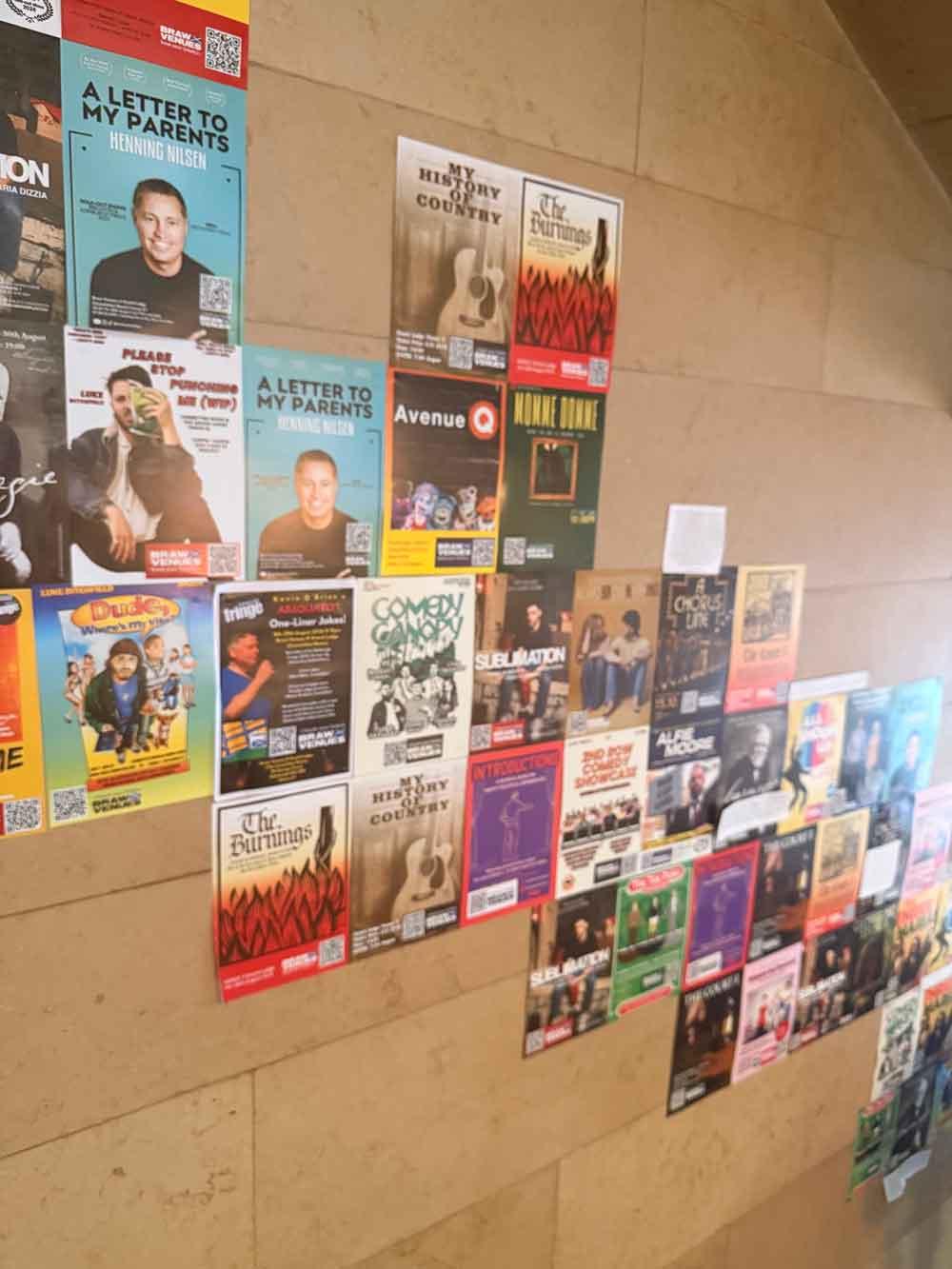
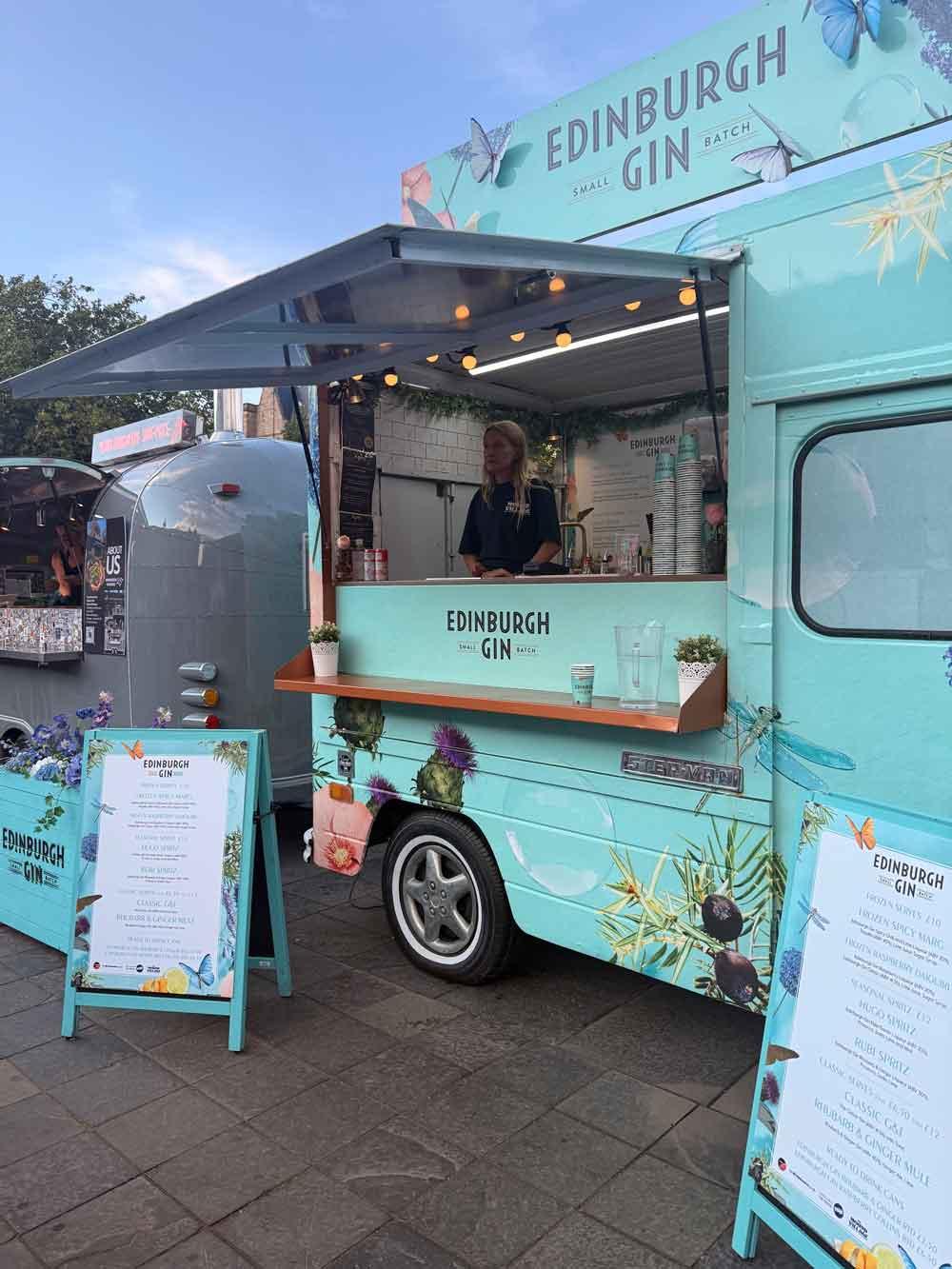
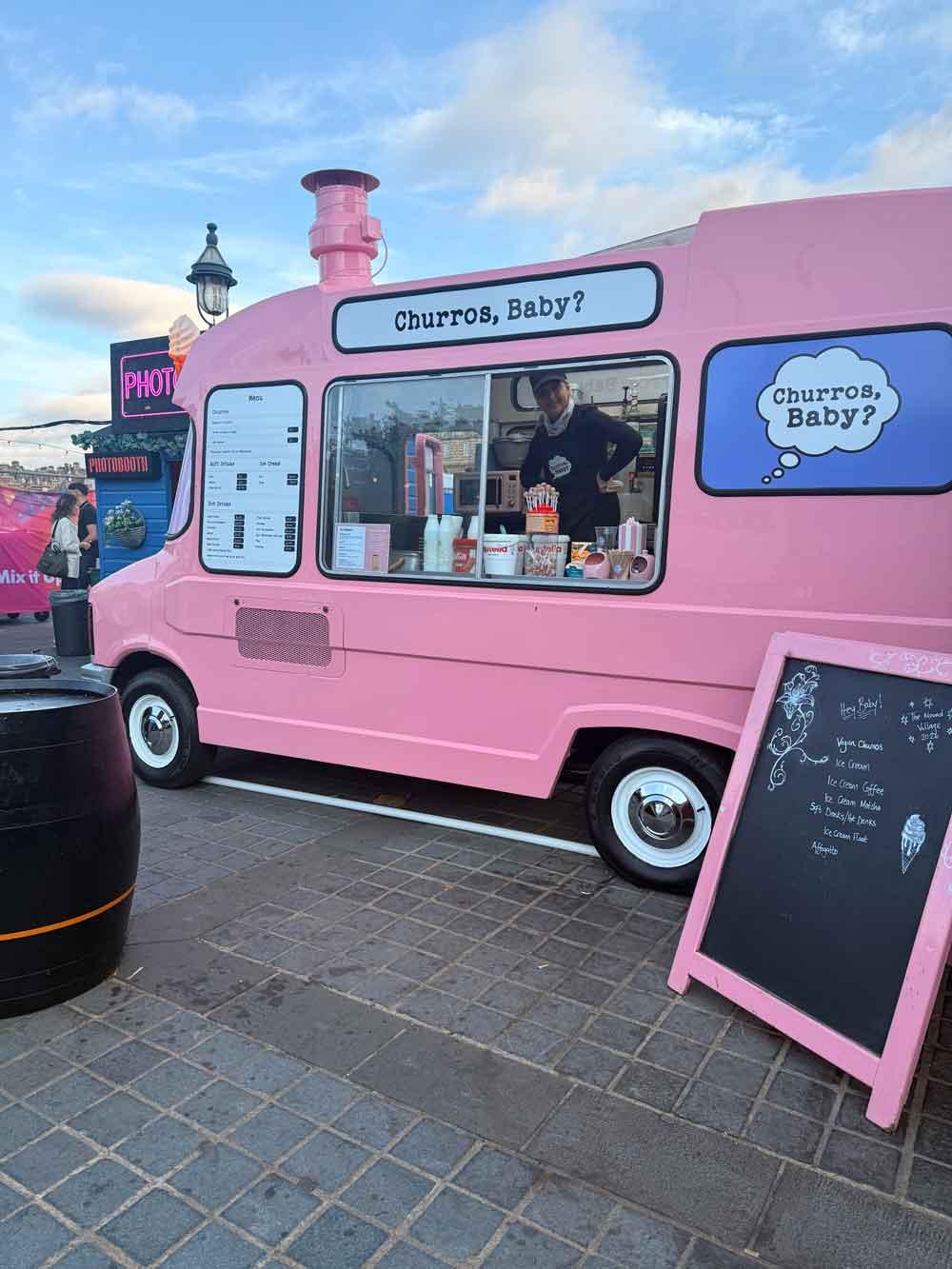
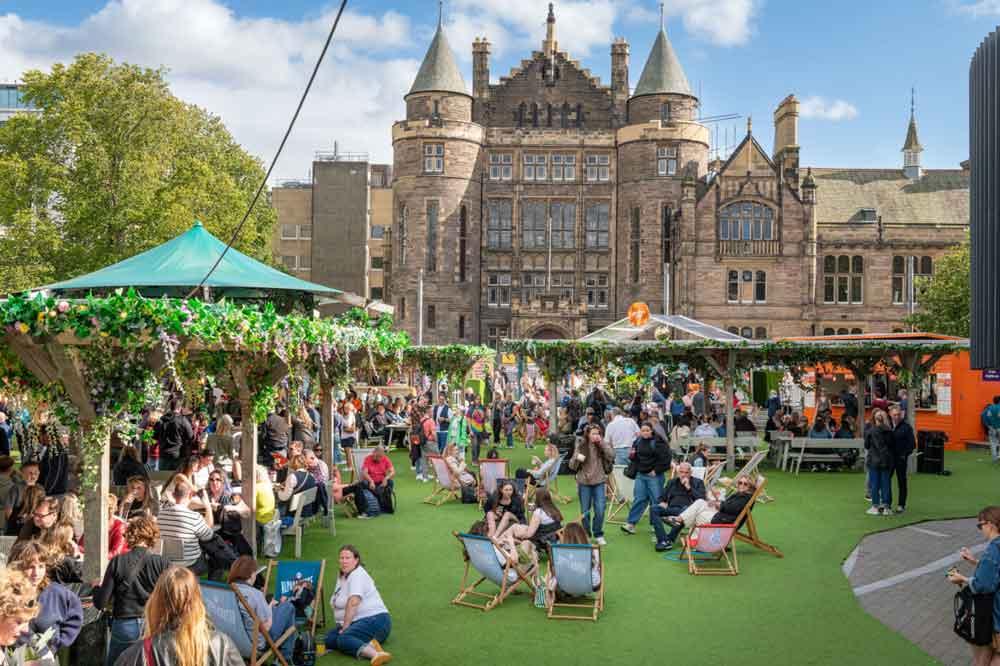
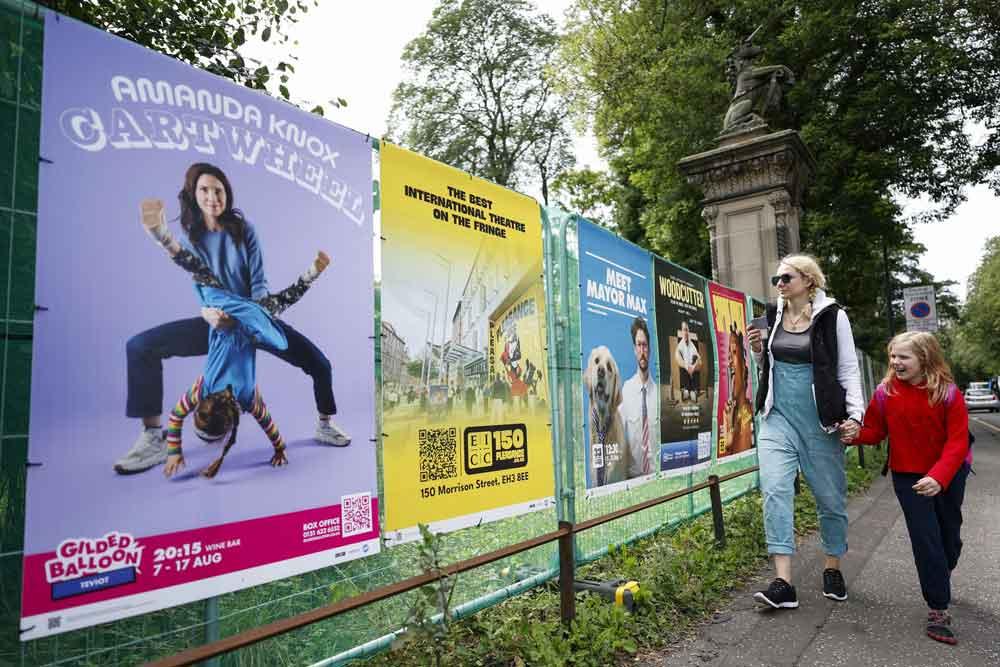
Edinburgh seems to surrender itself to creativity. Beautiful squares become temporary festival villages filled with pop up bars and food trucks. Courtyards glow beneath strings of fairy lights. Posters compete for every available piece of wall. Performers hand out flyers in the streets. Actors hurry between venues carrying bags, costumes and props.
Audiences pour out of theatres talking excitedly about what they have just seen before rushing off to see something else. There is an extraordinary energy everywhere. The venues themselves are part of the adventure. One moment you can be inside something resembling a conventional theatre and the next squeezing into a tiny room, a converted space or a tent. Pleasance Courtyard, Summerhall and Assembly become worlds within the city, filled with performers, producers, programmers and audiences.
The boundaries between Edinburgh and the festival almost disappear. The city itself becomes one enormous stage. Through Farzana, I also began to understand the important role Soho Theatre plays in this extraordinary ecosystem. Soho Theatre has established itself as one of Britain's great homes for new theatre, comedy and cabaret, with a particular reputation for discovering and developing distinctive voices. The Edinburgh Fringe has long been central to that work. Soho Theatre does not simply take productions to Edinburgh. Its team spends the festival watching performances, meeting artists and looking for talent that might have a life beyond the Fringe. In that sense, Edinburgh becomes an enormous laboratory for new ideas and new voices.
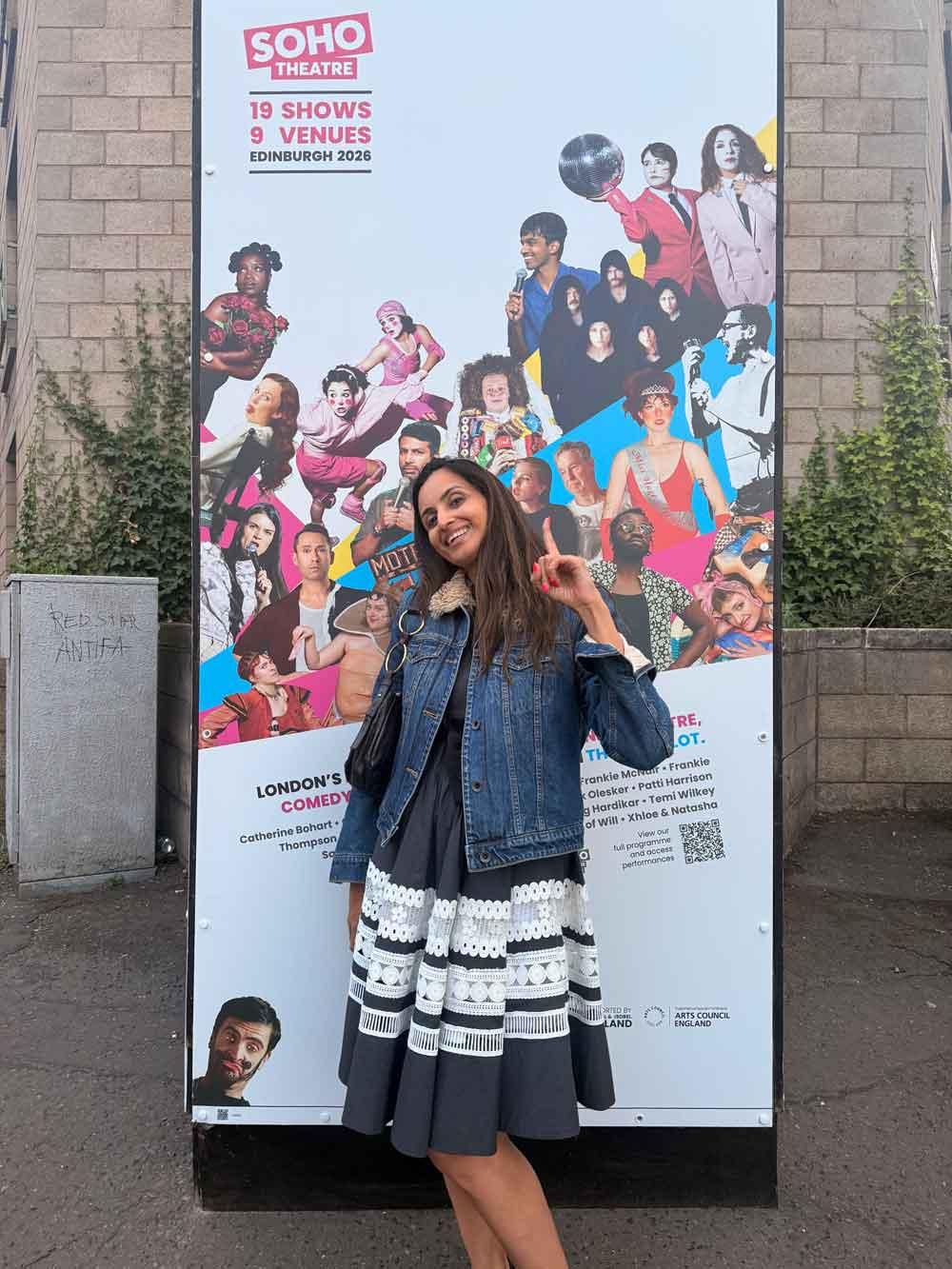
That relationship has produced remarkable success stories over the years. Soho Theatre has also developed particularly strong connections with comedy from India, introducing Vir Das to UK audiences at the Edinburgh Fringe in 2016. In 2023, Urooj Ashfaq became the first India based comedian to win the Edinburgh Comedy Award for Best Newcomer. Soho's 2026 Fringe programme was another ambitious undertaking, with 19 shows playing across nine venues.
Travelling with Farzana meant that I was able to glimpse a little of what happens behind the performances. There are writers and actors, of course, but also directors, producers, programmers and supporters, all moving around Edinburgh, meeting one another and searching for that elusive spark.
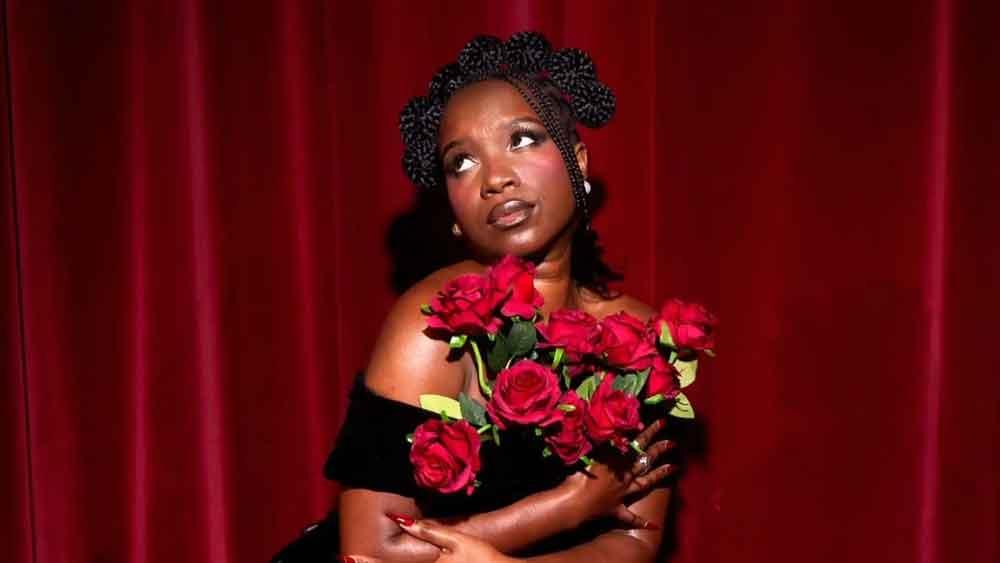
Our own adventure began with Pink Rabbit. Written and performed by British Pakistani actress and writer Farah Ashraf, Pink Rabbit is a solo performance exploring family, faith, identity, sexuality and desire through the life of a young British Pakistani Muslim woman. There is something incredibly brave about solo theatre. There is nowhere to hide. One performer has to create an entire world and hold a room entirely through her own presence. Every silence matters. Every shift in energy matters. There is no ensemble to fall back upon. Farah did precisely that.
What I found particularly compelling was the way Pink Rabbit explored subjects that can still be difficult to discuss openly within conservative cultural environments. It managed to be provocative without losing its humanity, and funny without diminishing the seriousness of the questions it raised. The production was directed by Alessandro Babalola, a friend of Farzana's, and produced by Daljinder Johal. It was fascinating to watch something so intimate and then think about the network of people required to bring even a one-woman performance to the stage.
From there, the Fringe became an extraordinary carousel. We saw Lover Girl, written and performed by Temi Wilkey and directed by Ragevan Vasan. Funny, intimate and unapologetically personal, it explores the romantic adventures of a Black bisexual woman and that most universal of human desires, to love and be loved. There was something refreshingly fearless about the performance. Temi takes her own experiences and turns them into something an audience can recognise, even if the particulars of their lives are completely different from hers. That, I began to realise, was one of the great pleasures of the Fringe. The most personal stories often became the most universal.
Then there was HAM, a wildly irreverent reimagining of Hamlet that turns Shakespeare on its head, weaving together grief, veganism, meat, revenge and the climate crisis. Only at the Edinburgh Fringe, I thought, could someone take one of the greatest tragedies in the English language, throw in a dead pig, nudity and a vegan revenge plot, and somehow make the whole thing work brilliantly. It was bold, absurd and gloriously committed to its premise. Again, I found myself thinking about the freedom Edinburgh gives artists. Where else can you take a text that has been performed for more than four centuries, dismantle it, rebuild it around contemporary anxieties and put the result in front of an audience willing to come along for the ride?
We also watched Dude, Where's My Visa?, a stand up and storytelling show featuring Luke Ditchfield and Arjun Doraiswami. The premise could hardly have been more appropriate for an international festival. It took that most stressful and deeply unfunny of subjects, immigration bureaucracy, and turned it into comedy. The show drew on the pair's experiences of navigating the complexities of visas and the Home Office, finding humour in the anxiety and absurdity of trying to establish whether you actually have the legal right to remain in the country you call home.

Arjun himself comes from a fascinating international background. He is the son of Indian diplomat Vikram Doraiswami, the former Indian High Commissioner to the United Kingdom, and grew up across different countries and continents through his father's diplomatic career before eventually settling in London. There was something particularly fitting about watching a young Indian comedian turn questions of visas, borders and belonging into material for laughter at a festival where performers and audiences have travelled from across the world. It also planted the seed for the conversation Farzana, and I would later have on the train home. Identity can be deeply serious. Immigration can be deeply serious. Belonging can be deeply serious. But sometimes the things that frustrate and confuse us most are precisely the things we need to laugh about.
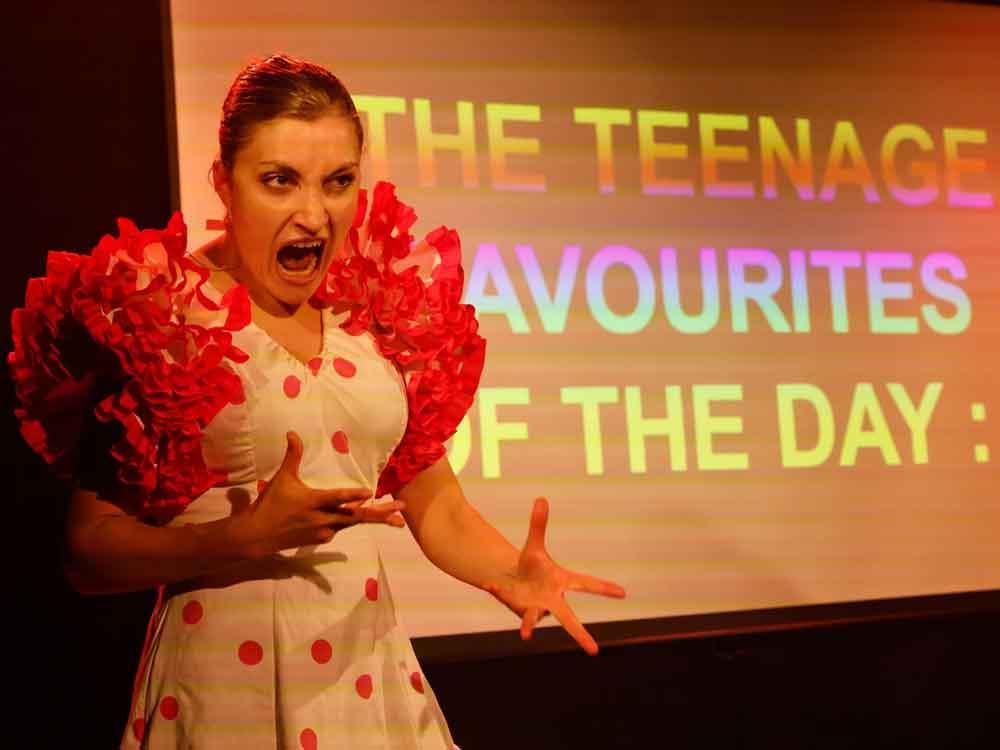
Perhaps my greatest surprise of the entire trip, however, was discovering contemporary clowning. Frankie Thompson's Horrible Things was unlike almost anything I had previously seen. Frankie is an extraordinary physical performer, and her show exists somewhere between clowning, comedy, cabaret and performance art. Through movement, facial expressions, lip sync and moments of glorious absurdity, she creates a world from the horrible, embarrassing and unsettling things found in memory, family, society and popular culture.
Watching her made me realise how narrow our definition of comedy can sometimes be. We tend to think comedy requires jokes and punchlines. Clowning has a completely different language. Sometimes the joke is a movement. Sometimes it is a silence. Sometimes it is an expression. Sometimes it is simply the sight of another human being behaving in an utterly inexplicable way. It was strange, unpredictable and completely outside my normal cultural diet, which was precisely why I enjoyed the experience.
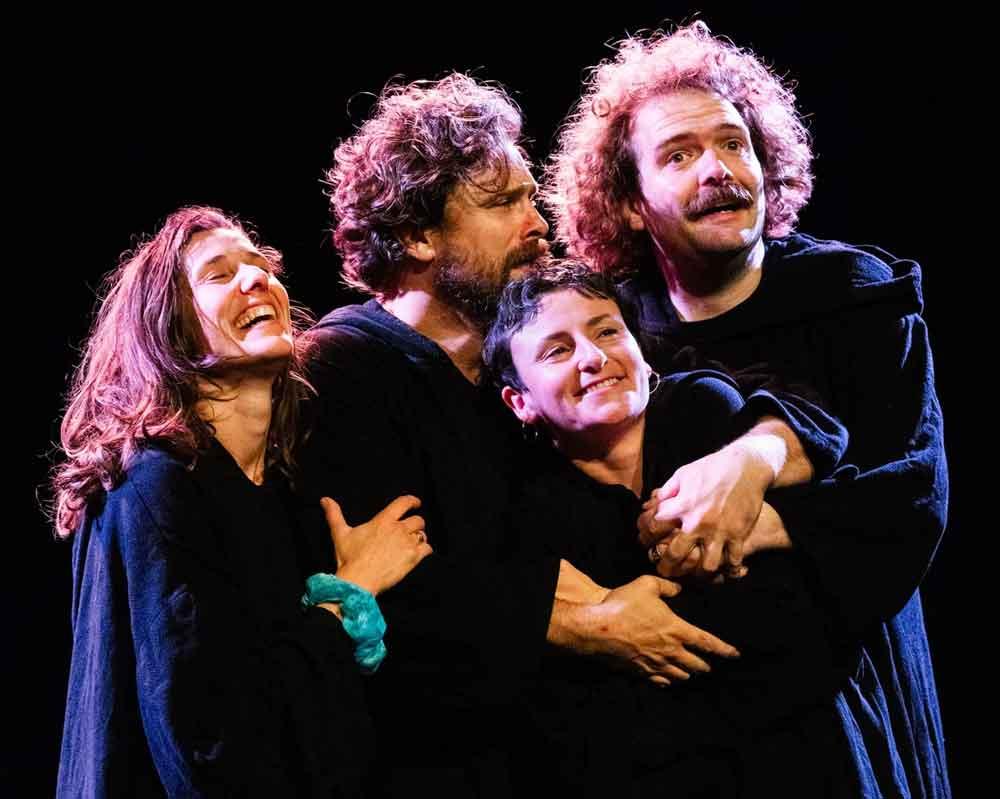
And then came Underground Monk Show. How does one adequately describe Underground Monk Show? Five Los Angeles based performers, Max Baumgarten, Dee Marcucci, John Norris, Bill O'Neill and Claire Woolner, appear as a group of monks who discover magic water. The water makes dreams come true. The monks gradually descend into glorious madness. That is probably all anyone needs to know. We watched it late at night in the Piccolo tent at Assembly, which somehow made everything even more surreal. At one point I looked around and contemplated the absurdity of the situation.
I had travelled from London to Edinburgh and was now sitting inside a tent at night watching five Americans dressed as monks lose their minds over magical water. Where else but the Fringe? And I was laughing. Farzana, however, was not always laughing at the same things. This became a running theme throughout our visit. At certain performances, particularly when the comedy depended heavily upon very specific references to British life, Farzana would laugh instantly while I occasionally found myself a fraction behind the room. I understood the words. What I did not always possess was the cultural reference beneath them. On our train journey back to London, we began talking about this. Why had she found something hilarious when it had left me cold? Why had I laughed at something else when she had barely smiled? Neither of us thought the other lacked a sense of humour. We simply realised that we were bringing different cultural libraries into the theatre.
Farzana grew up in London in a British Pakistani family. British references are woven into her cultural memory. I grew up in Sri Lanka. Although I now live in London and consider it home, my earliest cultural references were formed somewhere else. Comedy, we realised, relies enormously on recognition. A joke might refer to a television programme everyone in Britain watched as a child, a particular type of school, an accent, a supermarket, a politician, a class distinction or some tiny unspoken rule of British social behaviour. If you grew up with that reference, recognition is instantaneous. You laugh. If you did not, you can understand every word of the joke and still not quite feel it. That tiny distinction between understanding something intellectually and recognising it instinctively is where so much humour lives.
Then we noticed something else. When the comedy became particularly American in its references, sensibility or rhythm, our reactions sometimes reversed. I would start laughing while Farzana remained completely straight faced. Something had travelled successfully into my cultural universe and failed to land in hers. We began to find our different reactions almost as funny as the shows themselves. Two women could sit side by side, watching precisely the same performer, hearing precisely the same words, and effectively experience two different shows. The more we talked about it, the more fascinating it became.
Every one of us, I realised, carries an invisible cultural library. Mine began in Sri Lanka. Farzana's began in London within a British Pakistani family and has expanded through marriage into a British Italian family, as well as through a career that takes her across countries, institutions and cultures. Neither library is static. Every country we visit adds something. Every person we know adds something. Every book we read, film we watch, friendship we form and place we call home adds another shelf. But the earliest shelves remain. Perhaps that is why humour can be such an intriguing test of cultural belonging. You can live in a country for years. You can understand its politics. You can participate fully in its professional and social life. You can speak its language perfectly. Then somebody makes a joke about something every British child apparently experienced decades ago and the entire room collapses with laughter while you sit there thinking, what on earth just happened? There is something rather wonderful about that. The Fringe made me think about this because it is such an international gathering.
During our visit, we travelled from Farah Ashraf's British Pakistani world in Pink Rabbit to Temi Wilkey's exploration of love in Lover Girl. We went from the Shakespearean reinvention and ecological anxieties of HAM to Arjun Doraiswami and Luke Ditchfield turning immigration bureaucracy into comedy in Dude, Where's My Visa? Then came Frankie Thompson's wonderfully strange world in Horrible Things and, finally, the glorious American madness of Underground Monk Show. In the space of a few days, we had encountered British, Pakistani, Indian, American and other cultural references, all filtered through completely different theatrical forms. Each performer arrived with a cultural vocabulary. And each member of the audience arrived with theirs. Sometimes they collided. Sometimes they missed one another entirely. And sometimes they connected so perfectly that an entire room erupted simultaneously in laughter. That is the magic of live performance. You are not sitting alone at home watching a screen. You are surrounded by other human beings, and their reactions become part of your experience. A laugh can become contagious. So can silence. Sometimes the audience understands something before you do. Sometimes you find yourself laughing at something that seems to have passed everyone else by. There is vulnerability on both sides of the stage. Beyond the performances themselves, one of my greatest pleasures was meeting some of the people who make this extraordinary festival possible.
I encountered remarkable young actors, writers and producers from Britain and around the world. Many were still at relatively early stages of their careers, yet there was an infectious sense of possibility about them. I found that enormously inspiring. Usually, we encounter artists after success has arrived. We see the West End production, the television programme, the international tour or the sold-out comedy show. Edinburgh allows you to see something earlier and perhaps more exciting. You see people taking risks. You see ideas before anyone knows whether they will work. You see performers enter tiny rooms and ask complete strangers to believe in them for an hour. You meet producers who have taken a chance on a new voice. You meet directors helping performers shape an idea. You see young artists carrying their own flyers through the streets and then, an hour later, commanding a room. And occasionally you have the delicious feeling that you might be watching somebody who, in a few years, everyone will know. That sense of possibility seems to permeate Edinburgh during the Fringe.
It is in the performers. It is in the audiences. It is in the producers and programmers rushing between shows. And it is in the city itself.
By the end of our visit, Edinburgh had become as memorable to me as any individual performance. I loved walking through its historic streets between shows. I loved the food stalls, the temporary bars and the fairy lights glowing above crowded courtyards as darkness fell. I loved watching groups of friends gather around tables comparing notes about what they had seen. I loved overhearing fragments of conversations about performances as we passed strangers in the street. Someone was always recommending something. You must see this. Don't miss that. Have you heard about the show in the tiny room upstairs? The entire city seemed to be participating in one enormous conversation about creativity. There was also something liberating about allowing myself to see performances I might never ordinarily have chosen. At home, we tend to gravitate towards what we know. We choose familiar genres, familiar theatres, familiar performers. Edinburgh encourages the opposite. It encourages curiosity. Walk into the tent. Take the flyer. Watch the unknown performer. Give the strange idea an hour. You might hate it. You might love it. You might not understand it at all. But you will probably have something to talk about afterwards.
Eventually, after what felt like a cultural marathon, Farzana and I boarded our train back to London. We were tired, culturally overwhelmed and completely exhilarated. As the landscape passed outside our window, we talked about Pink Rabbit, Lover Girl, HAM, Dude, Where's My Visa?, Horrible Things and those completely mad monks with their magical water. We talked about the performers we had met and the producers behind them. We talked about Soho Theatre and the importance of organisations prepared to champion new talent. We talked about Edinburgh and how extraordinary it is that, for a few weeks every year, an entire city becomes a platform for imagination. But we kept returning to laughter. They say laughter is the best medicine. Perhaps it is. But Edinburgh taught me that what makes us laugh tells us something surprisingly profound about who we are.
It tells us where we grew up. It tells us what we watched as children. It tells us which references we instinctively understand and which ones still require translation. It carries traces of family, geography, class, language, education and memory. Humour has history inside it. The wonderful thing is not that Farzana, and I always laughed at the same things. We didn't. The wonderful thing was that we could sit beside each other, experience the same performance differently and then spend the journey home trying to understand why. Perhaps that is what culture at its best allows us to do. Not simply to recognise ourselves, but to become curious about what somebody else sees. That, for me, is the spirit of the Edinburgh Fringe. For a few magical weeks every year, a beautiful city opens itself to thousands of people with strange, brave, funny, provocative and occasionally completely bonkers ideas and says: come and show us what you have. Some will make us think. Some will move us. Some will challenge us. Some will bewilder us. Some will make Farzana laugh while I sit there wondering what I have missed. Others will make me laugh while she looks at me in complete disbelief. And some will make an entire room of strangers laugh together. If we are lucky, they might even teach us something about ourselves along the way.
My first Edinburgh Fringe was chaotic, surprising, culturally fascinating and utterly magical. I arrived expecting to see some good theatre and comedy. I left thinking about culture, identity, creativity, belonging and the strange alchemy that occurs when a performer walks onto a stage and tries to make a room full of strangers feel something together. As our train carried us south towards London, there was at least one thing Farzana, and I agreed upon that required absolutely no cultural translation. We have to come back next year.
---------------------------------------
The Edinburgh Festival Fringe: A Snapshot
The Edinburgh Festival Fringe is the world’s largest celebration of performing arts, transforming Scotland’s capital into an extraordinary international stage for several weeks every August. Theatre, comedy, music, dance, circus, cabaret, spoken word, musicals and experimental performance spill into theatres, pubs, tents, university halls and wonderfully unconventional spaces across the city. The Fringe began in 1947, when eight theatre companies arrived in Edinburgh uninvited and performed alongside the newly established Edinburgh International Festival. Their independent performances took place on the “fringe” of the official festival, and an entirely new cultural movement was born. Today, the scale is remarkable. Recent editions have featured around 4,000 shows and more than 50,000 individual performances, spread across roughly 300 venues. In 2026, the Fringe ultimately welcomed 4,232 shows from 77 countries, staged across 306 venues, demonstrating just how international the festival has become. The Fringe takes place annually in August, generally running for around three to four weeks. The 2027 Fringe will run from 6th to 30th August, marking the festival’s 80th anniversary.