Lakmahal: Where Legacy Still Welcomes
By Shaleeka Jayalath
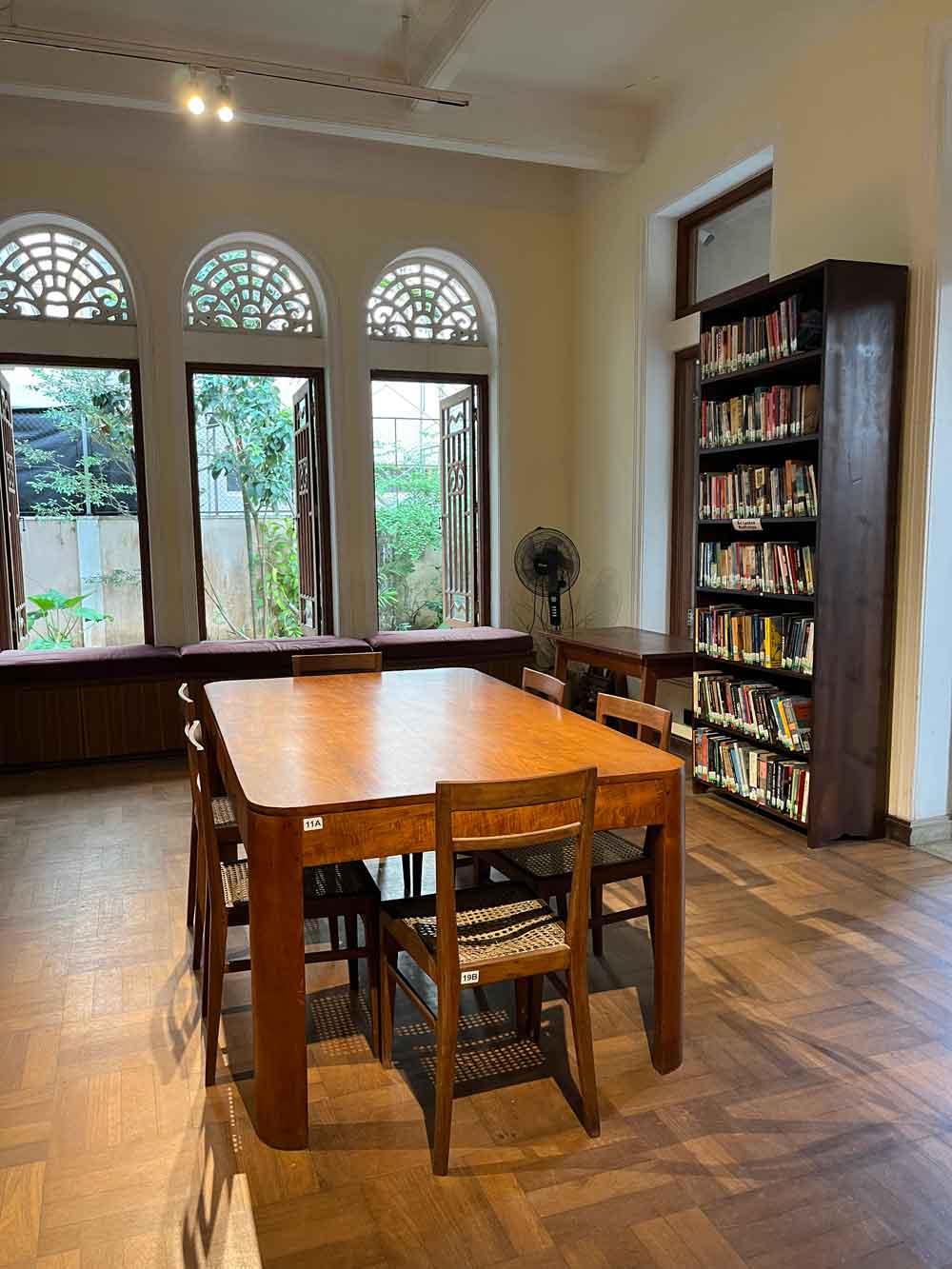
 In a time when progress is often measured by what we replace rather than what we preserve, there is quiet significance in a place that chooses memory as its foundation. The Lakmahal Community Library is, at first glance, a sanctuary for readers and writers, a peaceful space housing over three thousand books across genres, inviting visitors to read, think, create and converse. Yet Lakmahal is far, far more than shelves and tables. It is, in truth, a living inheritance: an affirmation that community is not built merely through infrastructure but through values sustained across generations.
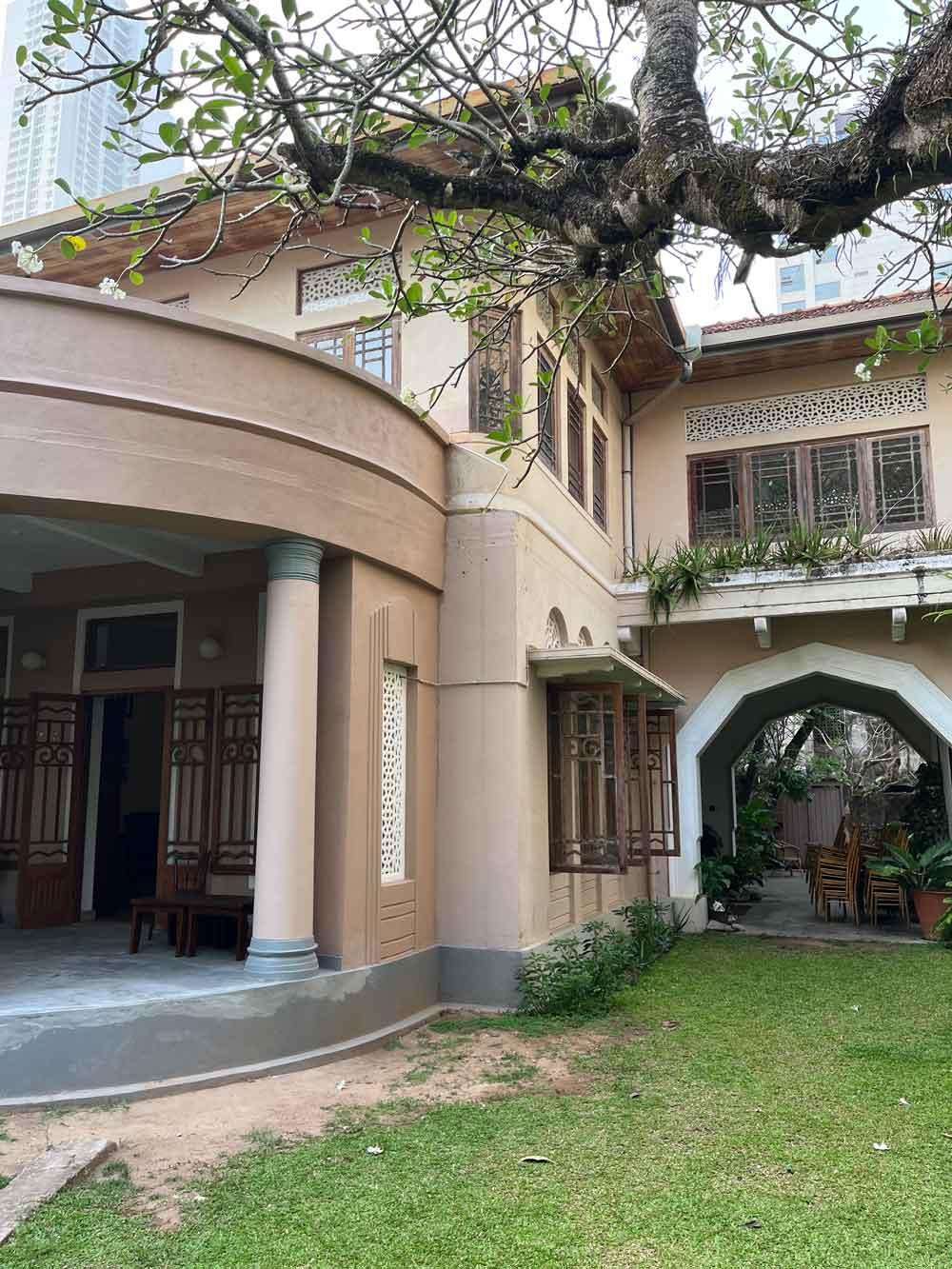
Built in 1937 as a private home, Lakmahal once belonged to a family united by a love of literature. The house was built by civil servant Cyril Wickremesinghe, originally from Galle, and his wife Esme, from Kurunegala, after years of travelling across the island following government postings. In finally settling in Colombo, they established not merely a residence but a household which was expansive, familial and permanently open to visitors. In choosing to retain both the house and its name, the founder of the library and great-granddaughter of Cyril and Esme Wickremesinghe, Anisha Dias Bandaranaike, did something quietly radical. She did not convert a building into a library; she extended a home into a community. The rooms of the Lakmahal library today host reading circles, writing groups and conversations among strangers who gradually cease to be strangers. The aim is simple yet ambitious: to cultivate reading, storytelling, creative thought and wellbeing through an accessible public space. But the atmosphere that makes such activity possible was not created recently. It was inherited.
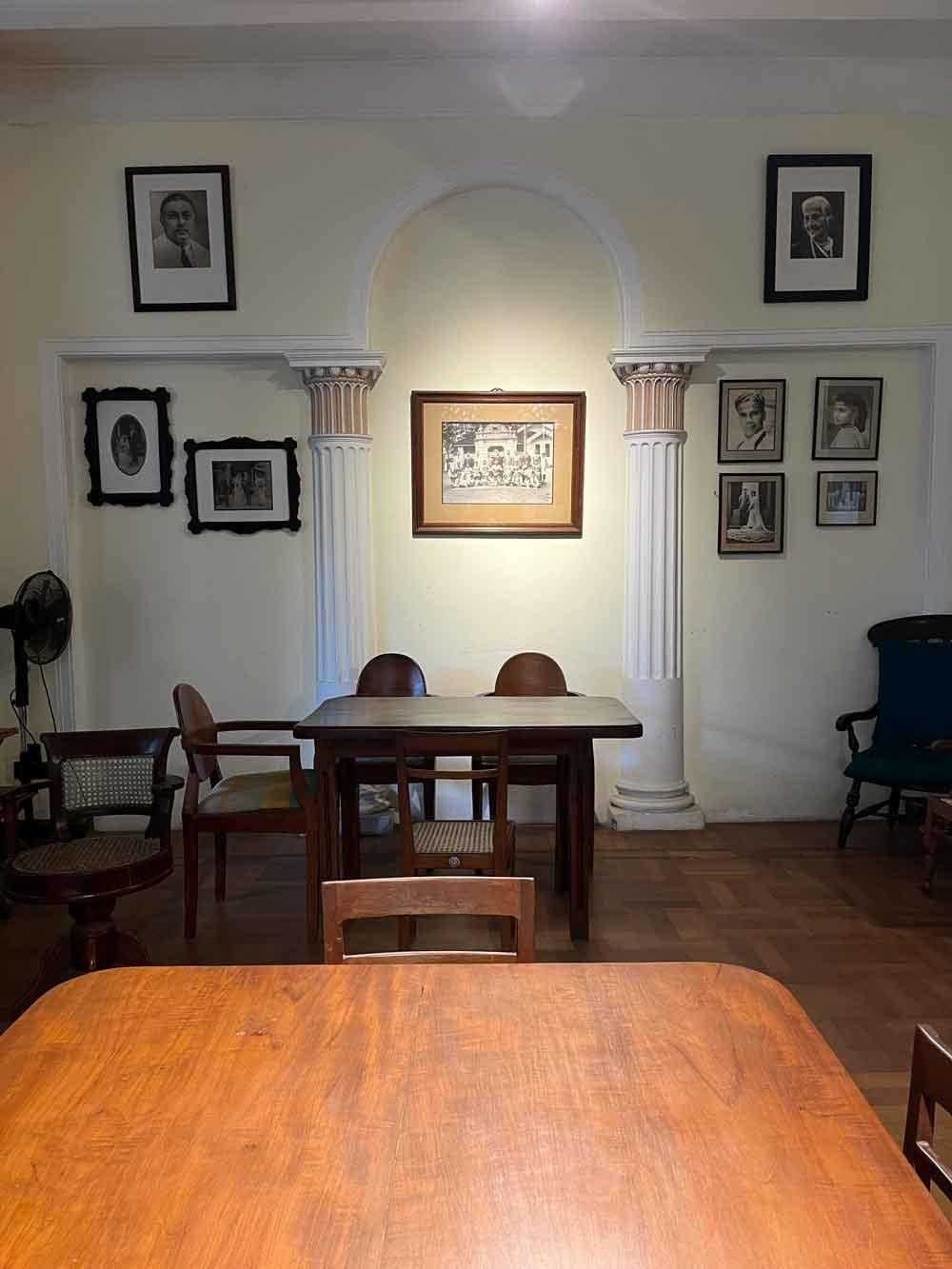
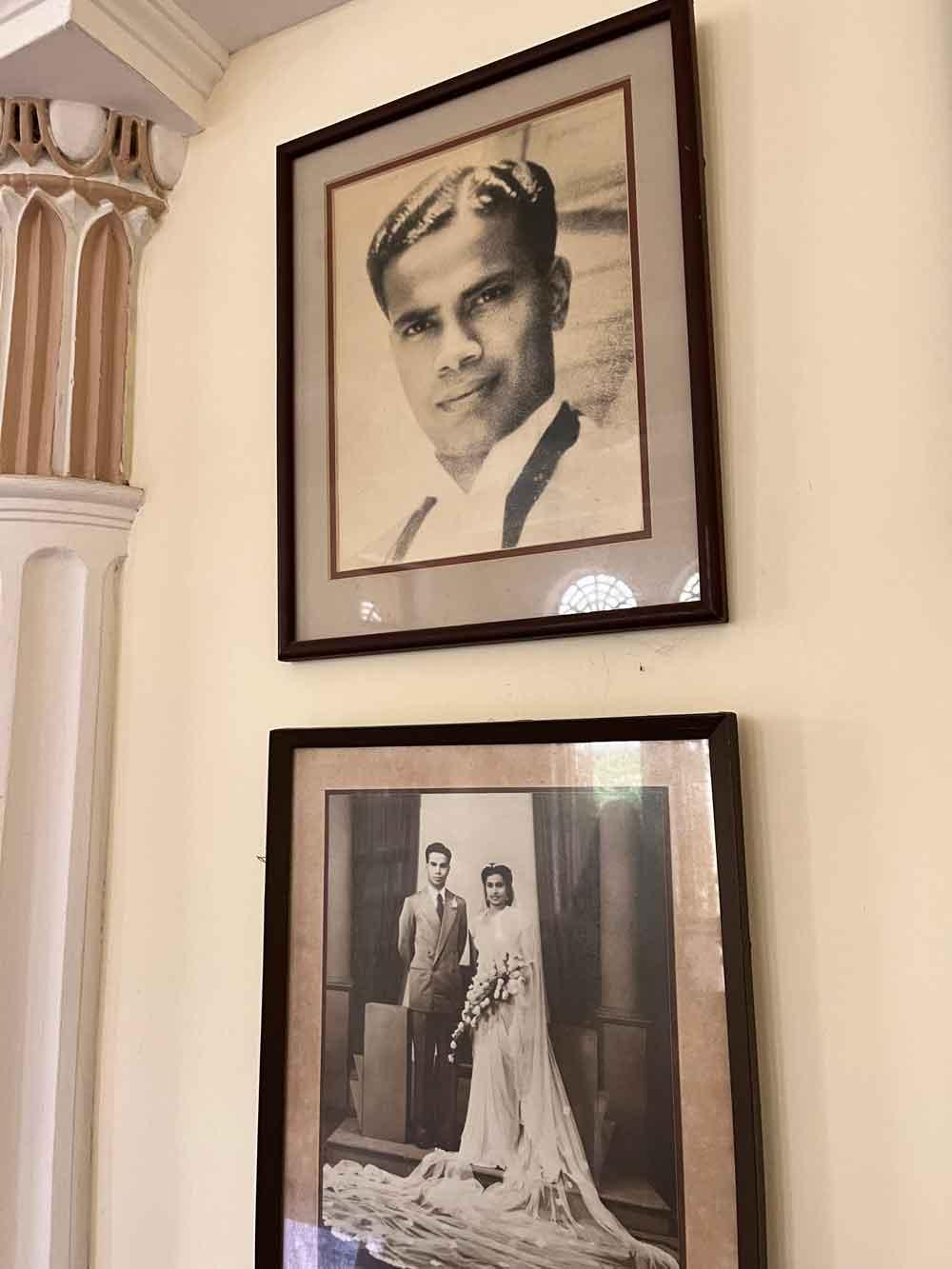
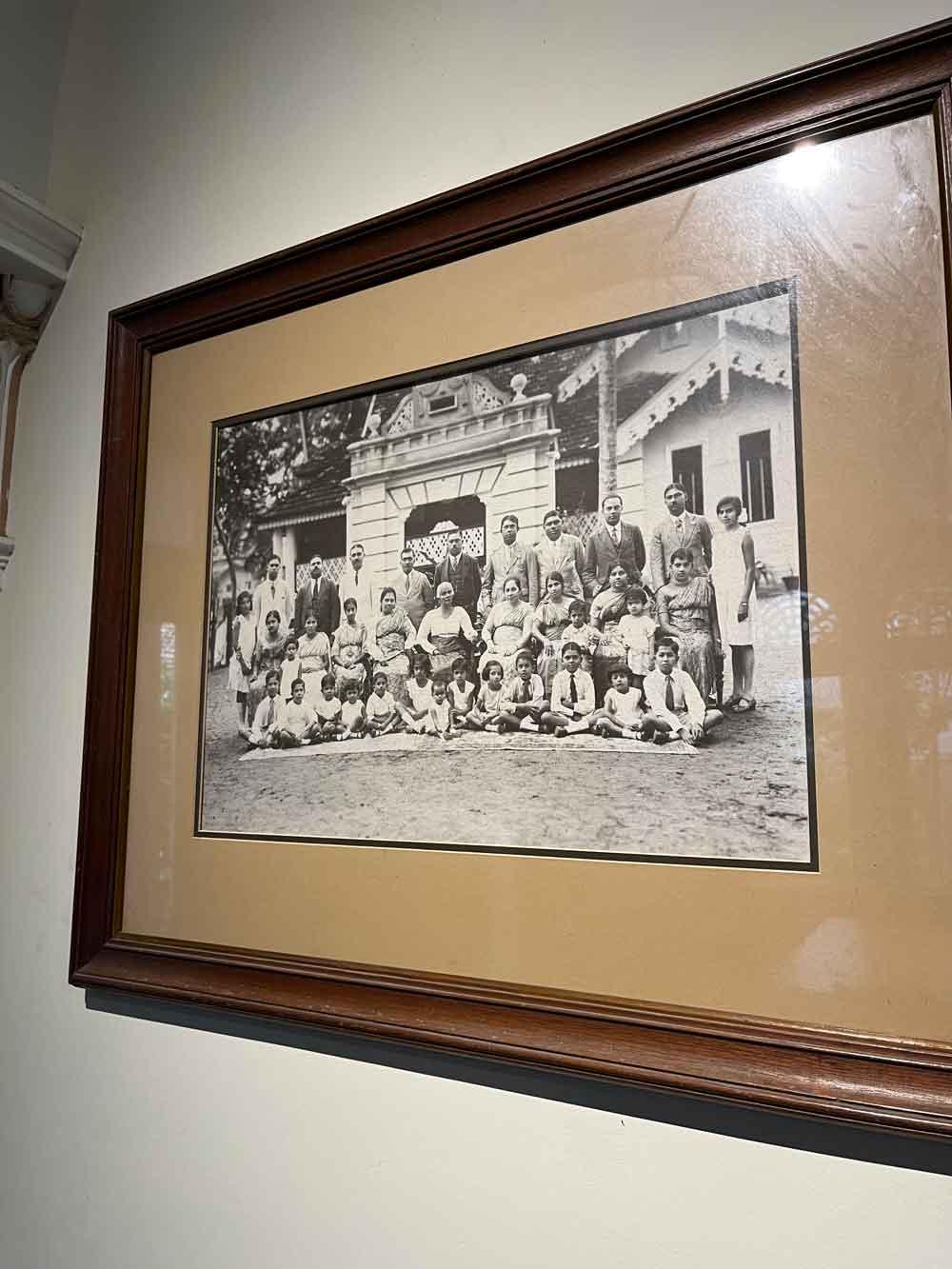
The walls themselves tell the story. Photographs of Cyril and Esme Wickremesinghe, as well as their son-in-law and daughter Sam and Mukta Wijesinha to whom Lakmahal was passed down, greet visitors, not as ceremonial decoration but as explanation. Lakmahal functions as it does because long before it became a library, it was a home whose doors rarely stayed closed. Cyril Wickremesinghe came from a large family of nine siblings, and Lakmahal quickly became a gathering place for nephews, nieces, cousins and godchildren who were regularly sent to Colombo to study or, as family lore affectionately recalls, to acquire a measure of discipline. Esme Wickremesinghe made no distinction between her own relations and those of her husband; the house absorbed them all. Family gatherings grew so large that more than one dining table was often required, meals unfolding amid conversation, debate, teaching and study.
Even after Cyril’s death in 1945, Esme continued this tradition of availability - always finding time, always making space. That instinct for hospitality and attentiveness was undoubtedly inherited by her daughter Mukta, for whom openness to others was never performance but upbringing. Both she and her husband Sam practised an open house in the truest sense. Lakmahal was not a salon for the privileged, but a refuge for the uncertain. Spare rooms appeared when someone needed accommodation; meals extended when conversation lingered; background, profession, ethnicity or belief were never conditions of welcome. Many arrived for an afternoon and stayed for weeks. Others came burdened and left steadied. No formal programme existed, yet guidance was constantly given.
Sam Wijesinha’s public life is well recorded: Secretary General of Parliament at a formative period of Sri Lanka’s legislature and later the nation’s first Parliamentary Commissioner for Administration. These roles required authority, but those who encountered him remember accessibility. Early mornings at Lakmahal often began with the sound of cups before conversation, Sam having prepared coffee for whoever had arrived, whether student, journalist, neighbour or stranger. Advice rarely appeared as instruction; it emerged through gentle questions that allowed a visitor to arrive at clarity independently. One left believing one had solved one’s own dilemma, only later realising one had been guided.
I was privileged to know them both, Mukta Wijesinha being my mentor. Her influence extended beyond family and friendship into the shaping of character in hundreds of young people. Starting out as a Girl Guide and then a Guide and Ranger Captain at Ladies' College Colombo, she later served as Chief Commissioner and eventually President of the Sri Lanka Girl Guides Association, and represented the country internationally as World Board Member of the World Association of Girl Guides and Girl Scouts. Titles, however, fail to capture her method. Meetings never ended when the programme ended; she ensured a child travelled home safely, checked whether a quiet student had been heard, noticed when someone seemed troubled and followed up days later. Her service to the Church of Ceylon reflected the same instinct - quiet constancy rather than visible leadership. She mentored without announcing mentorship; one recognised it only years afterwards, when her voice surfaced unexpectedly as one’s own conscience. Like her husband Sam, Mukta kept the doors of Lakmahal open to
anyone who sought help or guidance. Around the same dining table that had been maintained by her parents, gathered students, members of the Girl Guiding and Church of Ceylon communities, relatives, friends of her children, and countless other visitors who passed through the doors of Lakmahal. No one left without sharing a meal; all were invited to partake simply as they were, as part of the family.
Seen in this light, the tea and coffee available today at the library acquire meaning beyond courtesy. Visitors help themselves not as customers but as guests, participating knowingly or not, in a tradition established decades earlier. What may appear to be a simple gesture is in fact a cultural transmission: hospitality as education.
Sri Lanka as long maintained public libraries and private collections, but a community library occupies a subtler space. Lakmahal does not merely provide access to books; it recreates an environment in which learning naturally occurs. Reading encourages empathy, conversation refines thought, and shared space nurtures responsibility toward others. The founders of the house once achieved this informally; the library now sustains it intentionally.
Legacy is often imagined as monument or institution bearing a name. Yet Lakmahal suggests a quieter definition. Legacy is behaviour repeated until it becomes atmosphere. The openness once practised by two individuals has become the operating principle of a public space. A visitor who studies there, shares a table, pours a cup for someone else, or lingers to speak with a stranger, unwittingly continues a pattern begun long before the library existed.
In preserving a home rather than replacing it, Lakmahal preserves something rarer than architecture: a habit of humanity. At a moment when societies risk efficiency without empathy, it reminds us that education is not confined to bookshelves but lived in how people are received. The house still teaches, not through instruction but through welcome. Lakmahal thus stands not as memorial but as continuation. Its shelves hold stories, but its greater lesson is the one enacted daily within its walls: that community survives when generosity becomes ordinary, and that the most enduring inheritance is the space we make for one another.