After the Firecrackers Fade: What Avurudu Really Leaves Behind
By Dewmi Dodhani
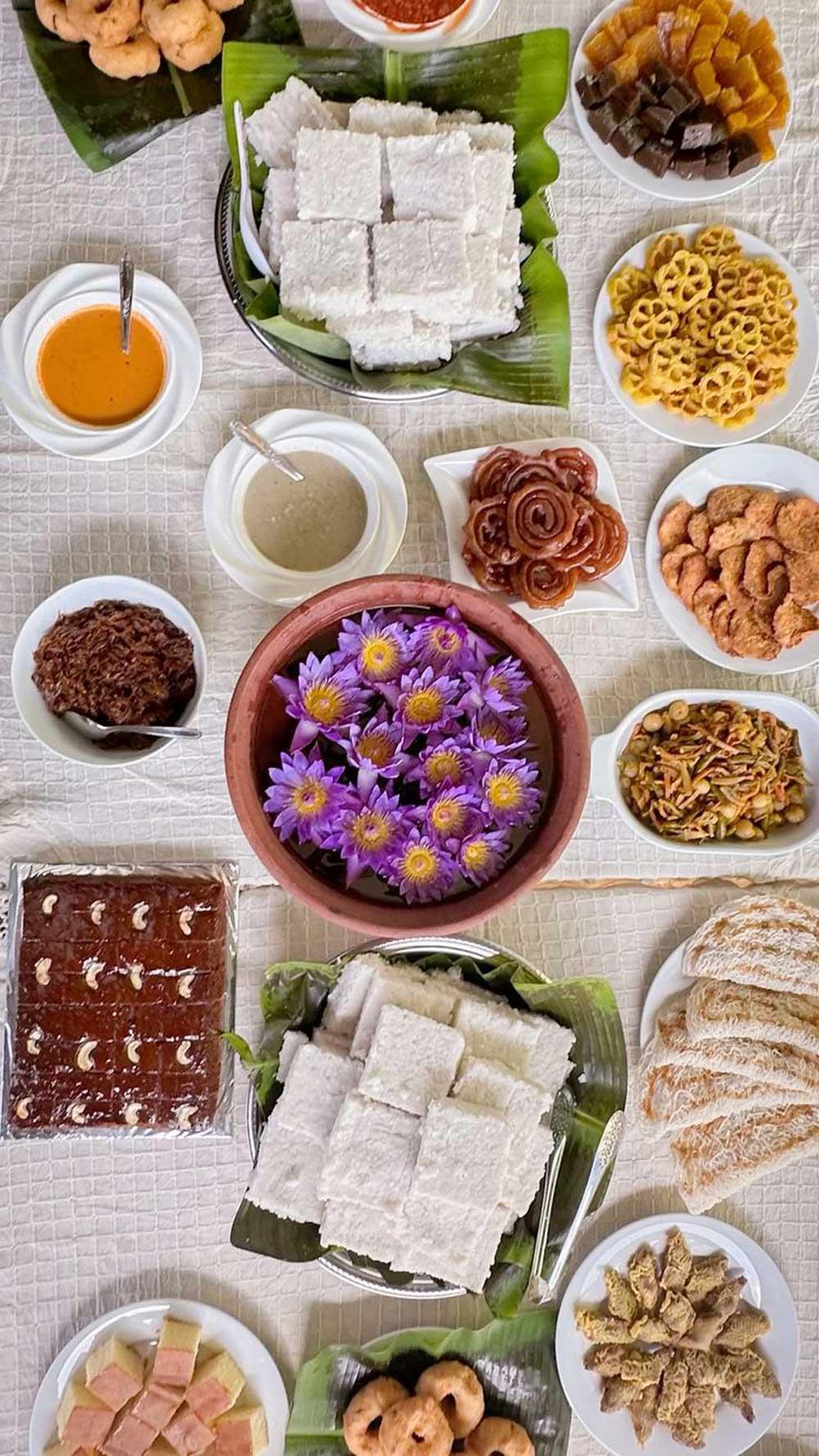
For a few days each year, life softens. The pace that usually defines daily routines begins to loosen its grip. Shops close earlier, roads feel less crowded, and the constant urgency that drives work, study, and responsibility seems to step aside. Homes become warmer, not just in temperature but in spirit. The scent of freshly prepared kevum and kokis fills the air, relatives gather across generations, and conversations stretch without the usual pressure of time.
Sinhala and Tamil New Year, known as Avurudu, does not arrive merely as a cultural celebration. It arrives as a pause. A reset. A rare moment where people are allowed to exist without the constant demand to produce, achieve, or move forward. Yet like all pauses, it does not last. The firecrackers eventually fall silent. New clothes are folded and placed carefully back into cupboards. Plates that once overflowed with sweetmeats return to their usual simplicity. Decorations come down. Guests leave. Slowly, almost without notice, life resumes its familiar rhythm. And it is here, in this quiet return, that a deeper question begins to take shape. What does Avurudu truly leave behind once it is over?
One of the most striking aspects of the New Year period is the stillness it creates. In a world that rarely allows people to stop, Avurudu offers permission to do exactly that. There is no overwhelming pressure to be productive. Deadlines are temporarily suspended. Expectations soften. Time opens up in a way that feels unfamiliar yet deeply comforting. People sit together without glancing at the clock. They visit neighbours without needing a specific reason. Children play games that require nothing more than laughter and presence. Even moments of silence feel different, less like emptiness and more like rest.
This kind of stillness is rare. It stands in sharp contrast to the pace that dominates the rest of the year. Perhaps that is why its absence feels so noticeable once the celebrations end. The calm that once seemed effortless begins to fade as responsibilities return. Messages demand replies. Tasks accumulate. Schedules fill every available space. The pause disappears, and with it, a certain kind of clarity. After Avurudu, people often speak about returning to normal life. The phrase is used casually, almost automatically. But it raises an important question. What exactly is normal? Is normal the fast moving, tightly scheduled version of life that leaves little room for reflection or connection? Or is it the slower, more grounded experience that emerges during the New Year?
Avurudu quietly exposes this contrast. It reveals that another way of living is possible. A way where time is not measured solely by productivity, where relationships are not squeezed into brief intervals, and where presence is valued more than constant motion. Despite experiencing this alternative, most people return to their previous patterns almost immediately. This is not necessarily a conscious choice. It is often the result of how modern life is structured. Systems of work, education, and communication are built around speed and efficiency. Slowing down, outside of designated periods like Avurudu, can feel impractical or even impossible.
Yet the memory of that slower pace lingers, creating a subtle awareness that something different exists. Another defining feature of Avurudu is the way it transforms human connection. Interactions during this time feel fuller. Conversations are not rushed. They unfold naturally, moving from one topic to another without the pressure to conclude quickly. Visits carry intention rather than obligation. Even the simplest exchanges, offering food, sharing greetings, or laughing over traditional games, feel meaningful. These moments are not driven by convenience. They are shaped by presence. People are not multitasking or dividing their attention. They are simply there, engaged with one another.
This depth is what makes these interactions memorable. It is not necessarily what is said or done, but how it is experienced. Once the festive period ends, communication often shifts back to a more efficient mode. Messages replace conversations. Responses become shorter. Staying in touch becomes easier, but the quality of connection can diminish. The warmth that defined Avurudu interactions begins to fade into something more functional.
This shift highlights an important difference. Being connected is not the same as feeling connected. Avurudu serves as a reminder of what that distinction looks like in practice. Traditions also take on renewed significance during this time. In a rapidly evolving world, customs can sometimes feel distant or symbolic, something to be observed rather than experienced. However, during Avurudu, these traditions come alive in a way that feels relevant and grounding.
Lighting the hearth at an auspicious time is not just a ritual. It becomes a shared moment that links families across generations. Preparing traditional foods is not simply about cooking. It is about preserving a sense of identity and continuity. Following age old practices creates a connection to something that extends beyond the present moment. Even those who do not strictly adhere to every custom often find comfort in their presence. These traditions provide a sense of stability in a world that is constantly shifting. They remind people of where they come from, offering a quiet anchor amid change.
When the celebrations conclude, these rituals may no longer be performed daily, but their impact does not vanish entirely. They leave behind a sense of belonging that continues to resonate. As life returns to its usual rhythm, it might seem as though everything associated with Avurudu disappears. The decorations are gone. The gatherings come to an end. The routines that once paused resume their familiar pace.
However, not everything fades. What remains are often the smallest and most subtle experiences. A memory of sitting with family without the distraction of a phone. A conversation that felt genuine and unforced. A moment of laughter that did not need to be recorded or shared to have value. These are not tangible things. They cannot be stored, displayed, or revisited in a physical sense. Yet they linger in quieter ways, shaping how people feel long after the festival is over. The challenge lies in noticing them. It is easy for these moments to be overshadowed by the return of routine. Without attention, they can fade just as quickly as the celebrations themselves.
Perhaps Avurudu is not meant to exist solely as a temporary escape from reality. It may serve a deeper purpose as a reminder. A reminder that slowing down is possible, even if only in small ways. A reminder that meaningful connection does not require a special occasion. A reminder that presence holds more value than constant activity. However, reminders only matter if they lead to change.
If life continues exactly as it was before, rushed, distracted, and disconnected, then Avurudu becomes just another event marked on the calendar. It is experienced, enjoyed, and then left behind without lasting impact. But if even a small part of that stillness is carried forward, the outcome becomes different. It does not require a complete transformation of daily life. It can begin with simple choices. Taking a little more time for conversation. Being fully present during shared moments. Allowing brief pauses in a day that would otherwise feel continuous. These small shifts may seem insignificant, but they have the potential to extend the essence of Avurudu beyond its designated days.
When the firecrackers fade and the noise settles, what remains is not the visible celebration. It is something quieter and less obvious. A glimpse of an alternative way of living. One that is slower, more attentive, and more connected. This glimpse is easy to overlook, especially as routines reassert themselves. Yet it carries meaning precisely because it offers contrast. It shows what life can feel like when the usual pressures are set aside. In the end, the true significance of Avurudu may not lie in the days it is celebrated. It may lie in what is remembered and what is carried forward afterward.
The festival does not need to last for its impact to endure. Its value is found in the awareness it creates. An awareness of time, connection, and presence. After everything returns to normal, that awareness remains, waiting to be noticed. And perhaps that is what Avurudu really leaves behind. Not just memories of celebration, but a quiet invitation to live differently, even within the same life.