Education Taught Us Answers, Not Awareness

 By Dewmi Dodhani
There is a certain confidence that comes with walking into an exam hall. Notes revised, concepts memorized, key terms sitting neatly in your mind like checkpoints you have already passed. You take your seat, scan the paper, and feel a quiet sense of relief when something familiar appears. In that moment, familiarity feels like success. It signals that you are prepared, that you know what to do, that you can deliver what is expected of you. But somewhere between writing answers and earning marks, a quieter and far less comfortable question begins to surface. What exactly have we learned?
Not learned in the sense of recalling definitions or structuring essays but learned in a way that shapes how we see, think, and respond to the world around us. It is a different kind of learning, one that does not fit neatly into bullet points or marking schemes. And it is often the kind that slips through the cracks of formal education. Education, as most of us experience it, is deeply centered around answers. There is always a correct one, sometimes a few acceptable variations, but rarely space for uncertainty. From a young age, we are trained to aim for accuracy, to avoid mistakes, and to trust that knowledge is something that can be clearly defined and neatly contained within textbooks and lecture slides. The system is designed to reward clarity, precision, and repetition.
To an extent, it works. It produces results. It produces graduates. It produces individuals who know how to respond when a question is placed in front of them. It teaches discipline, structure, and the ability to meet expectations. These are not insignificant outcomes. They shape careers, open doors, and create opportunities. But life does not always come in the form of a question paper. Outside the classroom, situations are rarely structured. There are no clear instructions, no predefined formats, and certainly no guaranteed right answers. Instead, there are complexities. There are people, emotions, conflicts, and decisions that demand something deeper than memorized knowledge. They demand awareness.
Awareness is not something you can underline in a textbook or revise the night before an exam. It is not something that can be summarized in a set of bullet points. It is built gradually, often quietly, through observation, reflection, and lived experience. It requires the ability to question, to doubt, and sometimes to sit with uncertainty without rushing to resolve it. And yet, these are the very skills that often receive the least attention in formal education.
In many classrooms, asking why is encouraged, but only up to a point. There is a boundary, even if it is not always visible. Once the syllabus needs to be completed, curiosity becomes secondary to coverage. There is pressure to move forward, to finish content, to prepare for assessments, and to ensure that students can reproduce what they have been taught. Slowly, without it being explicitly stated, learning begins to shift. It becomes less about understanding and more about performance.
Students begin to measure their worth through grades. A high score becomes a reflection of intelligence and capability, while mistakes are seen as shortcomings rather than necessary steps in the learning process. The focus moves from exploring ideas to arriving at the correct answer as efficiently as possible. This shift is subtle, but its effects are lasting.
Over time, it shapes how we approach not just education, but the world itself. We become comfortable with certainty and increasingly uncomfortable with ambiguity. We look for clear conclusions, even in situations that require nuance. We rely on familiar frameworks, even when they do not fully apply. We expect clarity in places where complexity is the more honest answer. But awareness does not operate within fixed boundaries. It resists simplification. It asks for flexibility and openness. It requires us to consider perspectives beyond our own, to recognize bias in ourselves and in others, and to understand that knowledge is not always absolute.
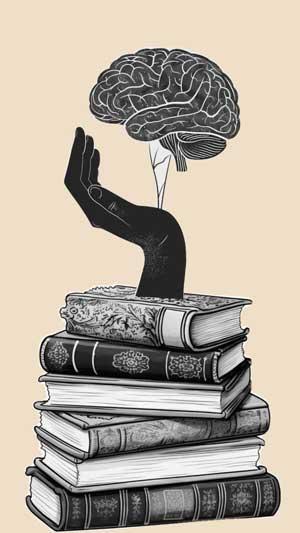 For instance, understanding a concept in sociology or psychology is one thing. Being able to define it, explain it, and apply it in an exam setting demonstrates a certain level of competence. But recognizing how that same concept plays out in real life, within families, friendships, workplaces, and communities, is something else entirely. That connection between theory and lived experience is where awareness begins to take shape. And it is not something that can be achieved through memorization alone.
This is not to suggest that formal education lacks value. On the contrary, it provides structure, foundational knowledge, and a shared framework through which we can understand the world. It introduces us to disciplines, ideas, and ways of thinking that we might not encounter otherwise. It creates pathways and opens doors that can shape the course of a person’s life. But it remains incomplete if it stops at answers.
True learning extends beyond the classroom. It happens in conversations that challenge our assumptions, in observations that shift our perspective, and in moments of discomfort where previously held beliefs begin to feel uncertain. It happens when we start to question not just what we know, but how we know it. It also happens in quieter ways. In noticing patterns in human behaviour. In recognizing the gap between what people say and what they do. In becoming aware of how context, culture, and experience influence understanding. These are not lessons that can be easily graded, but they are essential to navigating the world with clarity and sensitivity.
Perhaps the issue is not that education completely fails to teach awareness, but that it does not always prioritize it. In a system driven by measurable outcomes, tangible results often take precedence over intangible skills. Critical thinking, self-reflection, and emotional awareness are harder to quantify, and as a result, they are often treated as secondary. And yet, these are the very skills that determine how effectively we engage with reality.
Awareness does not provide easy answers. In fact, it often complicates things. It introduces doubt, forces reconsideration, and can make situations feel more difficult to understand. It challenges the comfort of certainty and replaces it with something less stable, but more honest.
At the same time, it offers something valuable in return. It allows for deeper insight, better judgment, and more meaningful engagement with the world. It creates space for empathy, for understanding perspectives that differ from our own, and for making decisions that are not just correct in theory, but thoughtful in practice. In a world that is increasingly complex and interconnected, these qualities matter. We are constantly navigating situations that do not come with clear guidelines. We encounter differing viewpoints, conflicting information, and evolving realities. In such an environment, the ability to recall information is useful, but it is not enough. What becomes essential is the ability to interpret, to question, and to adapt. This is where awareness becomes not just relevant, but necessary.
So perhaps the goal of education should be reconsidered or at least expanded. Instead of focusing solely on producing correct answers, it could also aim to develop individuals who are comfortable asking better questions. Questions that do not always have immediate answers but lead to deeper understanding over time. This does not require a complete overhaul of the system. It can begin in small ways. Encouraging open discussion without rushing to conclusions. Allowing space for uncertainty without framing it as failure. Valuing the process of thinking, not just the outcome. It also requires a shift in mindset, both for educators and students. A recognition that learning is not a finite process that ends with an exam, but an ongoing engagement with the world. A willingness to move beyond the comfort of memorized knowledge and into the more complex space of reflection and awareness. Because in the end, knowing the answer may help you pass an exam. It may help you meet expectations and achieve certain goals. But awareness is what helps you understand the world beyond it. And that understanding, while harder to measure, is far more lasting.