Neuschwanstein Castle
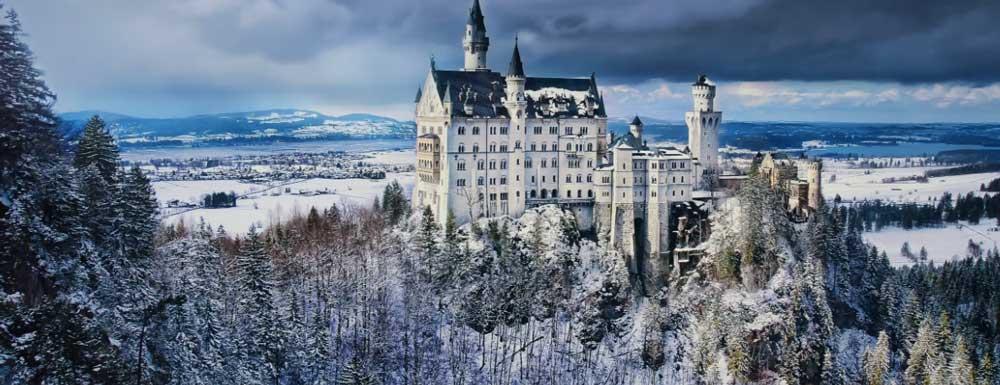
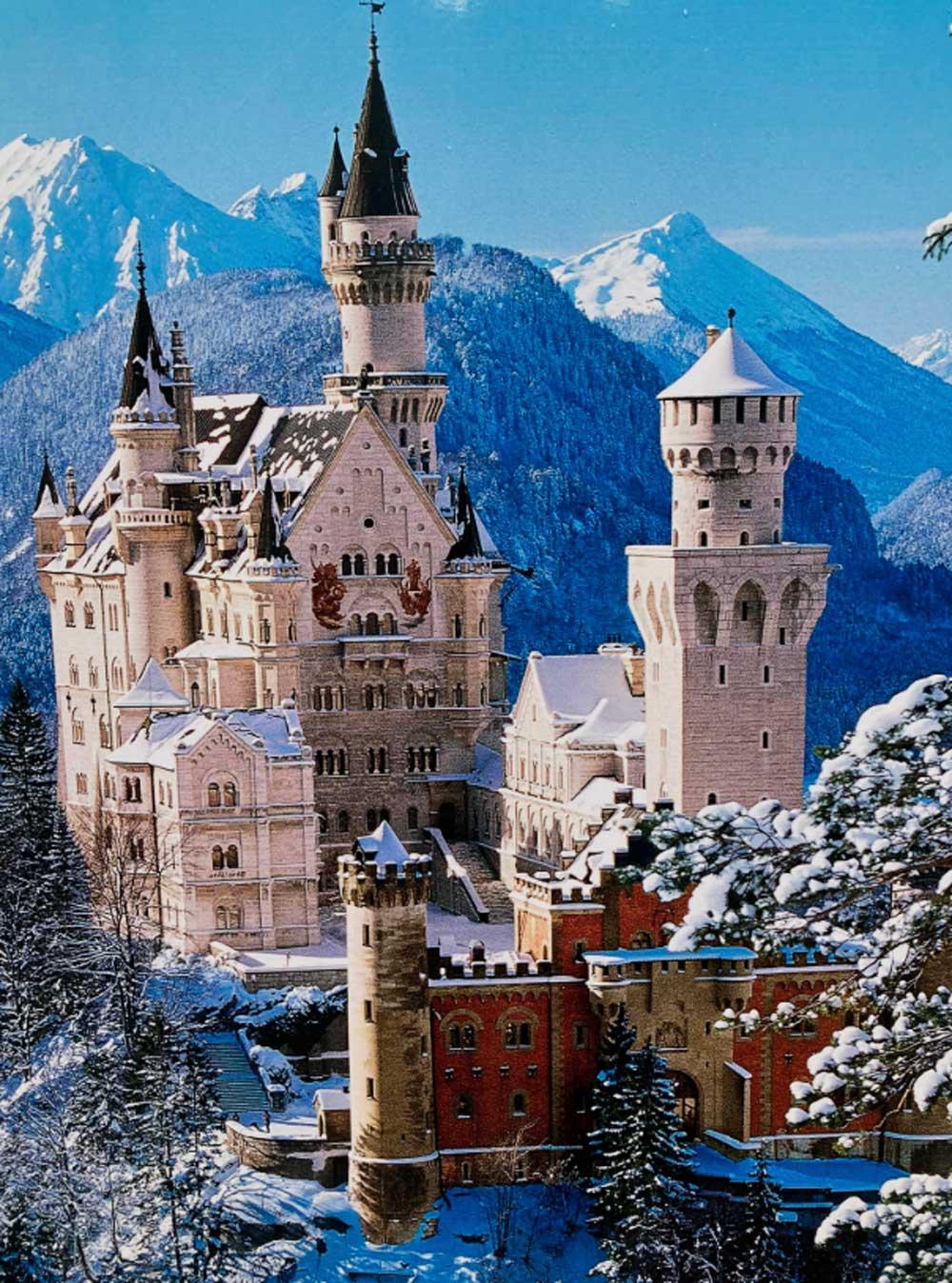
Some places feel like they’ve been lifted straight out of a storybook too magical, too perfectly imagined belonging to the real world. Perched high in the Bavarian Alps of Germany, Neuschwanstein Castle is one of those rare wonders. With its towering spires, romantic setting, and misty mountain backdrop, it looks less like a historical building and more like a dream someone once had and somehow turned into reality. Often referred to as the inspiration behind fairy-tale castles in films and literature, Neuschwanstein is not just a visual masterpiece. It is a story of imagination, solitude, artistic passion, and the blurred line between fantasy and reality. Visiting it feels like stepping into a world where kings-built castles not for defense, but for dreams.
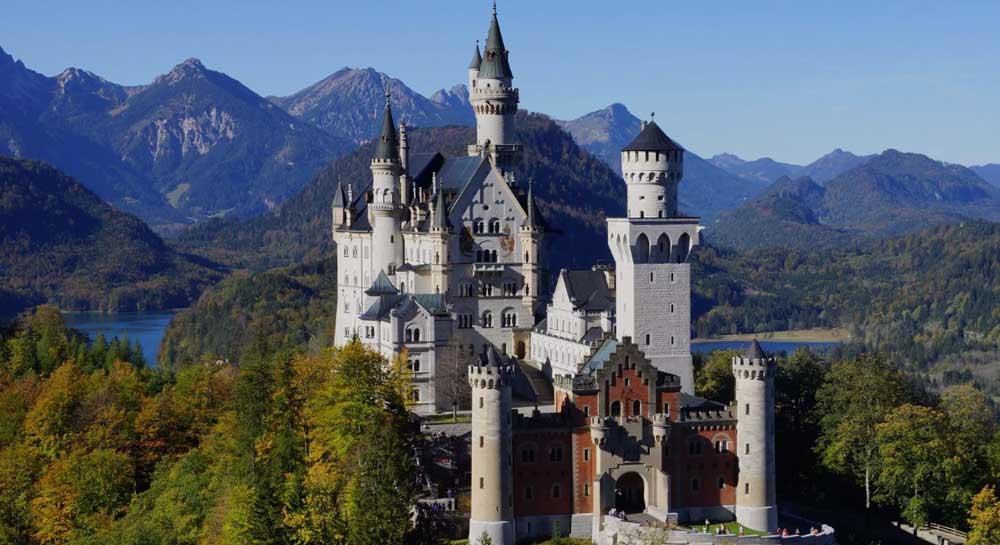
Neuschwanstein Castle was commissioned in the 19th century by King Ludwig II of Bavaria, a ruler often remembered as the “Fairy Tale King.” Unlike traditional kings focused on politics and power, Ludwig was deeply inspired by art, music, and mythology. He envisioned a castle that would serve as his personal retreat a place where he could escape the pressures of royal life and immerse himself in a world of imagination. Construction began in 1869, but unlike medieval castles built for protection, Neuschwanstein was designed purely for beauty and inspiration. Its architecture reflects romantic ideals rather than military strategy, blending Gothic, Romanesque, and Byzantine influences into a single harmonious structure. Yet Ludwig’s vision was so ambitious that the castle was never fully completed during his lifetime. Today, it stands as both a masterpiece and a reminder of a king who dared to dream beyond reality. The location of Neuschwanstein is just as breathtaking as the castle itself. Built on a rugged hill overlooking lush valleys and dense forests, it offers panoramic views of the Bavarian countryside. In the distance, the Alps rise majestically, their peaks often dusted with snow, adding to the castle’s magical atmosphere.
Below the castle lies the serene Alpsee, a crystal-clear lake reflecting the surrounding mountains. Nearby, the dramatic Marienbrücke (Mary’s Bridge) offers one of the most iconic viewpoints. From this bridge, visitors can see the castle framed perfectly against the landscape a sight so picturesque it feels almost unreal. Each season transforms Neuschwanstein in a unique way. In summer, vibrant greenery surrounds the castle, making it look alive with color. Autumn brings golden hues to the forests, creating a warm and romantic setting. Winter covers everything in snow, turning the castle into a true fairytale vision, as if it belongs in a frozen kingdom.
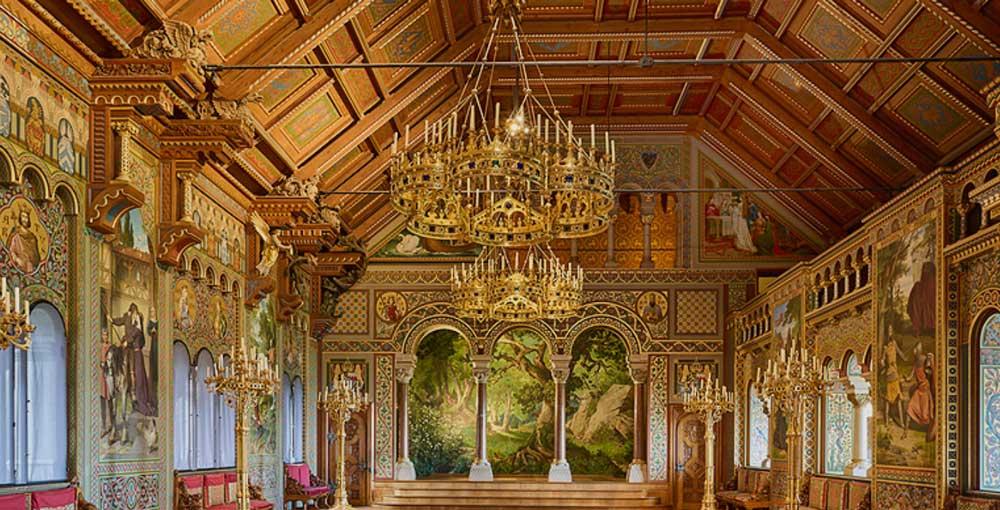
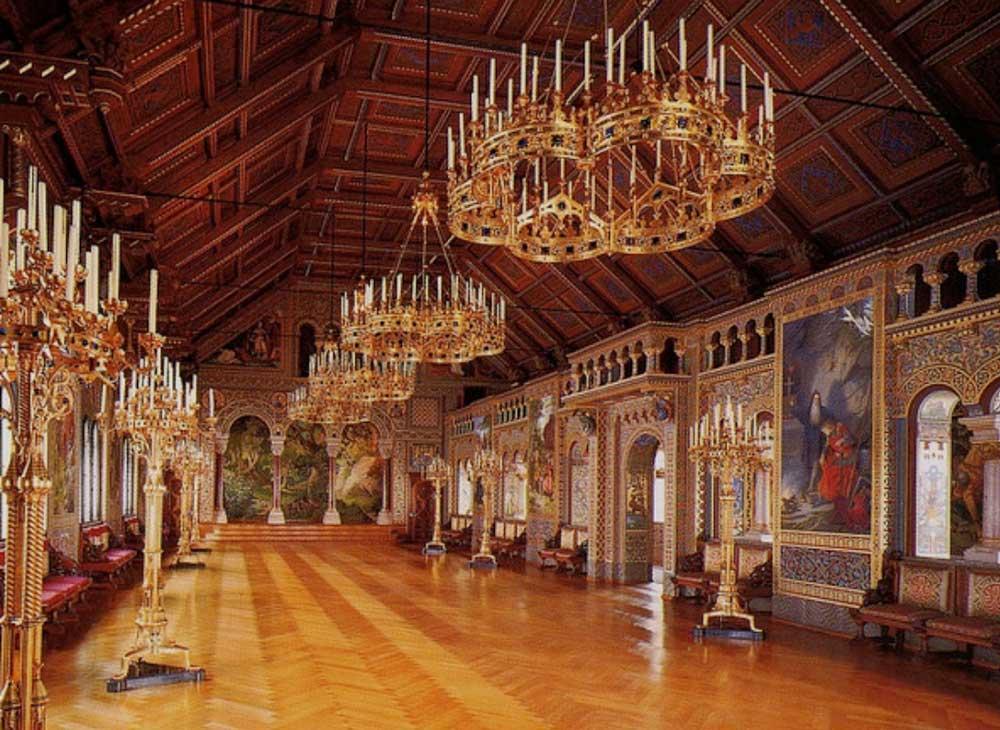
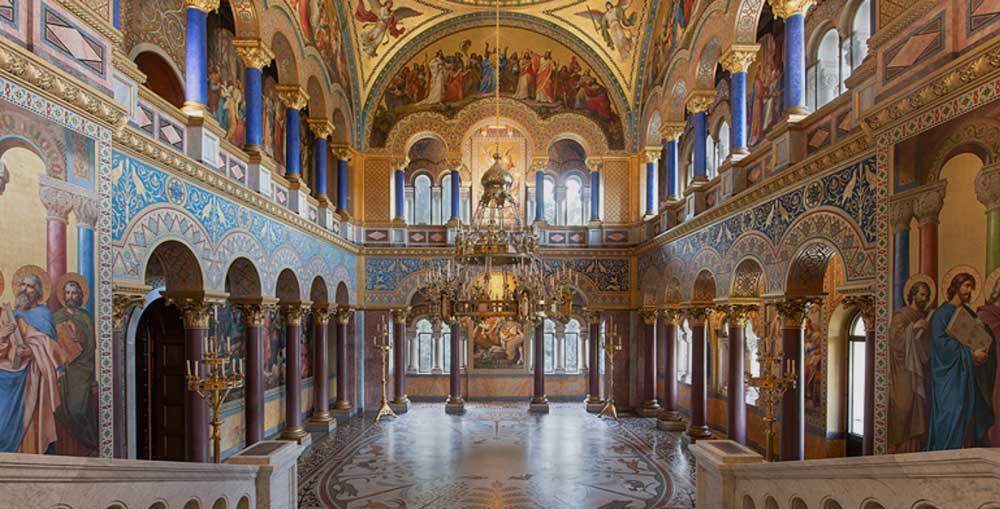
While the exterior of Neuschwanstein captures attention immediately, the interior reveals the depth of Ludwig’s imagination. Every room is designed with intricate detail, reflecting themes from medieval legends, operas, and German folklore. One of the most stunning spaces is the Throne Room. Though the throne itself was never installed, the room’s design is breathtaking featuring high ceilings, elaborate chandeliers, and golden mosaics that shimmer under soft light. The Hall of Singers, inspired by medieval knightly traditions, stretches across the castle with wooden carvings and murals depicting legendary tales. Much of the castle’s design was influenced by the works of composer Richard Wagner, whom Ludwig greatly admired. Scenes from Wagner’s operas are painted on the walls, turning the castle into a visual representation of music and storytelling.
Walking through these rooms feels like stepping into a narrative where every wall, ceiling, and detail has something to say. It is not just architecture it is art brought to life. Despite its grandeur, Neuschwanstein was never meant to be a bustling royal residence. Ludwig II lived a quiet and solitary life, using the castle as a private retreat. He often withdrew from public life, preferring the company of music, literature, and imagination. This solitude adds a layer of melancholy to the castle’s story. While it stands as a symbol of beauty and creativity, it also reflects the inner world of a king who sought escape from reality. Ludwig’s mysterious death in 1886, under circumstances still debated today, adds further intrigue to his legacy.
Shortly after his passing, the castle was opened to the public. Ironically, the place Ludwig built for solitude became one of the most visited castles in the world. Neuschwanstein’s enchanting design has influenced countless works of art and storytelling. Most famously, it served as inspiration for the iconic castle seen in Disney films. Its tall towers, romantic setting, and dreamlike appearance make it the perfect representation of a storybook palace. But beyond its influence on modern media, Neuschwanstein captures something timeless the human desire to dream, to create beauty, and to escape into imagination. It reminds us that even in a practical world, there is always room for wonder. Reaching Neuschwanstein is part of the experience. Visitors often begin in the village of Hohenschwangau, from where a scenic path leads up the hill toward the castle. The journey can be made on foot, by shuttle bus, or even by horse drawn carriage, adding to the fairytale atmosphere.
As you ascend, the castle gradually reveals itself through the trees. The anticipation builds with every step, and when it finally comes into full view, the moment feels almost cinematic. It is not just about arriving it is about experiencing the journey, the build-up, and the first breathtaking sight. What makes Neuschwanstein unforgettable is not just its beauty, but the feeling it creates. It blurs the line between reality and fantasy, making visitors question whether they are standing in a real place or inside a dream. The silence of the surrounding mountains, the soft rustle of leaves, and the distant view of valleys below all contribute to an atmosphere that feels peaceful and almost magical. It is a place where time seems to slow down, allowing you to fully absorb the moment.
Today, Neuschwanstein Castle is carefully preserved as one of Germany’s most treasured landmarks. Millions of visitors come each year, yet efforts are made to protect its structure and surroundings. Guided tours ensure that the interior remains intact while allowing people to appreciate its beauty responsibly. The castle stands as a reminder of the importance of preserving history not just for its architectural value, but for the stories and emotions it carries. Long after leaving Bavaria, the image of Neuschwanstein lingers in memory. It is more than a castle; it is a symbol of imagination brought to life. It reminds us that creativity has the power to shape reality, that dreams can take physical form, and that beauty often lies in the courage to create something extraordinary. Neuschwanstein is not a place you simply visit. It is a place you feel. A place that inspires, enchants, and quietly invites you to believe in a little bit of magic again. In a world driven by practicality and speed, Neuschwanstein Castle stands as a gentle reminder that sometimes, the most meaningful things are not built for necessity but for wonder.