Tsingy de Bemaraha: Madagascar’s Forest of Stone
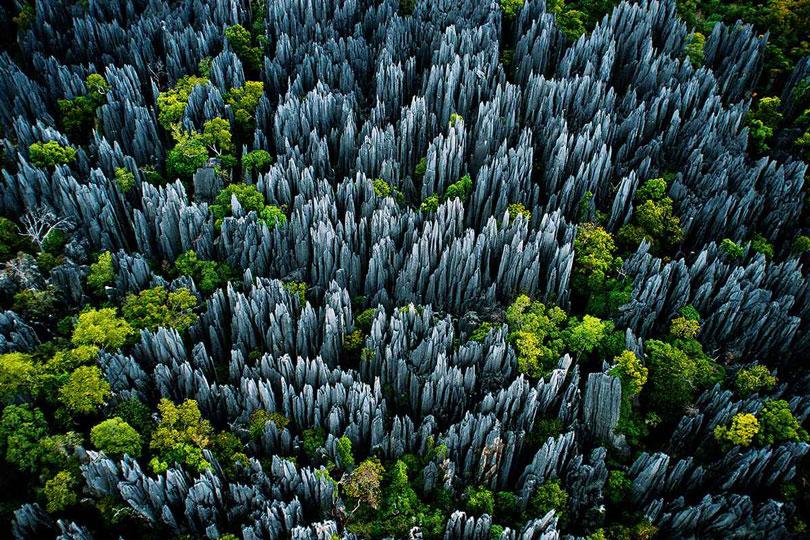
There are landscapes so unusual that describing them almost feels like exaggerating. Imagine a vast forest, except the trees have been replaced by thousands of razor-sharp limestone pinnacles. Narrow passages disappear between towering grey rocks, green vegetation grows in seemingly impossible places, and deep canyons cut through a landscape that looks as though it belongs on another planet. This extraordinary place is Tsingy de Bemaraha, hidden in the western part of Madagascar. Far less familiar to international travellers than the world's famous beaches, mountains, and cities, Tsingy de Bemaraha offers something much rarer: the feeling of discovering a world that has remained almost untouched by time.
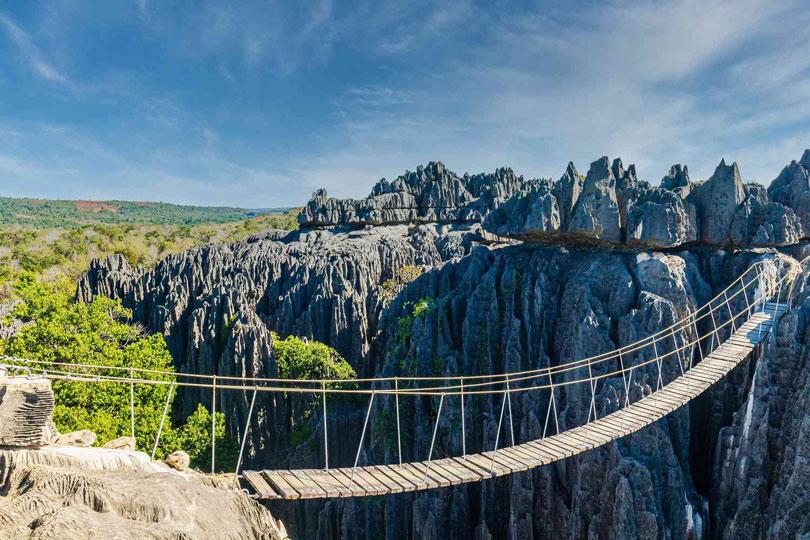
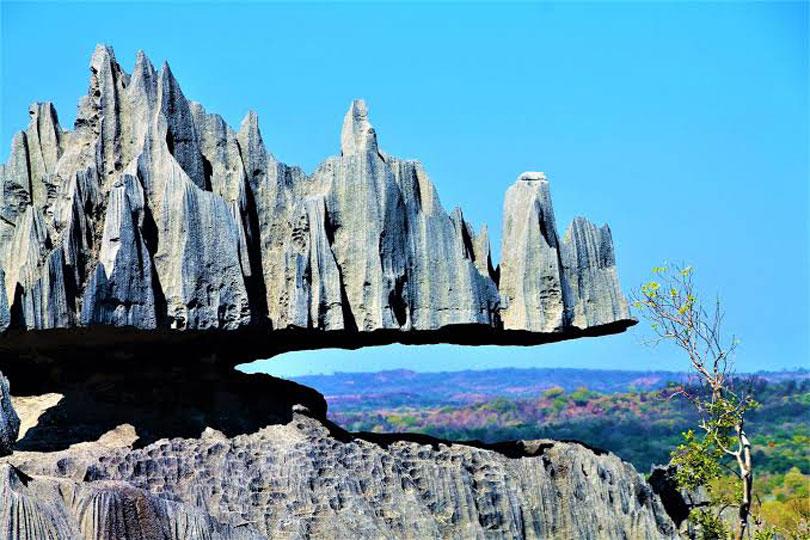
The word tsingy comes from the Malagasy language and is commonly associated with the idea of walking on tiptoe, a fitting description for this dramatic landscape of sharp limestone formations. Over millions of years, rainwater slowly dissolved and carved the limestone plateau, creating a maze of narrow ridges, deep cracks, caves, cliffs, and needle-like pinnacles. The result is a landscape unlike almost anything else on Earth. From a distance, the formations resemble the skyline of an enormous stone city. From within, however, they become much more mysterious, with hidden pathways and narrow corridors weaving between towering walls of rock.
The scale of Tsingy de Bemaraha is difficult to understand until you see it. Some of the limestone pinnacles rise as high as 100 metres, creating what UNESCO describes as a spectacular “forest” of limestone needles. The formations stand close together in some areas, creating an almost impenetrable maze. In other places, the rock opens into enormous canyons where sunlight reaches the forest floor far below. The contrast between the metallic grey limestone and the deep green vegetation makes the scenery particularly striking. It is not the kind of landscape that looks familiar even after seeing photographs of it. Every angle reveals another strange shape, another shadow, or another passage disappearing into the rocks.
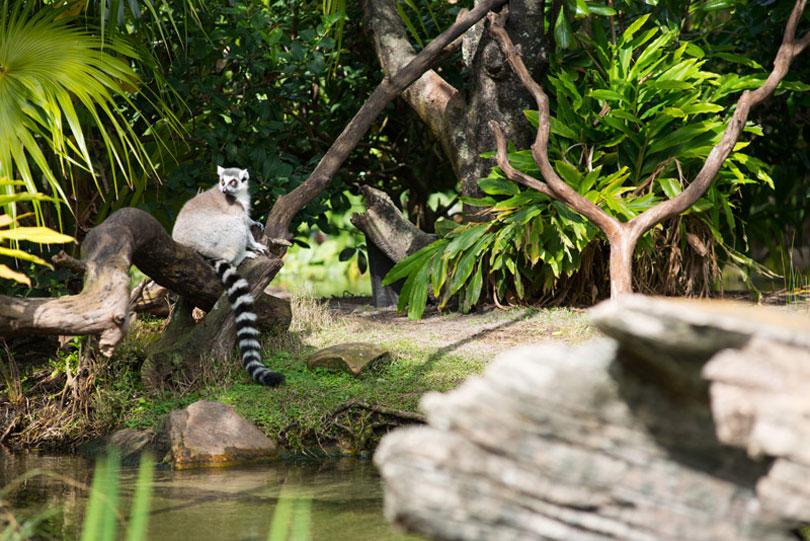
What makes the area even more remarkable is that the stone forest is surrounded by an ecosystem filled with life. Madagascar is famous for its extraordinary biodiversity, and Tsingy de Bemaraha is one of the places where that uniqueness becomes especially obvious. The surrounding forests provide habitats for rare lemurs, birds, reptiles, and countless plant species. Many of Madagascar's species evolved in isolation after the island became separated from other landmasses millions of years ago. UNESCO notes that the wider Andrefana Dry Forests contain exceptionally high levels of endemic biodiversity, including species and evolutionary lineages found nowhere else.
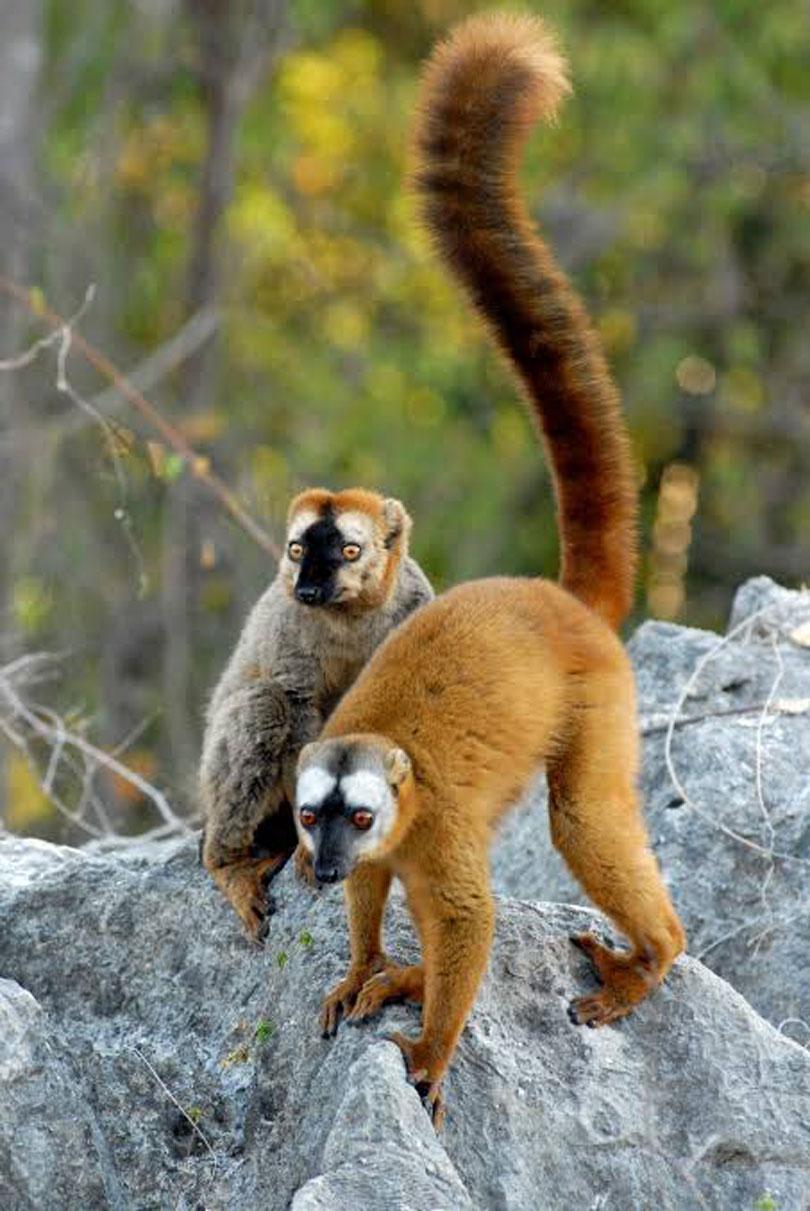
One of the most fascinating animals visitors may encounter is the lemur. These remarkable primates are found naturally only in Madagascar, and several species inhabit the forests around the Tsingy. Their movements can be surprisingly difficult to follow as they leap between branches and disappear into the vegetation. Their calls echo through the forest, creating a soundtrack that feels completely different from anything found in a typical tourist destination. Watching a lemur moving through a landscape of enormous limestone pinnacles is an unforgettable reminder that this is not simply a geological wonder. It is a living ecosystem.
The wildlife becomes even more interesting when visitors realise how many species have adapted to this extraordinary environment. Some animals move through the forest floor, while others navigate the cliffs and narrow spaces between the rocks. Birds make use of the trees and caves, while reptiles and insects inhabit the cracks and sheltered areas of the limestone. The combination of unusual geology and isolated evolution has produced a remarkable natural laboratory. In Tsingy de Bemaraha, the landscape itself influences how life survives, moves, and develops.
Deep within this strange world lies another spectacular feature: the Manambolo River canyon. The river cuts dramatically through the surrounding landscape, creating towering cliffs and a striking contrast between water, vegetation, and stone. From the river, the enormous limestone walls rise above the surrounding forest, offering a completely different perspective of the Tsingy. A journey along the water reveals sections of the landscape that are difficult to appreciate from above. The canyon also demonstrates how water has played a crucial role in shaping the region over geological time, slowly carving its way through the limestone and helping create the extraordinary formations seen today. UNESCO identifies the Manambolo canyon as one of the defining features of the protected landscape.
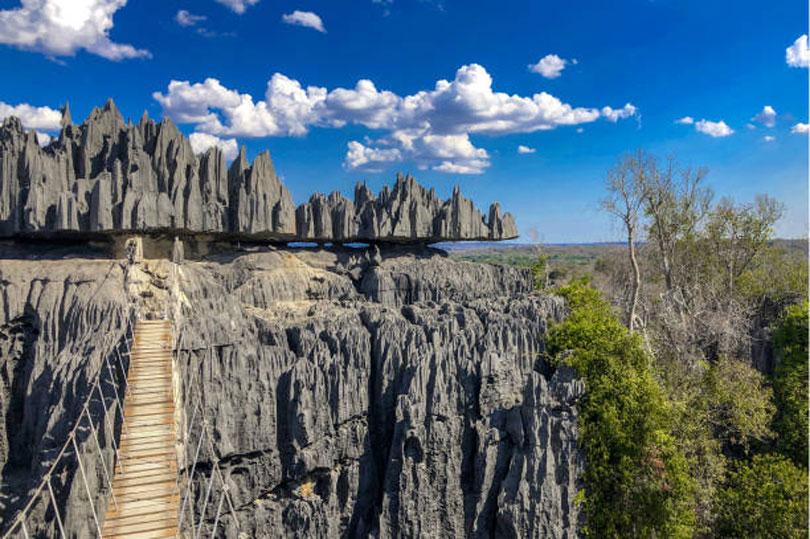
Exploring Tsingy is not like taking an ordinary walk through a national park. The landscape itself becomes part of the adventure. In some sections, visitors move between enormous limestone walls, while in others they encounter elevated viewpoints overlooking the stone forest. Bridges, ladders, and carefully established routes allow people to experience parts of the landscape that would otherwise be almost impossible to reach. The unusual terrain creates a sense of discovery because the next view is often hidden until the final moment. A narrow passage may suddenly open onto a vast panorama, while a seemingly ordinary trail can reveal a dramatic canyon below.
Yet perhaps the most fascinating aspect of Tsingy is the silence. Away from the sounds of cities and busy roads, the landscape can feel remarkably isolated. Wind moves through the vegetation, birds call from distant trees, and occasionally the sounds of wildlife echo through the rocks. The enormous limestone formations absorb and reshape these sounds, creating an atmosphere that feels mysterious and ancient. Standing among the pinnacles, it is easy to imagine that very few people have ever stood in exactly the same place.
The surrounding landscape adds another layer to the experience. Tsingy de Bemaraha is not simply a collection of rocks; it forms part of a much larger ecological region containing dry forests, wetlands, mangroves, rivers, and other habitats. The broader Andrefana Dry Forests World Heritage property now includes several protected areas across western and southwestern Madagascar, reflecting the exceptional biological and evolutionary importance of these ecosystems. UNESCO notes that the property represents some of the most important centres of endemism in Madagascar's dry forests.
The region's importance has been recognised internationally for decades. Tsingy de Bemaraha was inscribed on the UNESCO World Heritage List in 1990, making it one of Madagascar's earliest internationally recognised natural treasures. In 2023, the World Heritage property was significantly expanded as part of the Andrefana Dry Forests serial property, incorporating additional protected areas and recognising the wider ecological connections across western Madagascar.
But Tsingy de Bemaraha is more than an impressive destination for photographs. It represents a powerful story about what happens when nature is allowed to shape a landscape over extraordinary periods of time. The rocks were not designed, sculpted, or constructed by humans. Rain, geology, erosion, and time created them slowly. What looks like a gigantic stone fortress is actually the result of natural processes continuing for millions of years.
That is perhaps what makes Tsingy so captivating. Many of the world's famous attractions are immediately recognisable: a particular tower, temple, waterfall, or mountain. Tsingy has no single object that defines it. Its beauty comes from the entire landscape the endless collection of stone pinnacles, forests, caves, rivers, and hidden pathways that combine to create something completely unique.
In a world where many destinations have become familiar through social media long before people ever visit them, Tsingy de Bemaraha still possesses an element of mystery. It is remote, unusual, and visually unlike almost anywhere else on the planet. Its stone forests look impossible, its wildlife is extraordinary, and its canyons reveal a landscape shaped over geological time. For travellers searching for somewhere genuinely different, it offers an experience that famous postcard destinations simply cannot replicate.
Perhaps the best way to describe Tsingy de Bemaraha is not as a place that looks like another world, but as a reminder that our own world is already strange enough. Hidden in Madagascar is a landscape where stone rises like trees, rivers cut through ancient rock, lemurs move through the forests, and millions of years of geological history stand before you in towering pinnacles. It is magnificent precisely because it feels undiscovered and once you have seen the photographs, it becomes almost impossible not to wonder what it would feel like to stand inside Madagascar's extraordinary forest of stone.