Keeping the Lost Art of Ventriloquist Dummies Alive
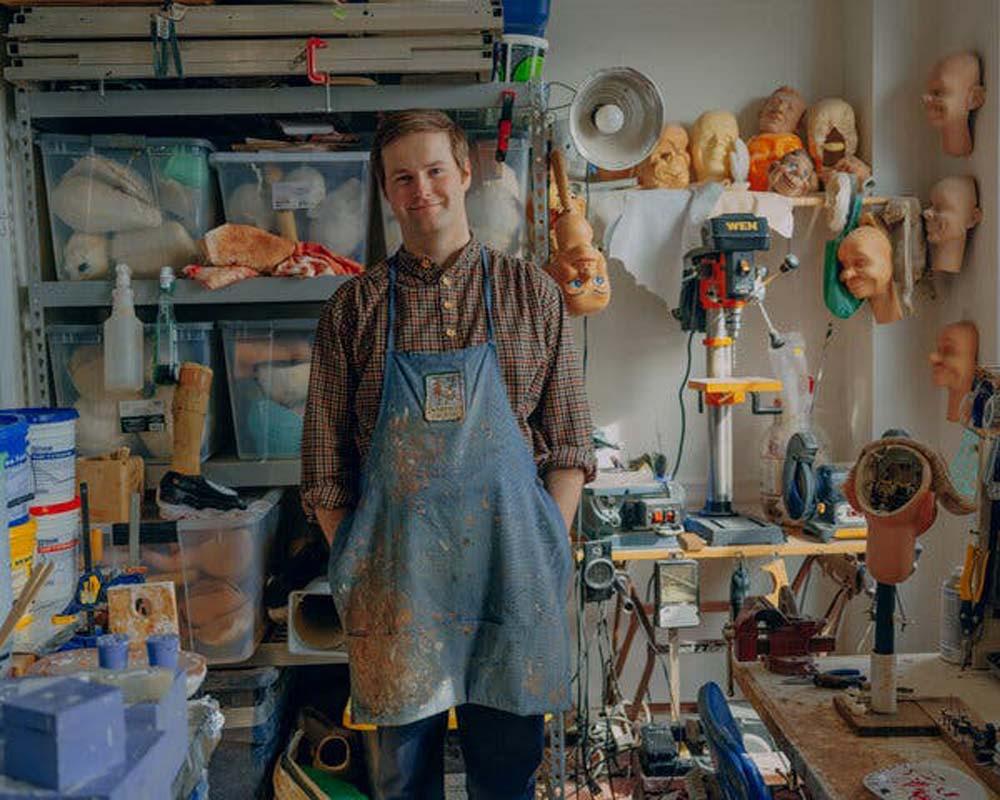
In an age dominated by digital entertainment, artificial intelligence and increasingly sophisticated special effects, Austin Phillips has chosen a very different kind of magic. His tools are wood, resin, brass, leather, paint and an old-fashioned fascination with figures that can appear to come alive.
Based in Portland, Maine, Phillips has built a career around creating, repairing and restoring ventriloquist dummies. What began as a childhood obsession has developed into a specialised craft that has made him one of the best-known professional figure makers and restorers in his field.
Phillips was just five years old when he first encountered a ventriloquist dummy. During a trip to a shopping mall with his mother, he noticed one displayed inside a box. He did not fully understand what the strange figure was capable of, but he was immediately fascinated.
For Christmas, he received a dummy of his own. Rather than simply playing with it, Phillips began teaching himself how to operate it. He learned to throw his voice and manipulate the mechanism that allowed the figure to move, effectively bringing it to life.
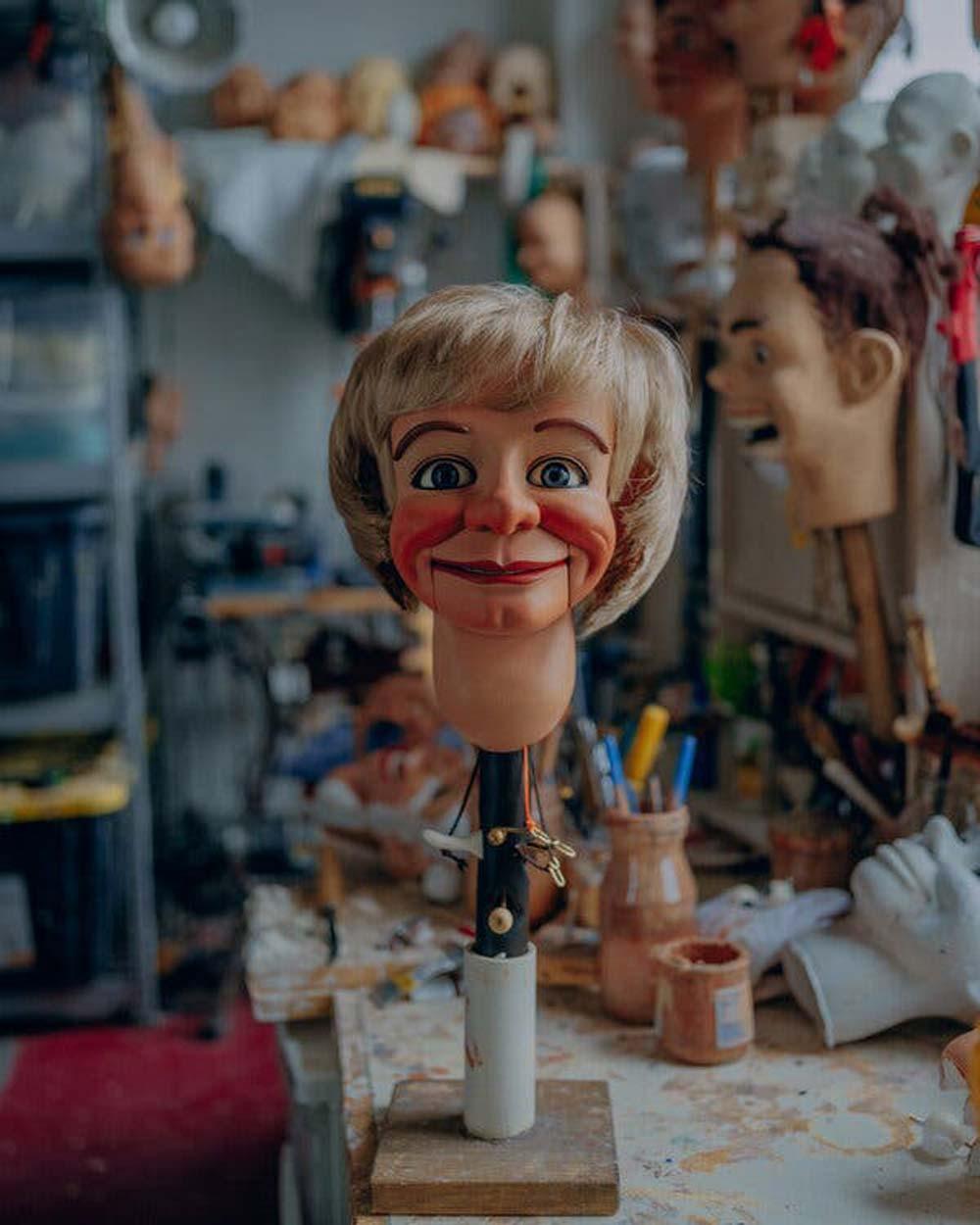
By the age of 16, his interest had developed into something much more serious. High-quality wooden dummies were expensive, so Phillips decided to make his own. He began carving figures himself, learning through experimentation and gradually developing the technical skills that would eventually define his career.
He performed as a ventriloquist until he was about 20, but eventually stepped away from performing. Phillips has admitted that maintaining a performance routine required more practice than he wanted to commit to. The puppets, however, never left his life.
At 22, he turned his passion into a full-time profession.
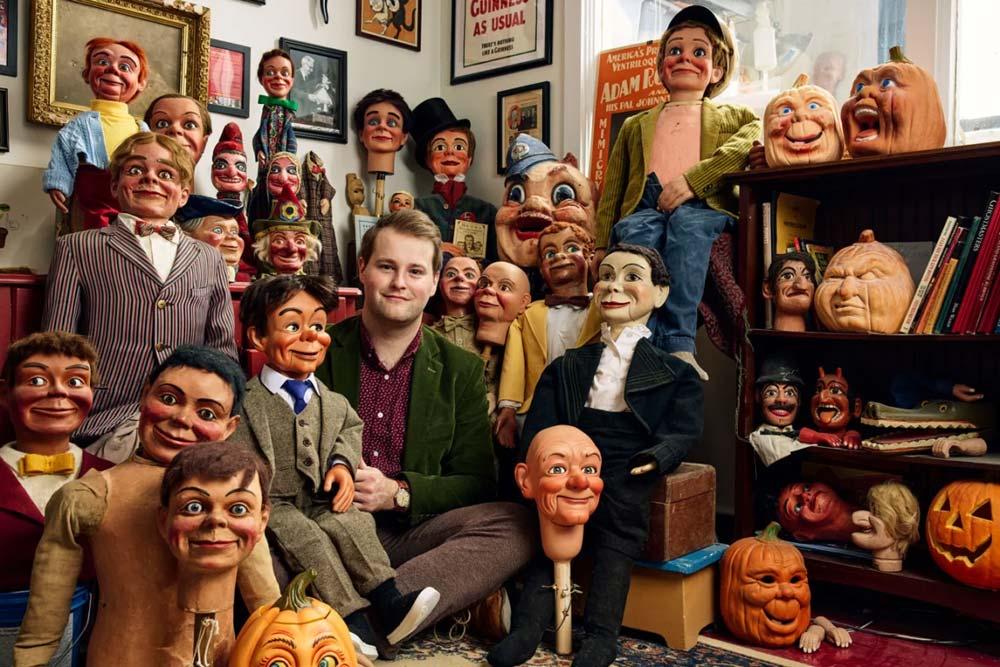
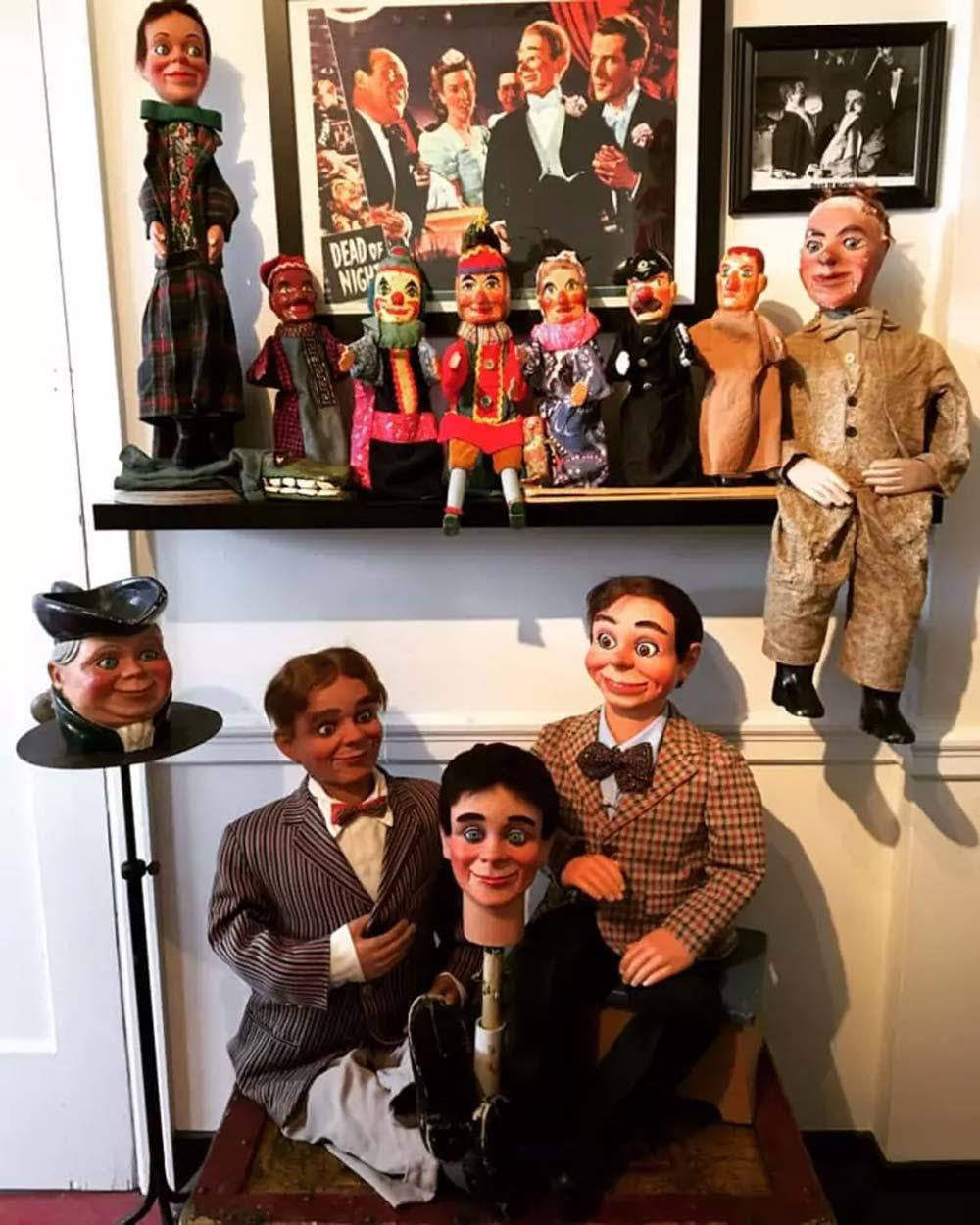
Today, his studio on Congress Street in Portland is a world of its own. Figures in various stages of production occupy the space alongside vintage dummies, custom creations and antique pieces sent to him by collectors seeking specialised restoration work.
His workload reflects just how unusual his expertise is. Phillips has worked on dozens of restorations and creates numerous custom figures each year. While simpler commissions can take around a month, complex restorations can demand considerably more patience and precision.
One of his particular specialties is repairing the delicate leather mechanisms around the mouths of antique paper-mache figures. These moving components are often extremely fragile, especially in figures dating back to the early 20th century. Phillips believes very few people are willing or able to dedicate the time required to preserve them.
That painstaking attention to detail is at the heart of his work.
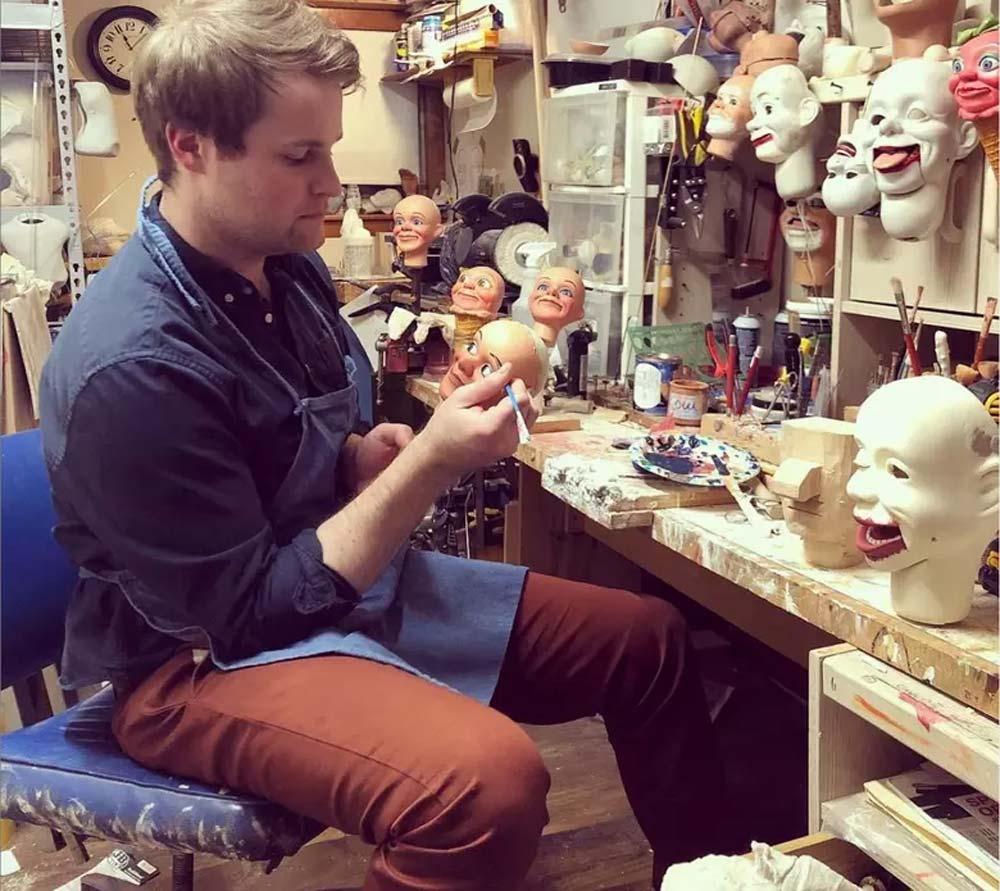
A ventriloquist dummy may look like a simple figure from the outside, but beneath its painted face is a complicated system of mechanisms. Phillips spends hours designing and assembling internal rigging that allows the figures to smile, move their eyes, turn their heads or even wiggle their ears.
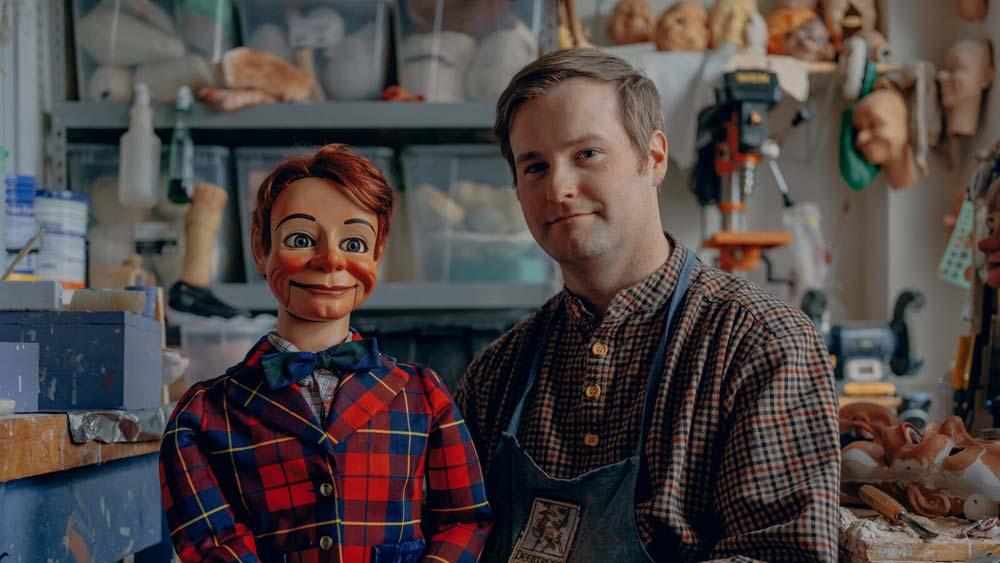
His modern figures are generally sculpted from urethane resin. Once a basic form has been created using a mould, Phillips sands and refines the surface before sometimes reshaping individual faces with a chisel. He then turns his attention to what he calls the “plumbing” , the intricate internal mechanisms.
These mechanisms are made from brass and carefully soldered together. For more elaborate commissions, Phillips can also add individually sourced human hair, which is punched into a lace cap to create a realistic hairstyle.
The process is remarkably hands-on. From the initial concept and sculpture to casting, carving, painting and mechanical construction, Phillips remains involved throughout.
For him, the figures are undoubtedly works of art. Yet he also sees them as tools designed to perform a purpose.
That distinction is important. A beautiful dummy is not successful simply because it looks convincing. It must also move correctly and respond smoothly to the performer controlling it.
This is perhaps what makes Phillips’ work so fascinating. He is not simply reproducing an old-fashioned object. He is trying to understand why these figures have captivated audiences for generations.
Ventriloquist dummies have sometimes been given an unsettling reputation, particularly through horror films and popular culture. Their fixed expressions, moving eyes and unexpected movements can make them appear eerie.
Phillips sees something completely different.
For him, these figures are designed to contain magic. His career has been an attempt to understand that magic, preserve it and recreate it for a new generation.
Some of his creations have found their way into important private collections, including a figure made for renowned magician David Copperfield. Many of Phillips’ other works are also owned by collectors rather than used regularly on stage.
Yet Phillips is conscious that preserving the tradition cannot simply mean looking backwards.
He has been developing a new kind of figure designed to appeal to younger audiences. His idea is to create a basic template that can be altered through different paint jobs and wigs, allowing the character to reflect the appearance and personality of its owner.
For Phillips, this is about keeping the art form relevant.
Tradition matters to him, but so does evolution. If young people are going to develop the same fascination he felt as a child, they need to see something that feels connected to their own lives.
His story is also about overcoming embarrassment.
As a teenager, Phillips temporarily put his interests aside. He was more concerned with fitting in and dating than with discussing ventriloquism and magic. Even later, he found himself hiding his profession from people he met socially.
At one point, after a relationship ended, he considered returning to dating apps. His instinct was to remove photographs of his dummies from social media because he worried that people would find his career strange.
The problem was that the puppets were his life. Eventually, he stopped hiding them. That decision changed more than his online presence. It allowed Phillips to embrace the unusual career he had created for himself and to recognise that being different was not something he needed to apologise for.
His advice to people pursuing unconventional careers is simple: embrace what makes you different. In a world where many people are encouraged to choose familiar and predictable paths, Phillips has built a livelihood from something that most people might consider unusual. His success demonstrates that a niche passion, when combined with patience, skill and determination, can become something much bigger.
The young boy who once stared curiously at a ventriloquist dummy in a shopping mall never lost that fascination. Instead, he transformed it into a craft. Today, surrounded by figures that span generations, Phillips is doing more than making puppets. He is preserving a disappearing tradition while experimenting with ways to give it a future. And perhaps that is the real magic behind his work: not making a dummy appear alive but keeping an entire art form alive.