IS THE AGENCY MODEL DYING IN SRI LANKA? NOT YET. BUT WE’RE DIGGING THE GRAVE OURSELVES.

THE NO BS MARKETER BY AMANTHA PERERA
I built a marketing agency. So, you can take everything I’m about to say with whatever amount of salt you like. But somebody in this industry has to say it out loud, so here it is: the marketing agency, as we know it in Sri Lanka, is in trouble. Not because agencies stopped being useful. Because the market around them never learned what they’re for. So, is the agency space sustainable? Is it scalable? Honestly, it was both. At the start. Let me explain what changed, who’s responsible, and why I think the next few years belong to someone else entirely.
The golden window
A few years ago, social media was still a mystery to most business owners here. They knew they needed to be on Instagram and TikTok, but they didn’t know how. That gap was the opportunity. Agencies stepped in, did the work, showed results, and grew by adding clients. It was stable because brands genuinely needed us. It was scalable because the playbook could be repeated. More clients, more team, more output. That window is closing. And not for the reasons people think.
PROBLEM ONE: WE STILL BELIEVE THE PRODUCT SELLS ITSELF
A lot of Sri Lankan businesses are built by people who are genuinely good at what they make. Great food. Great service. Great craftsmanship. And somewhere along the way, they absorbed a belief that has quietly killed more businesses than bad products ever have: If it’s good, people will come. They won’t. Not anymore. Not when there are fifteen other cafés on the same road, all with good coffee. The product gets you in the game. Marketing decides whether anyone knows you’re playing. Until business owners see marketing as just as important as the product, not a decoration on top of it, nothing else in this article gets fixed.
PROBLEM TWO: MARKETING IS ALWAYS THE LAST VENDOR PAID
Watch how money moves in most local businesses. Rent first. Suppliers next. Salaries. Electricity. The bank. And then, when everything else is settled and there’s something left, the agency. Thirty days becomes sixty. Sixty becomes ninety. Marketing is treated as the bill you can delay, because nothing visibly breaks when you don’t pay it. The lights stay on. The kitchen keeps running. But here’s what that tells you about how the business actually sees marketing: as optional. And you cannot build a sustainable industry on being everyone’s optional expense.
PROBLEM THREE: WHEN IT WORKS, THE PRODUCT GETS THE CREDIT
This one stings the most. An agency runs a campaign. Footfall goes up. Sales go up 30%. And the conversation in the owner’s office goes: “The new menu is really working.” Sales drop the next month? “The marketing isn’t working.” Heads, the product wins. Tails, the agency loses. When marketing succeeds, it becomes invisible. When it doesn’t, it’s the first thing cut. That’s not a client problem or an agency problem. That’s an understanding problem, and it runs deep.

PROBLEM FOUR: THE ONE-MONTH RELATIONSHIP
This is the pattern I’ve seen more than any other. A brand signs with an agency. Month one, the agency does what it does best: strategy, sharp content, a real lift in reach and enquiries. The brand looks at the results and thinks, we can do this ourselves now. They copy the format. They hand the phone to someone in-house: a staffer, a cousin, the intern. Three months later the engagement has flatlined, and nobody can explain why. Here’s why: they copied the output, not the thinking. The video was never the product. The decision behind the video was. Which hook, which audience, which week, which pillar, why this and not that. You can’t screenshot strategy. And to be fair to the brands, some of them can do it themselves. That’s real. But most are mistaking a boost for a system.
PROBLEM FIVE: ANYONE CAN START AN AGENCY
Starting an agency in Sri Lanka requires almost no capital. A laptop, a phone, an Instagram page, a logo. That’s it. You’re an agency. I’m not against that. That accessibility is how a lot of us started. But it creates a market where the floor keeps dropping. Someone is always willing to do a month of content for a fraction of what it actually costs to do properly. Brands see that number and start asking everyone else why they’re so expensive. Undercharging doesn’t just hurt the person doing it. It resets what the entire market thinks marketing is worth. Every underpriced package teaches another business owner that content is cheap, strategy is free, and anyone with a phone can do this.
PROBLEM SIX: YOU CAN’T KEEP GOOD PEOPLE
This follows directly from problem five. You hire someone talented. You train them for a year. They learn strategy, client handling, production, how to read numbers. And then they realize the exact same thing I realized: I could do this on my own. So, they leave. Sometimes they take a client or two with them. Sometimes they pitch your clients at half your price. Can I blame them? Honestly, no. The model makes it the rational move. When the barrier to entry is zero and clients are price-shopping, every good employee is one Canva account away from becoming a competitor. That makes it nearly impossible to build a team that stays long enough to scale.
IS THIS JUST A SRI LANKAN PROBLEM?
Agencies everywhere are under pressure right now: AI tools, in-house teams, shrinking retainers. That part is global. But the version we’re living through here is sharper. In more mature markets, marketing is a fixed line in the budget, decided before the year starts, the same way rent is. Here, it’s still the leftover. Still the delayed invoice. Still the thing you try for a month. The tools are changing everywhere. The mindset is what’s holding us back.

SO, WHO WINS? FREELANCERS.
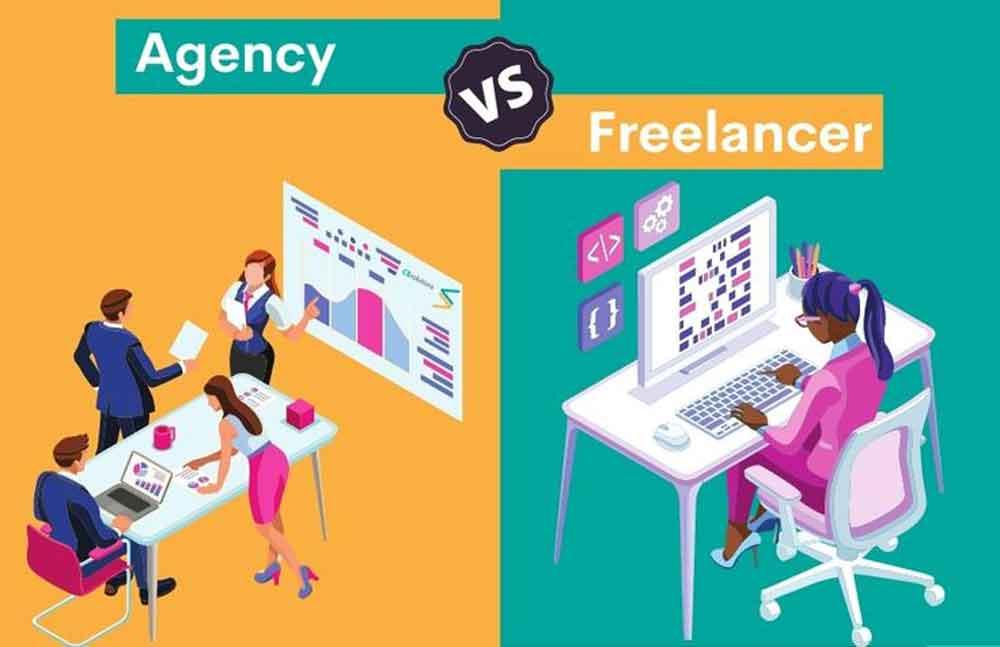
I genuinely believe this is the freelancer’s moment. Think about it. A freelancer has no office, no team payroll, no overheads stacked on top of the work. They can charge a fair price and still make a healthy living. Brands get direct access to the person actually doing the work, not a manager passing messages along. And for a market that likes to try things for a month, a freelancer is a far more flexible fit. The businesses that want a specialist, whether a videographer, a copywriter or a content strategist, can now build their own small team of freelancers instead of signing a retainer with one agency. But here’s my warning to every freelancer reading this: you are walking into the same market. Same late payments. Same “the product did it.” Same pressure to undercut. If you price yourself like a hobby, you’ll be treated like one. The model changes. The problems don’t, unless the mindset does.
WHAT ACTUALLY NEEDS TO CHANGE
Business owners: Put marketing in the budget before the year starts, not after the bills are paid. Give it time. One month is a test, not a strategy. And when sales go up, ask honestly what drove it.
Agencies: Stop selling posts. Sell thinking. Price for the value of the decision, not the number of deliverables. Put proper contracts in place. And stop racing each other to the bottom, because there’s nothing down there for anyone.
Freelancers: Build a reputation, not just a portfolio. Charge properly from day one. You are the future of this industry, so don’t inherit its worst habits.
THE QUESTION I WANT ANSWERED
The agency space in Sri Lanka isn’t dead. But it’s shrinking, and it’s shrinking because all of us keep treating marketing like the last thing on the list. That means the businesses, the agencies, and the people in between. So, here’s my question to every business owner reading this: when your sales went up last year, who did you thank? And to every agency owner: are you building something that lasts, or just something that survives until next month’s invoice clears? I’d genuinely like to hear your answers. Because this conversation is long overdue.