Game. Set. Transform. How collaboration, infrastructure and a shared vision are reshaping the future of the sport

RAISE THE BAR BY MIFRA SADIKEEN
For decades, Sri Lankan tennis has produced talented players through determination, passionate coaching and a strong club culture. Yet despite its rich history and moments of international success, the sport has often lacked the infrastructure, visibility and commercial investment needed to keep pace with the way tennis has evolved globally.
Today, however, that narrative is beginning to change.
Across Sri Lanka, a renewed vision is taking shape, one that goes beyond producing elite players to building a complete tennis ecosystem. From internationally recognized facilities and grassroots programmes to private-sector partnerships and new competitive platforms, the foundations are being laid for the sport to flourish in ways not previously possible.
At the centre of this transformation is the Sri Lanka Tennis Association (SLTA).
As the governing body of the sport, the SLTA has shifted its focus beyond organizing tournaments to creating an environment where tennis can grow sustainably. The emphasis is now on strengthening the entire pathway, from introducing children to the game, supporting junior development and high-performance training, to ensuring that Sri Lankan players have access to facilities that meet international standards.
That transformation is already visible.
The reconstruction of four hard courts at the SLTA is bringing the country's premier tennis venue closer to international specifications, creating playing conditions that better prepare athletes for regional and international competition. Alongside this, an ambitious floodlighting project is extending training hours well beyond daylight, allowing schoolchildren, national players, coaches and working adults greater access to the courts.
These developments may appear to be simple infrastructure projects, but their impact reaches much further.
Modern facilities improve the quality of training, enable Sri Lanka to host higher-standard tournaments, increase court utilization and, perhaps most importantly, make the sport more accessible to a wider community. When players train on courts that replicate international conditions, the transition to overseas competition becomes significantly smoother. When courts remain open after sunset, opportunities for participation multiply.

Infrastructure, however, is only one piece of the puzzle.
Around the world, tennis has evolved beyond the traditional club model. Countries that continue to excel invest not only in facilities, but in grassroots participation, sports science, technology, professional competition and commercial partnerships that make the sport financially sustainable. Success today depends on building an ecosystem rather than relying solely on individual talent.
Sri Lanka is beginning to embrace that philosophy.
The growing involvement of the private sector reflects a recognition that the development of sport is most effective when governing bodies and businesses work towards a common objective.
Wilson Sri Lanka's recent Blade V10 launch illustrated this changing approach. While it introduced one of the brand's latest performance racquets to the local market, the event also demonstrated a broader commitment to the development of tennis. National players, coaches, officials and young athletes came together to celebrate the game, while juniors Akeesha Silva and Yuhansa Peiris were announced as the first recipients of Wilson's long-term athlete sponsorship programme.
The significance of such initiatives extends beyond equipment.
For young players pursuing competitive tennis, access to professional racquets, apparel and long-term support can remove barriers that often limit development. More importantly, programmes of this nature send a clear message to aspiring athletes, that excellence will be recognized and supported.
At the same time, another important chapter is unfolding through the Sri Lanka Tennis Premier League (SLTPL).
While many may view it simply as a new tournament, the league represents something much larger. Built with the endorsement and support of the SLTA, the franchise-based competition has been designed as a long-term platform that brings together players, coaches, franchises, sponsors, media and supporters within a sustainable sporting ecosystem.
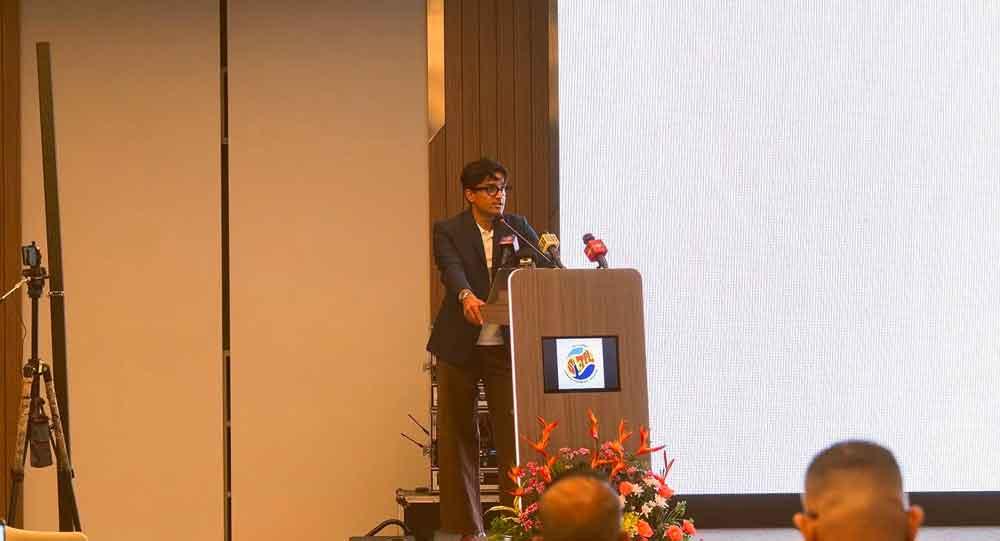
Its objective is not merely to crown champions but to strengthen the foundations of the sport.
The introduction of a franchise model creates greater visibility for players, attracts corporate investment, broadens media coverage and offers fans a new way to engage with tennis. Equally important is the league's commitment to reinvesting surplus funds through a dedicated Tennis Development Fund, supporting grassroots programmes, coaching, infrastructure improvements and regional participation.
In many ways, this represents a shift in how tennis is viewed in Sri Lanka, not simply as a series of tournaments, but as a sport capable of generating opportunities that continuously benefit its own future.
Technology also plays a role in this evolution.
Through an integrated digital platform, the SLTPL will introduce player management systems, franchise auctions, live scoring, rankings, performance analytics and statistical reporting, bringing a level of professionalism and transparency increasingly expected of modern sporting competitions. Perhaps the most encouraging aspect of this transformation is the way these initiatives complement one another.
The SLTA provides leadership, governance and the long-term vision for player development. Wilson contributes international expertise, equipment and direct investment in young athletes. The SLTPL creates a professional and commercially sustainable competition that can attract sponsors, media and public interest. Together, they are not competing for attention, they are working towards the same objective.
The revival of Sri Lankan tennis will not be defined by a single tournament, a single sponsor or a single player.
It will be measured by how many children first pick up a racquet, how many promising juniors are able to pursue the sport without financial limitations, how many courts remain active long after sunset and how many Sri Lankan players are able to compete confidently on the international stage.
The foundations are now being built.
With improved infrastructure, stronger partnerships, renewed investment and a shared commitment to developing the sport from the grassroots upwards, Sri Lankan tennis is entering a new chapter. One where success is no longer measured only by the champions it produces, but by the strength of the ecosystem it creates.