Corporate Olympiad: Where Teamwork Goes Beyond the Boardroom How Women in Management is Using Sport to Change Corporate Culture
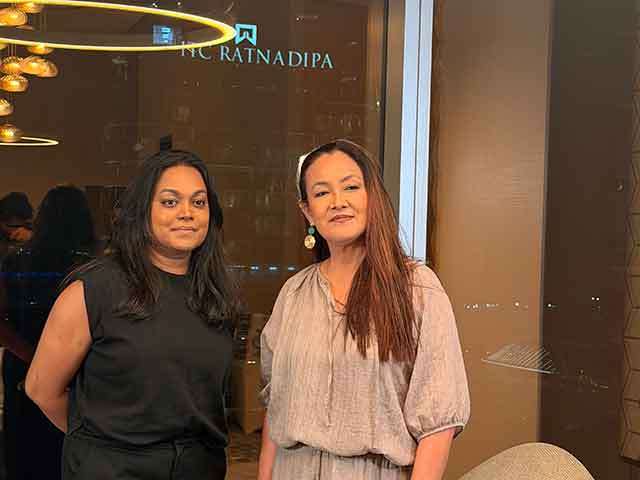
For more than two decades, Dr. Sulochana Segera has worked to challenge the way we think about women, leadership and opportunity. Through Women in Management (WIM), her work has reached women from grassroots communities and entrepreneurs building financial independence to professionals and C Suite leaders shaping some of the country's largest organizations. What began as a platform to create greater opportunity and visibility for women has continued to evolve, taking WIM's work into new spaces where change is needed. One of those spaces is corporate wellness. Now in its second year, the Women in Management Corporate Olympiad brings organizations together through sport, movement and team-based competition, with a much bigger purpose behind it: to encourage healthier workplaces, strengthen relationships between employees and create opportunities for people to connect beyond their job titles. Leading the initiative is Prasadini Perera, Chairperson of the WIM Corporate Olympiad and a former national athlete who understands firsthand what sport can teach us about discipline, resilience, confidence and teamwork. For Prasadini, the connection between sport and the corporate world was a natural one. For Sulochana, it became another opportunity to challenge conventional thinking. The result is an Olympiad organized and led by women but deliberately created for everyone. In this conversation with Raise The Bar, Sulochana and Prasadini speak about why WIM entered the corporate wellness space, what happens when CEOs and interns compete on the same field, the resistance they have faced as a women led organization and why changing corporate culture matters far more to them than simply filling an event.
What exactly is the WIM Corporate Olympiad and what are you trying to create through it?
Prasadini: The Corporate Olympiad is a platform where organizations bring together teams of employees to participate in sporting and fun events outside their normal working environment. It is not about finding the best athlete in an organization. We want ordinary employees to participate, enjoy themselves and experience what it is like to work together differently.
Most corporate events happen internally, sometimes between departments, so you continue interacting with the same people. Here, teams meet and compete with people from different companies and industries. There is networking, but there is also a lot of interaction within the organization itself.
Last year we saw family members coming to cheer for the teams as well, which changed the whole atmosphere. It became a day where employees, companies and families could come together around sport. There are competitive events, team activities and fun events, so it is designed for people with different levels of sporting ability. The idea is participation, movement and bringing people together.
Sulochana: The bigger purpose is corporate wellness. Sport is one way for an organization to demonstrate that it is thinking about its employees, not only their physical health, but also their mental health and happiness. We are not trying to create athletes. We are trying to create an environment where people can be themselves, interact and build relationships outside their usual roles. That is why we call it Beyond the Boardroom.
Prasadini, as a former national athlete yourself, what made you believe sport could have a place in developing stronger corporate teams?
Sport teaches you things that stay with you long after you stop competing. It builds resilience, confidence and discipline. It teaches you to work with other people and understand that your performance affects the entire team.
Those are also qualities organizations want from their employees. When I was in the corporate sector, I had opportunities to participate in sporting events, and I saw how differently people interacted outside the office. You get to know colleagues in a way you normally would not.
That experience was one of the reasons I wanted to bring something around sport into WIM. The Corporate Olympiad allows us to take those characteristics we develop through sport and bring them into the corporate environment.
One thing that stood out to me is what happens to hierarchy when people step onto a sports field. Did you see relationships change during the first Olympiad?
Prasadini: Definitely.
When you are on the field, there are no titles. You may have a CEO, manager, supervisor and intern on the same team, but the corporate hierarchy does not necessarily matter anymore. There may be a situation where a junior employee understands the event better and suddenly, they are guiding the CEO. The CEO has to listen because that person knows what the team needs at that moment. That is a very different interaction from what might normally happen inside an office. It gives employees confidence too. Someone may realize that their contribution matters and that they can lead in ways they had not previously had an opportunity to show. This is what team building should create. People start seeing each other as individuals rather than only through their designations.
Sulochana, you have worked with leaders and organizations across different countries. Do you think the way companies define a high performing employee is changing?
Yes. What I have seen is a shift from simply looking for hardworking people to looking for smart working people. Working longer does not necessarily mean performing better. Companies are increasingly concerned about retaining good employees, productivity and whether people are healthy enough to perform sustainably. If you have a stressed employee, you cannot expect that person's best performance. Globally, we have seen organizations becoming much more conscious about boundaries around work, leave and flexibility. COVID also accelerated the conversation around remote and flexible working.
So, the question is no longer simply, "How many hours did you work?" It is, "What did you contribute during those hours?" A happy and healthy employee is far more likely to contribute meaningfully than somebody who is constantly drained.
The Corporate Olympiad is organized by Women in Management, yet it is open to both men and women. Why was that important to you?
Sulochana: Because sport should not be put into a gender box. When Prasadini initially spoke to me about doing something around sport, I said we should open it to everyone. We talk so much about equality and equity inside organizations, but these values cannot exist only in a boardroom. They should be part of how we think and behave everywhere. Interestingly, one of the questions we repeatedly received was, "Can men participate?" Of course, men can participate. It is organized by women, but it is not an event only for women. This is about teamwork. I wanted ordinary employees, men and women, to come together, leave their titles behind and participate.
But being an event completely led and organized by women has created another challenge for WIM, hasn't it?
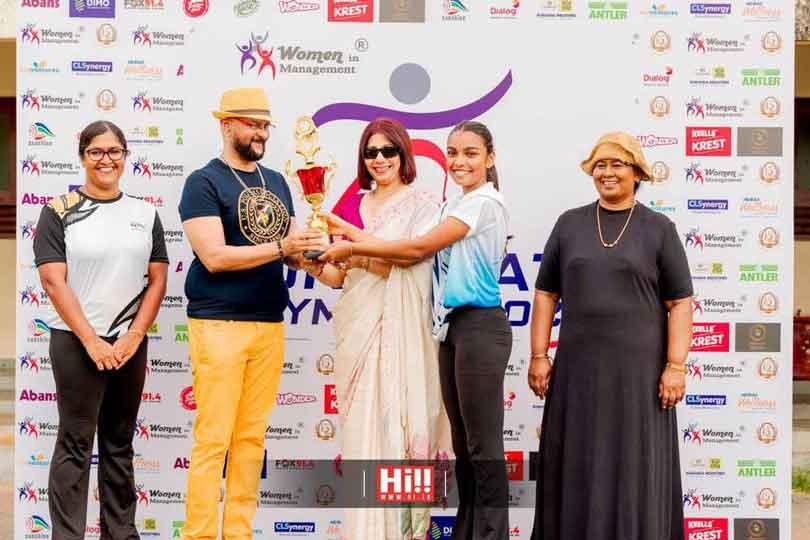
Sulochana: Yes, and that was interesting. There were people who questioned whether a women's organization could organize a sporting event at a professional level. We had to prove ourselves. During the first Olympiad we brought in professional officials and national level referees, and companies saw the standard of the event for themselves. Afterwards, people were asking whether we were going to do it again. But it made me question why women still have to go that extra mile to prove that we can enter certain spaces and deliver professionally. If men were organizing the same event, would we ask whether they were capable of managing it? Women in Management has spent years trying to change these perceptions. In some ways, the Corporate Olympiad itself has become another example of what we have always tried to do. It is not enough to speak about changing stereotypes. Sometimes you simply have to enter that space and demonstrate what is possible.
Prasadini, now that you're in the second year, what has been the biggest challenge getting companies to come on board?
This year we have the advantage of being able to show companies what happened during the first Olympiad. We have videos, photographs and feedback from the teams, so people can see what the event actually looks like. But there are still challenges. Some companies tell us the event was not included in their budget for the year. Others have employees working remotely and say it is difficult to bring everyone together on a Saturday. Sometimes management is interested, but employees are reluctant because it is a nonworking day and they have family commitments. We have to explain that this is not simply asking employees to come to another work event. It is an opportunity for the team to spend time together in a completely different environment. Interestingly, in one organization, employees were prepared to pool their own money because they wanted to participate and represent their company.
Perhaps companies with remote workforces actually need these opportunities to connect more than they did before?
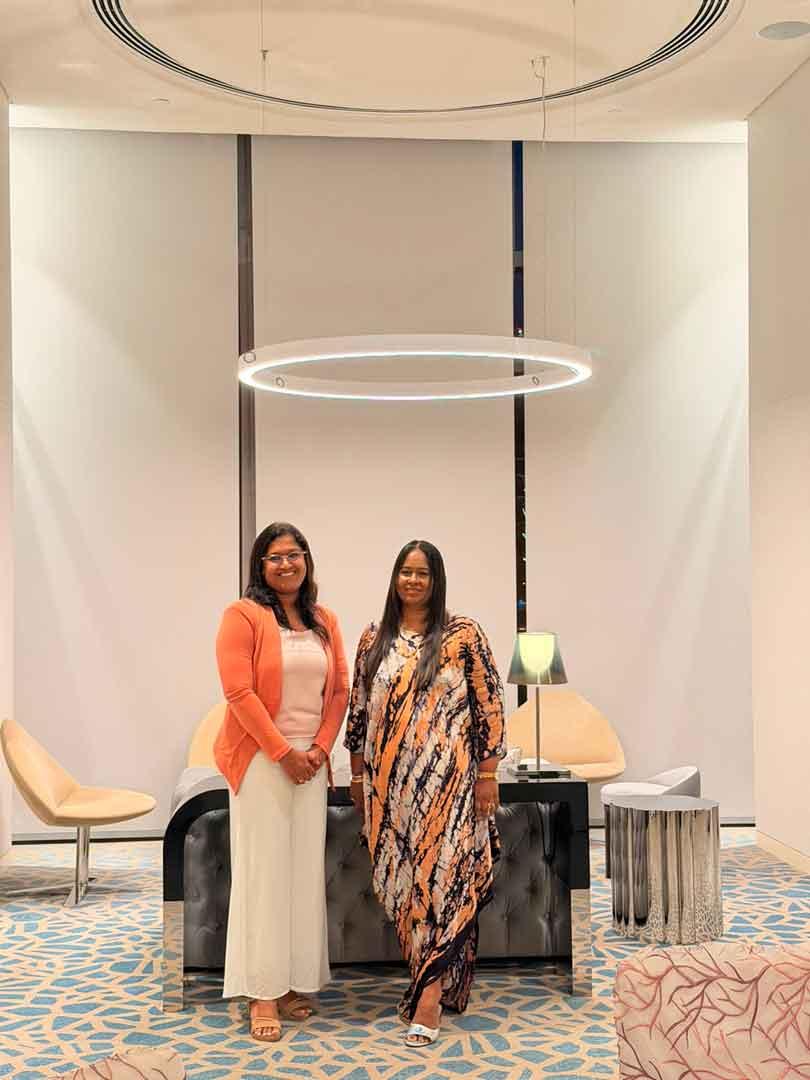
Prasadini: Yes. That is part of what we try to explain. When people work remotely, they may communicate every day, but they do not necessarily have many opportunities to build relationships outside their work. Sport creates that interaction naturally. People talk. They laugh. They compete. They support one another. They meet colleagues and employees from other organizations. Those experiences help build connection in a way that is very different from another online meeting or training programme.
Sulochana, you have spent more than two decades building WIM and initiatives that have grown far beyond where they started. Does rejection still discourage you when companies don't immediately understand a new idea?
No. Rejection has been part of my journey. When something is new, people often resist it because they do not yet understand how it could change them. When my team becomes worried and tells me we have only ten companies, I tell them, "We have ten companies. Let's do it."
When I started Top50, there were only a handful of us. Today it has grown into a global brand. My objective is not to say every company has to participate in the WIM Corporate Olympiad. My objective is to change the culture and change the thinking.
If another organization sees this and, two or three years from now, starts creating similar opportunities for its employees, I would consider that a success. I do not want WIM to be the only organization doing this. I want other people to follow. There is no point in creating something glamorous if it does not create impact. There has to be a bigger purpose.
What can companies and employees expect from the second Corporate Olympiad?
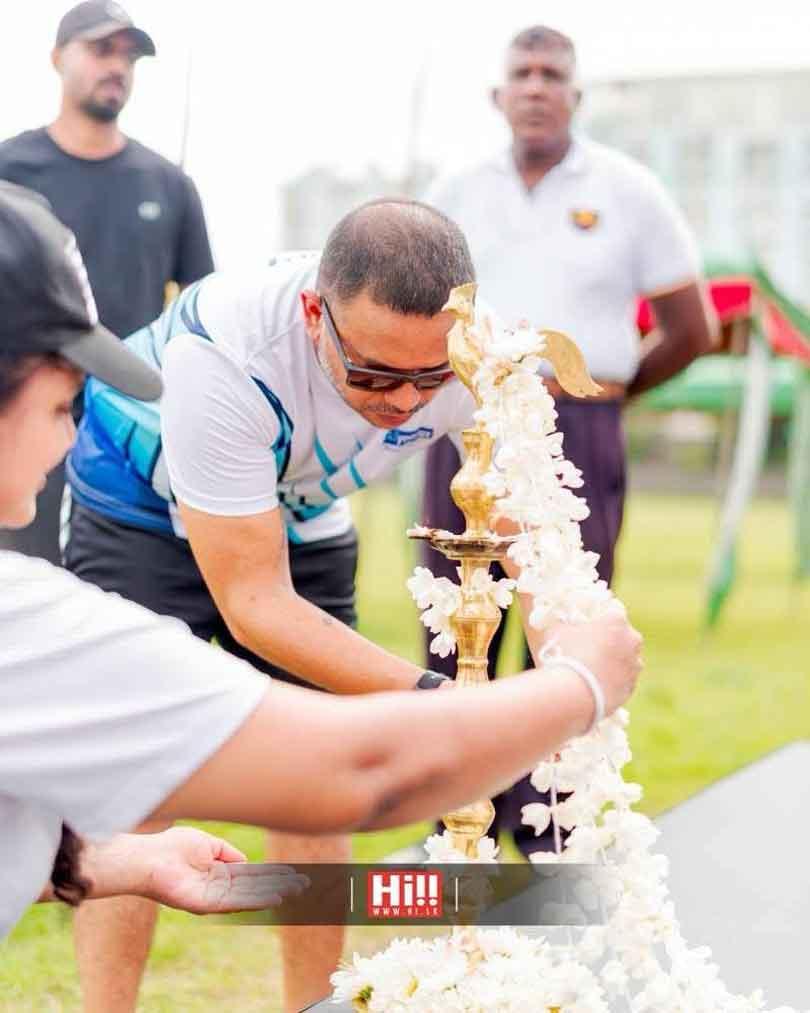
It is designed as a full corporate and family experience. There will be sporting competitions, team-based activities and fun events so employees with different levels of sporting ability can participate. We are also creating an atmosphere around the competition with food, small entrepreneurs, corporate brands, photography, live coverage and entertainment.
Families are welcome to come and support the teams as well. We want it to be competitive, but we also want people to enjoy the day. Ultimately, we want employees to leave feeling more connected to the people they work with and organizations to recognize that corporate wellness can be much more than an initiative on a calendar. For WIM, the Corporate Olympiad is still young. But perhaps its ambition is best understood through the organization behind it. Women in Management has spent more than two decades creating platforms intended to challenge established thinking and open spaces that did not always exist before. The Corporate Olympiad takes that same philosophy onto a very different field. This time the conversation is about sport, employee wellbeing and the future of corporate culture. And the measure of success will not simply be who takes home the most medals.
As Sulochana puts it, the goal is to change the thinking. Because sometimes building a stronger organization begins by taking people out of the office, removing the titles and giving them an opportunity to discover what they can achieve together.