Building Beyond the Legacy Hasib Omar on Building a Global Brand and Investing in Sri Lanka’s Future Athletes
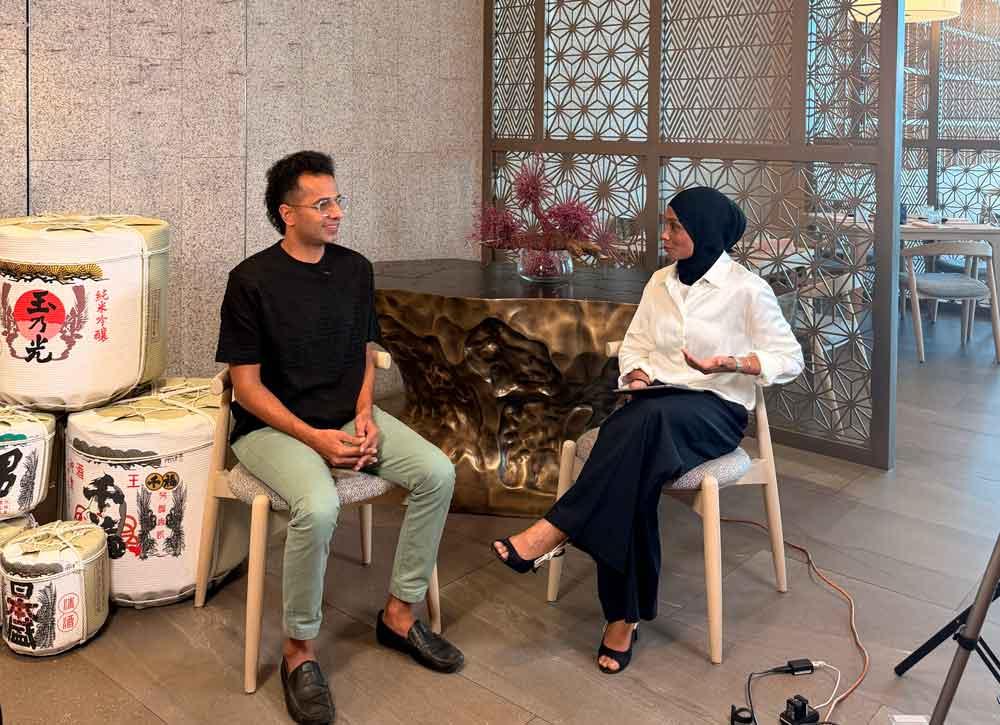
By Mifra Sadikeen
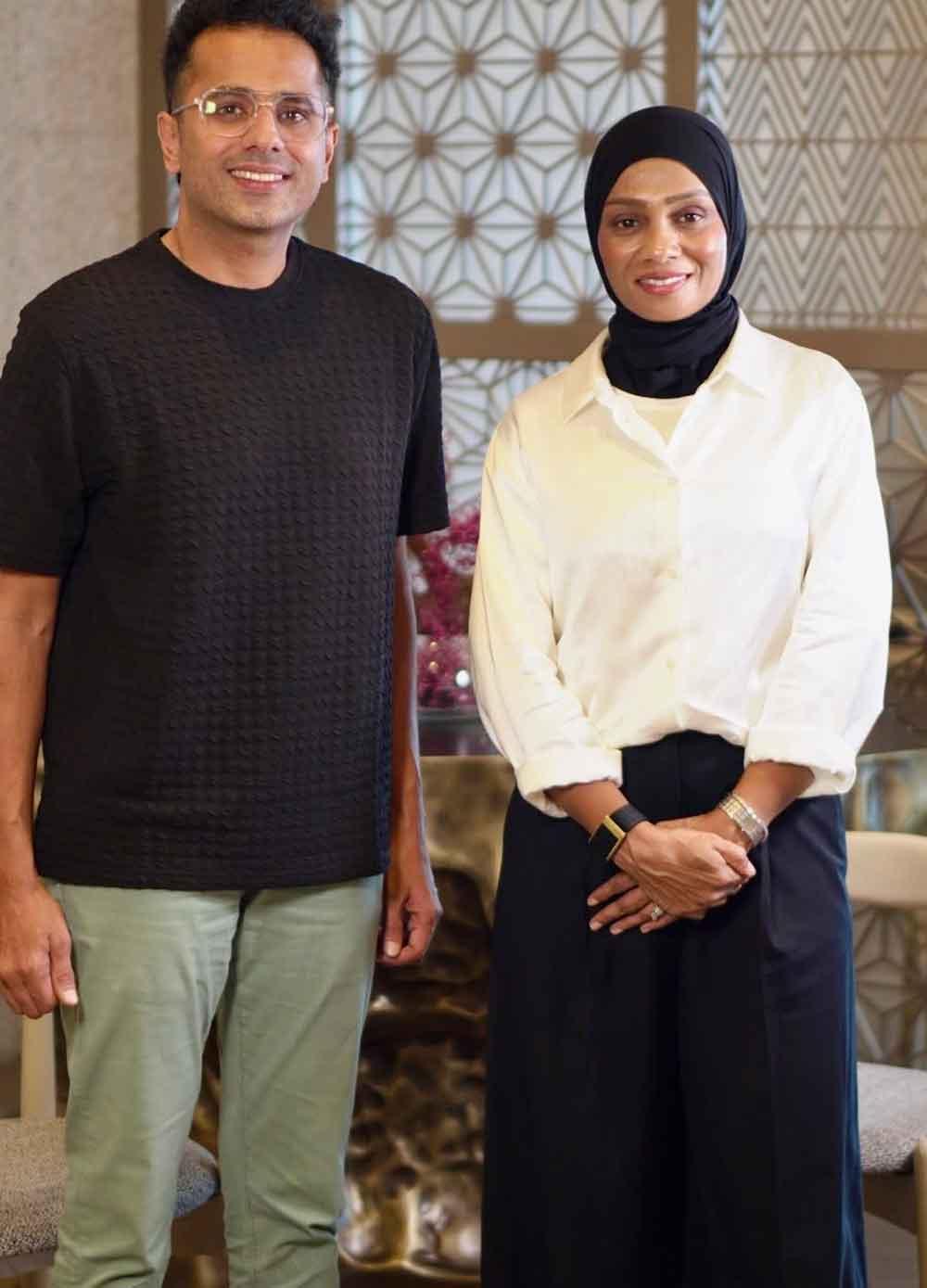
There are some people I wait a long time to have on Raise The Bar, not simply because of what they have achieved, but because I am interested in the choices that shaped who they became. Hasib Omar was one of them. He comes from a family behind one of Sri Lanka's most established apparel businesses, with decades of experience manufacturing for some of the world's most recognised brands, including Nike, Lululemon and Victoria's Secret. There was already a legacy. There was already knowledge.
There was already a successful business structure he could have continued to grow within. But what interested me about Hasib was what he chose to do with that foundation. He took the experience, exposure and technical understanding he had accumulated through the family business and used it to venture into a very different side of the apparel industry: building a consumer brand of his own.
That became Moose Clothing. Hasib does not describe that decision as walking away from his family legacy. Quite the opposite. He sees Moose as an opportunity to add to it. And perhaps that distinction tells us something important about building an identity of your own. Creating your own path does not require rejecting where you came from. Sometimes it means taking everything your experiences have given you and asking what you can build from them.
What makes Hasib's story particularly interesting is his willingness to acknowledge another part of that equation: privilege. He does not pretend that everyone begins at the same starting line. He openly acknowledges that financial security and the environment he came from gave him the freedom to take risks that many entrepreneurs simply cannot afford to take.
I appreciated that honesty. Because acknowledging an advantage does not necessarily diminish achievement. What becomes interesting is what someone chooses to do with that advantage. For Hasib, the answer has been to build. And building Moose taught him something he perhaps did not expect. Knowing how to manufacture world class clothing and knowing how to build a world class brand are two very different things.
The technical expertise was there. The manufacturing knowledge was there. The exposure to international brands was there. But consumers, retail, branding, marketing, changing tastes and fashion cycles presented an entirely new learning curve. Then came circumstances no entrepreneur could reasonably have planned for. The Easter attacks. COVID. Sri Lanka's economic crisis. Moose had barely begun its journey when the environment around it repeatedly changed.
Yet the business continued. Today, Hasib's ambition is not simply to establish Moose as a successful Sri Lankan clothing company. He wants to take it into India and ultimately build an international brand.
At the same time, Moose has begun using sport in two distinctly different ways. Its relationship with Sri Lanka Cricket is proudly commercial, placing Moose alongside arguably the most powerful sporting brand in the country. Its Future Olympians programme is almost the opposite, where Moose is supporting young swimmers through a critical stage where many talented Sri Lankan athletes disappear from competitive sport: the transition beyond school. This is a conversation about entrepreneurship, certainly. But it is also about legacy, identity, opportunity and what we choose to build from the advantages and experiences life gives us. And that is why I wanted Hasib Omar on Raise The Bar!
You came from the security of an established family business, yet you decided to create Moose Clothing. Where did that desire to build something of your own come from?
I see it more as adding to the family legacy. We come from a manufacturing background. The family business manufactures for some of the best brands in the world, from Lululemon and Nike to Victoria's Secret and many others.
Having worked in the apparel industry and seen what Sri Lanka is capable of producing, creating our own brand had always been a dream of mine. Sri Lanka manufactures amazing, very high-end products, but a lot of that product doesn't necessarily come into the Sri Lankan market. The idea behind Moose was to leverage that capability.
Personally, I have always been passionate about product development, retail and branding, so moving into that part of the industry was exciting for me. I never really saw it as leaving the family legacy. If things work out, I see it as adding another dimension to it.
You launched the business around 2018 and very quickly encountered the Easter attacks, COVID and then Sri Lanka's economic crisis. What did those years teach you about building a business?
When Moose started, we were a very small team of around six people. I would almost call many of them co-founders because of how close the team was and how passionate everyone was about what we were trying to create. Everyone believed in the vision.
Very soon after we started, Sri Lanka experienced the Easter attacks, which was a setback. But at the time, we were already thinking globally. We had plans to launch in India in 2020 and had started working with a distributor.
Then, just as our inventory reached the stores, COVID happened. The entire world stopped. At that point, we really didn't know what to do. It required a complete reset. But the team was extremely passionate and willing to do whatever was required. What the journey has taught me is that you keep at it. You don't accept no for an answer. There really is no substitute for perseverance and hard work.
You also speak very openly about the advantages your background gave you. Has that influenced the way you look at entrepreneurship and risk?
Absolutely. I have to be extremely grateful for how things have worked out for me. Coming from the background I did gave me a certain amount of comfort and security. It meant I could take a risk knowing that even if something didn't work, I still had security behind me.
A lot of people don't have that. I know I am extremely fortunate to have had it. That probably allowed me to take more risks than somebody else could and gave me a head start.
But once you decide to build something, you still have to keep going. I've always been someone who wanted to do new and exciting things, and this journey reinforced the importance of perseverance.
Many brands invest in sport primarily for visibility. Moose's Future Olympians initiative is very different. Why did you want to invest in athletes at a much earlier stage of their journey?
The Moose Future Olympians initiative is less commercial and much more personal. As a brand, we are not necessarily looking for an immediate return from it. Even if there isn't a
commercial return, that is something we are prepared to accept. This part of our journey is genuinely about helping athletes.
The programme is directed by Dr. Kaushal, whose father actually coached me in swimming many years ago at St. Joseph's. When we looked at sport in Sri Lanka, one of the challenges we identified was what happens to athletes after they leave school.
In cricket, for example, players can receive club contracts and earn an income while continuing to develop. Swimming is different. Young people may swim competitively throughout school, but when they leave and move into university or employment, continuing the sport becomes much more difficult. We wanted to see whether we could help bridge that gap.
How does the programme actually support the swimmers?
We started with five young swimmers. The idea is to create a longer-term programme where they receive sponsorship and financial support that gives them a better opportunity to continue pursuing the sport after school.
It is only five swimmers at the moment, so we are not pretending this is something enormous. But we would like to increase that number over time. We want to give them an opportunity to have the same shot at success.
2032 is still a long way away. We don't know what will happen. It may work out. It may not. But it is about giving these young people an opportunity to pursue their dreams and giving the sport an opportunity too. Hopefully, one day, somebody may qualify and even win an Olympic medal for Sri Lanka in swimming.
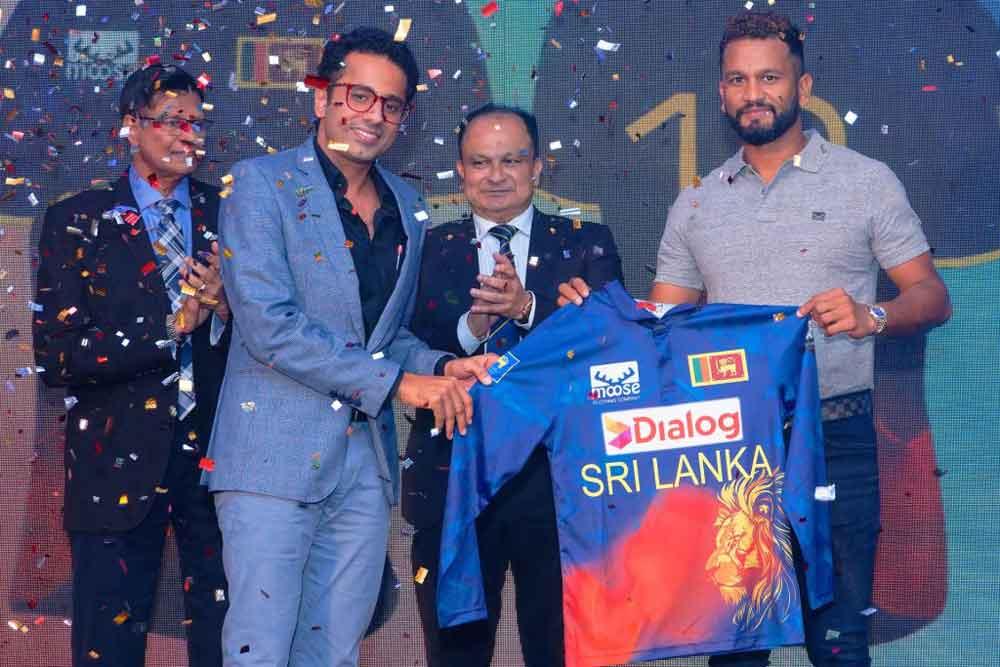
At the other end of Moose's sporting involvement is Sri Lanka Cricket, which you openly describe as a commercial partnership. What does seeing the Moose name on the national jersey mean to you personally?
I'm probably one of the biggest cricket fans, so personally, seeing the Moose logo on the Sri Lanka jersey gives me an absolute ego boost. But from the business side, our relationship with Sri Lanka Cricket is a commercial one. We design, manufacture and provide clothing, and there is also a commercial arrangement around having our logo on the jersey. For Moose, that association has been incredibly valuable. Whatever anyone says, Sri Lanka Cricket is probably the biggest brand in Sri Lanka.
Everyone is passionate about cricket. Even when people are angry because Sri Lanka loses, they're angry because they're watching. They care. To have Moose associated with something that has that level of national visibility is an incredibly proud moment for us.
You've built significant visibility in Sri Lanka, but your ambition for Moose is much bigger. Where do you ultimately want to take the brand?
The idea is very simple. I want Moose Clothing Company to become an international brand. India is the most obvious first opportunity. There are more than a billion people living next door to us and hundreds of millions within and above the middle class.
That is an enormous potential market and geographically it is right beside us. So ideally, the first major step would be capturing part of the Indian market and then continuing to take Moose global. That is the ambition.
Coming from manufacturing, did you initially underestimate how difficult building a consumer brand would be?
Absolutely. The grass always looks greener on the other side. Coming from manufacturing, I thought, we already manufacture the clothes. How difficult can branding and marketing really be? Then you actually enter the business and realise how challenging it is. One of the most surprising things I have learnt is that fashion has almost become perishable.
Clothing itself obviously isn't perishable, but people's preferences are. A style that sells today may no longer sell three or six months later. Trends change. Likes and dislikes change. So you're constantly responding to the market. That has been one of the challenges, but it is also what makes the journey exciting. We are having a lot of fun building it. And hopefully, eventually, Moose becomes the global brand we want it to be.
Hasib's story is interesting precisely because he does not attempt to erase where he started. He acknowledges the advantage. He acknowledges the family legacy. But perhaps there is a lesson in that approach to both business and sport. Opportunity gives someone a starting point. What they build from it still requires work. For Moose, the next ambition is substantial: take the manufacturing expertise Sri Lanka has spent decades developing for the world's greatest brands and use it to create a Sri Lankan brand capable of competing alongside them. And while building that business, Hasib is also using the brand to give another generation something equally valuable. A chance to keep going. Because whether it is an entrepreneur building a company or a young swimmer pursuing an Olympic dream, potential means very little without the opportunity to find out how far it can go.