WHEN THE CEO BECOMES THE CRISIS

THE BADUEL BRIEF BY FARZANA BADUEL
 Jensen Huang has spent more than three decades building Nvidia into one of the world's most valuable companies. Now the technology executive, whose chips are central to the artificial intelligence boom, is facing a crisis that reaches into his personal life and raises questions about national security. Huang has publicly apologised for being unfaithful to his wife, while Nvidia's board has launched an investigation following reports that he may have been targeted by a foreign intelligence operation. This week on our BBC show, When It Hits the Fan, my co-host David Yelland and I discussed Huang's response, the difficulties of managing a departing chief executive's legacy, and why the search for the next James Bond continues to generate so much publicity.

BBC Radio 4
When the CEO Becomes the Crisis
There are two statements worth examining in Nvidia's response. The first came from Huang himself, in a personal statement to employees on 8 November, acknowledging his infidelity and apologising to his family and colleagues. He also addressed the national security concerns, promising to cooperate with the company's investigation. I thought it was a well-judged statement. Huang accepted responsibility for his personal conduct without offering excuses or lengthy explanations. Most of the statement concerned his family, with shorter passages addressing his professional responsibilities and the investigation.
The second statement came from Nvidia's board, also on 8 November. It announced an independent investigation, saying it had no reason to believe that company secrets or national security had been compromised. It also expressed confidence in Huang's leadership. I can understand why the board wanted to reassure employees and investors. Huang is closely associated with Nvidia's success, and questions about his future could create considerable uncertainty. But expressing confidence in his leadership while an independent investigation is under way may invite questions about how the board will respond if its findings are uncomfortable.
There is a delicate balance here. A board must reassure the market without appearing to prejudge the outcome of its own investigation. The language of confidence may be intended to provide stability, but it also creates an expectation that the board will have to manage as the inquiry progresses. I've advised chief executives facing the prospect of their private lives becoming public, and some of the most difficult conversations happen long before a statement is released.
I usually try to speak to the individual alone, away from colleagues and other advisers. They often arrive with explanations they want included in the statement, sometimes going into considerable detail about the circumstances. I listen, because understanding their perspective matters, even when I know much of what they're telling me cannot appear in the final version. Then comes the uncomfortable part. I explain how the public may interpret their preferred wording and why an apology filled with qualifications can make matters worse. There can be lengthy discussions over individual sentences, particularly when someone is being asked to acknowledge behaviour, they would rather keep private. These conversations can be surprisingly emotional. People accustomed to making decisions affecting thousands of employees may suddenly find themselves uncertain about their own future. The possibility of losing their family's trust can weigh far more heavily than any newspaper headline. Huang's apology addresses his personal conduct directly. But Nvidia faces questions that an apology cannot settle. Reports concerning Alice Huang, a business executive whom US intelligence officials reportedly suspect of links to Chinese intelligence, have prompted scrutiny of whether sensitive information may have been exposed. China has rejected the espionage allegations. The board's investigation is still under way, and there has been no established finding that Nvidia's secrets were compromised. For now, the company must manage the uncertainty while allowing that process to reach its conclusions.
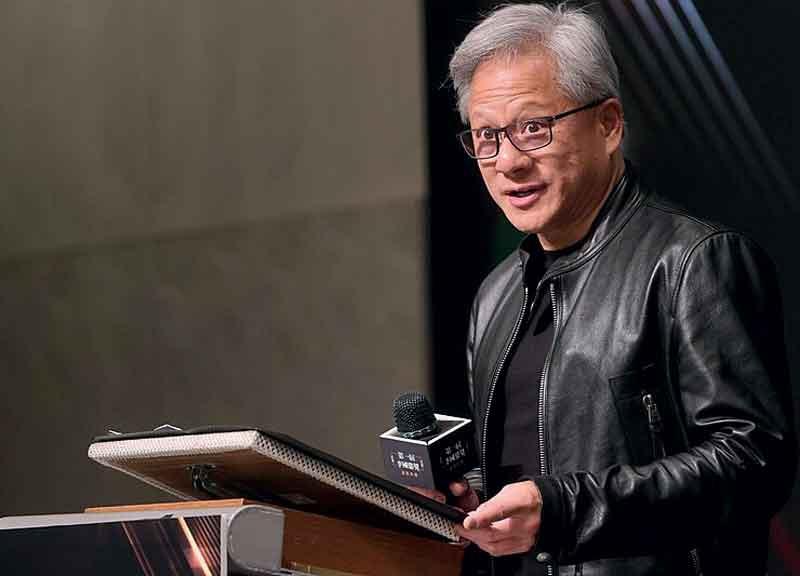
Jensen Huang
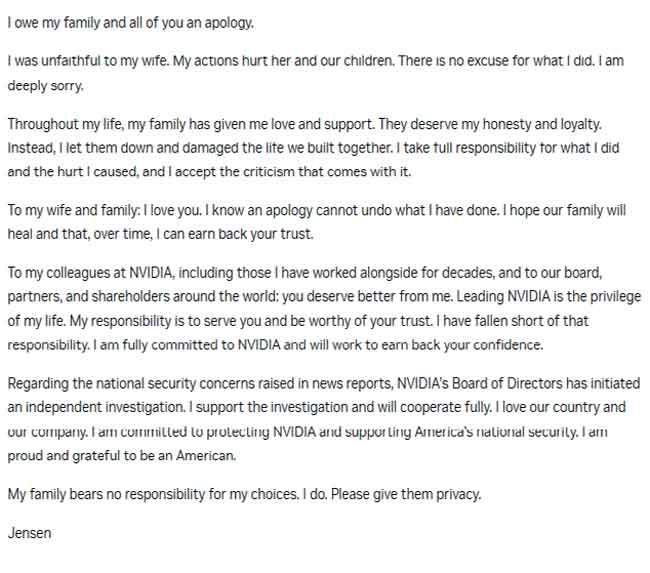
Jensen Huang's personal apology to his family, colleagues and shareholders, published on the 8th of November 2026.
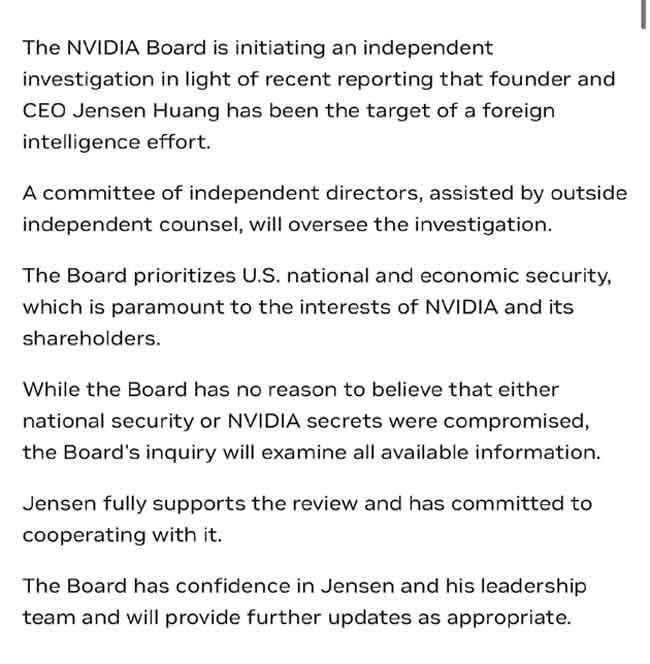
NVIDIA's board announces an independent investigation while reaffirming its confidence in Jensen Huang. Date: 8th of November 2026.
The Problem with Exit PR
After nearly four decades at Macquarie, Shemara Wikramanayake has stepped down as chief executive of the Australian financial group. Her departure has brought renewed attention to the bank's reputation in Britain, particularly its former ownership of Thames Water. In a rare interview with The Sunday Times (UK), Wikramanayake discussed her career, her relatively unconventional lifestyle and Macquarie's extensive investments in the UK. She also challenged the negative perceptions surrounding the bank's involvement with Thames Water. Macquarie has invested in businesses ranging from transport and energy infrastructure to housing. Yet its association with Thames Water, whose financial difficulties and environmental record have attracted sustained criticism, remains particularly prominent in Britain.
I've worked with departing chief executives who begin thinking seriously about their legacy during their final year in office. After spending decades building a business, they understandably want their achievements recognised. Some are considering board appointments or other opportunities, while others are preparing for a very different life outside the executive suite. An interview can help introduce aspects of a leader's career that may have received little attention. Wikramanayake's personal story is interesting, and Macquarie's wider investment record deserves consideration alongside the criticism it has faced. But an interview also gives journalists the opportunity to revisit questions an executive might prefer to leave behind.
There was a revealing moment on LinkedIn after Macquarie published a warm farewell to its former chief executive. The post attracted the congratulations and praise familiar to anyone who spends time on the platform. Then PR executive Matthew Freud entered the discussion with a sharply critical assessment of the bank's legacy. The contrast was striking. Macquarie was celebrating a long-serving leader, while a prominent critic was reminding readers of the controversy surrounding one of its best-known investments. Wikramanayake is entitled to explain her record and challenge what she considers unfair criticism. Her achievements at Macquarie are substantial. But the public may judge her tenure through a different set of experiences, particularly where an essential service such as water is concerned. For departing executives, that can be difficult to accept. Their preferred account of their career is only one part of how it will be remembered.
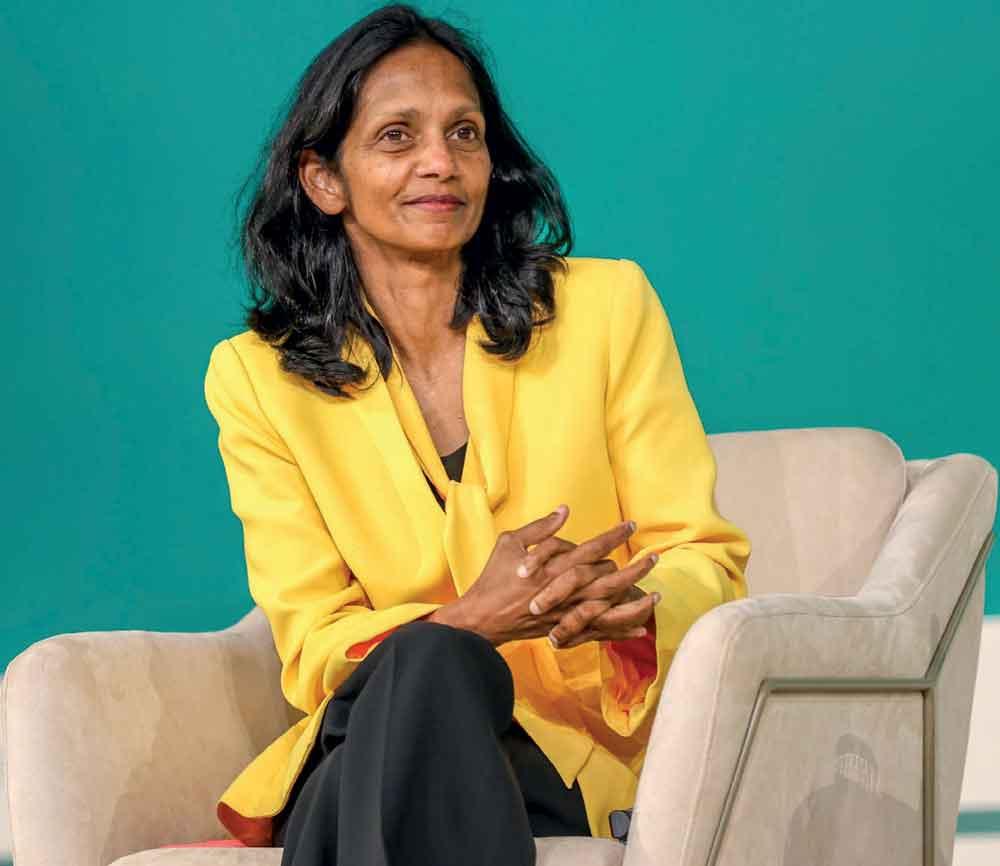
Shemara Wikramanayake
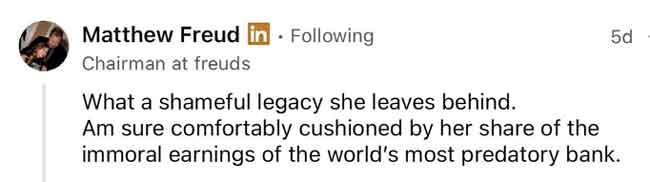
Matthew Freud's response to Macquarie's farewell post illustrates how difficult it can be for departing executives to control the narrative around their legacy. Photo: LinkedIn.
The Secret Worth Keeping
Meanwhile, the search for the next James Bond continues, with fresh speculation about which actor will inherit one of cinema's most recognisable roles. Callum Turner and Jack Lowden have been linked to the part, while more recent reports suggest Robert Pattinson and Nicholas Hoult have also undergone screen tests. Amazon MGM Studios has yet to announce its choice.
The speculation has become a publicity story in its own right. Every new name attracts headlines, fans debate who would make the best Bond, and journalists compete to discover what the studio has decided. It is tempting to assume that every rumour has been carefully planted by a publicity team, although we cannot know how much of the speculation is being encouraged and how much comes from people genuinely trying to discover the answer. What interests me is how valuable a secret can become when enough people want to know it.
Working in public relations means being trusted with information that cannot always be shared. Clients may tell us about sensitive negotiations, personal difficulties or decisions that have yet to be announced. We need that knowledge to advise them properly, even when we cannot discuss it with anyone else. I've found that people can become particularly curious when they suspect you know something they don't. There is sometimes a temptation to demonstrate how well-connected you are by dropping a hint or revealing a little more than you should. Resisting that temptation is part of the job. A client's confidence can take years to earn and considerably less time to lose. As for the next James Bond, I have no inside information to offer. And even if I did, I'm afraid I'd have to keep it to myself.

A showcase of all iconic James Bond actors in lifelike wax figures at Madame Tussauds London
About The Writer
Farzana Baduel is CEO of Curzon PR, President of the Chartered Institute of Public Relations, and co-presenter of When It Hits the Fan on BBC Radio 4. To follow Farzana Baduel on Instagram, scan the QR code below.

Listen To ‘When It Hits the Fan’ on BBC Radio 4
Apple Podcasts | Spotify | BBC Sounds