‘For the Ocean, With Love.’ World Oceans Day with The Pearl Protectors.
Sri Lanka has long been called the Pearl of the Indian Ocean, a name that speaks as much to the richness beneath its waters as to the Paradise Island itself. But that richness is quietly under threat. Muditha Katuwawala, Executive Director of The Pearl Protectors, has spent years in and beneath those waters, watching what most of us never see. What began as a simple awareness platform has grown into a movement of nearly 4,000 volunteers, driven by one belief of safeguarding the biggest life on earth. We sat down with Muditha to understand what is really happening to the seas surrounding this island, and what it will take to protect them, on behalf of World Ocean Day.
We talk a lot about plastic bottles and straws, but you've spoken about a more invisible kind of pollution, chemical runoff flowing into the ocean through our rivers and canals. How does that process unfold, and what does eutrophication actually do to a reef or a bay that was once full of life?
In Sri Lanka, there was a pesticide ban introduced by the previous government. The reasoning behind it was, in my opinion, quite genuine. It was important and it was needed, because the excessive amounts of pesticides used in our agriculture are virtually unheard of elsewhere. They are causing serious health issues, particularly in the Anuradhapura district, where so many people are suffering from kidney disease linked directly to chemical pesticide use. As an island nation, Sri Lanka must transition to organic fertilizers at some point.
In a world where most agriculture relies on chemical pesticides, there is tremendous global demand for organic, nutrient-rich food. Sri Lanka was ideally positioned to meet that demand. Had it been done properly; we could today be a thriving organic exporter with exports tripled or quadrupled due to that demand. We missed that opportunity. Now we are back to square one, with excessive pesticides continuing to flow out into the sea. That has created a much larger problem for our oceans: eutrophication. In many areas, you can see excessive algal growth turning the sea visibly greener. That is not a good sign. The algae absorbs enormous amounts of oxygen from the water and blocks sunlight from reaching the seabed, effectively creating dead zones around Sri Lanka's coastline. We have 103 rivers pushing out these excess nutrients, pesticides, and chemicals, and they are slowly killing our marine life. This is fundamentally a policy issue. We need a proper, managed transition to organic fertilizers, clear standards on which pesticides are permitted, and enforceable controls on how much hazardous chemicals agricultural and industrial sectors are allowed to use. Pesticides are the biggest culprit, but they are not the only ones. Along the Kelani River, for example, you can see industries discharging chemical waste and wastewater directly into the river, which eventually reaches the sea.
There are court cases ongoing and countless complaints lodged against large companies doing exactly this, yet accountability remains elusive. There must be meaningful penalties, and those penalties must actually be enforced rather than quietly set aside. In Sri Lanka, penalties are what drive enforcement and give regulations real weight. Without enforcement, regulations exist only on paper. It is time we approached this from both an enforcement-led and a policy-led angle. Our oceans are suffering visibly because of what is flowing into them, and that cannot continue.
Ghost fishing nets are something most people have never heard of, let alone seen. But you have. Can you walk us through what it actually looks like when an abandoned fishing net wraps itself around a coral reef, and explain why, by the time anyone notices, it’s often already too late?
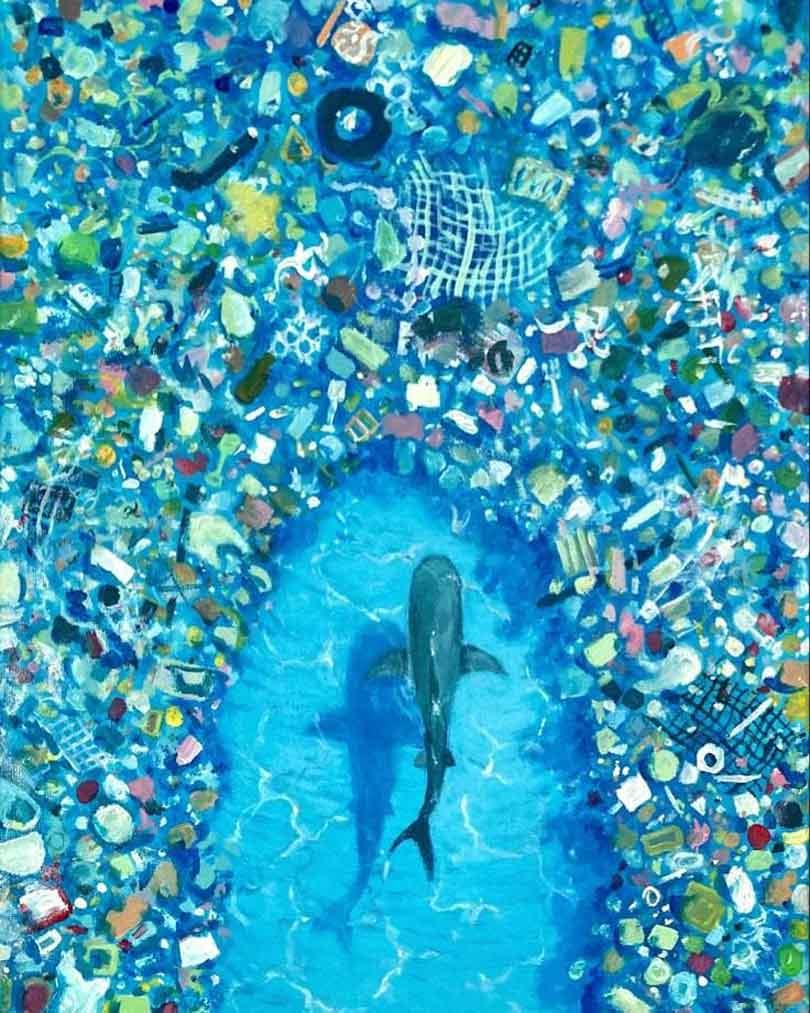
Ghost fishing nets are fishing nets that have been discarded by fishermen into the sea. When a net becomes unusable, fishermen consider it waste and simply throw it in. What happens next is that it either floats around or sinks down and gets entangled in reefs. When a net is floating, fish get trapped inside it. Larger fish then come to feed on them, and they too become caught. This is how turtles, sharks, dolphins, and even whales end up ensnared in these abandoned nets.
When a net sinks and traps a reef, it can effectively wipe out all the corals in that area, and vast amounts of marine life become entangled. These nets, usually made of nylon, do not break down or decompose easily. They are extremely strong, meaning they can remain on the seabed for years, slowly destroying entire reefs and the life within them. When we dive down, we find these nets at various depths, and we try to remove them wherever possible. It takes an enormous amount of time and effort because they become so deeply entangled with corals and reefs, and often there are fish caught within them too, which makes removal even more difficult and costly.
There are two main reasons why we see so many abandoned nets in Sri Lanka. First, the quality of fishing nets here is generally poor, so fishermen discard them much sooner. Second, some fishermen deliberately place nets over reefs to increase their catch, disregarding guidelines and rules. Since the nets are inexpensive, losing one is not considered a significant loss, and they simply buy new ones whilst unknowingly causing far greater damage beneath the surface. We only know this is happening because we dive. We try to capture footage and show people the impact, but for most people on land, it simply does not exist. It goes entirely off the radar. It is truly heartbreaking. You see moray eels, fish, just trapped with nowhere to go, and you have to swim down and cut them free. You always find yourself thinking: what if we had not been diving? Those animals would have suffered a terrible death alone. These are cries coming from the bottom of the sea that no one else can hear.
Sea turtles have been swimming in these waters for millions of years. What role do they actually play in keeping Sri Lanka's marine ecosystem functioning, and what will to the ocean around us if we lose them?
Sri Lanka is home to five of the world's seven species of sea turtles. Very few countries can say that. These animals play a critical role in maintaining marine ecosystem balance. They are keystone species, magnificent and ancient, and Sri Lanka is truly blessed that they consider these waters their home.
Sea turtles are reptiles that surface to breathe before diving back down. Some are herbivores, some are omnivores, and together they feed on various marine creatures and algae, helping to keep the ecosystem in balance. With climate change and so many other pressures mounting, protecting these animals has never been more urgent. They are endangered, and in Sri Lanka we see far too often how abandoned fishing nets catch them, costing them their flippers and limbs, leaving them unable to swim. But the threats go beyond that. In Mannar, I witnessed turtles being killed at sea, their flesh loaded onto boats and brought ashore to be sold. This happens because it is easy to evade authorities at sea. Beyond the animals themselves, their eggs are also under threat. Many people dig them up and eat them, believing there are nutritional benefits, which is simply not true. Others sell them commercially. It has become an industry of its own.
The consequences of losing sea turtles would be devastating. Without them, algae growth goes unchecked, seagrass beds deteriorate, and the food chain begins to unravel in ways that affect every species in the ocean, including the fish that coastal communities depend on for their livelihoods. These animals have survived for millions of years. It would be a profound failure on our part if they disappeared on our watch, in our waters, within our lifetime.
Beyond turtles, biodiversity loss is accelerating across our waters. Is there a species, or even a specific reef, that you've watched change dramatically over the years, something that tells the story of what climate impact really means at a local level?
Sea turtles are essentially indicators of ocean health, and there are many others like them. Corals, seagrasses, benthic reef fish, and even whales all serve as markers that tell us whether the ocean is thriving or suffering. And across all of them, what we are seeing is a general and significant depletion. Almost 97 percent of Sri Lanka's corals have been bleached. Bleaching means they are near death, turned white by the effects of climate change. Ten or twenty years ago, if you dived in Hikkaduwa, you would have seen vibrant, colourful coral beds. Now it is all white. The same is true of Pigeon Island. The fish populations in our shallow waters tell a similar story. Only about half the marine life you would once have encountered in these waters remains today.
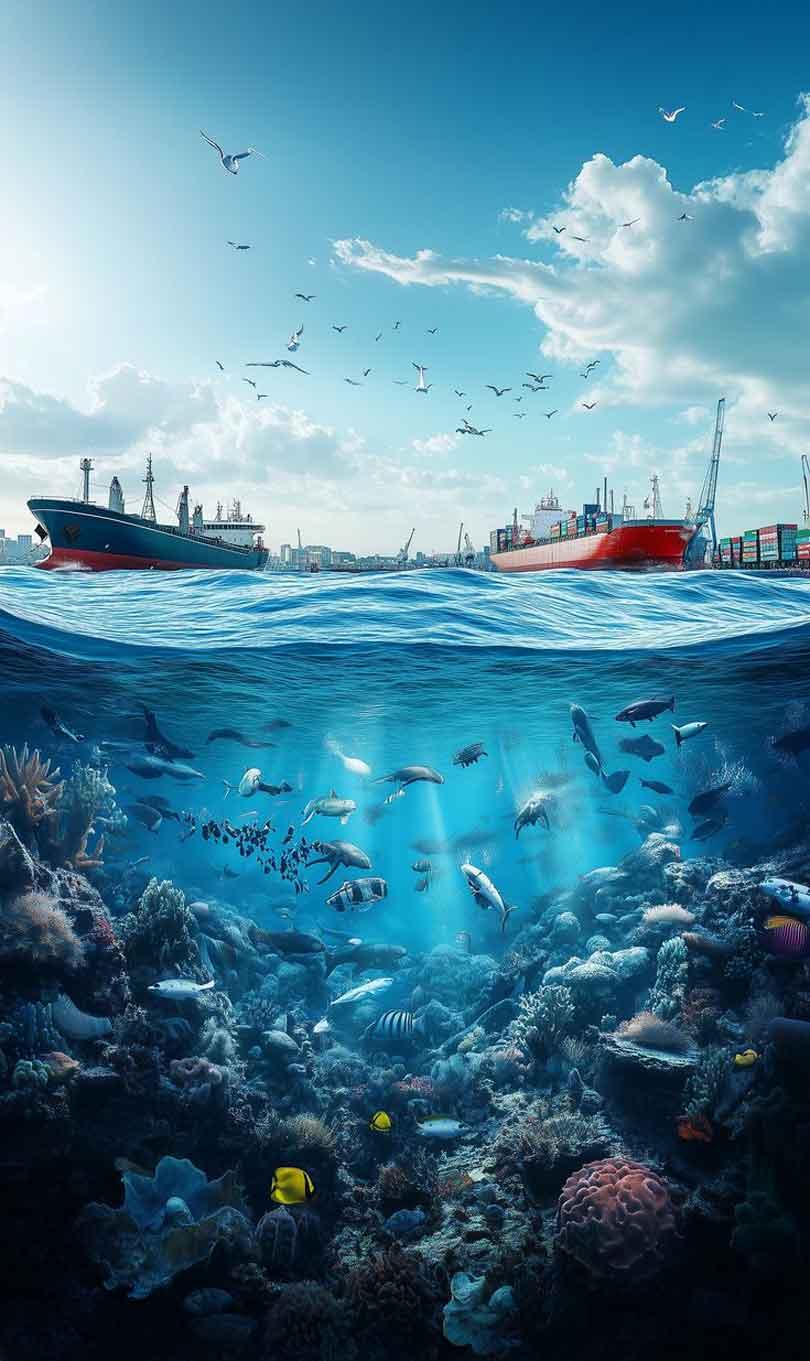
These are not isolated statistics. They are indicators of an ecosystem under pressure from multiple directions at once. Climate change is one of the leading drivers, but it is not alone. Excessive nutrient runoff, pollution, coastal construction, illegal sand mining, destructive fishing practices, and maritime accidents all compound the damage. The tragedies of MV X-Press Pearl and the MSC Elsa are stark examples of how a single incident can release chemicals that disrupt an entire ecosystem. On land, the damage extends to mangroves. We are seeing mangroves cut down across the south of the country, around the Madu River and countless lagoons that once had thriving ecosystems. They are being cleared to make way for land plots, villas, and hotels. Places market themselves as eco-friendly, and those words are used freely, but you have to ask seriously how much land degradation and habitat destruction lies behind them. The population is growing, industries are expanding, and the demand for land keeps increasing. In that equation, wildlife and marine life have no voice. They are always the first to go. And that trajectory is accelerating.
Coastal erosion feels like a natural process to most people, waves and wind doing what they've always done. But you'd argue it's much more man-made than that. What are we actually doing to accelerate it, and what does a coastline in crisis look like five or ten years from now?
The way things are going, in another five to ten years we will see severe erosion along our entire coastline. The reason Sri Lanka has such beautiful golden beaches is largely thanks to our rivers. Rivers push out large amounts of sand sediment, which ocean currents and upswells then carry back onto our beaches. Unlike the white coral sand of the Maldives, our sand is golden precisely because it is river sand. That natural cycle is what has built and maintained our coastline for centuries. What we are doing now is breaking that cycle. More than 50 percent of sand in Sri Lanka is illegally mined from rivers, meaning the sediment that should naturally flow out to sea and replenish our beaches never gets there. Without that replenishment, erosion accelerates, and beaches simply disappear. If you look at photographs of our southern coast from decades ago and compare them to today, the difference is stark. Where there were once long, sweeping beaches, in many places there is now only exposed rock, because there is no sand left to fill them.
Wellawatte Beach is a telling example. People who have visited that beach for decades will tell you it was once long and beautiful. The Kinross Beach restaurant, which had been there since the 1960s, has had to close because the beach it sat on has effectively washed away. Erosion is quietly tightening its grip on our coastline. If we continue extracting sand from our rivers and allowing unethical coastal construction to proceed unchecked, within ten years we will no longer be able to honestly tell visitors that Sri Lanka has golden beaches, because those beaches will no longer exist.
Illegal sand mining doesn't make headlines the way oil spills do, but you've described it as quietly catastrophic. How does removing sand from a beach or riverbed set off a chain reaction that most people never connect back to the source?
Sri Lanka has 103 rivers, and most of them are being illegally sand mined. The demand comes from the construction industry, which prefers river sand because it is clean and easier to work with than sand sourced from the ocean. So, people go in and extract it, often with little oversight and no accountability. What most people do not realize is that river sand is not just a construction material. It is part of a natural cycle. As rivers flow to the sea, they carry sediment with them, and that sediment is what replenishes our beaches. When you mine that sand illegally and in large volumes, you are interrupting that cycle. Less sediment reaches the ocean, less sand returns to the shore, and beaches begin to erode. The connection between a sand mine inland and a shrinking beach on the coast is not one most people make, but it is direct. Everything in the natural environment is linked, and over the past ten to fifteen years, the increase in illegal sand mining has correlated clearly with the increase in coastal erosion we are seeing across the island. If this continues, the consequences will be severe. Around 25 percent of Sri Lanka's population lives near the coast. Erosion does not just affect tourism or aesthetics. It threatens the homes, livelihoods, and living conditions of millions of people. This is not a distant or abstract risk. It is already unfolding, and we need to act on it now.
Finally, World Oceans Day is a moment of reflection, but it's also meant to be a spark. For someone reading this over their morning coffee, feeling like the problems are just too big for one person to matter, what do you say to them?
World Oceans Day is just a day. The ocean does not pause for it. It continues to make waves, support livelihoods, produce the oxygen we breathe, and maintain the balance the world depends on, every single day. This is simply a moment to celebrate and acknowledge what the ocean does for us, and hopefully to carry that awareness into the rest of the year. The most important thing any person in Sri Lanka can do right now is simple: if you see something wrong, say something. There are illegal activities being openly promoted, sewage being discharged, hatcheries operating unethically, and people handling protected animals like baby sea turtles for photographs. If you see it, speak up rather than scroll past. That act alone changes the demand for these harmful and illegal practices. It sends a signal that people are watching and that it is not acceptable. The ocean and its animals have no voice. We do. And that voice only means something when we act on it. No single person can solve everything, but every person who chooses to act rather than ignore makes the problem smaller. That is where change begins. The ocean has no voice, no vote, and no seat at the table. But in the hands of people who respect the nature, it has something perhaps more powerful: a witness. As we close this conversation, we are reminded that the sea surrounding this island is not simply a backdrop to our lives. It is the very thing sustaining them. May we learn to treat it accordingly, before the tide turns in ways we cannot reverse.