Can Duolingo Save Us From Brain Rot?

By Amaya Perera
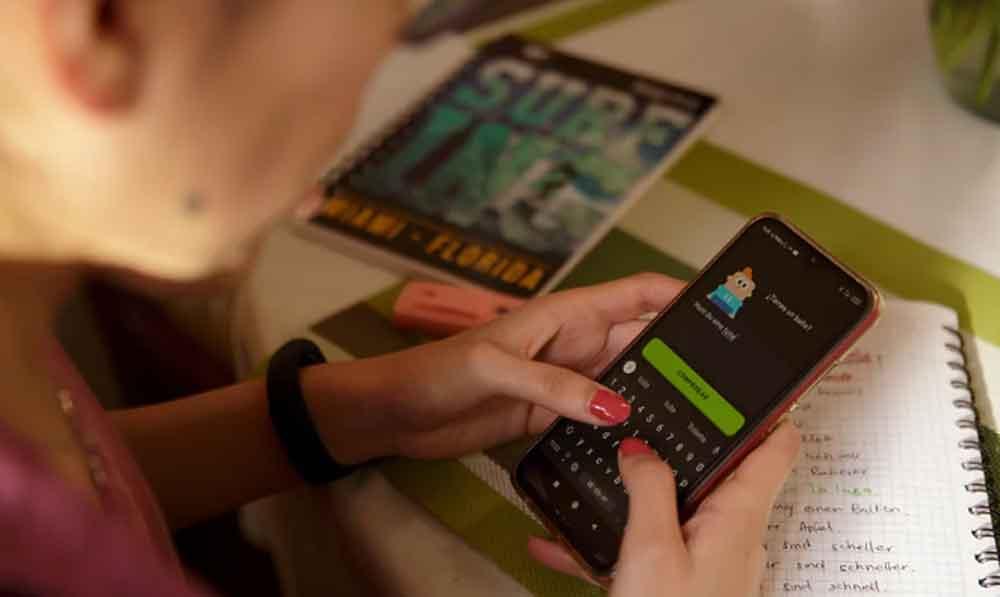
The app lives on the same phones that have become synonymous with endless scrolling, short attention spans and what young people jokingly call “brain rot.” The same device that can swallow an hour of mindless scrolling can also teach you how to order breakfast in French, conjugate a Spanish verb or recognize a Korean phrase.
Duolingo's answer to the attention problem is not to fight the phone. It is to give the phone something better to do.
At its simplest, Duolingo is a language-learning platform. Users can learn dozens of languages through short, interactive lessons covering vocabulary, reading, listening, speaking and grammar. But the real innovation is not the information inside the lessons. It is the way Duolingo packages that information.
It takes learning and makes it feel like something you would normally find in a game.
You earn points. You complete challenges. You move through levels. You collect achievements. You maintain a daily streak. You receive reminders. There are little celebrations when you get something right.
Five minutes can suddenly feel like a tiny victory. And that is important in an internet culture built around instant gratification.
Social media has become exceptionally good at rewarding attention. Swipe and there is another video. Refresh and there is another post. Tap and something happens. Duolingo borrows that same basic principle, but redirects it.
Instead of endlessly consuming content, the user has to do something.
Remember the word. Choose the translation. Listen to the sentence. Speak into the microphone. Complete the challenge. Get it right.
Move forward.
The screen is still there. The dopamine-driven design is still there. But the user is participating rather than simply consuming. That does not mean Duolingo is a magical cure for excessive screen time, and it certainly cannot replace reading books, having conversations or spending time away from devices.
But it offers a much healthier possibility: not all screen time has to be empty time.
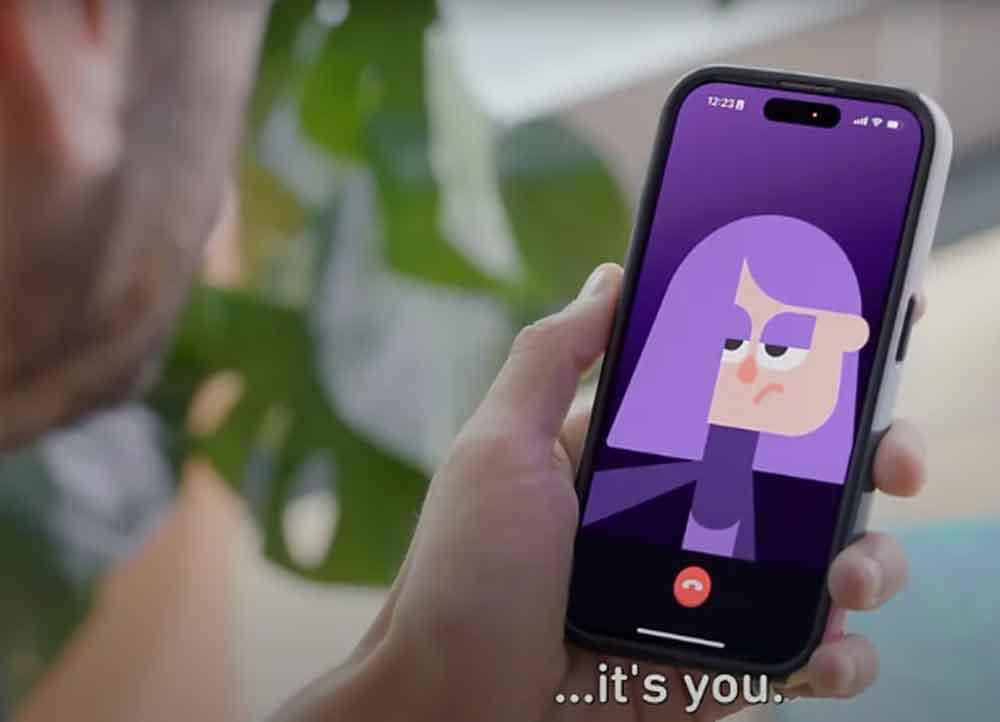
This is where the infamous Duo the Owl comes in. Duo is the face of the entire operation, and he has become almost impossible to separate from the idea of keeping a Duolingo streak alive.
He reminds you to practise. He celebrates when you do. He appears when you disappear.
And thanks to Duolingo's deliberately chaotic social-media personality, the green owl has become a meme in his own right.
The joke is that Duo is terrifyingly invested in your education. Miss your lesson and the owl will somehow know.
But underneath the joke is an extremely effective behavioral strategy.
Duolingo is trying to turn learning into a habit. The company understands that saying “I want to learn a language” is very different from actually learning one.
The first is an ambition. The second requires repetition. So Duolingo makes repetition easier.
A lesson can take only a few minutes. The progress is immediately visible. The streak creates continuity. Rewards make completion satisfying. Notifications bring the learner back.
One day becomes ten. Ten becomes fifty. Fifty becomes a hundred.
Eventually, the learner is no longer trying to remember to study. Studying has become part of the routine. That is perhaps Duolingo's most interesting contribution to the fight against digital brain rot.
It does not ask young people to suddenly develop the attention span of a university professor. It starts with the attention they already have. If someone can spend ten minutes scrolling, Duolingo asks: why not spend some of those ten minutes learning something?
If someone enjoys collecting points in a game, why not collect points for vocabulary? If someone refuses to break a social-media streak, why not build a learning streak? It is not about pretending that entertainment does not work.
It is about making learning entertaining enough to compete. And Duolingo has become remarkably good at that.
Its lessons are intentionally bite-sized. Its interface is colourful and interactive. Its characters have personalities. Its notifications are playful. Its rewards are immediate. Most importantly, the user is constantly doing something. That matters because passive consumption and active learning are fundamentally different experiences.
Scrolling can leave you with hundreds of pieces of information that disappear almost immediately. A Duolingo lesson asks you to retrieve information from memory, make a choice, recognise a pattern or produce an answer.
The genius of Duolingo is that it does not pretend young people hate technology. Quite the opposite. It understands that young people already love technology.
So instead of saying, “Put your phone down,” it asks:
“What if we made you want to pick it up for something useful?”
That is the green owl's real trick.