Crimson Run 2026: RAC Colombo South & Fight Against Menstrual Stigma
Marian de Silva
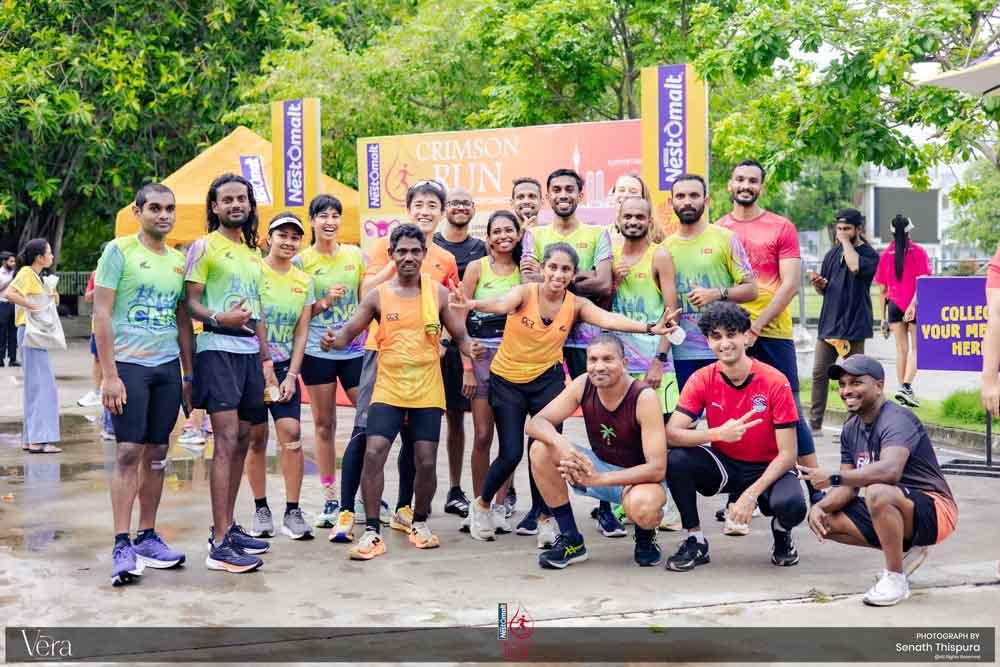
Before the sun made its way across the Colombo sky, enthusiastic good mornings filled the air around the registration counters at Racecourse Grounds. Friends paused for photographs before the run, while corporate teams arrived together, energized and ready for the morning ahead. There was excitement in the air, but beneath the enthusiasm was a deeper purpose that had brought hundreds of people together on June 7.
The Crimson Run 2026 was never simply about completing five kilometers.
Organized by the Rotaract Club of Colombo South in partnership with the Selyn Foundation, and supported by Nestomalt, Lanka Hospitals, The Comms Outlet, and Eva, the event sought to raise awareness and support for menstrual health initiatives while challenging the stigma that continues to surround menstruation in Sri Lanka. As a volunteer and a fellow rotaractor, I had the privilege of witnessing firsthand what can happen when a community chooses to stand behind a cause that has remained in the shadows for far too long. The Crimson Run was part of Project Crimson, a flagship initiative dedicated to addressing menstrual health, period poverty, and the many misconceptions that continue to affect women and girls across the country. While the run itself lasted only a few hours, its message extended far beyond the finish line.
What stood out most throughout the morning was the diversity of the crowd.
There were seasoned runners aiming for personal bests. There were first-time participants who had never taken part in a community run before. There were children cheering from the sidelines, university students, professionals, and retirees. There were women supporting women, but perhaps most encouragingly, there were also countless men who chose to show up for the cause. Too often, menstrual health is framed as a "women's issue". While women are directly affected by the challenges surrounding periods, meaningful progress requires support from everyone. The sight of fathers, brothers, husbands, boyfriends, colleagues, and friends participating in solidarity was a reminder that creating change requires collective responsibility. Conversations about menstrual health should not belong exclusively to women. They should belong to all of us. For many participants, the run offered an opportunity to support an important cause. For others, it was a chance to learn. For some, it was simply a way to stand in solidarity with women and girls who continue to face barriers that many people rarely stop to consider.
The reality of period poverty remains alarming.
Across the world, millions of girls and women still lack access to safe and affordable menstrual products. While many take access to sanitary products for granted, countless others are forced to rely on newspapers, tissues, leaves, old rags, and torn pieces of cloth during their periods because they have no alternative. Imagine trying to attend school, work, or carry out daily activities while worrying about how to manage something as natural as menstruation without proper resources. Imagine missing classes, avoiding social situations, or risking your health because a basic necessity remains out of reach.
For many girls and women, this is not imagination. It is reality.
This is precisely why the partnership between the Rotaract Club of Colombo South and the Selyn Foundation is so significant. Through initiatives such as the #BleedGood movement, the Selyn Foundation has worked tirelessly to support women and girls affected by period poverty while simultaneously creating sustainable livelihoods for female artisans. Their work extends beyond the distribution of reusable sanitary products. It encompasses education, empowerment, and the creation of safe spaces where conversations about menstrual health can take place openly and without judgement.
The Crimson Run represented another step in that journey.
Yet while access to menstrual products remains a major issue, another challenge continues to persist.
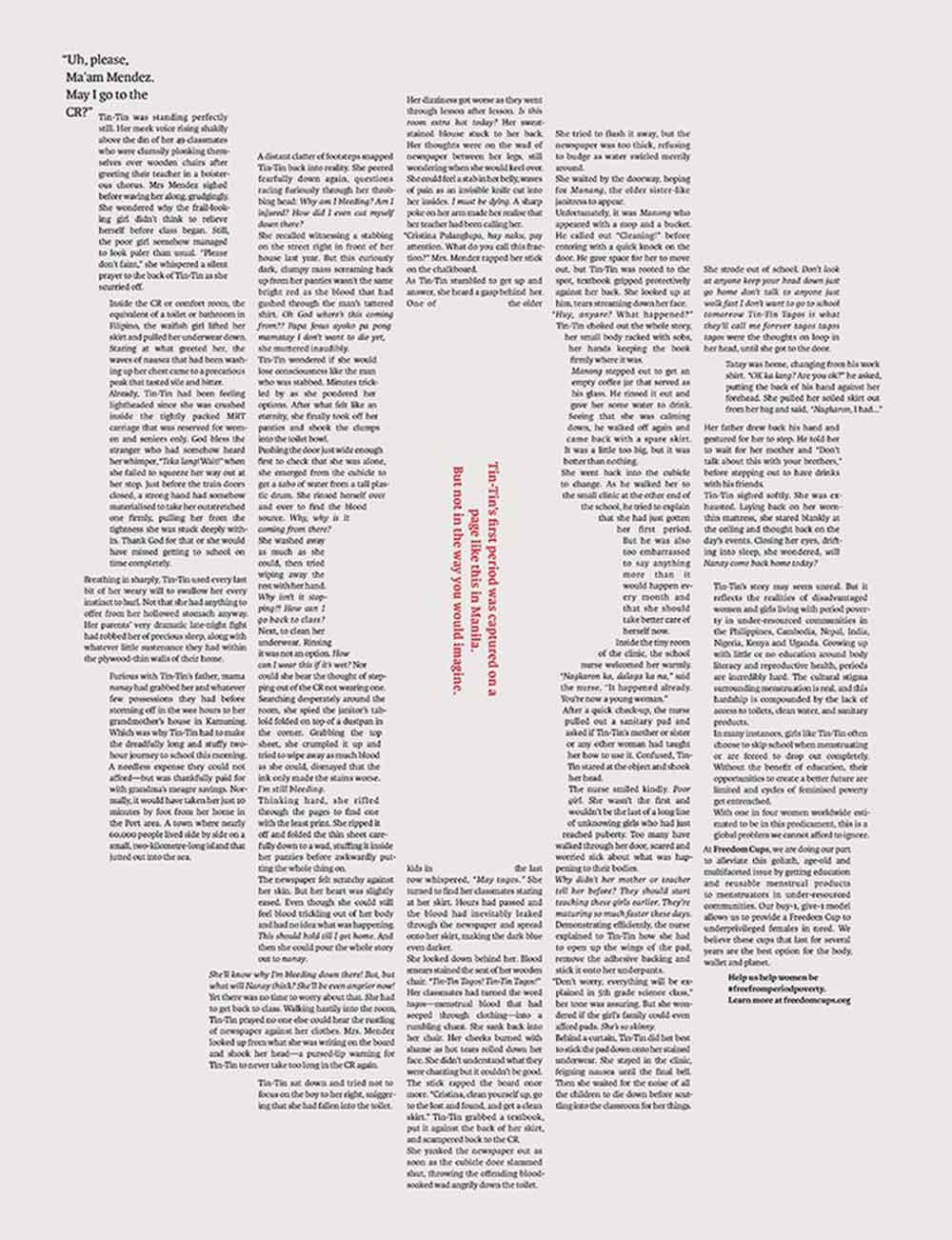
Stigma.
In many societies, menstruation remains surrounded by silence, embarrassment, and misinformation. Despite being a completely natural biological process experienced by billions of women throughout history, periods continue to be treated as something shameful. Across cultures and communities, girls are often taught to hide discussions about menstruation. In some places, they are excluded from certain activities or spaces. In others, they are made to feel impure or unclean because of something entirely beyond their control. Even in modern society, the stigma persists in subtler ways. Menstrual products are concealed as though they are something to be ashamed of. Casual jokes are made at the expense of women experiencing periods. Conversations about menstrual health are often met with discomfort or dismissal. Many girls grow up without access to accurate information because those around them are too uncomfortable to discuss the topic openly. These attitudes may appear harmless on the surface, but their consequences are significant.
- Silence creates misinformation.
- Misinformation creates fear.
- Fear creates barriers to health, education, and dignity.
Menstruation should never be treated as something dirty. It should never be a source of shame. And it should certainly never be a reason for someone to be denied opportunities, education, participation, or respect. Access to menstrual health is not merely a women's issue. It is a human rights issue. Every girl deserves the opportunity to attend school without worrying about her period. Every woman deserves access to safe menstrual products. Every individual deserves to be treated with dignity. These principles should not be controversial. Yet events like the Crimson Run remind us that there is still work to be done.
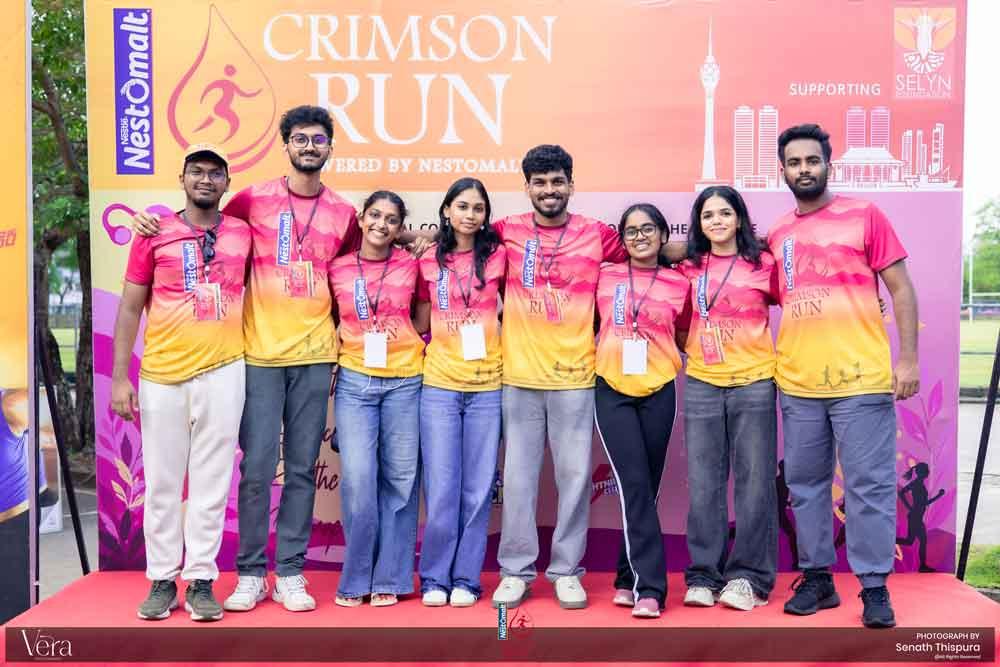
As volunteers, we spent much of the morning ensuring that participants had a positive experience. There were registrations to manage, directions to provide, questions to answer, and countless small tasks that contribute to the smooth execution of an event. Like most volunteer work, much of it happened quietly behind the scenes. However, what made this experience particularly meaningful was the knowledge that every contribution, no matter how small, was supporting something larger.
Every registration represented support for the cause. Every participant represented another voice helping to challenge stigma. Every conversation helped bring menstrual health further into the public sphere.
One of the most inspiring aspects of the event was witnessing families participate together. In a society where discussions about menstruation are often avoided, seeing parents bring their children to support the cause felt especially powerful. Change begins with education. Education begins with conversation. And conversations begin when people are willing to engage openly rather than treating topics as taboo. The atmosphere throughout the event reflected exactly that spirit. There was laughter, encouragement, and camaraderie. Strangers cheered one another on. Volunteers worked tirelessly behind the scenes. Participants crossed the finish line knowing they had contributed to something bigger than a race. The red shirts worn throughout the event became more than a dress code. They became symbols of solidarity. As runners moved through Colombo's streets, they carried with them a visible message that menstrual stigma deserves to be challenged, and period poverty deserves attention. The Crimson Run was successful not because of how quickly participants completed the course, but because of what it represented.
- It represented awareness.
- It represented advocacy.
- It represented compassion.
Most importantly, it represented hope.
Hope that future generations of girls will grow up in a society where menstruation is understood rather than stigmatized. Hope that no girl will be forced to rely on newspapers, tissues, leaves, or torn pieces of cloth because she cannot access proper menstrual products. Hope that conversations about periods will one day be treated with the same openness and respect as conversations about any other aspect of health. As the event came to a close and volunteers began packing away equipment, there was a collective sense of accomplishment.
The run was over. The conversations, however, were only beginning. The fight against period poverty does not end after one event. The effort to dismantle stigma cannot be completed in a single morning. Real change requires ongoing advocacy, education, and community engagement. Fortunately, that commitment was evident throughout the Crimson Run. The Rotaract Club of Colombo South, the Selyn Foundation, sponsors, volunteers, participants, and supporters all came together with a shared purpose. Together, they demonstrated what is possible when people choose empathy over indifference and action over silence. In a world where many girls still face unnecessary barriers simply because they menstruate, that collective effort matters.
The Crimson Run was more than a fundraising event.
- It was more than a community run.
- It was a statement that dignity matters.
- It was a reminder that menstruation should never be a source of shame.
And it was proof that when communities come together to advocate for change, every step can help move society forward. For that reason, being part of the Crimson Run was not only a rewarding volunteering experience. It was a privilege.