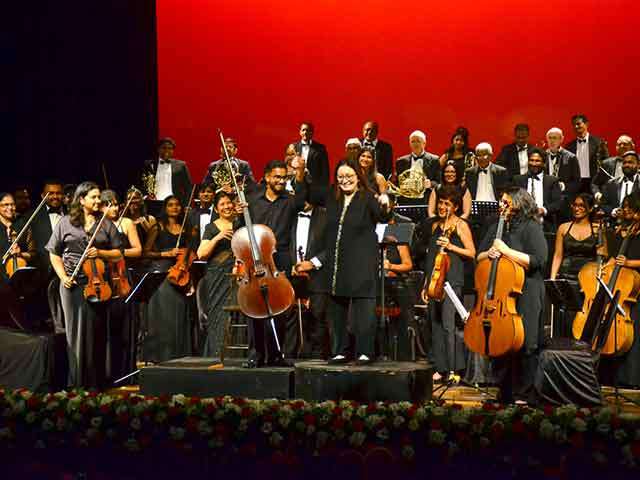
In Conversation with Shivalatha Sivasundaram
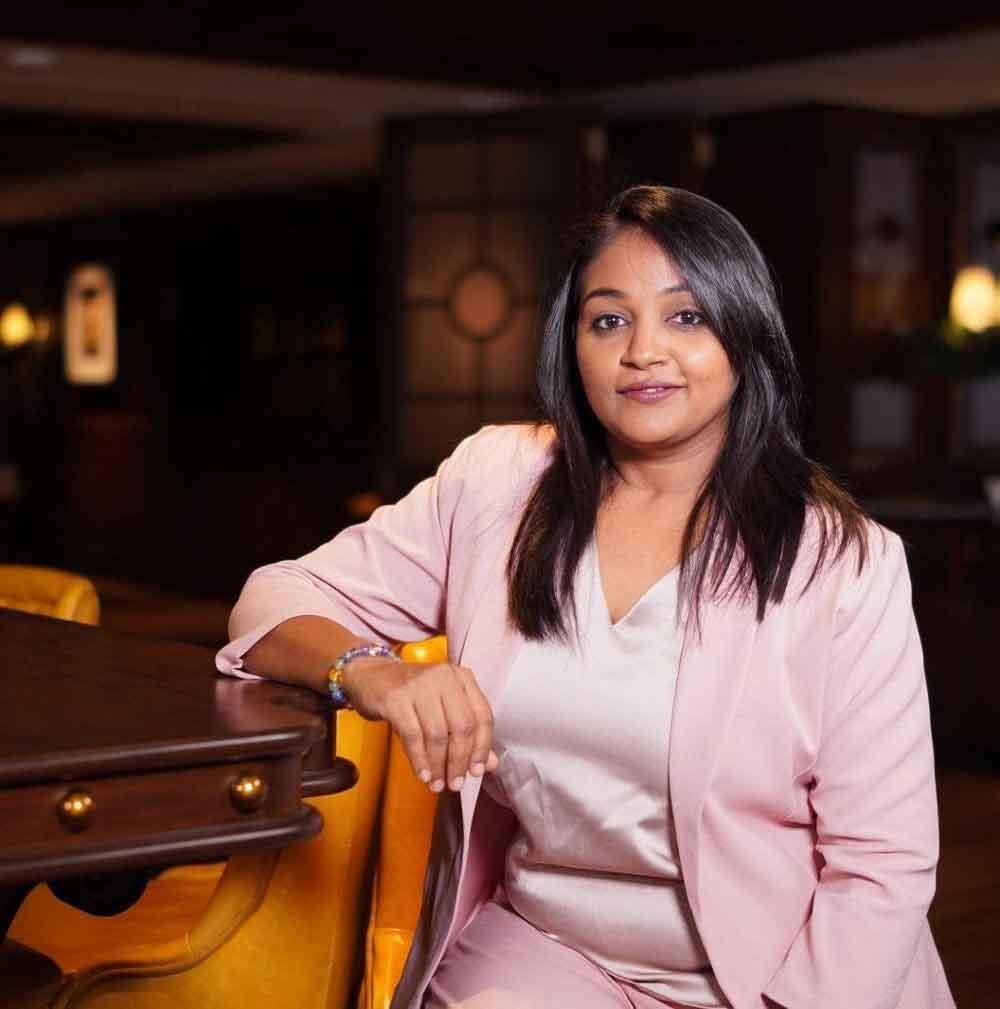
By Noeli Jesudas
In a world where service is often reduced to transactions and checklists, Shivalatha Sivasundaram is quietly reshaping what it truly means. With a career that spans banking, marketing and corporate training, she has evolved into a voice that champions something deeper, service as an experience, a mindset and a culture. The Training Lab, she continues to challenge conventional learning, bringing a people-first approach to an increasingly digital world.
Q. Your journey spans over two decades across banking, marketing, and corporate training. What were the defining moments that shaped your transition into becoming a “Service Architect”?
Two decades in banking gave me an education that had surprisingly much more than to do with banking, since corporate and retail banking, credit risk and marketing all placed me in front of people at moments that mattered to them. Somewhere in those years I stopped thinking about products and began thinking about the experience around them.
The first came early in relationship management, when it struck me that clients almost never left over rates. They left over how they had been made to feel, and the causes were always small: a call not returned, an explanation buried in jargon, a promise quietly missed. Service, I came to understand, is not a department or a temperament but a structure, and most organisations left it to chance.
The second came when I began training teams internally and watched an officer, written off as weak at customer handling, transform in three sessions. She had learned nothing new; someone had simply explained it in a language she could absorb. The ability had been there all along; the design around it was missing.
The third was a decision rather than a realisation: leaving a secure career to build The Training Lab without investors or institutional backing.
Those experiences changed how I understand the work. Service had stopped being something an individual delivers and become something an organisation builds deliberately, to a brief and a blueprint, which is what the architecture in that description means. When it fails, that is usually a design fault rather than bad luck, and the distinction is where my work begins.
Q. The Training Lab was built on the idea of making learning accessible and experience-driven. What gap did you see in traditional training models that pushed you to create something different?
Some of the sharpest thinking I met in my banking years came out of training rooms, and what struck me was how seldom it survived past Monday morning.
The reasons were specific. Training was generic, the same deck delivered to a bank, a factory and a logistics firm with the logo changed, and it came almost entirely in English to audiences who think, sell and serve in Tamil and Sinhala. It ran in one direction, and began without a problem statement, because nobody had asked what the organisation was trying to fix.
The Training Lab was built the other way round. Every engagement begins with a problem statement rather than a proposal: what is going wrong, for whom, and what is it costing? Only then is the programme designed and shaped to the industry, the culture and the people in the room, so two clients in the same sector never receive the same programme.
Learning also had to be barrier-free, whether the barrier is geography, language, age, background or ability, which is why we deliver trilingually and take school children as seriously as boardrooms.
Inclusion for differently-abled participants works in two directions. We design programmes they can genuinely take part in, using accessible formats, captioned material, sign-language-supported modules and pacing built for the room rather than adapted at the door, and we train organisations to serve differently-abled colleagues and customers with competence rather than awkwardness. A learning room that quietly excludes people is not a learning room; it is a filter.
Adults do not learn by being lectured at, but by doing something uncomfortable in a safe room and then being shown why it worked.

Q. Being trilingual and working with diverse audiences, how has language influenced the way you design and deliver impactful training experiences?
Language is not a delivery mechanism; it is the difference between understanding something and owning it.
Working across Tamil, Sinhala and English taught me that translation is not the same as design. Humour does not survive the crossing, nor does idiom, and a case study set in a Colombo boardroom means little to a team on a factory floor. So I redesign rather than translate: the concept stays constant, while the vocabulary, the analogies and often the pace change entirely.
What surprised me most was the emotional effect. When you train people in the language they think in, participants who were silent for two hours in English become the most articulate in the room. There is a dignity in it, an unspoken message that you do not have to perform in a borrowed language to be taken seriously here.
That matters enormously in Sri Lanka, where a great deal of talent has been quietly overlooked simply because it did not present itself in English.
Once you have had to rebuild an idea three times for three audiences, you also learn to say things simply, and simplicity is not the opposite of sophistication so much as the proof of it.
Q. In a rapidly evolving digital world, how do concepts like AI, digital behaviour, and modern customer expectations reshape what “good service” means today?
The definition of good service has been quietly rewritten in recent years, and I am not convinced every organisation has noticed. Politeness, accuracy and speed were once real differentiators, and they now belong largely to systems that do not tire, forget or have difficult mornings. An organisation still competing on those qualities is competing on ground it no longer holds.
Good service is now defined almost entirely by what happens where the automation ends. Customers reach a human only when something has gone wrong or they are upset, which is a very different job from the one most frontline staff were hired for. They are no longer working a queue of routine requests but handling the difficult residue the system could not resolve, and yet their training is still built for the queue. That is where service quality is now lost.
Digital behaviour has reset expectations alongside it. People move between WhatsApp, a call and a branch visit in one afternoon and assume the organisation is following along, and they benchmark you against the best experience they had that week, which may have been a food delivery app rather than a competitor.
I run programmes on harnessing AI for business efficiency, so I am hardly nostalgic. The instruction I repeat is the same: automate the transaction and put your strongest people where the emotion is. Reverse that order and you get an efficient operation and a steady, silent loss of customers.
Q. The Training Lab has already expanded beyond Sri Lanka into international markets. What has that global exposure taught you about service excellence across cultures?
I have coached clients across the United States, Australia, the United Kingdom, Malaysia, the Maldives and Africa, and that exposure taught me one thing: the principles of service excellence are universal, while their expression is entirely local.
Respect, reliability, ownership and attentiveness are wanted everywhere, but what respect looks like varies enormously. In some markets warmth and informality read as excellent service, while elsewhere the same behaviour reads as unprofessional. In some cultures a customer tells you plainly that they are unhappy; in others they simply never return, and your team never learns anything went wrong.
That has made me more careful, and I no longer arrive anywhere with a fixed model of good service. I ask first what courtesy means here, what escalation looks like, and what a participant will not say in front of a supervisor.
It has also given me respect for Sri Lankan service instincts, since our hospitality is a genuine asset. What we lack is not warmth but consistency, the structure that makes service repeatable rather than dependent on who is on duty.

Q. Looking ahead, what is your long-term vision, both for The Training Lab and for redefining service standards?
The vision has a business dimension and a wider one, and I care rather more about the second.
We are working through a three-year strategy built on four pillars: expand, innovate, impact and scale. The Digital Lab, with self-paced courses, live virtual classrooms and AI-supported learning paths, will give a participant in Jaffna or Malé the same access as one in Colombo, while we expand into the Maldives, Bangladesh, India, Malaysia and the Middle East and build the Youth Lab with schools.
Of all the initiatives we have launched, one holds a very special place in my heart; our Trainer Cohort. It is built on a simple belief: experience should never go to waste. We identify seasoned professionals, those returning to work after a career break, and those who simply wish to give back, and empower them to become confident, professionally trained, and fairly compensated trainers. Instead of allowing decades of wisdom and expertise to fade away, we bring it back into classrooms, boardrooms, and communities, creating a ripple effect that benefits generations to come.
On service standards, my ambition is straightforward: that service in this region be treated as a designed discipline with measurable standards, not a personality trait people either have or do not.
None of this has been built alone, and the ambition I hold most firmly is that The Training Lab should continue to matter long after I have stopped running it. That, rather than revenue, is the measure I would like to be held to.