A Change Is Gonna Come

By Dhulsini de Zoysa
It’s been a long, A long time coming, but I know A change gon come, Oh yes, it will (Sam Cooke, 1964 – U.S. civil rights era anthem) Colombo, Sri Lanka On Friday, the former Defense Secretary and the former Inspector General of Police (IGP) were sentenced to death for dereliction of official duties related to the 2019 Easter Sunday terrorist attacks. The Colombo Permanent High Court Trial-at-Bar delivered the back-to-back decisions one week before what should have been the 19th birthday of my only child, Kieran. A trial at bar, a special legal proceeding heard by a panel of three judges of the High Court usually without a jury, is reserved for high-profile matters of national importance.[1] The Easter Sunday attacks are of national and international significance. The well-financed, coordinated, and multi-focal, ISIS-inspired attacks on Easter Sunday in Sri Lanka put the world on notice – extremist terrorism can come for you anywhere. Fred Kempe, father of one of Kieran’s classmates in Washington, D.C. and president of the D.C.-based think tank, The Atlantic Council, wrote succinctly, “global terrorism entered a new era with the bombing in Sri Lanka.”[2] In all, the Easter Sunday attacks took roughly 270 lives and injured hundreds more.
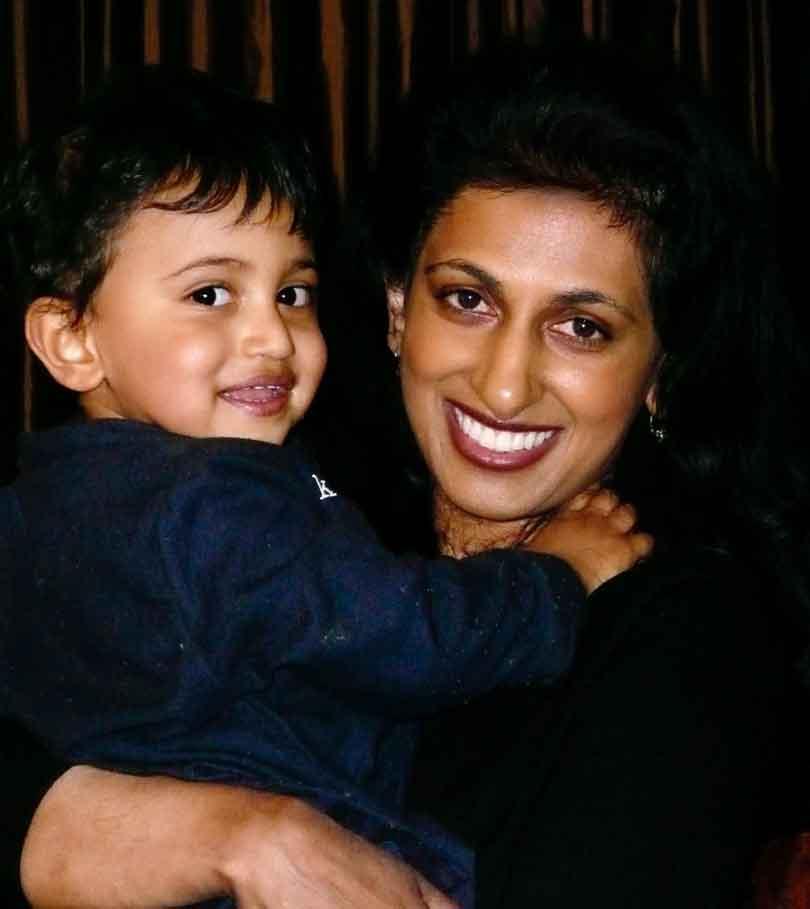
The heartbreak reverberated far beyond Sri Lanka’s shores. Among the dead were 45 foreign nationals from 13 countries, including my brilliant, beautiful, multi-ethnic, American son. Just weeks before he was killed, Kieran wrote for an English term exam, “my cultural connections are diverse. I am one-quarter Sinhalese, one quarter Tamil, three-eighths Russian, and one-eighth German. My family is Buddhist, Christian, Quaker, and Jewish. We celebrate peraharas and poya days, Christmas, and Hanukkah.” My sweet boy embodied our multi-faith, multi-cultural world. Soon after Kieran was killed, I wrote that someone must be held to account and that accountability rests on the shoulders of the country’s leaders.[3] I asked: “if Sri Lanka’s highest elected officials don’t take responsibility for the absence of adequate security measures or an emergency communication system, or for ignoring advance warnings of imminent attacks, how can any Sri Lankan feel safe? Can’t anyone with a backpack, briefcase, suicide belt, or box truck wreak havoc at a train station, holy festival, or other peaceful gathering? And if Sri Lanka’s elected officials don’t do more to protect their own countrymen, what right do they have to ask tourists to come back? What assurance can they offer that there won’t be another terrorist attack?” Of course, terrorist activity can happen anywhere. I know that there are extremists in every country and of every faith. There will always be people who believe that violence is the answer. There will always be those whose ideology is so misguided that they are willing to kill innocent people. But Government bears the responsibility to protect people and to deliver justice. Tragedies like the Easter Sunday attacks happen when Government fails this salient mission. It is unconscionable that the former Government of Sri Lanka ignored credible intelligence reports that could have prevented the Easter attacks from happening. Kieran was not killed because it was his fate, or God’s plan, or because he was too good for this world. I reject these simple answers. My son died because of extremist ideology and unforgivable lapses in counterterrorism efforts. Someone must be held to account. On 31st July, the High Court found the former Defense Secretary and the former IGP guilty on 854 of the 855 charges filed against each of them.
The charges stem from failures to act in response to dozens of credible and increasingly frequent warnings from Indian and American intelligence in the weeks leading up to the Easter Sunday attacks. The High Court shares the view that with great power comes great responsibility. The failures of the Defense Secretary and the IGP are especially heinous because these men were entrusted with ensuring public safety. In that context, the judgment of the death penalty seems commensurate to the crimes. (My personal views on capital punishment were formed years ago when I was a teenager in the U.S. where statutes vary by state and their application can often seem unjust. The U.S. is the only western industrialized nation to retain capital punishment.) It does not matter to me whether or not the Government of Sri Lanka puts the Defense Secretary and IGP to death as the Trial-at-Bar decided. These sentences will not bring back my sweet Kieran, but they do take us a step closer to justice and I am grateful for that. There are tens of thousands for whom justice never comes, no acknowledgement or accountability, no apologies, no answers to the most basic questions: what happened to my son? Who killed my husband? Who stood by and watched as my mother, my sister, my friend, or my neighbor was raped? Human rights violations happen everywhere –in China, in Gaza and Iran and Israel, in Russia and Ukraine, in Saudi Arabia and Sudan and Syria and Yemen, in Venezuela and in the United States— and they should be abhorrent to good people everywhere. “There may be times when we are powerless to prevent injustice, but there must never be a time when we fail to protest” ― Elie Wiesel Imagine if a multi-faith, multi-cultural, ethnically diverse little island in the Indian Ocean could show the world what accountability and justice look like. Wouldn’t that be paradise?

https://english.newsfirst.lk/2026/07/31/former-igp-pujith-jayasundara-sentenced-to-deathover- easter-sunday-attacks-case https://english.newsfirst.lk/2026/07/31/ex-defence-secretary-hemasiri-fernando-sentenced-todeath [1] https://srilankabrief.org/trials-at-bar-in-sri-lanka-use-and-abuse-prof-g-l-peiris/ [2] [https://www.cnbc.com/2019/05/03/globalterrorismentered- a-new-era-with-the-bombing-in-sri-lanka.html [3] de Zoysa, “Be Like Kieran” in the Sunday Observer, June 16, 2019 About the Author: Ms. Dhulsini de Zoysa, a Sri Lankan American mother, lost her only child in the Easter Sunday attacks that she survived. Born in Sri Lanka, she has lived in Washington, D.C., her home, since she was 4 years old. She now splits her time between Washington and Colombo.