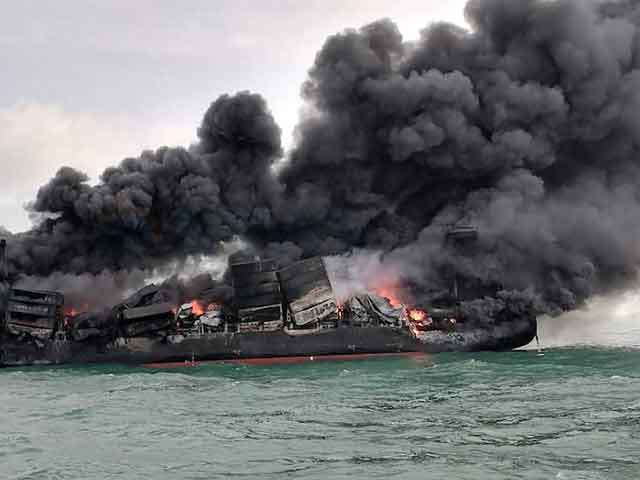
Is Britain Beginning to Break Apart? The New Independence Challenge Facing the United Kingdom.

Michelle O'Neill of Sinn Féin
By September 2026, a question that Britain has wrestled with for generations has suddenly become much harder to ignore. What exactly is the future of the United Kingdom? The leaders of the main nationalist parties governing Scotland, Wales and Northern Ireland are meeting in Cardiff to affirm the right of their nations to determine their own constitutional futures. John Swinney of the Scottish National Party, Rhun ap Iorwerth of Plaid Cymru and Michelle O'Neill of Sinn Féin are expected to sign a memorandum calling on Westminster to prepare for and facilitate constitutional change. This does not mean that Scotland, Wales and Northern Ireland are declaring independence tomorrow. Nor does it mean that the United Kingdom is about to disappear. But it does represent something historically significant.
For the first time, nationalist parties seeking fundamental constitutional change are simultaneously leading the devolved governments in Scotland, Wales and Northern Ireland. Their individual objectives are not identical, but all three are challenging the assumption that the present United Kingdom must remain permanently as it is. In simple terms, the argument is moving from whether constitutional change should be discussed to who should have the power to decide it. For Scotland, that means another independence referendum. For Wales, it means establishing that the Welsh people have the right to choose independence if they eventually want it. For Northern Ireland, the question is different. Sinn Féin seeks Irish reunification rather than the creation of an independent Northern Irish state. Together, however, these movements raise an extraordinary possibility. The political map of these islands could look dramatically different within a generation.

Rhun ap Iorwerth, First Minister of Wales
WHAT IS ACTUALLY HAPPENING?
The Cardiff meeting is important because the three nationalist movements are attempting to establish a common principle. They argue that the people living in Scotland, Wales and Northern Ireland should ultimately decide their constitutional futures, rather than Westminster permanently determining those futures for them. That sounds straightforward, but constitutionally it is extremely complicated. Scotland held an independence referendum in 2014. The result was 55% for remaining in the United Kingdom and 45% for independence. Since then, Brexit, changes of government, economic upheaval and a succession of political crises have transformed British politics.
The Scottish Government has now published a new draft Independence Referendum Bill. It proposes asking voters the simple question, “Should Scotland be an independent country?” However, Scotland cannot simply hold a legally effective independence referendum whenever its government wishes. The UK Supreme Court ruled in 2022 that legislation for the proposed referendum related to matters reserved to Westminster. The Scottish Government itself acknowledges that its new bill would be introduced once the necessary powers have been secured. That makes Westminster crucial.
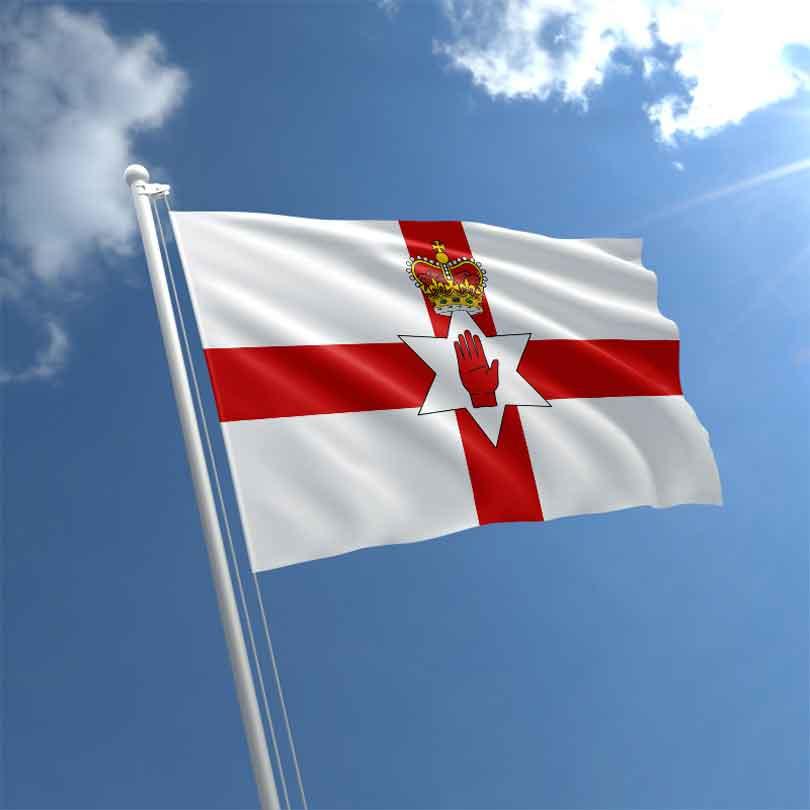
Northern Ireland
Wales is at a much earlier stage. Welsh independence has historically attracted considerably less support than Scottish independence. Plaid Cymru's rise has nevertheless changed the political conversation. Wales now has a First Minister who openly believes independence should be a legitimate destination if the Welsh people choose it. There is no immediate timetable for a Welsh independence referendum. The constitutional debate is therefore more about direction than departure.
Northern Ireland is different again. Its future is governed by the arrangements created by the Good Friday Agreement and subsequent legislation. Under the Northern Ireland Act 1998, the Secretary of State must order a poll if it appears likely that a majority would vote for Northern Ireland to leave the United Kingdom and become part of a united Ireland. Northern Ireland therefore already has a legal route through which its constitutional status can change.
WHY DOES THIS MATTER SO MUCH?
The United Kingdom is not simply England with three regions attached. It is a multinational state consisting of England, Scotland, Wales and Northern Ireland, each with its own history and political identity. If Scotland left, the psychological impact would be enormous. The union between Scotland and England dates from 1707. Its end would mean dismantling more than three centuries of shared political government. Questions would immediately arise about currency, pensions, taxation, national debt, defence, energy, borders, trade and citizenship. There would also be the extraordinary question of Britain's nuclear deterrent. The UK's Trident nuclear submarines are based at HM Naval Base Clyde in Scotland. Scottish independence would therefore create major negotiations over the future location and operation of Britain's nuclear forces.
The economic consequences would be equally complex. Scotland and the rest of the UK conduct enormous amounts of trade with one another. Independence would require decisions about currency and regulation, while Scotland's stated ambition to join the European Union could eventually create a situation in which the Scottish and English economies operated under different trading frameworks. That would not necessarily mean passport booths appearing overnight along the Anglo Scottish border. Britain and Ireland already demonstrate through the Common Travel Area that people can move between different sovereign states without conventional immigration controls.
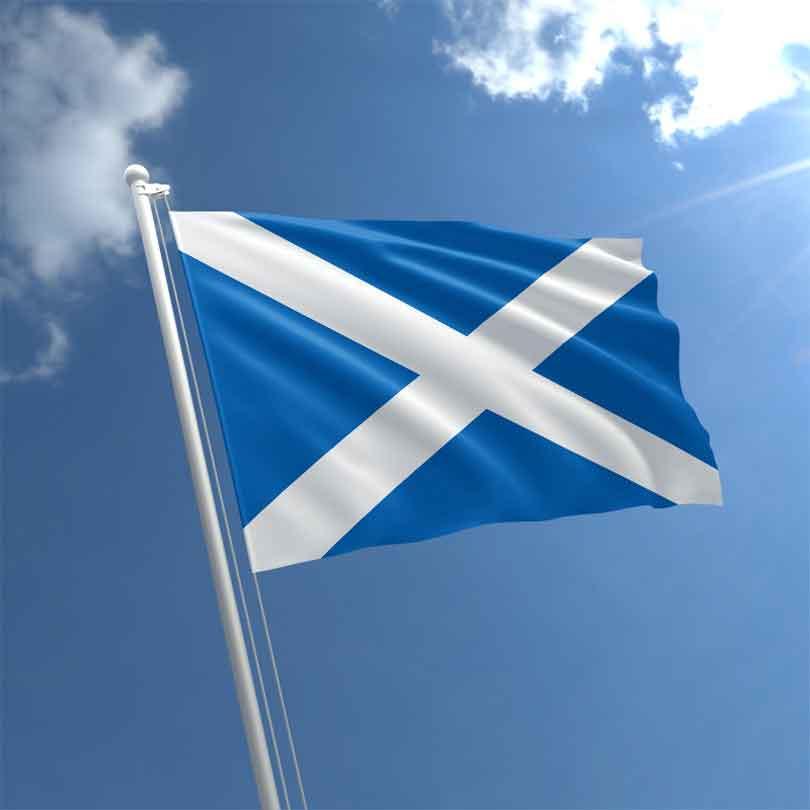
Scotland
Goods and regulation are another matter. If an independent Scotland eventually joined the European Union while England remained outside it, arrangements would be required to manage the boundary between the EU single market and the remaining UK market. Brexit showed just how politically difficult apparently technical questions about borders, customs and regulation can become.
WHAT HAPPENS IF NORTHERN IRELAND LEAVES TOO?
A united Ireland would be one of the most consequential political developments in modern European history. Northern Ireland has been part of the United Kingdom since the creation of the Irish Free State in the early twentieth century. Reunification would therefore change not merely a border but the constitutional identity of millions of people. Any successful transition would require enormous sensitivity towards the unionist population, many of whom regard British identity as fundamental to who they are. It would also have major implications for Ireland.
The Republic would potentially inherit responsibility for integrating different public services, health systems, taxation structures and political institutions. Reunification would be a process rather than an event. Yet Northern Ireland presents another fascinating European dimension. The Republic of Ireland is an EU member. Consequently, Irish reunification would connect Northern Ireland politically with an EU state. Scotland also wants to return to the European Union if it becomes independent. That creates a remarkable possible long-term picture. England and perhaps Wales could remain outside the European Union, while Scotland and a united Ireland were inside it. Europe's political geography would have been redrawn again.
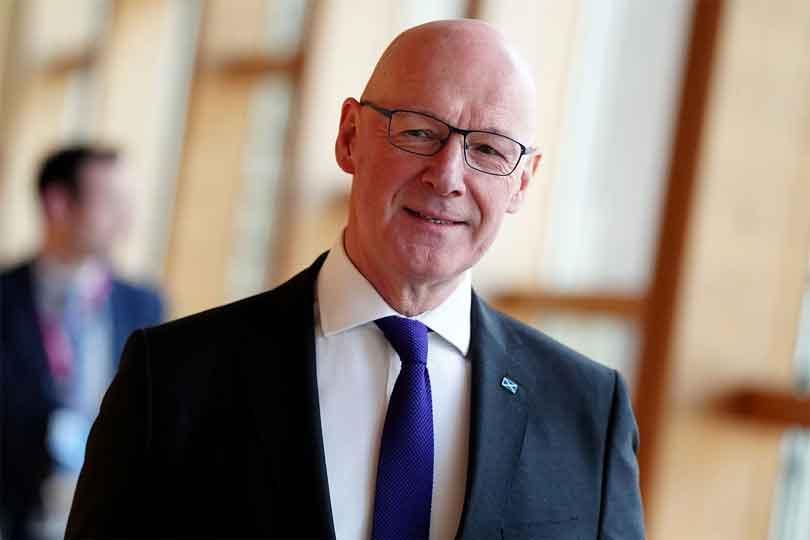
John Swinney, The First Minister of Scotland
And what about Wales? Wales may ultimately prove the most difficult independence question economically. The Independent Commission on the Constitutional Future of Wales concluded that independence offers greater agency and accountability but also carries substantial risks involving government finances, currency, borders, trade and administrative capacity. That does not make Welsh independence impossible. It demonstrates that political independence and economic independence are not the same thing. Modern European countries are deeply interconnected. Even sovereign governments share markets, regulations, defence arrangements, energy networks and international institutions. The real Welsh debate would therefore concern whether decisions affecting Wales are better taken predominantly in Cardiff or within the wider UK.
WHAT WOULD REMAIN OF GREAT BRITAIN?
There is an important geographical distinction. Great Britain technically means the island containing England, Scotland and Wales. The United Kingdom is currently the United Kingdom of Great Britain and Northern Ireland. If Northern Ireland joined the Republic of Ireland, Great Britain would still geographically exist. If Scotland became independent, however, the political meaning of Britain would change fundamentally. England and Wales could theoretically remain in a successor state together. If Wales later became independent as well, England would stand alone as by far the largest successor to today's United Kingdom. That would create its own identity crisis. For centuries, English and British identity have frequently overlapped. The breakup of the Union would force England to confront a deceptively simple question.
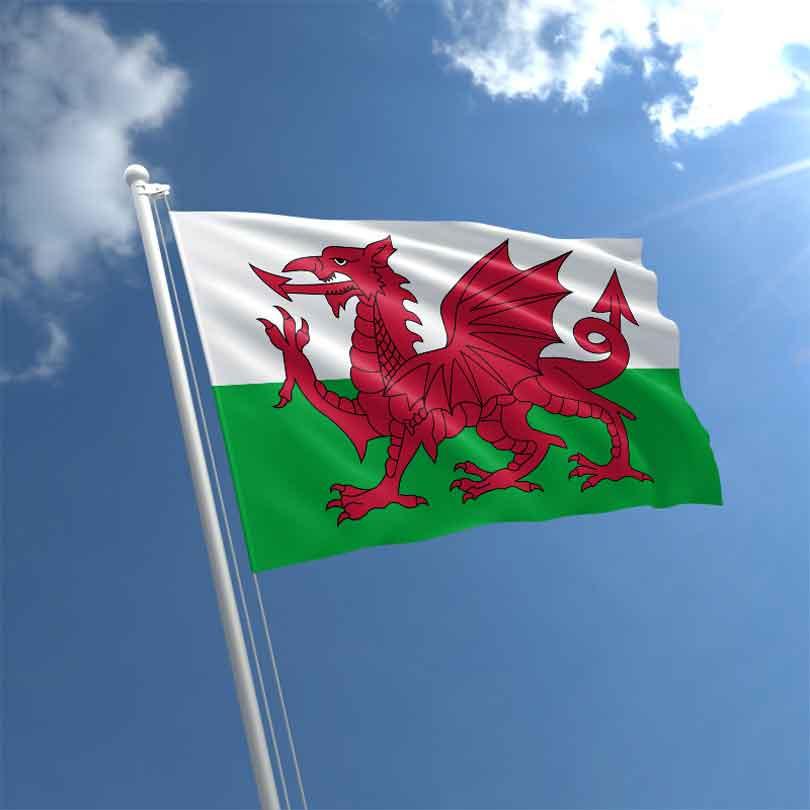
Wales
WHAT DOES IT MEAN TO BE ENGLAND RATHER THAN BRITAIN?
There would also be international consequences. The United Kingdom is a permanent member of the United Nations Security Council, a nuclear weapons state, a member of NATO and one of Europe's largest economies and military powers. Scottish independence would not automatically erase those positions. The likely assumption would be that the continuing UK state retained much of the UK's international legal identity, although the political and practical consequences would require extensive negotiation. Its population, territory, economy and military resources would nevertheless be reduced. For Europe, the transformation could be equally profound. An independent Scotland seeking EU membership would create a new northern European state with significant energy resources and strategic importance in the North Atlantic. Irish reunification would expand the territory and population governed by Dublin. Wales, if it eventually followed, would face its own decision about Europe. The irony would be striking. Brexit was intended by its supporters to restore national sovereignty to the United Kingdom.
A generation later, it could become part of the historical chain of events that encouraged some of the nations within the UK to reconsider where their own sovereignty should lie. None of this is inevitable. Polls can change. Governments lose elections. Economic circumstances alter. Independence movements can advance rapidly and then stall for years.
Scotland remains closely divided. Welsh independence is still a minority position. Northern Ireland's constitutional future is politically sensitive and legally dependent upon evidence that majority opinion has shifted towards reunification. The Cardiff gathering should therefore not be mistaken for the beginning of the formal dissolution of Britain. It is something subtler. It is evidence that the constitutional question is no longer confined to Scotland.
Three nationalist movements are now attempting to coordinate their political arguments at precisely the moment when all three devolved governments are led by parties committed to fundamental constitutional change. That places Westminster in a difficult position. Repeatedly refusing referendums may preserve the Union legally, but opponents will argue that it risks weakening the democratic case for the Union politically. Allowing referendums carries the opposite danger. Once a vote is permitted, Westminster must accept the possibility of losing it.
That may become the defining constitutional dilemma of the next decade. The ultimate outcome could still be a strengthened United Kingdom with greater powers transferred away from Westminster. It could become a looser federation or confederation of nations. Scotland alone could leave. Northern Ireland could eventually reunify with Ireland. Wales could remain within Britain long after Scotland had departed. Or, over several decades, the United Kingdom as we know it could cease to exist. History suggests that countries rarely imagine their constitutional arrangements will change until change suddenly becomes possible.
The Soviet Union disappeared. Czechoslovakia divided peacefully. Yugoslavia broke apart violently. Germany reunited. The European Union expanded eastwards. Britain itself left the European Union after decades in which withdrawal had seemed politically remote. Britain's situation is different from all of those examples, and there is no reason to assume that constitutional change here would follow any particular historical model.
But there is a lesson in them. Political maps are not permanent. The significance of September 2026 may therefore be understood only years from now. Perhaps the Cardiff meeting will eventually be remembered as another moment of political theatre in Britain's long constitutional argument. Or perhaps historians will look back on it as one of the moments when Scotland, Wales and Northern Ireland stopped debating their futures separately and began asking a much larger question together. Not simply whether they should leave the United Kingdom. But whether the United Kingdom, in its present form, can survive the twenty first century.