You Are Not Alone What Families Need After a Developmental Disability Diagnosis
For many parents, a diagnosis does not arrive with a roadmap. It may come after months or even years of questions, assessments and uncertainty. Why is my child struggling to communicate? Why are certain routines so difficult? Why does school seem harder for them than it does for other children? What kind of support do they need? And, perhaps most importantly, where do we go from here? The questions can be overwhelming. The answers, particularly in a country where access to specialized services and reliable information remains uneven, are not always easy to find.
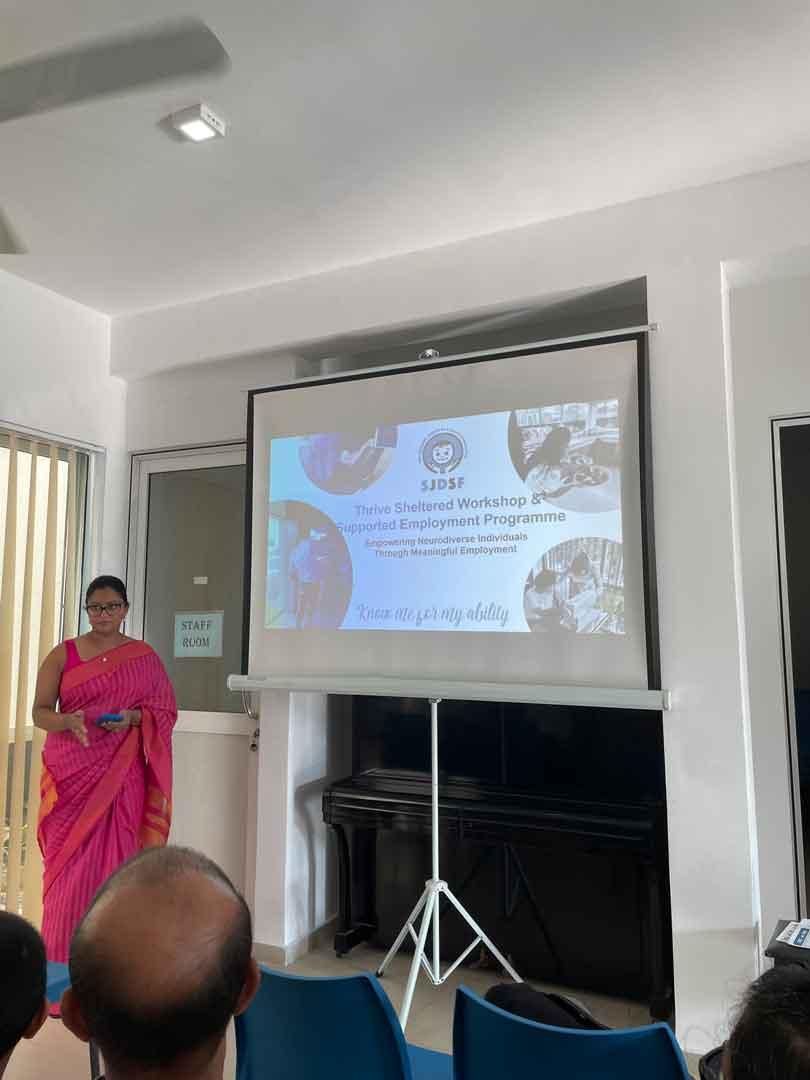
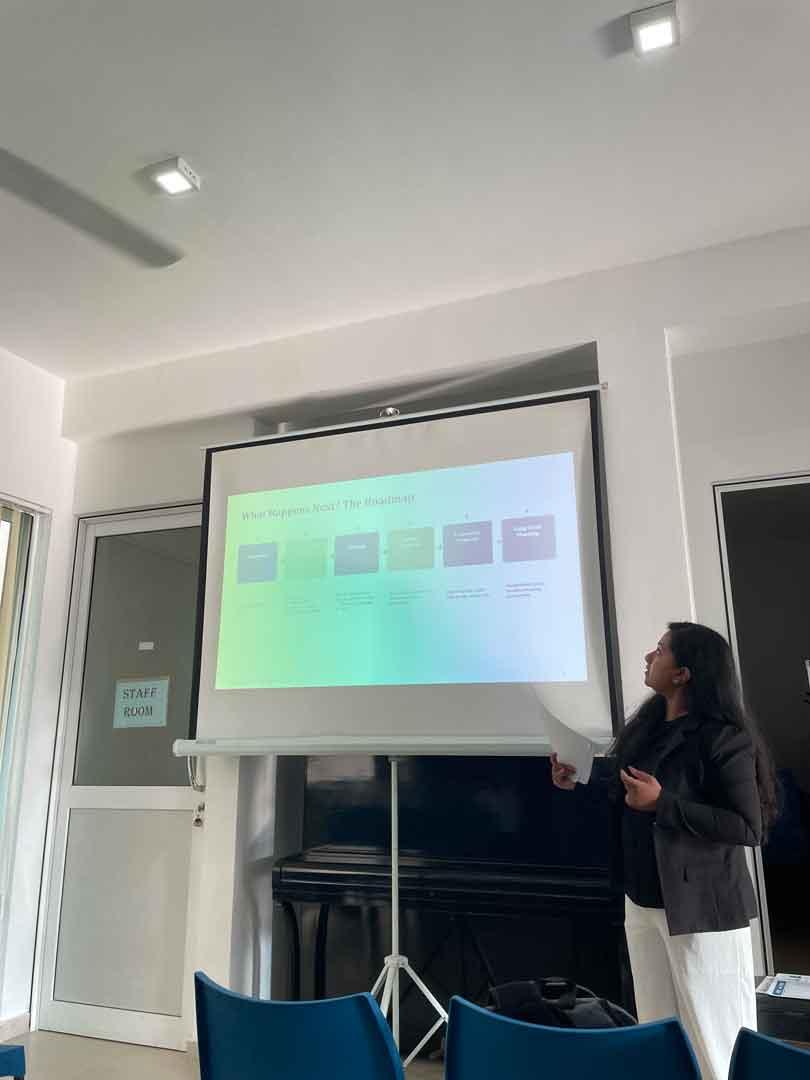
It was against this backdrop that the Shiranee Joseph De Saram Foundation hosted “You Are Not Alone”, a free workshop for parents and caregivers of children with developmental disabilities and additional support needs on August 20. Held at the Foundation’s premises in Colombo, the workshop brought together parents, professionals and members of the wider community for an afternoon centred not simply on diagnosis, but on what comes after it: understanding a child’s needs, developing practical strategies and finding support. The message was simple, but significant: families do not have to navigate the journey by themselves.
Established in 1993, SJDSF works with individuals with neurodiversity and intellectual disabilities, providing support that includes life-skills development, vocational training and assistance for caregivers. Its motto, “Know me for my ability”, reflects an important shift in how disability is understood: away from defining individuals by what they cannot do and towards recognizing what they can learn, contribute and achieve when given the right support.
Looking beyond behavior
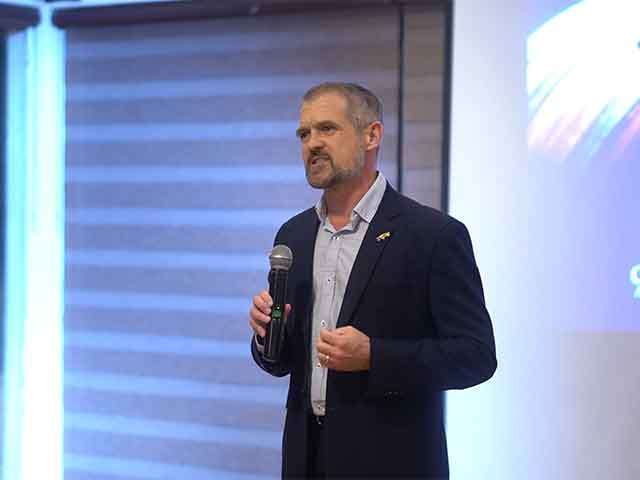
A central focus of the workshop was Applied Behavior Analysis, commonly known as ABA. There is often misunderstanding about what ABA is and who it can help. Dr. Nirupa Rajalathan, a Toronto-based physician, clinical director and educator whose professional work focuses on developmental care, behavioral intervention and the educational needs of neurodivergent children, says the approach is broader than many people assume. “There is often a misunderstanding about what ABA is and who it helps,” she explains. ABA is a behavioral and educational approach that supports individuals in learning important life and educational skills. For younger children, it can also involve teaching parents’ effective ways to communicate with and support their child, including helping them learn everyday life skills in ways suited to how they learn.
That distinction is important because the word “behavior” can sometimes lead families to believe that the objective of intervention is simply to make a child behave differently. Meaningful support, however, begins with a more important question: why is the behavior happening in the first place? A child who struggles during a transition, for example, may not simply be “refusing” to cooperate. They may be communicating discomfort, confusion, anxiety or difficulty understanding what is expected of them. Rather than focusing only on stopping a behavior, professionals can look at what may be contributing to it and what skills the child may need to communicate or cope more effectively.
“Behavior can have many possible causes,” Dr. Rajalathan says. “Using different assessment strategies helps professionals identify the factors contributing to a behavior and develop appropriate, individualized support.” Looking at behavior in this way allows professionals to avoid assumptions and develop support around the individual child. The aim is not to change behavior simply for the sake of conformity, but to understand the child and help them develop meaningful skills that support communication, participation and independence.
The everyday work of independence
For parents, much of this work does not happen inside a therapy room. It happens in the everyday moments: getting dressed, eating, following a routine, communicating a need, moving from one activity to another, participating in school, playing with others or learning how to manage increasingly independent tasks. These may appear to be ordinary milestones, but for some children they require considerably more time, repetition and individualized support.
The workshop encouraged parents to look at these moments not as failures, but as opportunities for learning. A child learning to communicate a request independently, participate in a routine or complete part of a daily task can be developing skills that have a much larger impact on their quality of life over time. Importantly, this does not mean turning the home into a therapy center. Learning can be incorporated naturally into everyday interactions, allowing parents to support their children without making every moment feel like a structured intervention session.
The principle is straightforward: ordinary routines can become opportunities for learning. The objective is not to make every interaction feel like therapy, but to recognize that children learn through the environments and relationships around them. For caregivers, however, knowing which strategies to use, how to adapt them and when to seek professional guidance can be difficult. This is where access to reliable information and specialized professionals becomes particularly important.
When the family needs support too
Caregivers are often expected to become experts overnight. A diagnosis may introduce an entirely new vocabulary, new appointments, new educational considerations and new decisions. At the same time, parents are still trying to navigate the ordinary responsibilities of family life. There is also the emotional dimension: parents may worry about whether they are doing enough, whether they have missed something or what the future will look like for their child.
For Praveena De Saram of SJDSF, this is one of the reasons families need to be reached much earlier. The Foundation often meets families when their children are already teenagers or young adults, by which point parents may have spent years struggling to access the knowledge, skills and appropriate interventions needed to help their children reach their potential. “In some cases, critical windows for learning and developing greater independence have already been missed,” she says.
“You Are Not Alone” was designed to help bridge that gap. A diagnosis can be overwhelming, particularly when parents are given a label without enough practical guidance about what it means or what to do next. Bringing professionals and families together creates an opportunity to turn a diagnosis into a starting point for informed action rather than allowing it to become a source of uncertainty.
One of the biggest gaps in Sri Lanka, De Saram says, is not only support for children, but support and counselling for the family itself. Parents may have to navigate medical, educational, therapeutic and social-service systems without a clear guide. A diagnosis may be delivered during a relatively brief clinical consultation without parents receiving enough information about what it means for their particular child, what interventions may be appropriate or where those services can be accessed. “We need a much stronger system of family education and counselling that helps parents move from simply receiving a diagnosis to understanding what they can practically do to support their child,” she says.
From diagnosis to possibility
The language surrounding disability matters because it can influence how children are seen and, in turn, the opportunities made available to them. “Developmental needs do not mean a child cannot learn,” Dr. Rajalathan says. “They may simply learn differently.” That principle has implications far beyond early intervention and asks schools to reconsider whether the systems designed to educate children are flexible enough to accommodate different ways of learning.
Schools can provide alternative or individualized learning plans that allow children to access curriculum content in ways suited to their learning needs. Assessment methods can also be made more flexible rather than relying solely on traditional paper-and-pencil examinations. For some children, the challenge may not be an inability to understand a concept, but the way in which that knowledge is presented or assessed. An inclusive education system must therefore ask whether children are being given genuine opportunities to demonstrate what they know.
But inclusion cannot stop at education. If children are expected to develop independence, society must also create opportunities for them to use that independence. That means thinking about adulthood from much earlier and asking what happens after school, when educational structures and familiar routines begin to fall away.
Changing the conversation
Sri Lanka has made progress in recognizing the importance of inclusion, accessibility and support for people with disabilities. Yet considerable work remains. Part of that work is changing the language surrounding disability. Children should not be reduced to diagnoses, nor should developmental differences be viewed only through the lens of limitations.
The more useful question is often: what support does this child need to participate, communicate, learn and develop their independence? That question shifts the conversation away from comparison and towards individual progress. It also places responsibility not only on families, but on schools, healthcare professionals, communities, employers and policymakers to create environments in which people with additional support needs can participate meaningfully.
De Saram believes Sri Lanka must also move beyond a charity-based mindset. There has been progress, particularly among more socially progressive communities and some employers and educators, but stigma remains deeply embedded in schools, workplaces and everyday community life. Inclusion, she argues, cannot be tokenistic. Organizations may declare themselves inclusive without putting the structures, training and ongoing support in place to make that inclusion sustainable. When those efforts fail, the failure can wrongly be attributed to the individual with a disability rather than to the way the programme was designed.
A different way forward
Perhaps the most valuable message from the SJDSF workshop was not a particular technique or intervention. It was the reminder contained in its title: You are not alone.
For Praveena De Saram, that is precisely what she hopes parents take away from a workshop such as this. “I would like them to leave knowing that they genuinely are not alone,” she says. “There are professionals, other parents and organizations that can help them navigate the journey.” But reassurance alone is not enough. Parents should also leave with practical techniques that help them connect and communicate with their child, understand their child’s individual needs and strengths, and build skills and independence through everyday interactions.
Ultimately, the goal is to help parents move from feeling overwhelmed by a diagnosis towards asking a more constructive question: What can my child do, and how can I help them build on that? That shift in perspective can be powerful.
A diagnosis may change the questions a family has to ask, but it does not have to determine the limits of a child’s future. With appropriate support, children can develop communication, learning, social and daily-living skills at their own pace. Families can learn how to recognize their children’s needs and strengths. Professionals can help translate evidence into practical strategies. Schools can adapt. Employers can open doors. Communities can become places where difference is accommodated rather than treated as something to be hidden.
There is no single strategy that will work for every child, and no workshop can provide every answer. But sometimes, the first step is simply knowing where to ask the next question. That is what makes spaces like “You Are Not Alone” important. For families standing at the beginning of an unfamiliar journey, practical knowledge can provide direction. Professional guidance can provide reassurance. Other parents can provide understanding. And sometimes, being told that you do not have to figure everything out alone is a form of support in itself.