Work of Heart and the Courage to Put Life into Words. In Conversation with Sinali Sedara Senarath
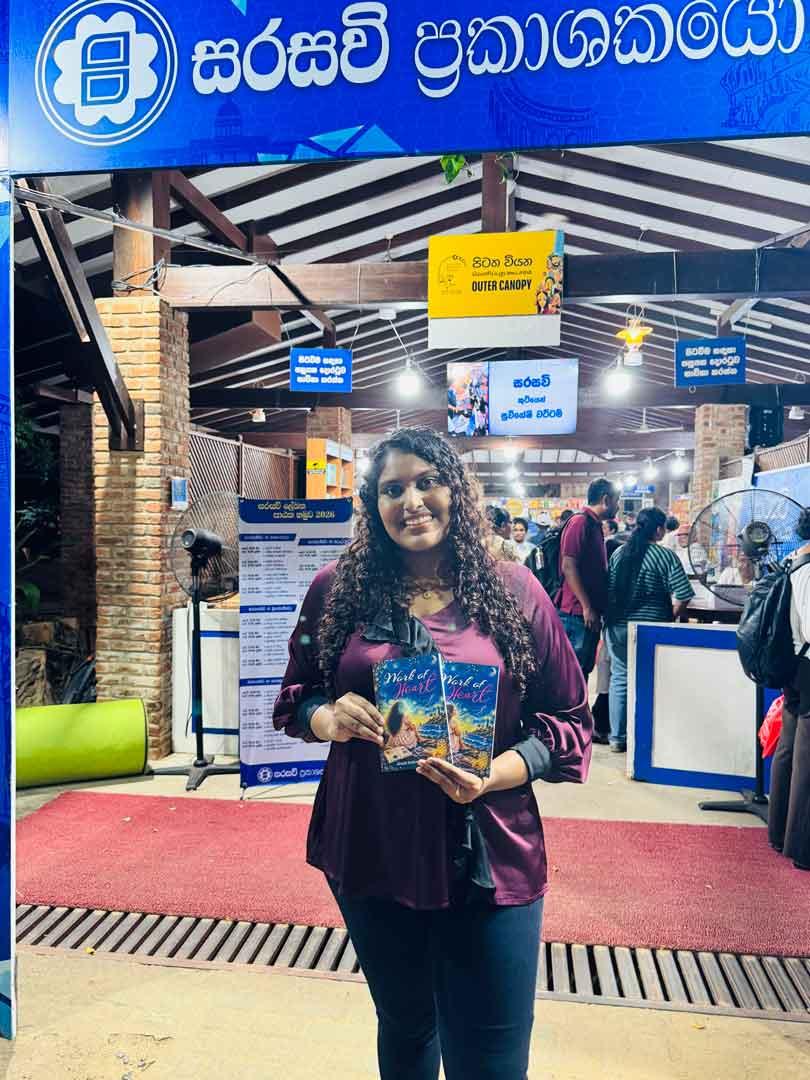
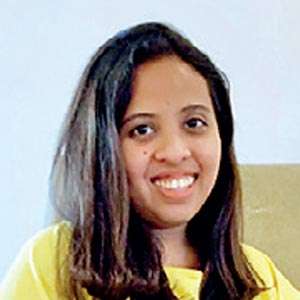
For young writer Sinali Sedara Senarath, authorship did not begin with dreams of publication or a carefully planned literary career. It began with journals, books, classroom discussions and the simple habit of writing things down. Now a third-year undergraduate at the University of Kelaniya, studying for a BA Honours in Teaching English as a Second Language, Sinali has taken an important step from private writing to publication with Work of Heart. Personal and conversational, the book draws upon memories, emotions and ordinary experiences while exploring grief, nostalgia, love, hope and growing up. Behind it lies a lifelong relationship with literature and the encouragement of teachers, family and friends who helped her trust her own voice. In this interview, Sinali speaks about the childhood that made stories important to her, the literary education that shaped her thinking, and the courage it took to allow strangers into a world once confined to journals.
You are both an undergraduate and a published author. How would you introduce yourself to readers who are meeting you for the first time?
I am currently a third-year undergraduate at the University of Kelaniya, following a BA Honours in Teaching English as a Second Language at the Department of English Language Teaching. I have always been very attached to words, books and stories, so writing has been part of my life for much longer than being an author has. I studied at St. Mary’s Convent for both my O’Levels and A’Levels and chose English Literature for both. I have also kept journals since I was very young. Work of Heart is really another step in that journey. I am still studying, still figuring things out and very much still learning, but I had something in my heart, wrote it down and took the leap of letting other people read it.
Where did that attachment to books and stories begin?
Being an only child, with my mother as my constant companion, meant that stories naturally became a big part of my childhood. Books, movies and the world of fiction gave me worlds to disappear into, people to meet and stories to grow up with. Books were never just something I read. They were part of how I experienced childhood. I also kept journals from when I was really little, although those early entries were probably not exactly literary masterpieces. One thing I was absolutely addicted to was the Diary of a Wimpy Kid series. I think that influenced the light-hearted, diary-like quality I eventually brought into some of my own writing in Work of Heart.
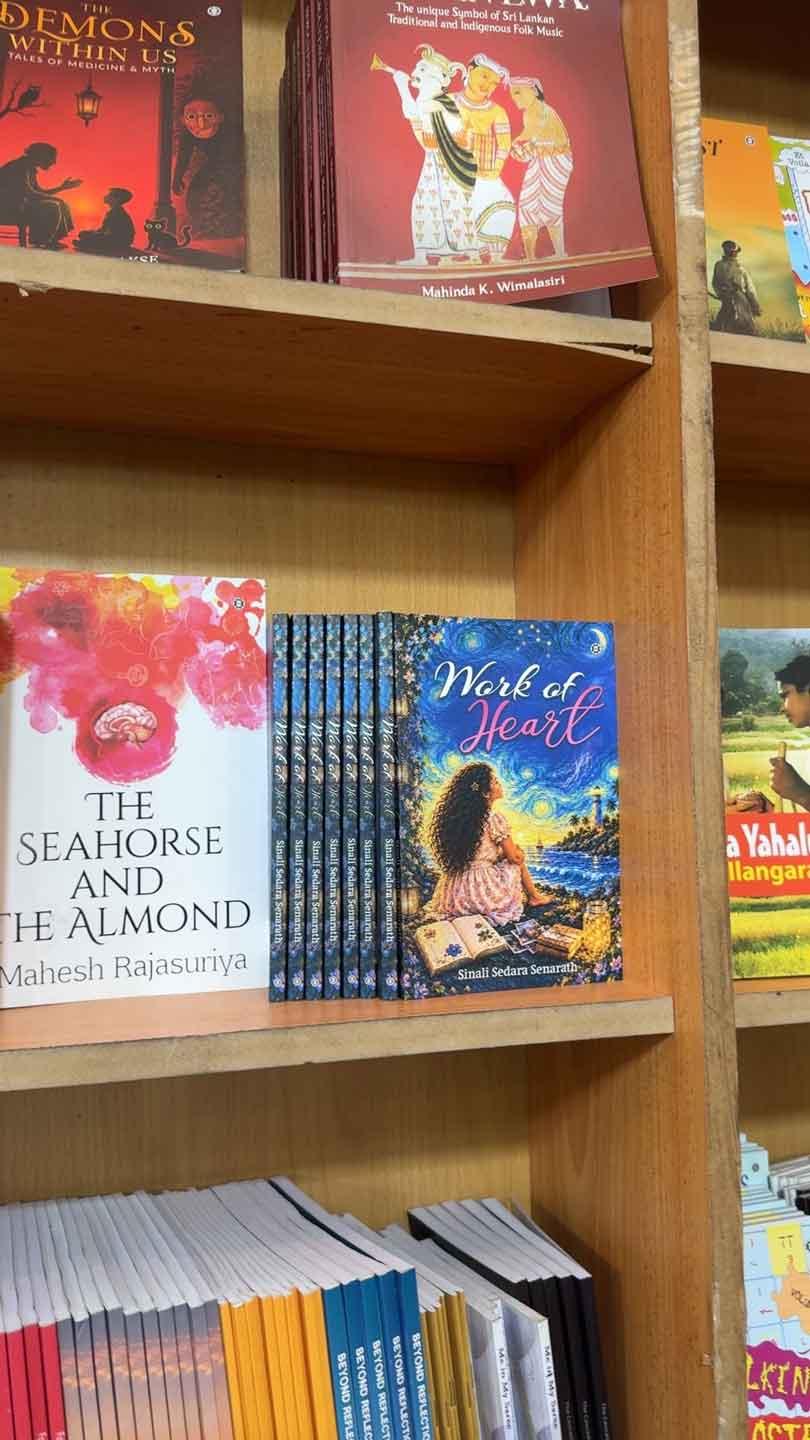
How important was your education in transforming someone who loved reading into someone prepared to write?
My exposure to English Literature was probably one of the biggest turning points in my development as a writer. At O’Level, literature introduced me to the idea that it is not simply about understanding a story or memorising literary terms. We looked at themes, language, imagery, context and literary techniques, but we were also encouraged to respond to texts with sensitivity and empathy. At A’Level, we had to move further and develop our own critical responses. I encountered writers including Shakespeare, John Donne, Keats, William Blake, Maya Angelou, James Joyce, Hemingway, Jhumpa Lahiri and Yann Martel. That had a lasting effect on me. It taught me that writing is not only about finding beautiful words. It is also about observing, questioning, understanding people and looking at experiences from more than one perspective.
Did you always imagine that those observations would eventually become a published book?
Not at all. I do not think I grew up saying that I was going to be an author one day. Writing was simply something I did. I kept journals, wrote little things, read a lot and slowly became more comfortable putting my thoughts into words. Becoming a published author came much later. I think the dream came after the habit. I was writing first, and only later did I begin thinking that perhaps I could actually make a book out of it. My literature education also helped me take that possibility seriously. When you spend years reading writers and discussing how texts are constructed, eventually you begin wondering what your own words might look like on a page.
Was there someone who particularly encouraged you to believe those words deserved a place on the page?
One person I really have to mention is Mr. Indunil Wannakukorala, who was my English Literature teacher from my O’Level days and has continued to be someone I deeply value as a mentor. He always encouraged me to write and made me feel that my ideas were worth putting into words. Having a teacher who takes your writing seriously when you are still a school student can make such a difference. Literature itself was also a huge inspiration. Reading writers such as Charlotte Brontë, Emily Brontë, Jane Austen, Sylvia Plath, Ernest Hemingway, Mark Twain and Yann Martel made me want to experiment with words and discover what I could do with them.
Which writers have stayed with you most strongly?
There are honestly too many to name. I have always loved Jane Austen and the Brontë sisters. Sylvia Plath has had a very different but powerful influence on the way I think about writing and emotion. I also love Khaled Hosseini, Jojo Moyes, John Green, Jeffrey Archer and Raphael Lippincott. Sonali Deraniyagala’s Wave stayed with me because of the way personal memory and devastating experience can be transformed into literature. The Book Thief is another book that stayed with me, as did Anne Frank’s The Diary of a Young Girl. That is what I love about reading. Not every book influences you in the same way. Some teach you how to write, some teach you how to feel, some make you question things, and some simply make you want to pick up a pen.
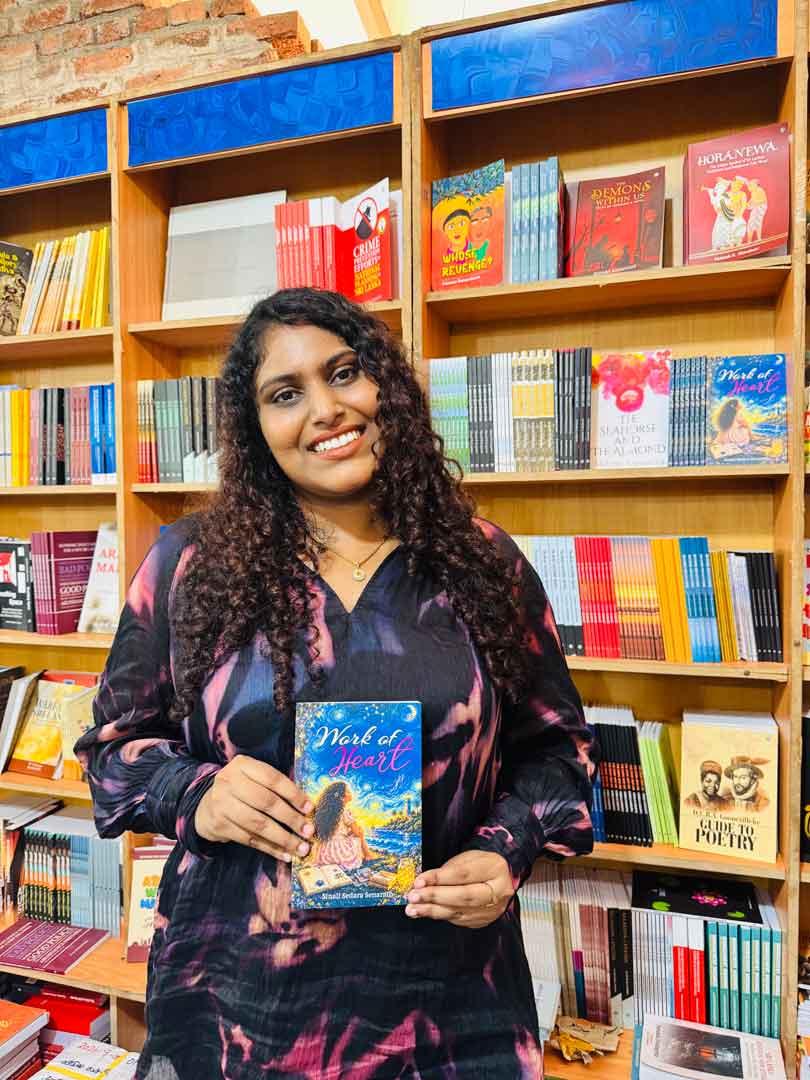
How did Work of Heart itself begin?
It started from a very simple place. I never began it thinking that I was going to write my first book. It developed gradually from my habit of writing things down. My exposure to books showed me something important. Writing about ordinary experiences, memories and deeply personal emotions can become meaningful to somebody else. You do not necessarily need an extraordinary life or a dramatic plot for your experiences to have value. I did not want my first book to be something overly serious or ambitious either. I am not presenting myself as someone who has lived an extraordinary enough life to write a grand memoir or biography. I believe there is something to take from every person’s life, even the ordinary parts. So, I decided to start small, keep it personal and light-hearted, and simply share what little old me has to say.
The title Work of Heart captures that sense of intimacy. What does it mean to you?
The title is quite literal because the book is very personal to me. It is something I wrote with a lot of feeling, memories and affection. It is not necessarily a work of art in the grand sense of the expression. I think it is much more a work of heart. It contains pieces of my heart. That made Work of Heart feel like a very natural title.
How much of Sinali herself will readers discover in those pages?
A lot of me, honestly. It is very personal, but I would not call it an autobiography or memoir. I think it sits somewhere much more personal and conversational. When you write about yourself, you are not necessarily writing only about yourself. Hopefully somebody else can read something and think that they have felt that too or suddenly remember something from their own life. That was something I really wanted the book to do.
What are some of the emotions and experiences you explore?
The book touches on grief, nostalgia, love, growing up, memories, hope and the little experiences that stay with us. Those themes became meaningful to me partly because literature taught me that seemingly personal experiences can connect to much larger human experiences. The texts we studied dealt with conflict, loss, identity, relationships, freedom, social expectations, memory and the human condition. We were encouraged not simply to identify those themes but to consider how they affect real people.
Was writing so personally ever difficult?
Definitely. Some pieces were fun and easy to write because they came from lighter memories. Others were much harder because they required me to sit with emotions that I might normally avoid. But the hardest part was probably deciding that something I had written privately could actually be shared publicly. There is a big difference between writing something in a journal that nobody else is supposed to see and putting it into a book that strangers can pick up and read. There was definitely a lot of overthinking involved. Eventually I realised that if I kept waiting until I felt completely ready or completely confident, I might never do it. So, I decided to take the chance.
What was it like when the private words finally became a physical book?
Surreal. There is something very strange about seeing something that existed as words on your screen or in your notebook suddenly become an actual physical book. I think the moment it really hit me was seeing someone else hold it. When you are writing, it feels very private. Suddenly it belongs in the hands of other people too. Mostly, I am incredibly grateful that something I wrote has made it this far.
Who else became part of that journey?
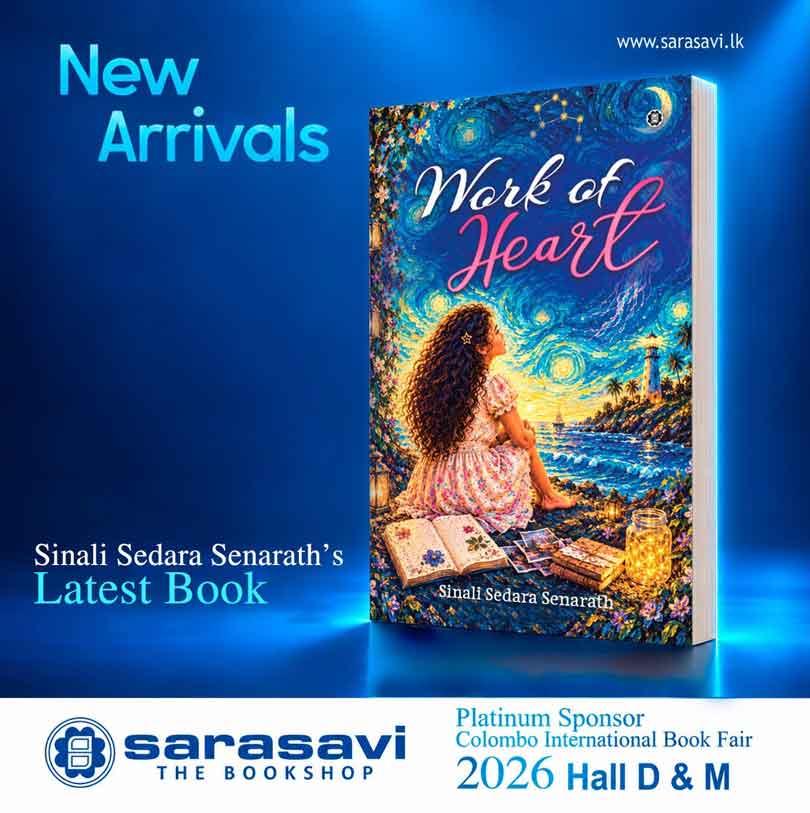
The people in my life have given me so much to draw from. My uncle Don Mangala Jayasinghe and my aunt Gayathri Sedara Senarath Jayasinghe have been important parts of the journey, as have my mentors, teachers, friends and family. The support I received from Sarasavi Publishers, and their staff also helped turn what was once a very personal little dream into an actual book. I am deeply grateful to every person who supported the dream, even in the smallest way. Whether somebody gave me a word, thought, correction, idea or conversation, or simply told me that I could do it, they became part of the book too.
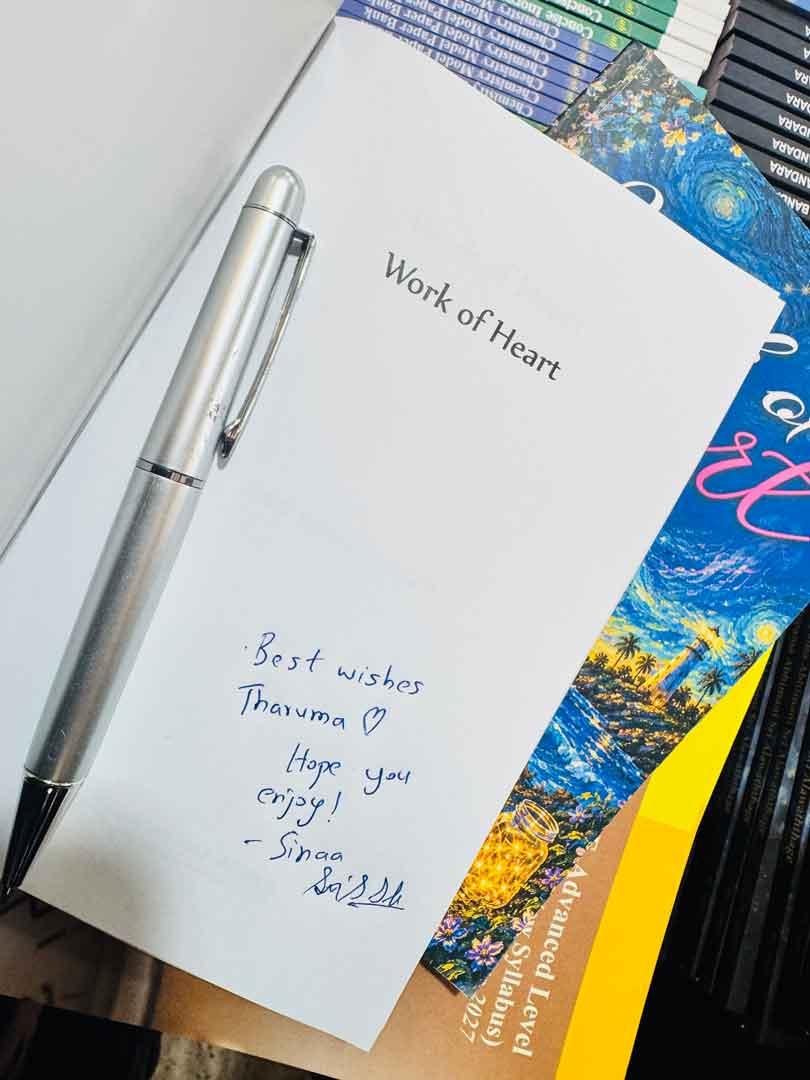
Has publication changed the way you think about yourself as a writer?
It has made me take my own writing a little more seriously. For years, writing was simply something I did because I enjoyed it. Having an actual book with my name on it made me realise that perhaps I should trust that part of myself a little more. But I do not suddenly feel that I have everything figured out because I published one book. If anything, it has made me want to keep learning and improving.
What would make you feel that Work of Heart has succeeded?
I would be really happy if someone simply found a little piece of themselves somewhere in the book. I do not expect every reader to relate to everything. But if someone closes the book and thinks about a memory, person, feeling or even something small that they had forgotten, then I think the book has done something worthwhile. And if somebody who has always wanted to write reads it and thinks that perhaps they can do this too, that would mean a lot to me. I am not some big, established or accredited author. I am just a girl who started writing things down and eventually decided to share them. If that encourages even one other person to start writing, I would be very happy.
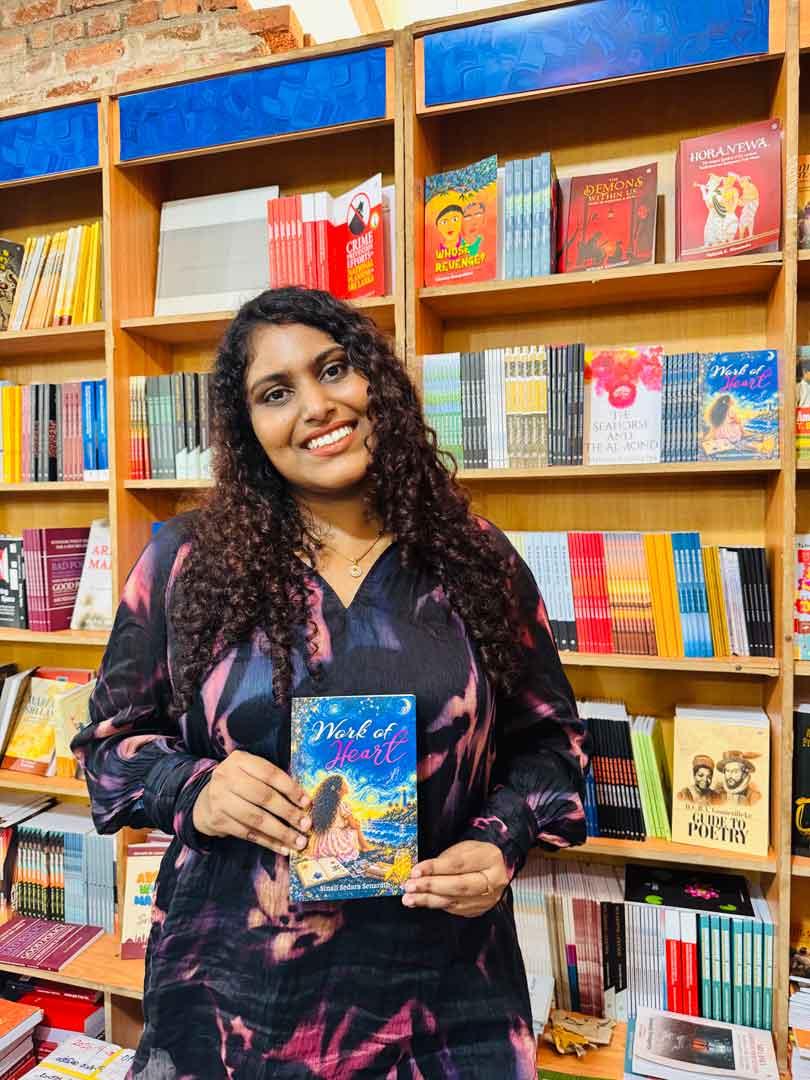
What would you tell another young person trying to balance writing with university or a career?
Do not wait until you feel like an author to start writing. You can be a student, teacher, engineer, doctor or absolutely anything else and still write. You do not have to choose one identity. I am studying Teaching English as a Second Language and at the same time I have written and published a book. The two things do not have to compete.
Keep a journal too. Seriously. You never know what little thought or memory you write down today might become something meaningful years later. Read as much as you can. Read things you love, but also things that challenge you. Most importantly, do not be too afraid of being not good enough. Your first piece does not have to be perfect. You just have to begin.
And what might the next chapter contain?
For now, I am still very much a student, so completing my degree and figuring out where I want to go professionally are my main priorities. As for writing, I definitely want to continue. I would love eventually to work towards a collection of short stories and, hopefully, a novel. I want to grow into those things gradually rather than rush them.
----------------------
For someone whose first book emerged not from a grand publishing plan but from the quiet habit of recording life, that gradual approach seems fitting. Work of Heart began with journals, memories and ordinary observations. Its publication has placed those once private words into other people’s hands, but Sinali remains at the beginning of both her literary and professional journeys. Perhaps the clearest lesson from that beginning is also the simplest one she offers other aspiring writers. The identity of author does not have to come first. Sometimes, the writing does.