Why Online Dating Feels More Draining Than Exciting
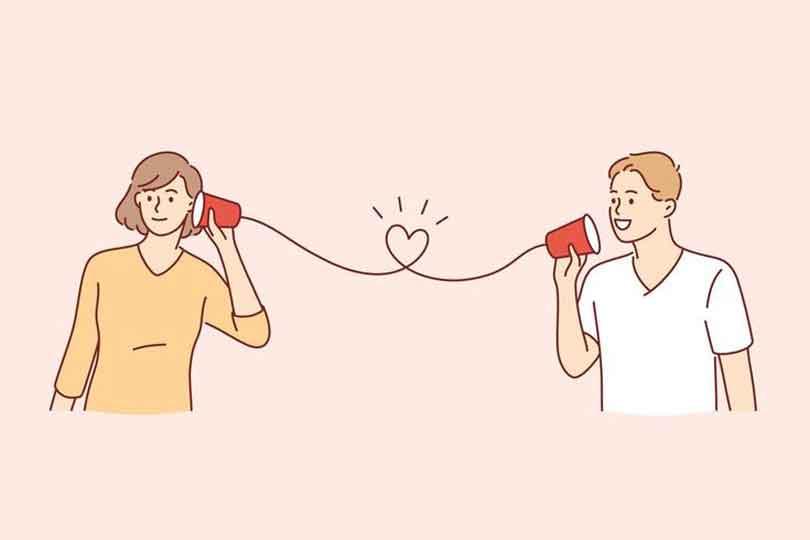
Online dating was supposed to simplify one of the most unpredictable parts of life. With just a few taps, people could meet others outside their usual social circles, connect instantly, and potentially build relationships without relying on chance encounters or awkward introductions. It promised convenience in a world where time feels limited, and connection often feels difficult. Instead of waiting for love to arrive naturally, technology offered a faster and more efficient path toward it. At first glance, the idea sounds ideal. Thousands of profiles are available at any moment. Conversations can begin instantly. There is no pressure to approach someone in person or wonder whether interest is mutual. Everything appears structured, accessible, and modern. Dating apps market themselves as tools of possibility, places where connection is always just around the corner.
Yet for many people, online dating no longer feels exciting. It feels emotionally draining. Not in a dramatic or obvious way, but in a quiet and gradual way that builds over time. The exhaustion often appears slowly. What begins with curiosity and optimism eventually shifts into frustration, detachment, or emotional fatigue. People continue swiping and responding, but the excitement that once came with it begins to disappear. Instead of feeling hopeful, many users feel mentally tired before they even open the app.
Part of this exhaustion comes from the overwhelming number of choices online dating creates. Modern dating apps are built around endless scrolling. There is always another profile to view, another conversation to start, another possibility waiting. On the surface, having more options seems beneficial. More people should mean more chances at finding compatibility. But psychologically, too many options can create the opposite effect.
When people feel surrounded by endless possibilities, commitment becomes more difficult. Attention becomes divided. Instead of focusing on one person and exploring a meaningful connection, many users remain partially distracted by the possibility that someone “better” could appear with the next swipe. This creates a culture where people hesitate to invest emotionally because there is always another option available. As a result, conversations often become temporary and disposable. Interest is easily lost. Small imperfections become reasons to move on quickly rather than communicate openly or give things time to develop. People begin treating connections casually, not always because they intend to hurt others, but because the structure of dating apps encourages fast decisions and minimal attachment.
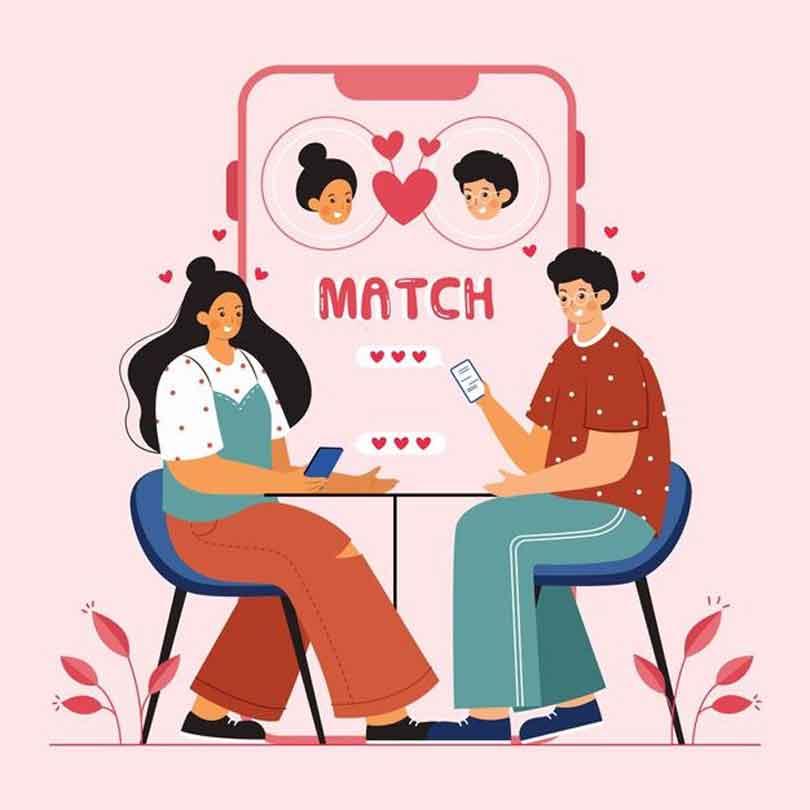
Over time, this changes how people experience relationships online. Instead of feeling valued as individuals, many begin to feel like profiles competing for attention in an endless stream of alternatives. That feeling alone can become emotionally exhausting. Another major reason online dating feels draining is the inconsistency of interaction. Conversations begin quickly, but they often end just as suddenly. Someone may seem interested in days or even weeks, only to disappear without explanation. Messages go unanswered. Plans never materialize. A connection that felt promising simply fades into silence.
This pattern has become so common that many people expect it before it even happens. Ghosting is now treated almost like a normal part of online dating culture. Yet even when people understand that it is common, it still affects them emotionally. Human beings naturally look for explanations when communication suddenly disappears. Silence creates uncertainty, and uncertainty often creates self-doubt. People begin questioning themselves in small but damaging ways. Was I too boring? Did I say something wrong? Was I not attractive enough? Even when logic says the disappearance probably had little to do with them personally, repeated experiences like this slowly influence confidence and emotional energy.
What makes online dating particularly difficult is that these moments rarely happen only once. They happen repeatedly. A single failed interaction is manageable, but dozens of unfinished conversations and unexplained disappearances begin to accumulate emotionally. Each experience may seem small on its own, yet together they create a constant sense of instability. The design of dating apps also encourages rapid judgment. Profiles are condensed into a few photographs, short bios, and brief impressions formed within seconds. People make decisions quickly because the apps are designed for speed. Swiping culture prioritizes instant attraction over gradual understanding.
This environment naturally places enormous importance on appearance and presentation. While physical attraction has always mattered in dating, online platforms intensify its role by making visuals the first and sometimes only factor in whether interaction begins. Personality, emotional intelligence, humour, kindness, and compatibility become secondary to how effectively someone captures attention in a limited amount of time. Over time, this can affect how users see themselves. Validation becomes tied to matches, replies, and attention. When responses are inconsistent or minimal, it becomes easy to internalize rejection. People start measuring their worth through engagement metrics in an environment that was never designed to reflect human depth accurately.
Even confident individuals can feel discouraged after prolonged exposure to this system. Constant comparison becomes unavoidable. Users compare themselves to other profiles, other lifestyles, other appearances. The apps unintentionally encourage people to market themselves while simultaneously evaluating others. That process can become emotionally exhausting because it keeps people in a constant cycle of judgment, both toward others and toward themselves.
Then there is the repetition. Many online dating experiences begin to feel identical after a while. The same introductions appear repeatedly. The same questions are asked. “What do you do?” “What are you looking for?” “What do you enjoy doing?” The conversations often follow familiar patterns that rarely move beyond surface-level interaction. At first, these exchanges feel normal. But after enough repetition, they begin to feel mechanical. People find themselves retelling the same stories, restarting the same conversations, and rebuilding the same small talk over and over again with different faces. The emotional energy required to remain enthusiastic through that repetition can become surprisingly heavy. Eventually, dating stops feeling spontaneous or meaningful and starts feeling procedural. Instead of excitement, there is routine. Instead of curiosity, there is emotional fatigue.
This is where burnout begins to develop. Dating burnout does not necessarily mean people no longer want love or companionship. In many cases, it means they are simply tired of the process required to pursue it online. There is constant interaction, but very little emotional reward. Conversations happen daily, yet genuine connection feels rare. People remain socially engaged while simultaneously feeling disconnected.
The emotional imbalance becomes difficult to ignore. Users invest time, attention, and emotional energy into conversations that often disappear without warning. They remain available and responsive while receiving inconsistency in return. Eventually, many begin approaching dating defensively to protect themselves from disappointment. This emotional guardedness changes behaviour even further. People become less vulnerable, less patient, and less willing to invest fully. They may detach emotionally before anything meaningful can develop because experience has taught them not to expect consistency. Ironically, the exhaustion created by online dating can end up weakening the very openness required for genuine connection.
At the same time, it is important to acknowledge that online dating is not entirely negative. For many people, it genuinely works. Countless relationships and marriages have started through apps and online platforms. Dating technology has allowed people to meet across cities, cultures, and social groups in ways that would have been impossible in previous generations. For individuals with demanding schedules, limited social opportunities, or niche interests, online dating can create opportunities that traditional dating may not provide. It has made meeting people more accessible and, in many ways, more inclusive. The problem is not necessarily the existence of online dating itself. The issue lies more in how these platforms shape human behaviour and emotional expectations.
- When communication becomes instant, patience decreases.
- When options appear endless, people hesitate to commit.
- When interactions are easy to begin, they also become easy to abandon.
The structure of dating apps encourages speed, but meaningful relationships rarely develop quickly. Real connection usually requires time, consistency, vulnerability, and emotional presence. Yet many online environments prioritize efficiency over depth. They reward quick attraction rather than sustained emotional investment. As a result, users often feel trapped between wanting something meaningful and participating in a system that encourages temporary interaction. People continue searching because they still hope for connection, but the process itself can slowly drain the emotional energy needed to sustain optimism.
That is ultimately what makes online dating feel exhausting for so many people. It is not simply the act of meeting others. It is the inconsistency that surrounds those interactions. It is the emotional uncertainty created by disappearing conversations, shallow exchanges, and repeated disappointment. It is the pressure to remain emotionally available while navigating an environment that often feels impersonal and temporary. Most people are not looking for perfection. They are looking for sincerity, stability, and effort. They want conversations that continue, interest that feels genuine, and connections that deepen naturally over time. But online dating often interrupts that process with distractions, endless alternatives, and emotional unpredictability.
Eventually, many users reach a point where they no longer feel excited to open the app. What once felt hopeful now feels emotionally demanding. The constant cycle of swiping, matching, talking, and losing momentum begins to feel less like connection and more like recovery from repeated emotional interruptions.
And perhaps that is the clearest sign of the problem. Connection should not feel like something that drains people more than it fulfills them. It should not leave individuals emotionally exhausted before something meaningful has even begun. Relationships are meant to add depth, comfort, and companionship to life, not create a cycle of uncertainty that slowly wears people down. Online dating may continue evolving, and technology will likely remain part of modern relationships. But no matter how advanced the platforms become, people will still crave the same fundamental things they always have: honesty, consistency, attention, and emotional presence. Without those things, even the most connected digital world can still leave people feeling alone.