The Quarterly Win :
We have become remarkably good at measuring progress and considerably less certain about what progress is supposed to mean. We measure our lives in promotions, productivity, qualifications and accomplishments, treating every available hour as an opportunity to become more efficient, more accomplished or more valuable. Even rest has acquired a purpose beyond itself, often justified by how much more productive it might make us tomorrow. Somewhere in this relentless pursuit of improvement, a rather uncomfortable question emerges: what exactly are we growing, and at what cost?
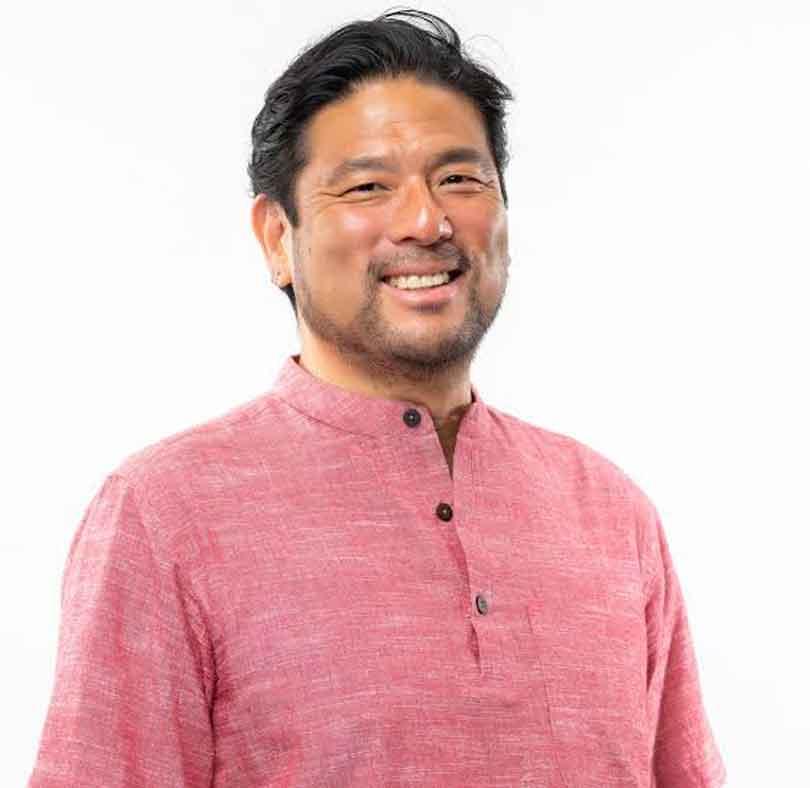
For Dr. Britt Yamamoto, the answer lies not in the boardrooms of modern organizations or the increasingly crowded shelves of self-improvement literature, but in the agricultural traditions of rural Japan. A fourth-generation Japanese American who grew up in Southern California, Yamamoto's relationship with his ancestral homeland was initially one of distance rather than belonging. It was an encounter with sustainable farming in Kumamoto that fundamentally altered his understanding of growth, success and, eventually, himself. That distinction forms the philosophical foundation of The Hyakusho Way, in which Yamamoto draws upon the wisdom of the Japanese hyakusho, traditionally understood as farmers possessing a hundred talents, to reconsider how contemporary society approaches work, leadership, relationships and personal fulfilment. Rather than treating human beings as specialists whose worth is determined by measurable output, the philosophy proposes a more integrated understanding of life, one in which versatility, interdependence, attention and the capacity to adapt are essential to flourishing. His work also challenges the assumption that growth must always be visible, suggesting that some of life's most important developments occur beneath the surface, beyond the reach of conventional measures of success.
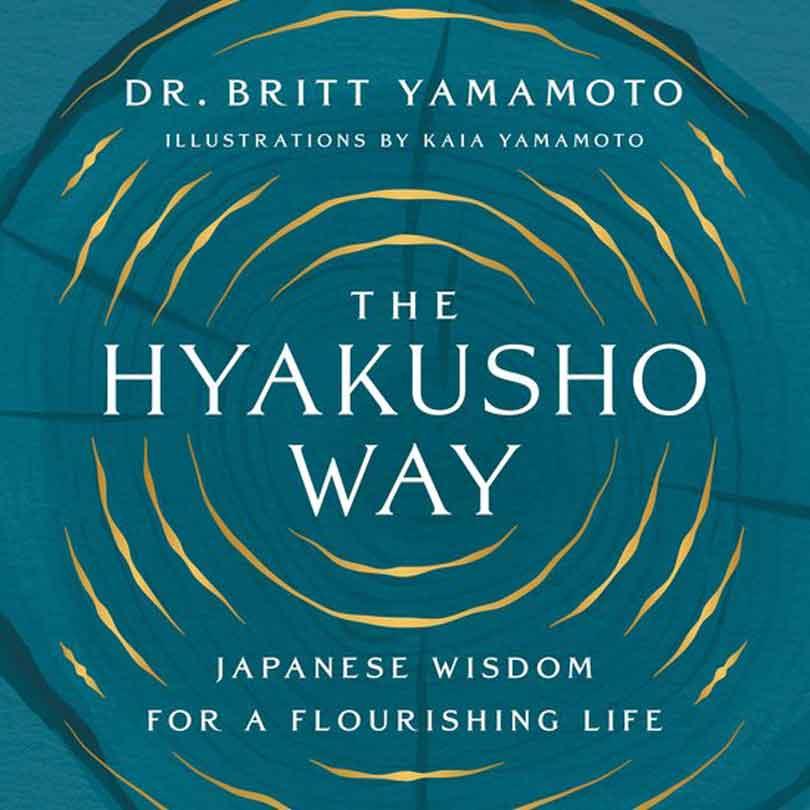
In conversation with The Sun (Daily Mirror), Dr. Britt Yamamoto reflects on the difference between an impressive life and a meaningful one, the dangers of leadership that prioritizes results over people, the privilege associated with slowing down and the importance of allowing ourselves to remain unfinished. At the heart of his philosophy is an invitation to reconsider our relationship with progress itself. Perhaps the measure of a life well lived is not simply what it produces, but what it continues to nourish.
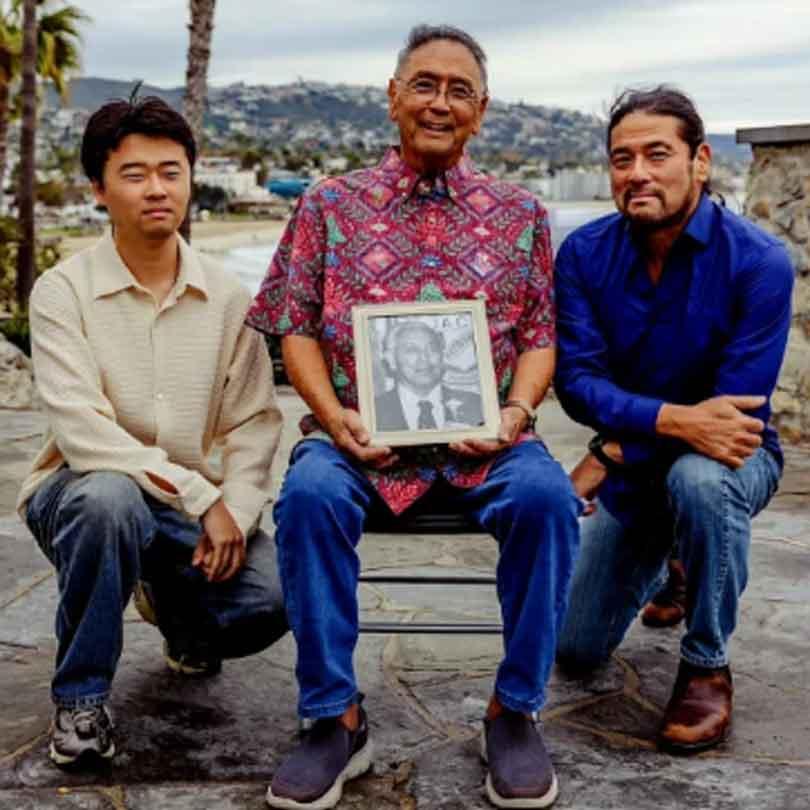
1. Dr. Britt, before we explore the philosophy behind The Hyakusho Way, I'd love to know what first drew you to Japan's agricultural traditions.
Honestly, I spent my youth avoiding Japan. I grew up as a fourth-generation Japanese American in a mostly white beach town in Southern California, and I held Japan at arm's length. Then, in Kumamoto, on that first day on the farm, I was asked the question: "What's the difference between a conventional farmer and a sustainable farmer?" I didn't know.
The answer was simple: the conventional farmer grows plants; the sustainable farmer grows soil. That question changed the direction of my life. I went to Japan to learn about farming. Farming brought me back to myself.
2. The Meaning of Progress: We've become exceptionally good at achieving more, but are we becoming any better at living? Have we confused productivity with purpose?
We've become brilliant at growing plants and terrible at growing soil. Productivity is the visible harvest: the quarterly result, the promotion, the busy calendar. Purpose lives underground, in the roots nobody sees. You can push a field to produce more every year with chemicals, and for a while, the numbers look great. Then the soil dies. Many people today look successful on the surface but feel exhausted underneath. So maybe a more important question isn't "Are you productive?" It's "How are you sustaining yourself?"
3. The Hyakusho Philosophy: Your book celebrates versatility in a world obsessed with specialization. Have we become so focused on mastering one thing that we've forgotten how to live fully?
Hyakusho describes the farmer, someone with a hundred talents. The farmer can't specialize. In one day, she's a meteorologist, a mechanic, a botanist, a neighbor and a cook. Specialization makes us efficient. It also makes us brittle. When your whole identity rests on one skill, losing that role feels like losing yourself. Versatility isn't about being average at many things. It's about being whole.
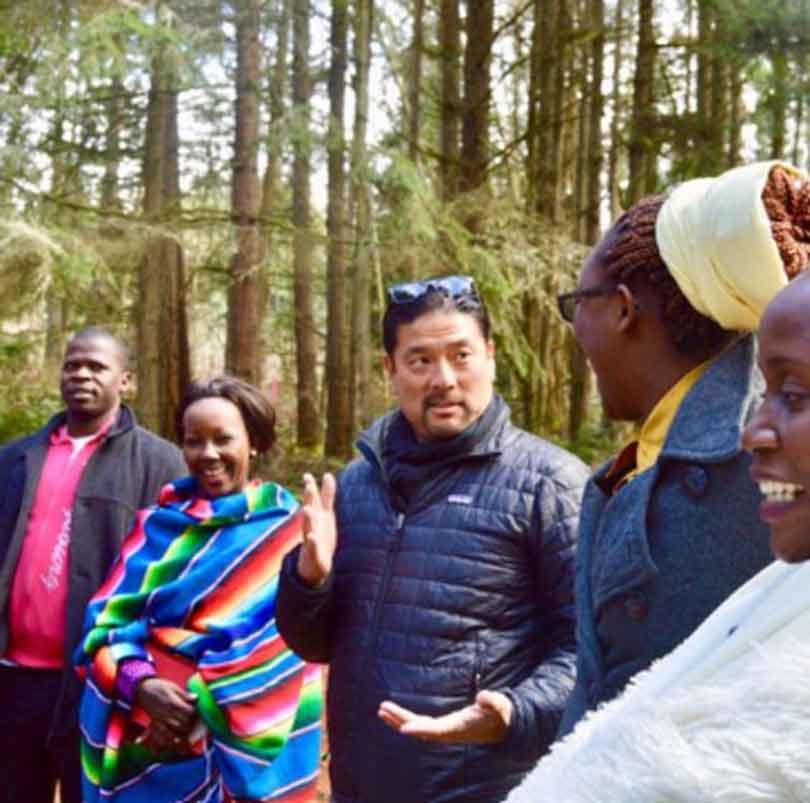
4. In The Soil of Leadership, you emphasize cultivating the conditions for growth. Can a leader truly be successful if their organization thrives but their people don't?
No. That's the conventional farmer's mistake. You can get a big harvest while quietly destroying the ground it grows in. Organizations do this constantly: record profits, burned-out teams. Eventually, the soil gives out, and they wonder why talent leaves and innovation dries up. A leader's real job is the soil: trust, reflection, well-being and the speed of connection between people. Fruits are only as strong as their roots. Grow the people, and the results take care of themselves.
5. The Privilege of Slowing Down: Your philosophy encourages intentional living, but for people struggling to survive, slowing down is a luxury. How can the hyakusho philosophy remain relevant to them?
It's a fair challenge, and I won't pretend otherwise. But remember who the hyakusho were. They weren't wealthy. Their wisdom came out of scarcity, not leisure. They couldn't afford to ignore the weather or their neighbors. That's my point: attunement isn't about free time. It's about attention. And I believe that Sri Lanka knows this well. I have heard that during the recent economic crisis, many families survived by returning to home gardens and sharing with neighbors. That's not luxury. That's the hyakusho way.
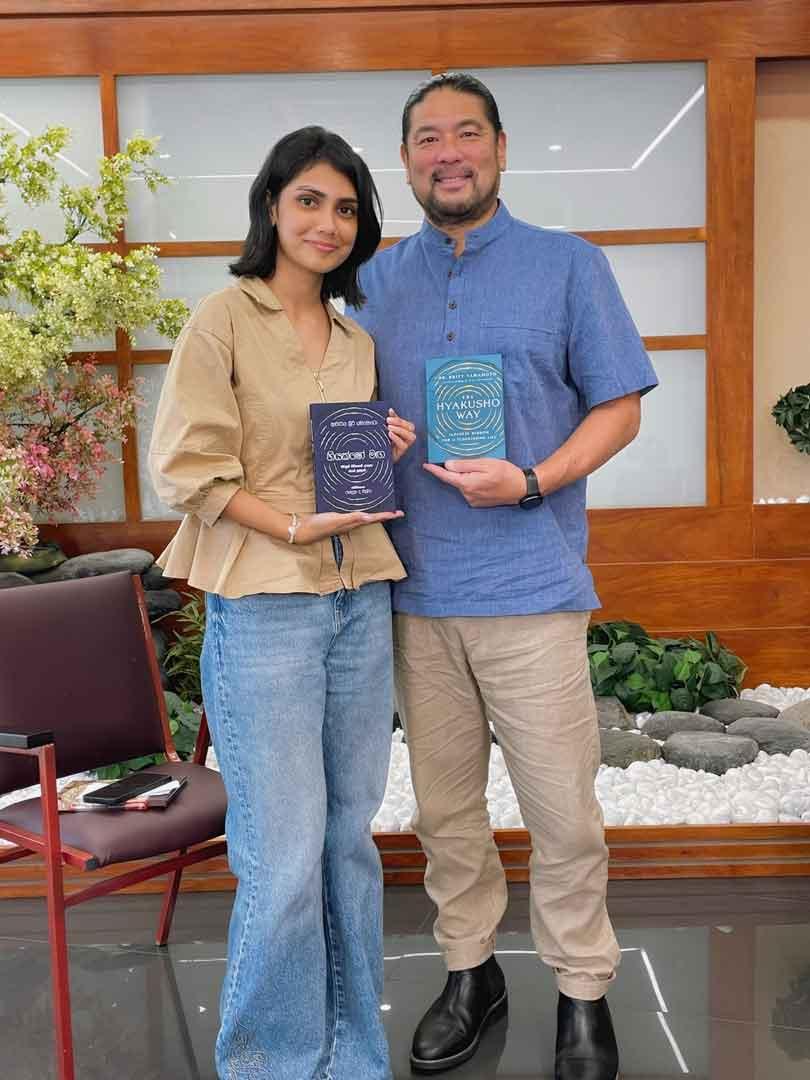
6. The Hyakusho Way has now been translated into Sinhala. What parallels do you see between Japanese agricultural wisdom and Sri Lanka's own cultural and agricultural traditions?
I am just beginning to learn about the parallels, but I am finding that they're deeper than I expected. For example, I learned of the saying "wewai, dagabai, gamai, pansalai’ - the tank, the stupa, the village, the temple. Life organized around water, faith and community. Japan has satoyama, the village landscape where forests, rice paddies and households sustain one another. Japan has yui, where the whole village comes together to rethatch a neighbor's roof. Sri Lanka has attam, shared labor during planting and harvest. Both cultures tell the story of the rabbit in the moon, the hare who offered itself as food. Both are rice cultures shaped by Buddhism and the lotus that grows from mud. These islands are separated by an ocean but rooted in the same soil.
7. Your philosophy explores the principle of allowance. In a world that rewards control and certainty, how do we distinguish the wisdom of letting go from simply giving up?
Early in my farming life, as told in The Soil of Leadership, I planted a field of purple amaranth. Beautiful, nutritious, and nobody wanted to buy it. I was righteous about it. Eventually, I swallowed my pride and grew green beans. I didn't give up farming. I let go of my ego. That's the difference. Giving up abandons the field. Allowance keeps tending it while releasing control over what it becomes. I think of the leader as a conduit, not a source. It's about contact, not control. Presence, not permission.
8. Have we become so transactional in our relationships that we've forgotten what genuine human connection looks like?
I once ran Coastal Sage Farms with partners I was excited to work with. Believing we shared a future, we skipped written agreements. The partnership fell apart. So, I value structure; the problem is not having agreements but letting them define the entire relationship. Genuine connection means seeing someone as a whole person, not just for what they can offer you. It requires unhurried time, which we have largely designed out of our lives.
9. The Achievement Generation: We're raising a generation that feels compelled to monetize every passion and optimize every moment. What happens when even our happiness becomes another measure of productivity?
Farmers understand something we've forgotten: fallow. A field left to rest isn't being lazy. It's rebuilding itself. We're raising a generation that has never been allowed to lie fallow. Every hobby becomes a side hustle, every period of rest becomes recovery for more output, and every joy gets posted and measured. When happiness becomes a metric, it stops being happiness. I wrote The Hyakusho Way during my own fallow season in the Japanese countryside, after a long book tour, watching turtles slip into the river. Nothing about that time was productive. Everything in the book came from it.
10. If you could meet your younger self arriving in Kumamoto, what would you tell him about the difference between building an impressive life and living a meaningful one?
I'd tell him: "You're going to build an impressive life. You'll start farms, organizations and programs across continents. And at some point, you'll wilt, and when people ask, you'll say, 'I'm fine.' You won't be. Impressive is what people see from the road. Meaningful is what's happening in the soil. Stop trying to grow the biggest plant. Grow the soil. Grow it in yourself first." And you know what? It's going to be OK. Everything, it's going to be OK.