Murder Mystery Night: Dinner, Deception & Death
Marian de Silva
It’s been a while since I last addressed you, my dearest reader
I pen this piece not as your usual writer, but as Isabella Monroe, an interior designer, a familiar face within the walls of the Blackwood Manor and, most importantly, a dear friend of the late Lord Blackwood. It was meant to be an elegant evening. A dinner, perhaps, accompanied by good conversation, familiar faces and the sort of extravagance one would naturally expect from Lord Blackwood. Instead, it became a night of questions, suspicion and an unfortunate death that left an entire room wondering who among us could possibly be responsible.
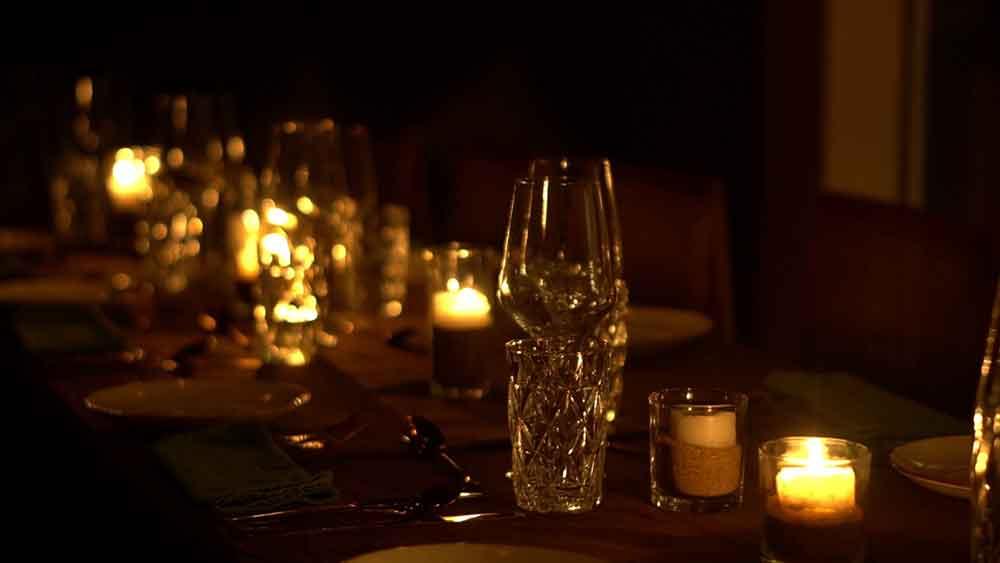
The evening was brought to life by Rare Events at Belle Colombo 07, transformed for the occasion into the grand and rather mysterious Blackwood Manor. Having been involved in restoring parts of the renowned mansion, I was familiar with its character and its history. Returning to it under such circumstances, however, felt strangely different. Everything appeared beautifully arranged, almost too beautifully arranged. The setting was elegant, the table was immaculate and the atmosphere carried that quiet sense of anticipation that comes when something is about to happen.
And something certainly did.
I had known Lord Blackwood for some time. He was a man of presence, the sort of person whose arrival could alter the energy of a room without much effort. Played by the talented Migara Cabral, Lord Blackwood was brought to life with exactly the kind of charm and authority one would expect from the owner of such an imposing estate. To see that character at the centre of an evening that would eventually lead to his death was, to put it mildly, unsettling.
I was not there to investigate. I was not a detective, nor did I particularly wish to become one. I was Isabella Monroe. I was observant and quiet. While the doctor had questions and the room slowly became more uncomfortable, I preferred to listen. When I was asked something, I answered. There seemed little point in offering more than was necessary when every sentence could suddenly acquire a meaning of its own. The doctor, naturally, was far more interested in finding answers.
Questions began to circulate through the room, each one carrying the possibility of revealing something that someone would rather have kept hidden. I watched quietly as conversations shifted and expressions changed. A person who had been laughing moments earlier could suddenly become guarded. Someone else might answer too quickly. Another would simply sit back and say nothing. I noticed these things. I simply did not announce that I had noticed them.
There is a certain advantage to being quiet in a room full of people who are desperate to explain themselves. You hear more. You see more. Most importantly, people tend to forget that you are listening. Still, the evening began with something considerably more pleasant than an interrogation.
Dinner.
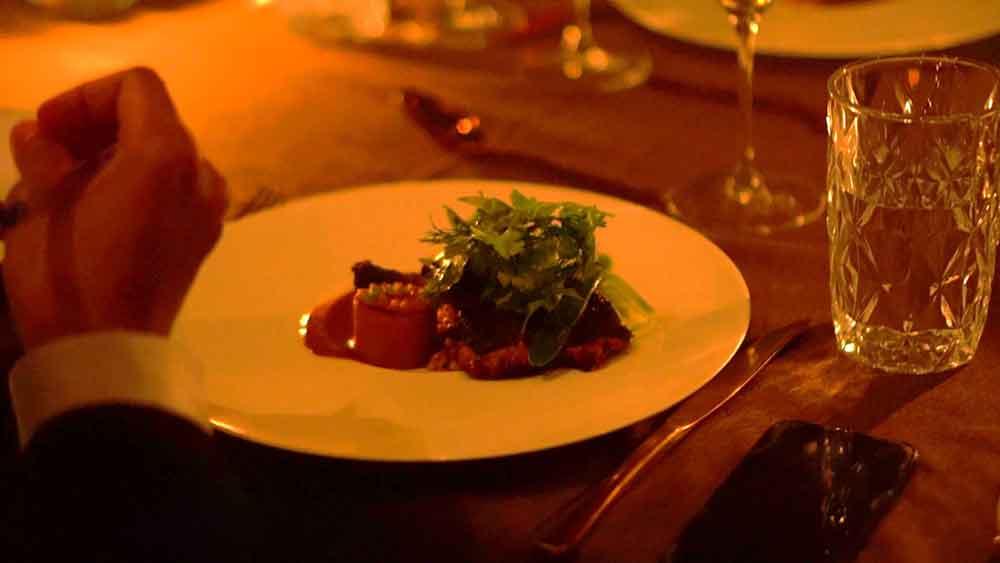
The menu itself had been designed as a narrative, divided into chapters that carried the guests through the evening. The first was aptly named The Opening Act, featuring citrus-cured salmon ribbons, crisp green apple matchsticks, dill-infused buttermilk whey, compressed cucumber, wild radish wheels and a delicate rice shard.
It was a refined beginning, bright and delicate, with the salmon and green apple providing a contrast of richness and freshness. The details on the plate were precise, but nothing felt unnecessarily complicated. It was the sort of course that encouraged you to take your time, which was fortunate, because there was plenty happening around the table that deserved attention.
Then came The Plot Thickens, a smoked sweet corn bisque with charred sweet corn succotash, coconut milk reduction, kaffir lime emulsion, herb-pressed oil and chilli salt rice crackling.
By this point, the title seemed increasingly appropriate.
The warmth of the bisque was balanced by the brightness of the kaffir lime, while the chilli salt rice crackling added texture and a little surprise. It was comforting and sophisticated at once. Around us, however, comfort was becoming rather difficult to maintain. The room was beginning to feel different.
Perhaps it was because we all knew that something was wrong. Perhaps it was because we had started looking at one another differently. A dinner table can be remarkably revealing when everyone seated around it has been given a reason to be suspicious.
Then came The Intermission, a sharp passionfruit and lemongrass sorbet with brewed lemongrass extract, kithul syrup and micro-mint crystal salt.
It offered a moment of freshness between the courses, but the evening itself offered very little opportunity to pause. By then, the mystery had become part of the dinner. We were no longer simply guests enjoying a carefully prepared menu. We were characters inside a story, and every interaction seemed to matter.
That was what made the experience so convincing.
Rare Events did not simply place a murder mystery around a dinner. The entire evening was structured around it. The menu became part of the narrative, the setting gave the story its atmosphere and the guests became responsible for bringing the characters to life. Belle Colombo 07, with its elegant setting, provided the perfect backdrop for a gathering where glamour and suspicion could comfortably occupy the same room.
Then came The Climax.
Guests could choose between three main courses, each offering an entirely different interpretation of indulgence. The Poulet featured charred Cajun-spiced half chicken, a lemongrass and sweet tea brine, roasted local squash ballotine, wild mushroom, chestnut and dried fruit mousse stuffing, corn succotash and a Vietnamese herb salad.
The Boeuf was considerably more luxurious, with 150g of Australian striploin cooked medium-rare, accompanied by truffled potato purée, creamy wild mushrooms and herb béarnaise.
Then there was the seafood, bringing together hand-rolled milk-yam gnocchi, local prawns, cuttlefish, snapper and mussels with a seafood-reduction bisque.
The choices were extravagant, but that seemed perfectly suited to the Blackwood household. Nothing about the evening was intended to be ordinary. The food was elaborate, the setting was theatrical and the characters were larger than life. Yet underneath all of it was the uncomfortable reality that one of us was responsible for a murder.
And I had known the victim. That detail made my position particularly interesting.
The questions directed towards me were simple enough. Where had I been? What did I know? What was my relationship with Lord Blackwood? I answered them calmly. There was no reason to embellish anything. I had known him. I had worked on the restoration of parts of his home. I had been his friend. Beyond that, I had very little to say. Or perhaps I simply preferred to keep what I thought to myself.
As the evening progressed, the atmosphere became increasingly tense. What had initially felt like playful suspicion began to feel more serious. The possibility that someone had genuinely wanted Lord Blackwood dead changed the way every conversation sounded. Yet somehow, the evening never lost its sense of elegance.
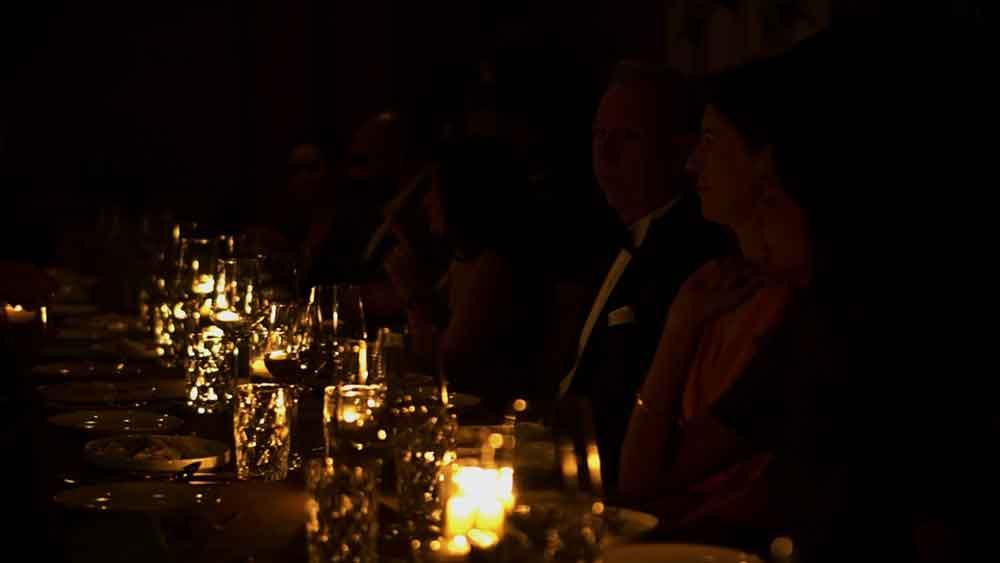
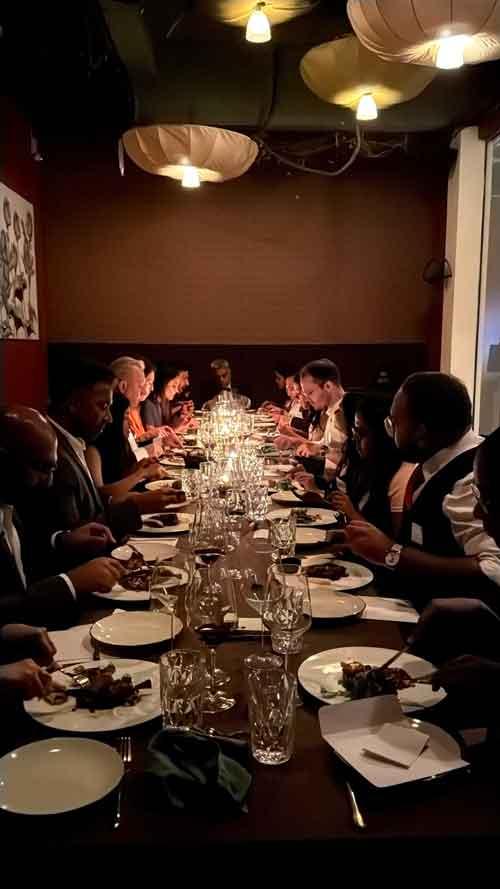
That contrast was perhaps its greatest charm. We were dressed for an extravagant dinner while discussing murder. We were enjoying carefully composed dishes while quietly examining the people around us. There was laughter, but there was also hesitation. There were smiles, but not every smile looked sincere.
It was theatrical without feeling artificial.
And then came The Resolution, a deconstructed narang and cardamom tart that brought together velvety local narang curd drops, toasted shortbread earth, cardamom-infused meringue peaks, white chocolate soil and spiced citrus gel shards.
The dessert was almost symbolic of the entire evening. Familiar elements had been taken apart and reconstructed into something unexpected. Nothing was quite where you expected it to be, and perhaps that was the point. The same could be said for the mystery.
By the time dessert arrived, the evening had already taken us through suspicion, revelation and uncertainty. We had heard different versions of events. We had watched people defend themselves. We had listened to questions being asked and answers being given.
Yet certainty remained elusive.
That is what makes a murder mystery successful. It does not simply give you a crime and ask you to identify a culprit. It makes you question your own judgement. It makes the innocent appear suspicious and the suspicious appear perfectly reasonable. Most importantly, it makes you realise how little you can truly know about the people sitting around you.
For me, the evening was also about returning to a place I knew and seeing it through an entirely different lens. As an interior designer, I have always been drawn to spaces and the stories they hold. Blackwood Manor was more than a beautiful setting. It felt lived in, layered with history and perfectly suited to a story where every corner seemed capable of hiding something.
Rare Events understood that atmosphere matters.
The success of Murder on the Menu was not simply in the murder itself. It was in the details surrounding it. The setting, the characters, the performances, the food and the unfolding questions all worked together to create an experience rather than merely an event.
And perhaps that is why the evening remained with me long after it ended.
I arrived as Isabella Monroe, expecting an elegant dinner with an old friend. Instead, I found myself seated among deep secrets, answering questions while trying not to reveal too much, watching events unfold without knowing where they would lead.
I was never a detective nor a murderer.
I was simply quiet.
I listened.
I observed.
As for who killed Lord Blackwood, well, that is a story best left to the evidence.
After all, at Blackwood Manor, appearances can be deceiving, friendships can be complicated and dinner can be deadly.
One thing, however, is certain.
It was a night to die for.