IN CONVERSATION WITH SADNA ISIK
HER STORY. HER STRENGTH. BY: DR. SULOCHANA SEGERA
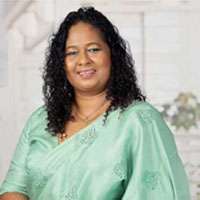
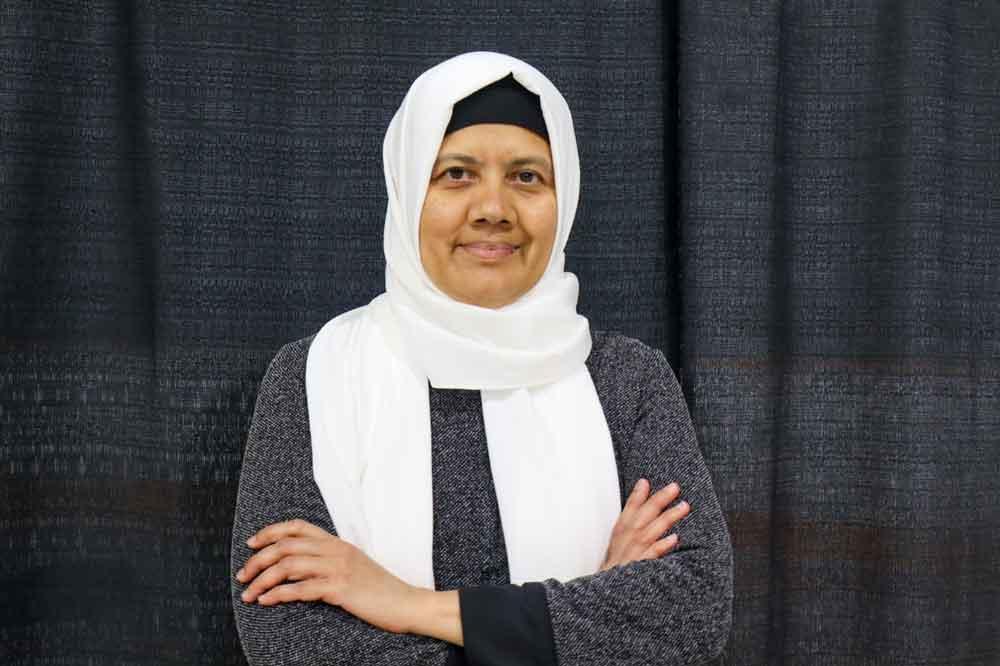
Scientist and entrepreneur Sadna Isik represents a new generation of thinkers who move confidently between disciplines. Her work spans electrical and computer engineering, cybersecurity, nanotechnology, wildlife conservation, and integrative medicine, fields that might appear unrelated but which she views as deeply interconnected. Born and raised in Sri Lanka and later educated in countries including Turkey and Canada, Sadna’s journey has been shaped by curiosity, resilience, and an instinct to observe patterns in both nature and technology. Her childhood experiments with natural pigments and handmade tools evolved into a lifelong fascination with innovation and systems thinking. Today, she balances roles as a scientist, engineer, entrepreneur, and advocate for holistic approaches to health and technology. Whether building digital security frameworks, exploring natural healing methods, or engaging with global research networks, Sadna approaches each challenge with the same guiding philosophy: that creativity, observation, and interdisciplinary thinking are essential to solving the complex problems of the modern world.
Your journey began with a love for painting and the natural world. How did those early passions shape the way you approach science and technology today?
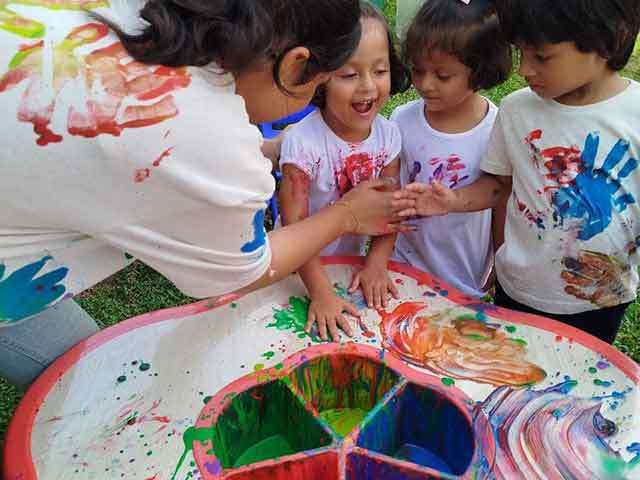
My earliest experiences with discovery did not take place in laboratories but in the natural world around me. As a child, I loved painting, but buying art supplies was not always possible. That limitation encouraged me to experiment with what I could find around me. Leaves became a source of green pigment, turmeric produced yellow, and burnt wood created black. I used sand from walls and simple paper as my canvas. Even at that age, I was fascinated by patterns. I experimented with textures and shapes, sometimes using banana tree molds to create designs. What I did not realize at the time was that these small creative experiments were teaching me the same principles that scientists use every day. I was observing carefully, testing ideas, and transforming natural materials into new forms. Those early experiences shaped the way I approach science today. Innovation often begins when resources are limited, and imagination becomes the most valuable tool. Instead of seeing limitations as obstacles, I learned to treat them as opportunities for experimentation. That mindset continues to guide my work in science and technology, where observation and creativity remain at the heart of discovery.
You have pursued diverse fields from wildlife conservation to nanomaterials. Did you ever feel torn between these paths, or did they always feel connected?
For me, these fields have always felt connected rather than conflicting. The human mind is naturally curious and capable of exploring many directions, and my journey reflects that curiosity. I have always believed that different disciplines can offer complementary perspectives on the same larger questions. In Sri Lanka there is a well-known saying that suggests a person becomes truly skilled by focusing on one field.
I respect the wisdom in that idea because deep focus is necessary for expertise. However, I also believe that developing knowledge across different areas can strengthen our understanding within each one. Growing up surrounded by nature encouraged me to observe the world as an interconnected system. Whether I was exploring wildlife, studying engineering, or experimenting with art, I was always learning about patterns, relationships, and structures. Over time I realized that these disciplines are not separate. They simply represent different methods of approaching complex problems. Wildlife conservation, materials science, and engineering design all require observation, analysis, and creativity. For me, they are different pathways leading toward the same goal of understanding and improving the world.
Your academic path spans several countries and disciplines. How did studying in Turkey, Canada, and other places shape your perspective on problem solving?
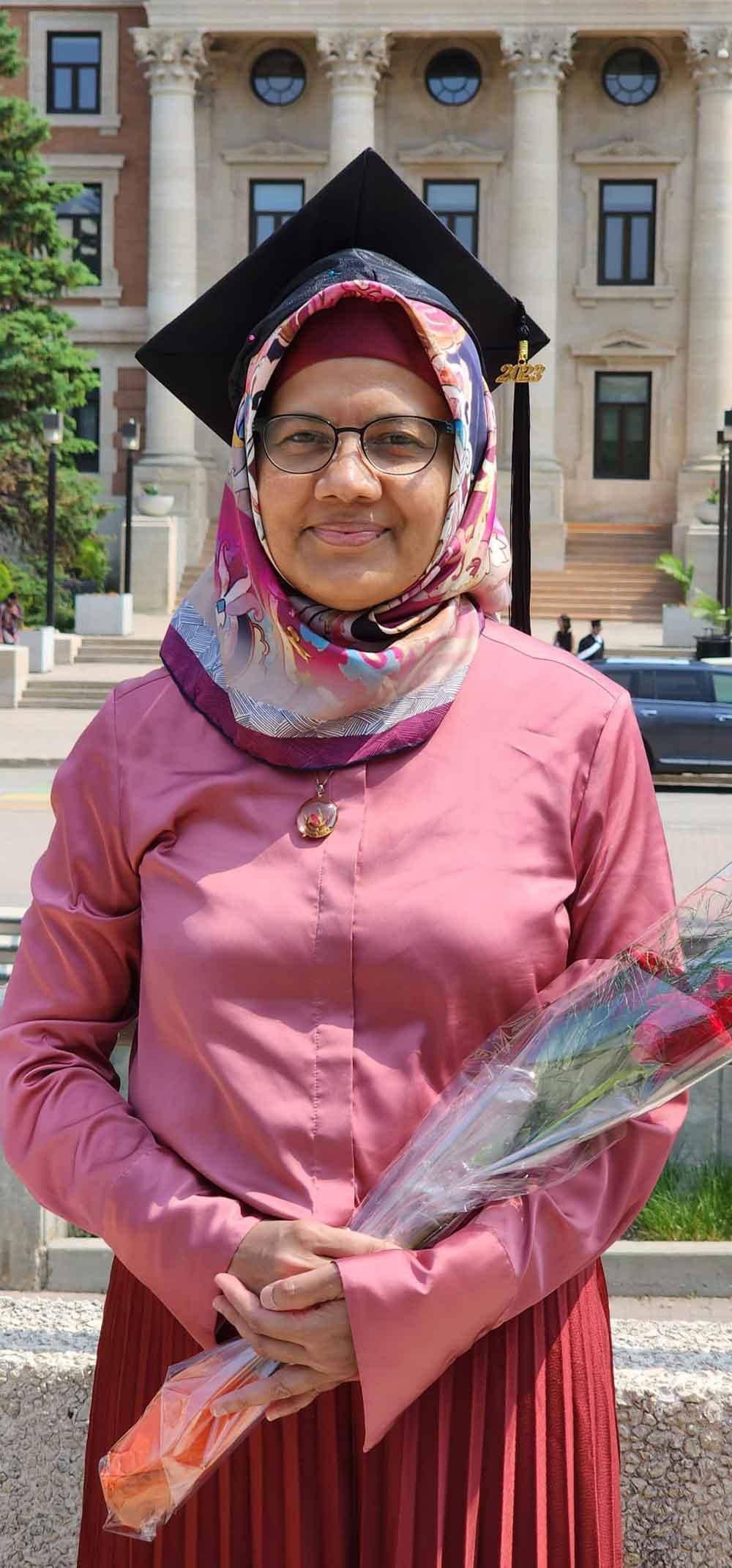
Studying in different countries was an important part of shaping my approach to science and innovation. Each place introduced me to new ways of thinking and solving problems. In Turkey, I experienced a fascinating intersection of cultures that bridge East and West. The academic environment there emphasized historical awareness and structural thinking. I learned to look at systems within broader contexts and to appreciate how culture and history influence the development of knowledge. Canada offered a very different perspective. The focus there was strongly centered on technological innovation and advanced research environments. Laboratories were equipped with sophisticated tools, and collaboration between researchers from different fields was encouraged. That experience strengthened my technical skills and introduced me to highly structured approaches to scientific research. Moving between these environments helped me understand that while scientific laws are universal, the ways people apply them can vary widely. My upbringing in Sri Lanka taught me resourcefulness and adaptability. My education abroad strengthened my technical training and analytical thinking. By combining these influences, I developed a global mindset that allows me to approach challenges by integrating different cultural and intellectual perspectives.
How has your PhD research in Electrical and Computer Engineering informed your work in cybersecurity and integrative medicine?
My doctoral research in electrical and computer engineering gave me a strong analytical foundation that continues to influence everything I do. Engineering teaches you to see the world as a network of systems that interact with one another. Understanding those interactions is essential to designing solutions that function effectively. In cybersecurity, this systems thinking is particularly valuable. Digital infrastructure today is highly complex, and protecting it requires more than simply reacting to threats. It requires understanding how networks operate, where vulnerabilities exist, and how those vulnerabilities can be addressed at a structural level. My engineering background allows me to analyze these systems carefully and design strategies that strengthen digital security from the ground up.
Interestingly, the same perspective also shapes my interest in integrative medicine. The human body can also be viewed as a complex system in which multiple processes interact. Health depends on maintaining balance among these processes. By applying analytical thinking from engineering to the study of natural healing methods, I explore ways to connect scientific precision with natural approaches to wellness. In both cybersecurity and medicine, the central challenge is understanding complex systems and protecting their stability.
You describe yourself as an engineer, scientist, and entrepreneur. How do you integrate these roles when approaching new projects?
I do not see these roles as separate identities. Instead, they represent different stages within the same creative process. Science, engineering, and entrepreneurship are all connected through the transformation of ideas into solutions. As a scientist, my work begins with observation and curiosity. I try to understand the underlying causes of a problem and explore it through research and analysis. Engineering then allows me to translate that understanding into practical systems. It provides the tools to design prototypes, build technologies, and create solutions that can function reliably. Entrepreneurship brings another important dimension. It focuses on how those solutions can reach people and address real world needs. This requires understanding markets, communication, and the social impact of innovation. By combining these perspectives, I can take an idea from the earliest stage of curiosity all the way to implementation. A scientific insight becomes an engineered solution, and entrepreneurship helps ensure that the solution reaches the people who can benefit from it.
What inspired you to co create a practice in integrative medicine with your husband, and how do you merge clinical expertise with systems engineering?
The inspiration came from a shared belief that science and nature should not be separated. Historically, healing practices were closely connected with observation of the natural world. Over time, modern systems often divided these approaches into different disciplines. My background in engineering encourages me to look at systems as integrated wholes rather than isolated parts. When my husband and I established our practice, we wanted to combine clinical knowledge with a broader understanding of how the body functions as a system. I approach health using systems engineering principles. In technology, engineers analyze systems to identify root causes of problems and optimize performance. A similar approach can be applied to health by examining how different biological processes interact and how balance can be restored. My husband’s clinical expertise and my analytical background complement one another, allowing us to explore healing methods that combine traditional knowledge with structured scientific thinking.
Running a cybersecurity firm requires precision and constant vigilance. How do your experiences in engineering and research give you an advantage in this field?
Engineering and research training provide a strong advantage in cybersecurity because they emphasize analytical thinking and structural design. Instead of simply responding to threats after they appear, engineers focus on building systems that are resilient from the beginning. Research experience also encourages deep investigation. When a problem arises, the goal is not just to solve the immediate issue but to understand its root cause. In cybersecurity, this means analyzing patterns of attacks, studying vulnerabilities, and developing strategies that prevent future risks. The field evolves very quickly, and new threats appear constantly. Having a research-oriented mindset helps me stay ahead of these changes by analyzing data and anticipating potential risks. Cybersecurity is ultimately about protecting complex digital systems, and my engineering background provides the tools to approach those systems strategically.
As a Sri Lankan Muslim girl entering global and non-traditional professions, what cultural or societal expectations did you navigate and how did you overcome them?
Growing up as the only Muslim family in my city created a unique experience. While I was born into the faith, my relationship with it developed through personal exploration rather than strict expectations. I approached my identity with curiosity, searching for meaning and understanding. My family environment allowed me a certain level of freedom in how I expressed both my faith and my interests. That freedom helped me integrate my cultural identity with my curiosity about science and nature. I never felt that these aspects of my life were in conflict with one another. Entering global and non-traditional professions sometimes required confidence and resilience, but I never viewed my background as a limitation. Instead, it provided a unique perspective that shaped my approach to learning and innovation. By trusting my curiosity and remaining open to new experiences, I was able to navigate different environments and build a career across cultures.
How has your background shaped the way you approach interdisciplinary innovation and building networks in international environments?
My approach to collaboration is influenced by a combination of curiosity and adaptability. Even as a child, I often found myself taking the initiative to connect people and bring groups together. That instinct continues to shape my work today. Although I naturally consider myself a shy person, I have learned to adjust my mindset when a situation requires leadership or communication. In international environments, this flexibility allows me to move beyond hesitation and focus on solving problems. Because my work spans both technical research and entrepreneurship, I often interact with people from very different backgrounds. I might be speaking with scientists in one context and business leaders in another. The ability to move between these environments and translate ideas across disciplines is essential for building strong networks. This adaptability allows me to connect individuals who might not normally interact and to encourage collaboration across fields. Innovation often emerges when people with different perspectives come together.
As someone who thrives at the intersection of disciplines, what advice would you give young scientists or entrepreneurs who feel they must choose only one path?
My advice would be not to feel limited by the idea that you must fit into a single category. Developing expertise in one field is valuable, but curiosity should never be restricted. The world today is changing very rapidly, and many of the most important innovations occur at the intersections between disciplines. The ability to move between fields and connect ideas from different areas can lead to entirely new solutions. Young scientists and entrepreneurs should focus on building strong foundations while remaining open to new knowledge. Instead of choosing only one path, they can build bridges between the subjects that inspire them. Diversity of thought is not a weakness. It is often the key to resilience and creativity in a world that continues to evolve.