Fame Game Featuring Dhananjaya Bandara
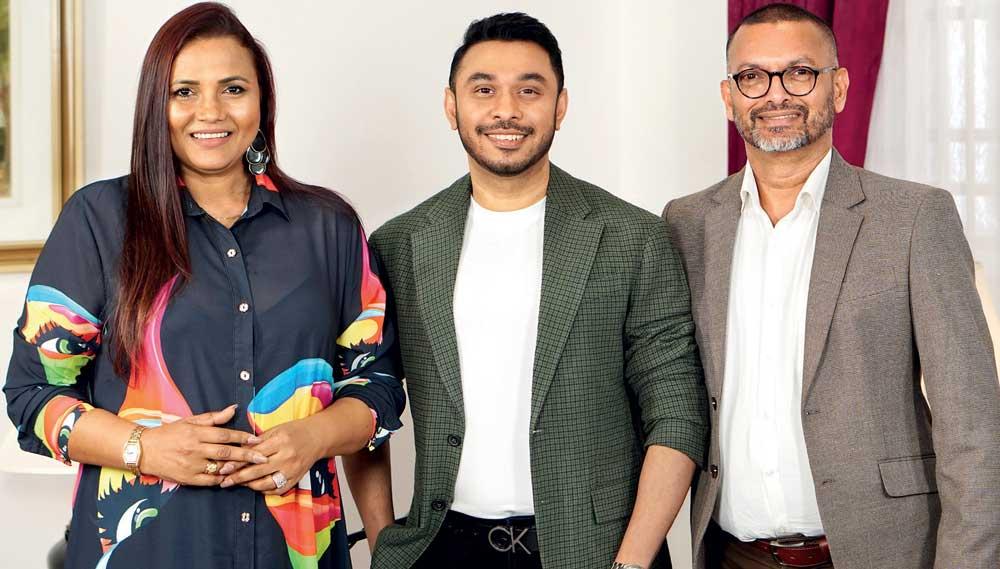
 By Thasmina Sookoor
Sri Lanka’s beauty, bridal, and fashion industry has witnessed the rise of many talented individuals, yet few have carved a distinct identity quite like Dhananjaya Bandara. As the creative force behind DB Salon and DB Ceylon, his work reflects a deep rooted respect for tradition combined with a forward looking vision.
Appearing on The Fame Game, hosted by Kumar de Silva and Rozanne Diasz, Dhananjaya engaged in a thoughtful and candid conversation about his journey, inspirations, and the philosophy behind his brand.
Q: Dhananjaya Bandara is now almost synonymous with DB Salon. What inspired you to create such a strong brand identity, especially in an industry where such branding is rare?
A: DB Salon was not something that came overnight. My journey began with my family background. I grew up in an environment connected to stitching, garments, and fabrication. My mother and grandmother played a significant role in shaping this exposure. They were involved in dressing brides, and through them, I naturally developed an interest in hair and makeup.
As a schoolboy, I started experimenting with these skills. Initially, it was simply a hobby and a way to earn pocket money. At that time, I never imagined that it would evolve into a brand like DB Salon. However, the foundation was laid during those early years.
Q: So at that stage, you did not think this would become something big?
A: Not at all. However, I remember a turning point when I was around 17. I was travelling to Kandy by bus to do my first Kandyan bridal set. A friend questioned why I was pursuing something so different from others, and it came across as criticism.
In that moment, I responded by saying that one day I would become a top name in the industry. At the time, it was more about responding to the challenge than a deeply thought out ambition. But that moment stayed with me.
Interestingly, years later, that same friend reached out and acknowledged that I had proven my point. That was quite meaningful.
Q: Your logo features two swans. What is the significance behind this design?
A: Everything I create has meaning. The swan represents three important elements.
First, it reflects tradition. In Sri Lankan culture, the swan or Hansa Puttuwa holds cultural significance. Second, it symbolizes purity, which is essential in my profession. I believe in maintaining clarity and professionalism in my work.
The third meaning is deeply personal. The larger swan represents my mother, and the smaller one represents me. My journey is inseparable from her influence and support. Without her, I would not be where I am today.
Q: Your work seems to blend tradition with modern elements. How do you maintain that balance?
A: Tradition is something we must handle with care. It is passed down through generations, and while it evolves over time, its essence must remain intact.
At the same time, we live in a modern world. My goal is to take Sri Lankan traditions to a global level while adapting them to suit contemporary lifestyles. For example, I explore ways to make traditional Kandyan attire more accessible and easier to wear without compromising its authenticity.
Q: Do you think younger generations are still interested in tradition?
A: That is exactly why adaptation is important. The future lies with Gen Z and the generations that follow. If we do not make tradition accessible, it risks fading away.
For instance, traditional Kandyan dressing can be complex. If we can simplify it, perhaps by redesigning it as a structured outfit rather than a draped one, we can encourage younger people to embrace it. The aim is not to replace tradition but to preserve it in a way that fits modern lifestyles.
Q: You have worked internationally. How do other cultures influence your perspective?
A: I have observed Indian weddings in places like New York and Sydney. What stands out is their commitment to tradition. Even younger generations proudly wear traditional attire such as lehengas with heavy jewellery.
This consistency is something I admire. It reinforces the importance of cultural identity regardless of where one lives. I believe Sri Lanka should also uphold its traditions with similar pride.
Q: Should Sri Lankan brides go for traditional Kandyan styles, or are they moving towards Western trends? What are your thoughts?
A: I would say that brides should choose traditional Kandyan bridal attire. It is unique to Sri Lanka and carries deep cultural significance.
Every element of Kandyan bridal dressing has meaning, from the jewellery to the draping. When a bride wears it correctly, she embodies completeness. It is not just about appearance but also about heritage and symbolism.
Q: You mentioned meaning in jewellery. Could you elaborate?
A: Kandyan jewellery is deeply symbolic. Each piece serves a purpose. For example, the earrings are believed to support blood circulation, so the bride should first wear the right side earring. This is important for a long and demanding wedding day.
Rubies, which are often used in these pieces, are associated with energy. Historically, kings and queens wore crowns not only for status but also to absorb energy from the universe. Similarly, Kandyan jewellery reflects and enhances energy, contributing to a bride’s radiance.
Every element, from the sun and moon motifs to intricate designs, carries a story.
Q: Is Kandyan tradition purely Sri Lankan?
A: Not entirely. It is influenced by Indian and Malaysian cultures. However, over time, it has become an integral part of Sri Lankan identity.
As an island nation, Sri Lanka has absorbed influences from various cultures and shaped them into something uniquely its own. This is what makes our traditions rich and meaningful.
Q: Tell us about your jewellery line, DB Ceylon.
A: DB Ceylon reflects my desire to preserve cultural heritage. One of my collections is inspired by the 1920s and features motifs such as the Berunda Pakshiya and Gurula.
These designs require intricate craftsmanship that is difficult to replicate today. While we have advanced technology, the level of detail and patience seen in traditional craftsmanship is rare.
I have studied antique jewellery extensively and attempted to recreate those finishes, but achieving the same level of authenticity remains a challenge.
Q: Your knowledge seems very detailed. Where does it come from?
A: Much of it comes from research I began as a schoolboy. I frequently visited Kandy, where I have family connections, and spent time speaking with jewellers and craftsmen.
I also visited museums and studied historical pieces. By gathering insights from different sources, I developed a deeper understanding of the art and its history.
Q: You often mention Harris Wijeyasinghe. How has he influenced you?
A: He is like a godfather to me. In the beauty industry, I see Ramani as a godmother and Harris Mama as a guiding figure in the bridal sector.
There are many others I deeply respect, but his influence has been particularly significant in shaping my understanding of Kandyan jewellery and tradition.
Q: DB Ceylon seems to have a long history even before its official launch.
A: Absolutely. It is not something that was created overnight. It represents 25 years of experience, learning, and growth.
I waited for the right moment to launch it. Despite delays due to challenges such as the pandemic and economic conditions, I chose to focus on the positive side. Launching it during my 25th year in the industry felt like the perfect culmination, both a milestone and a new beginning.
Throughout the conversation, Dhananjaya’s passion for his craft was evident. His approach goes beyond aesthetics. It is about storytelling, heritage, and purpose.
His work reflects a careful balance between respecting the past and adapting to the future. Whether through DB Salon or DB Ceylon, his mission remains clear, to preserve Sri Lankan tradition while making it relevant for generations to come.
Dhananjaya Bandara’s journey is a testament to how passion, persistence, and purpose can shape a remarkable career. From humble beginnings as a schoolboy experimenting with hair and makeup to becoming a leading name in the industry, his story is both inspiring and instructive.
As highlighted during The Fame Game, his work is not merely about beauty. It is about identity, culture, and evolution.
Scan the QR code above and watch the video interview