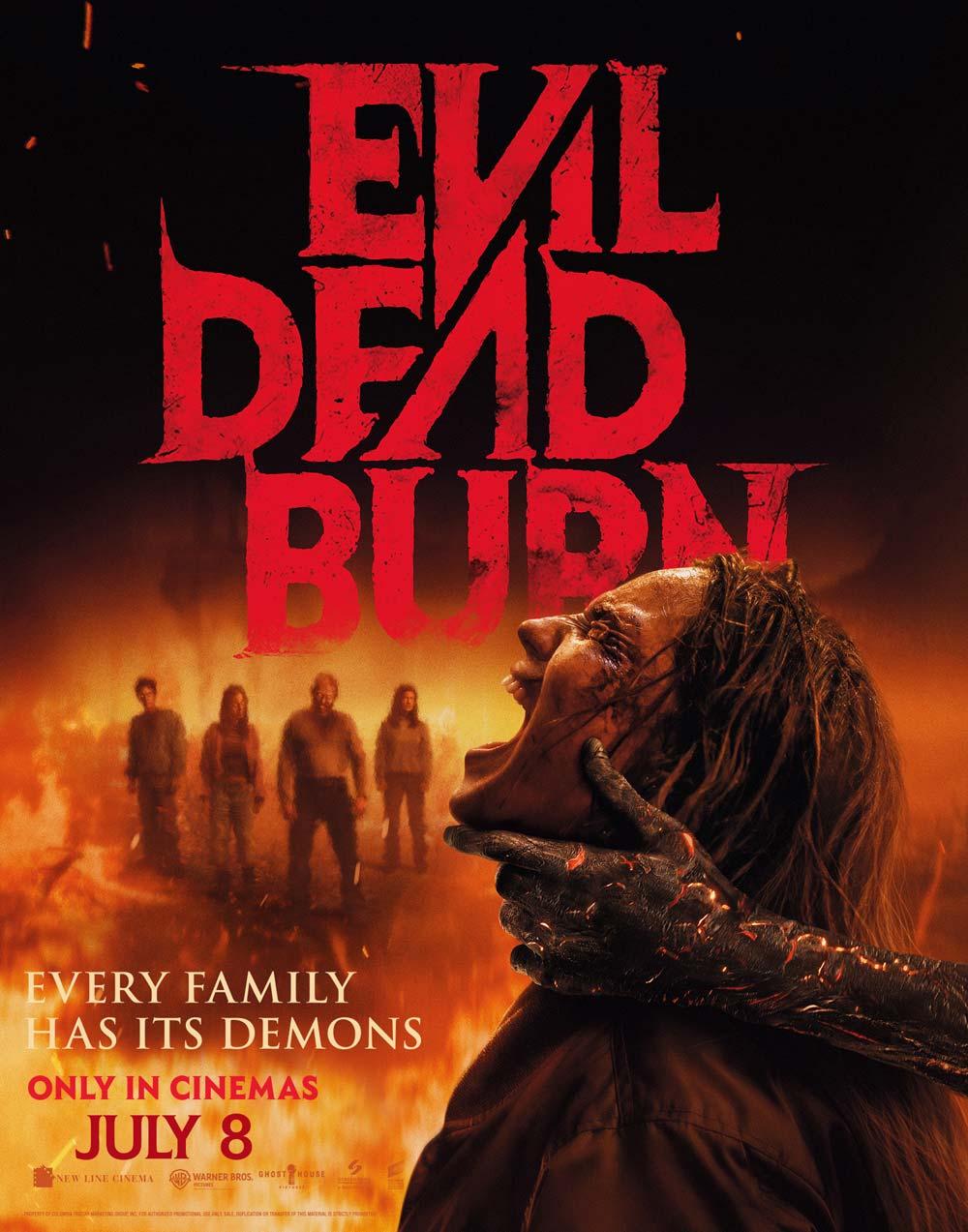
EVIL DEAD BURN
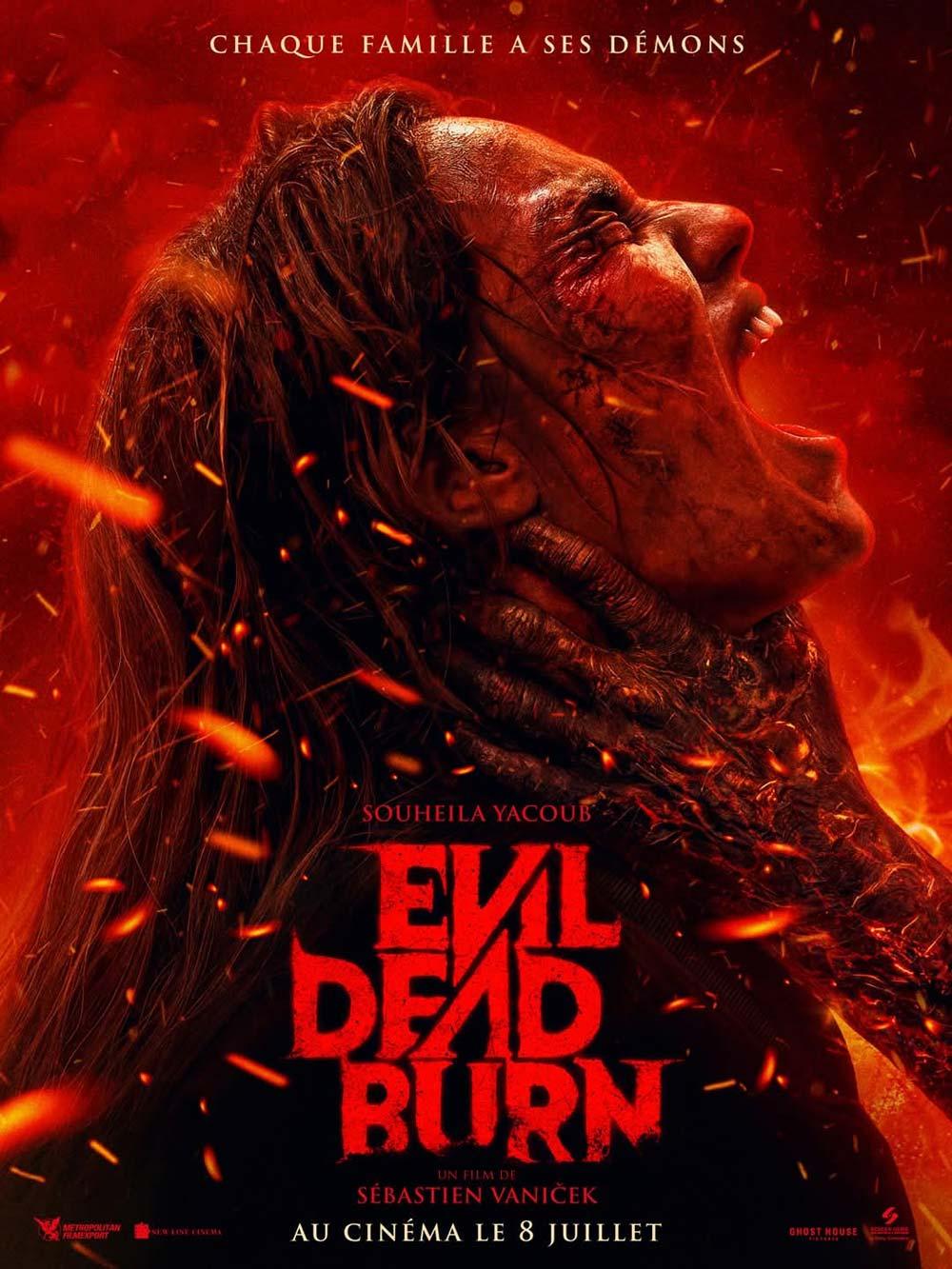

The Evil Dead franchise returns with another descent into demonic possession and family tragedy in Evil Dead Burn, the sixth film in the long running horror series. Directed by Sébastien Vaniček and produced by franchise veterans Sam Raimi and Rob Tapert, the film arrives after the success of Evil Dead Rise in 2023 with the difficult task of finding something new to do with a formula that has been terrifying audiences for decades.
Rather than simply attempting to recreate what came before, Evil Dead Burn places greater emphasis on grief, fractured family relationships and emotional trauma. The familiar ingredients are still here, including the Necronomicon, the Deadites and a group of increasingly desperate people trapped with an evil they cannot control. Yet the film approaches them from a more personal perspective, using a grieving family as the centre of its supernatural nightmare.
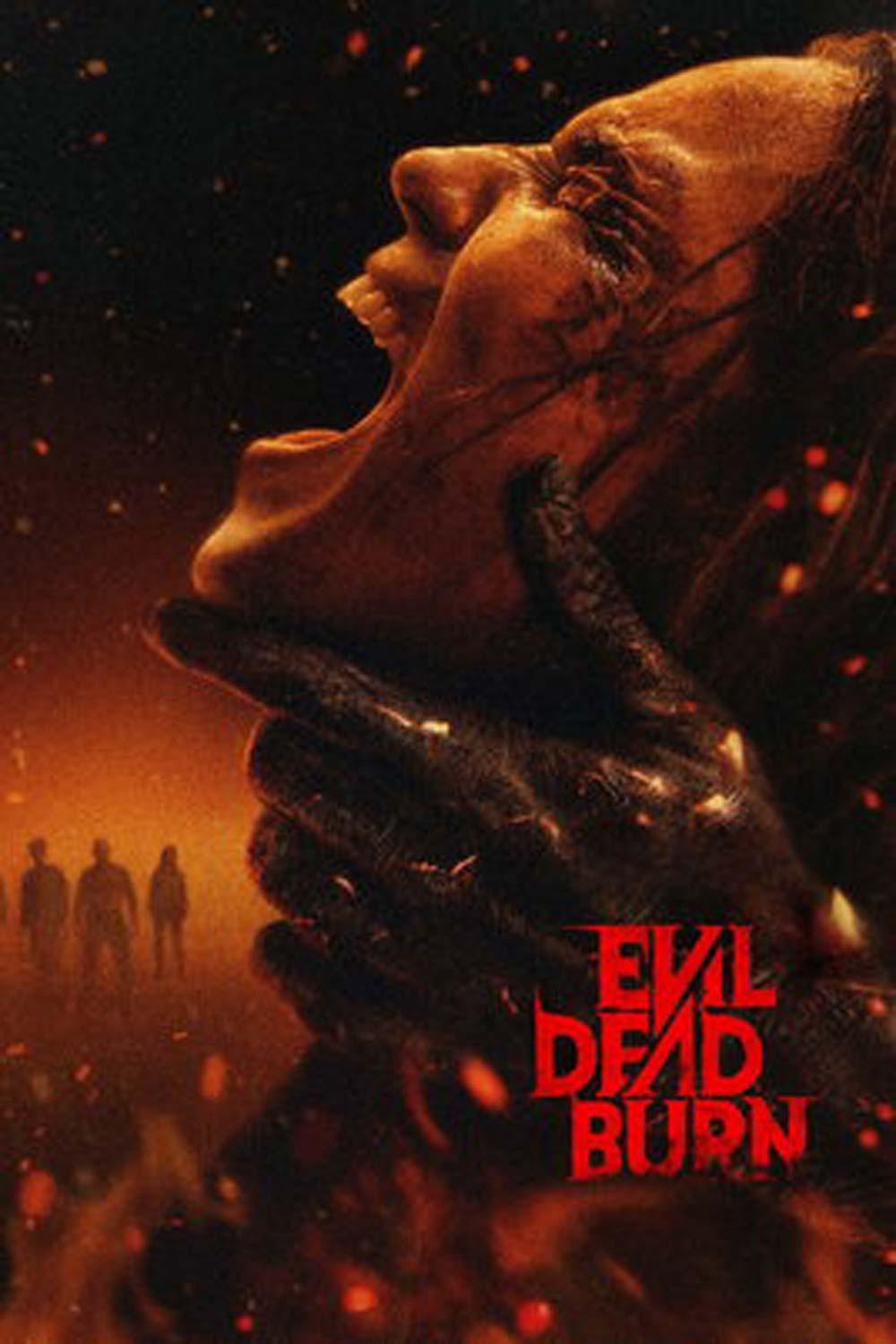 Running for 109 minutes, Evil Dead Burn is an interesting, if uneven, addition to the franchise. There are moments of genuine suspense, strong performances and some effective horror, but it does not possess the manic energy, outrageous violence or perfectly judged dark humour that made the best Evil Dead films so memorable. It is entertaining enough as a horror film, but less convincing as a standout entry in such an iconic series.
The story begins with Joseph Price, who discovers research left behind by his grandfather concerning the Necronomicon and the legendary Kandarian Dagger. The weapon is believed to possess the power to destroy Deadites, immediately connecting the story to the mythology that has defined the franchise.
As is usually the case in the Evil Dead universe, curiosity comes with devastating consequences. Joseph’s discovery awakens something that should have remained buried. Jessica becomes possessed, setting off a chain of events that eventually passes the curse to Joseph’s brother, Will, following a tragic accident.
Sometime later, the Price family gathers at an isolated lake house for Will’s funeral and cremation. His widow, Alice, arrives carrying the enormous weight of her husband’s death while also dealing with resentment from members of his family. Grief has not brought them closer together. Instead, old tensions and accusations begin to surface, with Alice finding herself caught between mourning the man she loved and defending herself against those who hold her responsible for what happened.
This is where Evil Dead Burn makes its most significant attempt to distinguish itself from previous films. Before the full supernatural horror begins, the film spends time establishing a family already under pressure. The characters are emotionally wounded before the Deadites arrive, giving the evil plenty of existing anger, guilt and resentment to exploit.
Inevitably, the funeral becomes something far more horrifying when Will returns as a Deadite.
From that moment, the lake house transforms from a place of mourning into a battleground. Possession spreads through the family, trust rapidly disappears, and every relationship becomes vulnerable. The Deadites have always been particularly effective because they do more than physically attack their victims. They manipulate memories, relationships and emotional weaknesses, turning familiar faces into instruments of psychological torture.
Evil Dead Burn understands this aspect of the mythology and uses the family dynamic to its advantage. The people Alice should be able to trust become potential threats, while the unresolved conflicts that existed before the possession make it increasingly difficult to know where grief ends, and supernatural manipulation begins.
The isolated lake house is an effective setting. Like the cabin of the original films and the apartment building of Evil Dead Rise, it creates the feeling that escape is always just out of reach. The surroundings become increasingly claustrophobic as the danger grows, allowing the film to build a reasonable amount of tension without relying entirely on constant attacks.
At the centre of everything is Alice.
Souheila Yacoub gives the film its strongest performance, successfully carrying both the emotional and physical demands of the role. Alice begins the story as a woman overwhelmed by grief and hostility. She is vulnerable, exhausted and surrounded by people who are dealing with Will’s death in very different ways. As the supernatural threat grows, however, she is forced to become increasingly decisive.
Her transformation from grieving widow to determined survivor provides the film with its clearest emotional journey. Yacoub avoids making the transition feel too sudden, allowing Alice’s fear and pain to remain visible even when she begins fighting back. By the final stages of the film, she has become a convincing horror protagonist without losing the vulnerability established earlier.
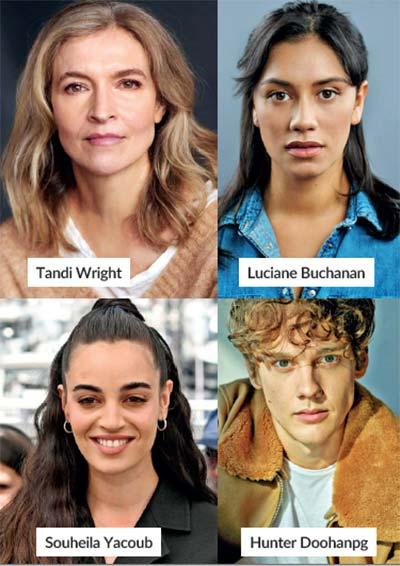 Hunter Doohan brings sincerity to Joseph, a character whose connection to his grandfather’s research places him close to the origins of the nightmare. Tandi Wright and Erroll Shand are also effective as grieving parents whose emotional devastation gradually gives way to something far more sinister.
Luciane Buchanan delivers some memorable moments as Thya, particularly once the supernatural elements begin to transform her character. Maude Davey has less screen time but still manages to make an impression. Collectively, the cast creates a believable sense of family tension before the horror takes over, which is important because much of the film depends on the audience believing these people have complicated histories with one another.
The performances ultimately do a considerable amount of the work in keeping Evil Dead Burn engaging during its slower sections.
One of the film’s strengths is its willingness to explore a slightly different corner of the Evil Dead universe. There would have been little value in simply copying Evil Dead Rise, particularly when that film already demonstrated how successfully the basic concept could be moved into a new setting. Evil Dead Burn instead attempts to build its identity around bereavement, blame and the destructive nature of unresolved family conflict.
That approach gives the film a more emotional foundation, although it also creates some of its biggest problems.
The slower emphasis on family drama occasionally works against the chaotic energy audiences expect from Evil Dead. There are stretches where the film seems more interested in its characters’ emotional wounds than in generating the escalating madness traditionally associated with the series. That is not necessarily a bad creative decision, but the emotional material is not always strong enough to compensate for what has been reduced elsewhere.
Most noticeably, the film feels surprisingly restrained when it comes to gore.
For almost any other horror franchise, this might be a minor criticism. For Evil Dead, it matters considerably more. Extreme, inventive and frequently absurd violence has become part of the series’ identity. The best films have treated gore almost as a form of visual imagination, constantly finding new ways to shock audiences while pushing scenes beyond conventional horror into something grotesquely entertaining.
Evil Dead Burn has violent moments and certainly does not avoid blood altogether, but compared with previous entries it feels noticeably controlled. Viewers expecting the relentless brutality of Evil Dead Rise or the outrageous physical horror associated with earlier instalments may come away disappointed. There are opportunities for the film to go further, but it often stops just when it feels as though the madness should escalate.
The dark humour is similarly inconsistent.
Humour has always been one of the most difficult elements of Evil Dead to reproduce because it works best when the horror itself becomes so excessive that laughter feels almost unavoidable. Here, the film includes several attempts at comedy, but too many feel deliberately inserted rather than naturally emerging from the situation.
Some jokes work, particularly when they come from the grotesque behaviour of the Deadites, but others feel forced and interrupt the tension rather than intensifying it. The careful balance between genuine horror and absurd comedy that defined some of the franchise’s most famous moments is never fully achieved.
This leaves Evil Dead Burn in a slightly awkward position. It is less extreme than the franchise at its most violent, less funny than it is at its most playful and more emotionally serious without necessarily becoming more emotionally powerful.
That does not mean the film is unsuccessful.
Vaniček creates a suitably oppressive atmosphere and demonstrates a clear understanding of the visual language of Evil Dead. The connection to the Necronomicon and the Kandarian Dagger ensures that the film remains rooted in established mythology, while the family storyline gives it enough individuality to avoid feeling like a straightforward remake of previous ideas.
The final act delivers the film’s biggest burst of action as Alice is forced into a violent confrontation with the Deadites. Armed with the Kandarian Dagger and increasingly aware of what is at stake, she must confront both the supernatural evil surrounding her and the painful truths that have haunted the family.
The climax provides blood, action and suspense, although again it never quite reaches the level of complete insanity that the strongest Evil Dead finales have conditioned audiences to expect. There is entertainment in watching Alice finally fight back, and Yacoub commits fully to the physical demands of the sequence, but the sense of escalation could have been pushed further.
The closing scenes also make it clear that evil is not so easily destroyed. The immediate battle may have reached its conclusion, but the threat itself remains, leaving the door open for the franchise to continue.
Ultimately, Evil Dead Burn is a decent rather than exceptional addition to the series. Its decision to focus more heavily on grief and family conflict gives it a distinctive angle, and Souheila Yacoub provides a strong central performance that holds the story together. The isolated setting works, the mythology remains intriguing and there are enough effective horror sequences to keep things moving.
What is missing is the sense of dangerous excess that makes Evil Dead feel like Evil Dead.
The humour does not consistently land, the gore is surprisingly restrained, and the slower emotional storytelling sometimes reduces the frantic momentum associated with the franchise. Fans hoping for another relentless display of inventive violence may find themselves waiting for a level of madness that never fully arrives.
As a standalone horror film, Evil Dead Burn is perfectly watchable. As the sixth chapter in one of horror cinema’s most distinctive franchises, expectations are understandably higher.
It tries something different, and that deserves some credit. Unfortunately, different does not always mean better. Evil Dead Burn has enough atmosphere, mythology and strong performances to make it an enjoyable casual horror watch, but it lacks the unforgettable set pieces, wicked humour and outrageous brutality needed to rank alongside the franchise’s best.
For longtime Evil Dead fans, it is worth seeing once to discover where the series goes next. For everyone else, it offers 109 minutes of possession, family dysfunction and supernatural terror without ever becoming quite as terrifying, funny or gloriously excessive as it could have been.
Rating: 2.5/5