An Open Letter to MasterChef Sri Lanka: Was Pork For Muslims Worth the Ratings?
To the production team, judges and sponsors behind MasterChef Sri Lanka,
I am writing this as someone who watched season one with real excitement, and as someone who has now watched season two ask two Muslim contestants to handle pork on national television without a single word of explanation afterward. This letter is not written in anger for its own sake. It is written because silence, from a show with your reach and your sponsor list, is not a neutral choice. It is a decision, and it deserves to be named as one.
I need to say upfront why this show mattered to me before it disappointed me. I have followed Savindri Perera's voice for over a decade, since her blogging days, long before Twitter became X and long before a national broadcaster gave her a seat at a judging table. Her commitment to Sri Lankan food, cooked without apology, is part of why I sat down for your first season with genuine anticipation. This was supposed to be a moment where a globally recognised format finally put "Sri Lanka on a Plate" in front of the world. I wanted it to succeed. I still want it to succeed. That is exactly why I am writing to you instead of simply walking away from the show.
What you asked two contestants to do
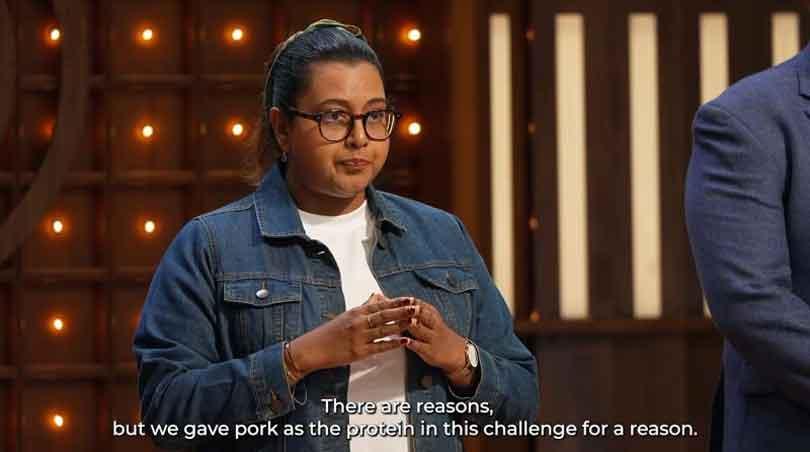
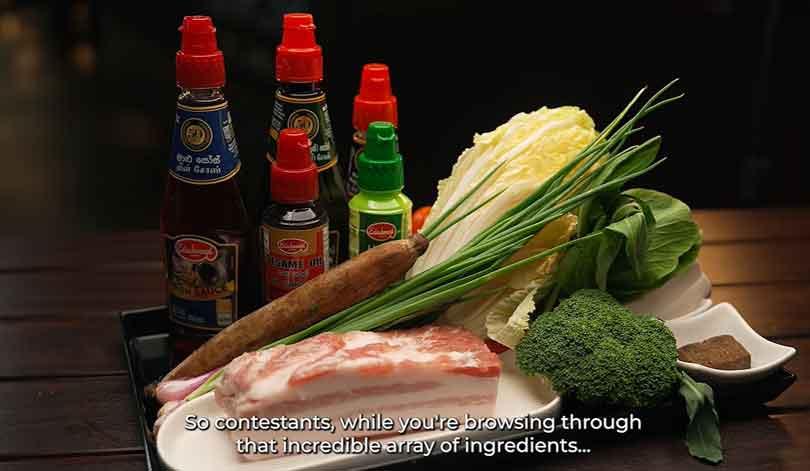
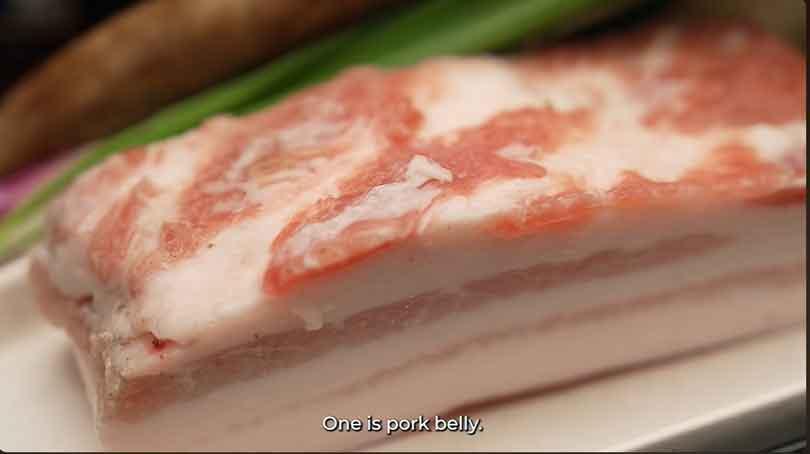
In a recent episode, your production ran a pork challenge that placed Shabnam and Yaseen, two Muslim contestants, in a position anyone with a basic understanding of Islamic dietary law could have predicted. Pork is not a food preference that can be worked around depending on mood or tradition. It is prohibited, and that prohibition extends to handling the ingredient, not only to eating it. This is not an obscure detail. It is one of the most widely known dietary restrictions in the world.
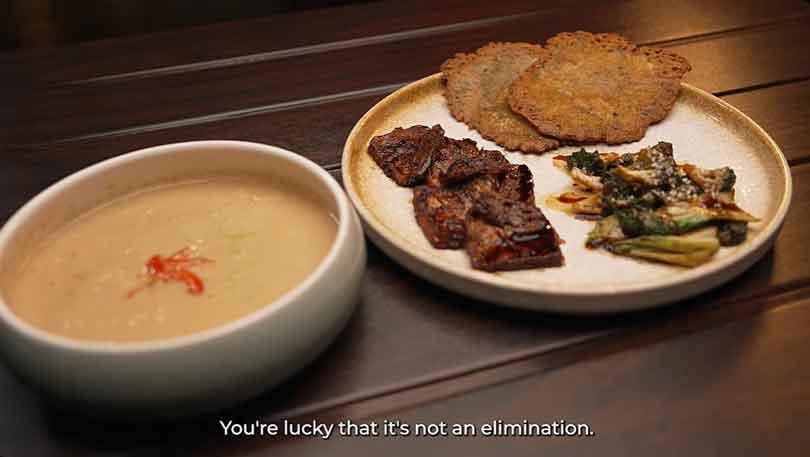
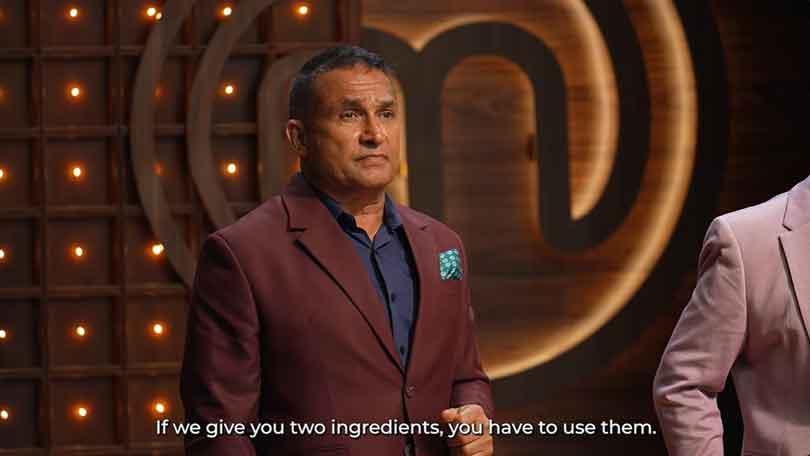
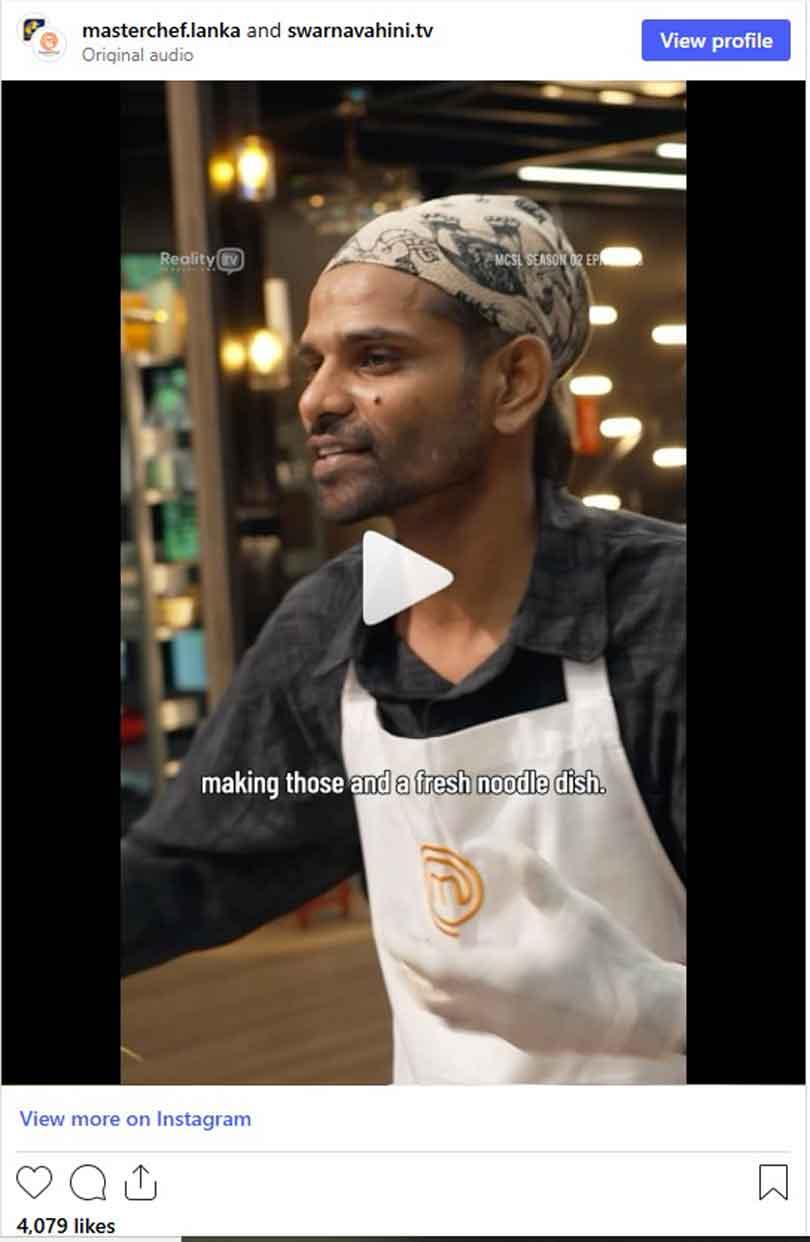
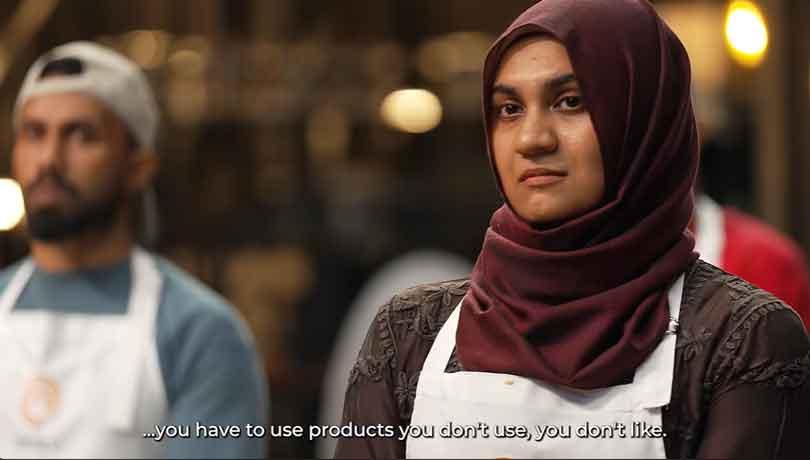
Shabnam held her line and stepped back from the pork, choosing to cook a tofu dish instead. Yaseen chose to participate, wearing gloves to create some distance from the meat while still preparing it for you to taste and judge. Your own social media described this as "two very different choices." I want to ask you directly: whose choice was it, really? You built the challenge. You selected the ingredient. The only choice you left your contestants was between compromising their faith on camera or opting out of competing on equal footing with everyone else at the bench, with one of your judges almost threatening Shabnam, ‘you are lucky this is not an elimination round’. That is not a neutral creative decision. That is a dilemma of your own making, dressed up as a contestant agency.
The reaction you have not addressed
The online response to this was immediate, and it was specific. Viewers called the challenge inappropriate and said that respecting religious belief should not become optional inside a competition format. Many specifically praised Shabnam for holding her ground. Others asked the question your writers' room should have asked before the challenge ever reached a contestant's station: why pork, in a country where roughly nine percent of the population is Muslim and pork is religiously forbidden, when prawns, chicken and beef were all sitting right there as options that could have carried the same creative difficulty without putting anyone's faith on trial in front of a national audience.
And then, nothing from you. At the time of reporting, no formal statement had been issued. No acknowledgment of how the challenge was designed, no explanation of your ingredient selection process, no commitment to reviewing how this happens going forward. I am asking you now, directly, to fill that gap: how was this challenge approved, who signed off on it, and what safeguards, if any, existed to catch this before it reached air?
Why your silence is the real problem
I want to be precise about what I am asking of you, because these conversations get flattened too easily. I am not asking you to sanitise the show or protect contestants from difficulty. MasterChef, as a format, has always pushed people into unfamiliar techniques and unfamiliar ingredients, and that tension is part of what makes it compelling television. I am not asking you to abandon that.
What I am asking is why a production operating inside a country with a defined, sizeable religious minority did not build a basic filter into its ingredient selection process. You had every resource available, budget, research staff, sponsor relationships, to catch this before a contestant ever stood in front of that pork. The fact that you did not suggest either a research failure at the production level, or a decision that contestant discomfort was an acceptable cost for a dramatic moment. I do not know which of those it is, because you have not told anyone. That is the point of this letter. Tell us.
Your silence since the episode aired sends its own message, whether you intended it to or not. It tells contestants, current and future, that their religious boundaries are something to be managed quietly on set rather than something you are accountable for in public. It tells the Muslim community watching that their discomfort registers as noise for you to wait out, not a signal for you to act on. If that is not the message you meant to send, the only way to correct it is to say so, clearly and on the record.
A word to your sponsors
This letter is not addressed only to your production team. It is addressed to CBL Group as your main sponsor, to Cinnamon Hotels and Resorts, to Keells Super, to Anchor, to VISA, and to every other brand whose name sits next to yours on this show. These are some of the most recognised consumer brands in Sri Lanka, sitting in millions of homes regardless of religion. When a brand attaches itself to a national television format, that is not a passive transaction. It is an endorsement of the standard that format is allowed to operate under.
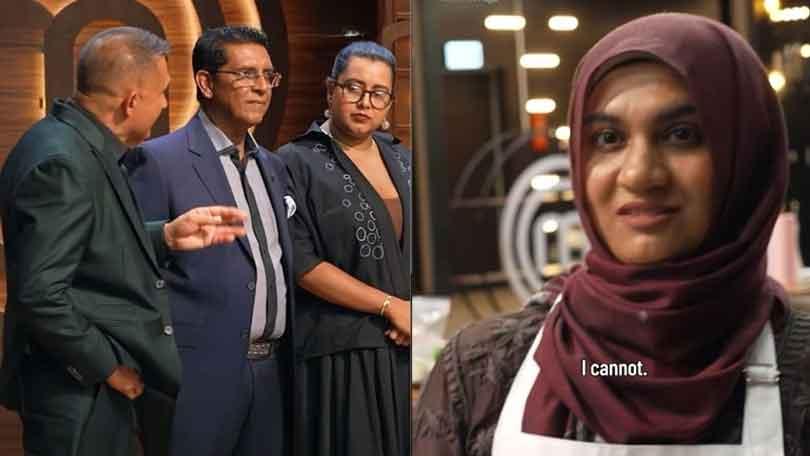
Sponsors routinely vet content for brand safety on issues far smaller than this. It strains belief that a challenge with this level of religious sensitivity moved from concept to broadcast without a single sponsor's compliance or brand team raising a flag. Either that vetting did not happen, which is its own failure, or it happened and was waved through, which is worse. I am not asking any of these brands to pull their funding over one episode. I am asking them to tell the public what their approval process for this show actually looks like, and whether cultural and religious sensitivity is a formal part of it or an afterthought nobody expected to be questioned.
What you are actually setting a standard for
Sri Lankan television does not exist apart from Sri Lanka's own diversity. This is a country where Sinhala, Tamil and Muslim communities live alongside one another, often on the same street, and where communal harmony is not an abstract value but a lived, occasionally fragile, negotiation. A globally licensed, heavily sponsored, prime time show that puts a religious minority's faith in direct conflict with a competition mechanic is not a small production misstep. It is a national broadcaster modelling, at scale and in front of the whole country, that minority religious practice is negotiable when the format calls for it.
This matters more, not less, because your format is global and licensed. International commentators, including marketing and media professionals who have raised this publicly, are already watching how the Sri Lankan adaptation of a global brand handles moments like this one. When you fumble this badly and respond with nothing, it does not reflect only on your production company or your broadcaster. It reflects on the country's media culture as a whole, at the exact moment international eyes are on it.
I am not asking for this show to be cancelled. I am asking for the accountability that has, so far, not been offered voluntarily. Tell your contestants, your viewers and the communities you claim to represent how this challenge was approved. Tell your sponsors' customers what your brand safety process actually screens for. Until one of you says something on the record, your silence is the story that will keep being told, with or without your input. Sincerely, A viewer who wanted this show and any national show in Sri Lanka to be better than this.