In Conversation with Farzana Baduel, Trustee, The HALO Trust
By: Shaku Perera
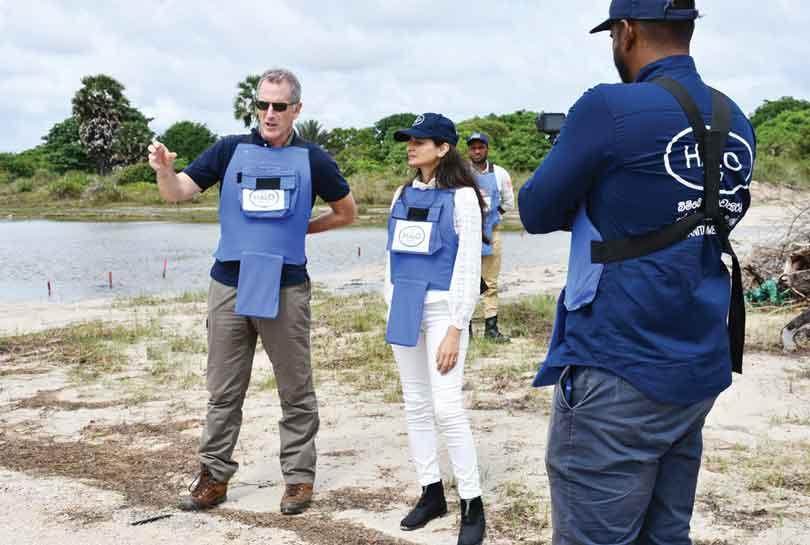
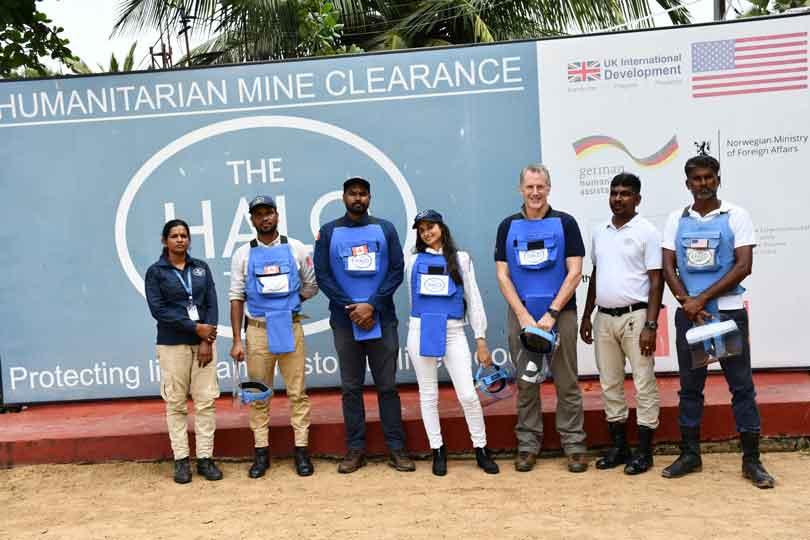
For more than two decades, The HALO Trust has played a critical role in helping Sri Lanka recover from the devastation of war. Established in 1988 and now operating in more than 30 countries and territories, HALO is the world’s oldest and largest humanitarian landmine clearance organisation, working to remove landmines and unexploded ordnance from conflict-affected communities. In Sri Lanka, HALO began operations in 2002, years before the end of the civil war, and has since cleared vast areas of contaminated land across the North and East. Its work has enabled displaced families to safely return home, restored farmland to communities, reopened transport infrastructure and supported long-term economic recovery. HALO also carries out extensive risk education programmes in villages and schools, while employing and training hundreds of Sri Lankans, many of them women, in highly specialised demining work. Since 2002, the organisation has removed more than one million explosive items in Sri Lanka, helping thousands of families rebuild their lives in safety. During her visit to Sri Lanka, I caught up with Farzana Baduel, Trustee of The HALO Trust. The interview below is based on our conversation about HALO’s work in Sri Lanka and the continuing challenges of mine clearance and post-war recovery.
Could you briefly talk about your experiences with The HALO Trust and the work it does?
I was always aware of The HALO Trust because of the iconic image of the late Princess Diana walking through minefields. Beyond that, I did not know much about the organisation. An opportunity came up to join the board when a public relations expert was stepping down. A colleague at Oxford University who was leaving the board encouraged me to apply, and I was appointed as a trustee in April 2025. HALO is a large international NGO operating in more than 30 countries and territories, working in both post-conflict and active conflict environments. The organisation operates in places such as Afghanistan, the West Bank and Ukraine, often entering areas to ensure that other humanitarian agencies can safely do so. Humanitarian organisations cannot deliver food, shelter or aid when land is contaminated by explosives, so HALO’s work is often the first vital step in enabling recovery. HALO also operates in countries including Libya, Syria, Angola, Cambodia and the Solomon Islands, and is preparing to begin work in Papua New Guinea. In many countries, explosive remnants from conflicts as far back as the Second World War still remain. One aspect of HALO I deeply admire is its strong commitment to women and gender equality. In Sri Lanka, 42 per cent of operational staff are women, including unit commanders and bomb disposal experts. Many women joined for economic reasons, particularly in post-conflict communities where families were left without male breadwinners. These women are incredibly resilient and hardworking, and their leadership is helping to transform communities. Daughters are growing up seeing their mothers in leadership positions, and in some cases, multiple generations of the same family now work for HALO.
In Sri Lanka, recruitment is different because of the civil war. With interrupted education, displacement and trauma, what are the main challenges in training people to do demining work?
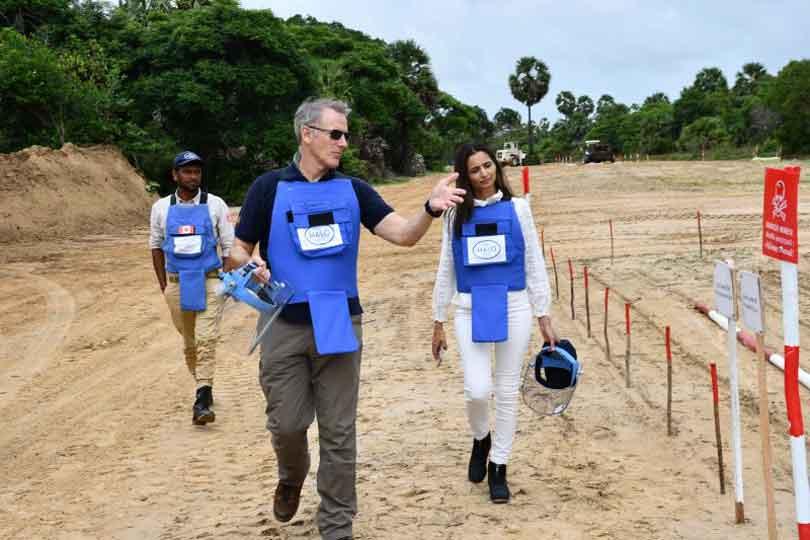
The biggest challenge is maintaining an exceptionally high standard of training and continual reinforcement. Even experienced staff who have worked for 20 years must complete refresher training if they have been away on leave. The length and depth of the refresher depend on how long they have been absent, because when you are dealing with explosives, there can be no mistakes. Sri Lanka’s extreme weather conditions also create operational challenges. Teams must take adequate breaks, and shifts cannot be too long because of the physical demands of the work. Since HALO began operating in Sri Lanka in 2002, the training approach has produced remarkable results. Staff who started in junior roles have risen into leadership positions and created a culture of operational excellence. In fact, the Sri Lankan team has developed standard operating procedures that are now being adopted internationally in other HALO operations.
Does the work and training differ from country to country?
Yes, every country presents different challenges. Sri Lanka is unique because, despite its relatively small land area, it is considered one of the most densely mine-contaminated environments in the world. During the 27-year conflict, many different types of mines were used, including Sri Lanka Army mines, mines manufactured in Pakistan, China and the United States, as well as improvised LTTE devices. One particularly dangerous device used by the LTTE was the “anti-tilt” mine, which is extremely hazardous.
With resettlement taking place after the war, what were the main safety concerns for communities?
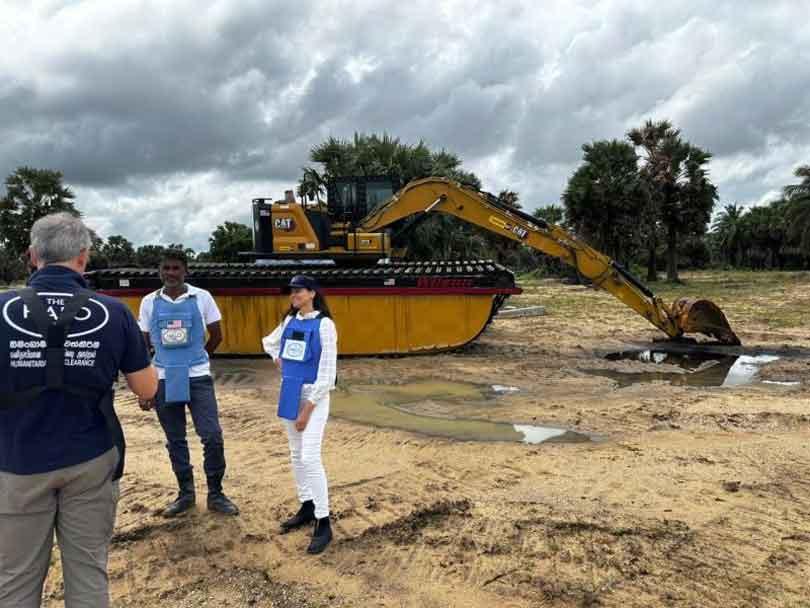
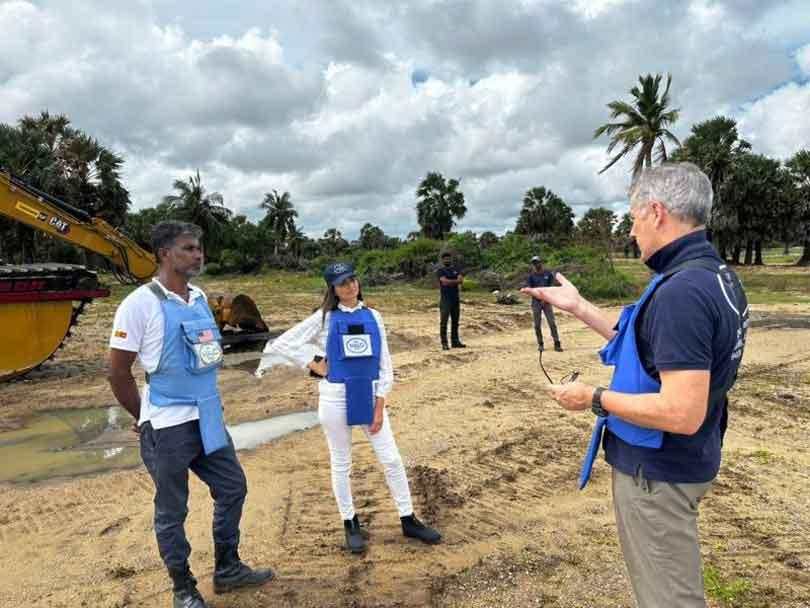
Around the ceasefire period, many people rushed back to their homes without fully understanding the danger posed by unexploded ordnance. When the guns fall silent and the fighting stops this is the most dangerous times for returning civilians. Tragically, there were deaths and injuries before awareness increased. The Sri Lankan government asked HALO to conduct surveys once the ceasefire stabilised. HALO works closely with the Sri Lanka Army, which maintains some records of where mines were laid and removed. However, there were often no records for LTTE minefields. Children are a major concern because they may not recognise the danger and are often injured or killed when picking up shiny objects or looking for scrap metal to sell. Contaminated areas are cordoned off, and HALO carries out extensive risk education programmes in villages and schools to teach communities how to identify and avoid explosives. Since 2002, HALO has removed more than one million explosive items in Sri Lanka, including around 300,000 landmines. The remaining items consisted of improvised explosive devices and other unexploded ordnance.
When you enter a country and complete the initial survey, do you usually have a timeline for making it completely mine-free?
Sri Lanka did have a target timeline, but several factors make exact predictions difficult. Funding levels have fluctuated, reducing operational capacity. Extreme weather can also cause recontamination, with mines shifting into previously cleared areas. In addition, advancing technology and re-surveys often identify contaminated land that was not detected earlier.
Given that the original timeline is no longer realistic, what are you looking at now?
We are now looking at a longer timeline because of reduced global funding. Some funding agreements have concluded, while others remain under review. At the same time, HALO is actively working to diversify support so operations can continue at the scale required.
This will seriously affect the work, won’t it?
Reduced funding has direct consequences. It means fewer teams in the field, slower clearance and longer timelines. That is why we are speaking more publicly about the issue now. Previously, HALO could focus entirely on delivery. Today, we also need to build awareness and broaden support. We want Sri Lankan corporates, philanthropists and the diaspora to understand that mines and UXOs still remain and that there is still important work to be done. We used to remove around 1,000 mines each month. That figure is now closer to 750 because of reduced operational capacity.
You have been engaging with the corporate sector. How receptive has it been?
I spent the first few days in the North before meeting people in Colombo, and many were surprised to learn that mines are still present in Sri Lanka. However, there has been strong interest and support. The media has been extremely supportive in helping raise awareness. The Sri Lankan government has also been very collaborative. Sri Lanka has a National Mine Action Centre, there are local NGOs working in the sector, and the army has its own demining units. There is strong coordination among all stakeholders. Ultimately, HALO’s goal is to leave Sri Lanka completely mine-free. We cannot leave until the last mine is removed and land is safely returned to communities.
Is there a risk that operations here could reduce even further?
It depends on funding stability and geopolitical factors, which are currently uncertain. That is why we want to broaden our support base, from individuals giving £10 a month to major donors contributing larger sums. We are encouraging support from individuals, corporates, the diaspora and community fundraising initiatives. Awareness is the starting point. There is also a strong economic argument for mine clearance. The North has enormous tourism and investment potential, but that potential cannot be fully realised while mine contamination remains. Clearance helps improve infrastructure, unlock investment opportunities and support national reconciliation. For example, HALO cleared mines from the Jaffna railway station area, which enabled train services to resume.
So, what is the way forward?
The way forward is greater involvement from the corporate sector, the public and the Sri Lankan diaspora. Everyone has a shared interest in the North’s development and long-term prosperity.
Do you have programmes to engage the diaspora?
Yes. We have already received generous support from both Hoppers London (Karan Gokani) and Kolamba (Eroshan Meewella), two well-known Sri Lankan restaurants in London, which have offered their spaces free of charge for events in June 2026 aimed at introducing HALO’s work to the Sri Lankan diaspora community. We hope to build on this momentum by expanding outreach to diaspora communities in North America and Australia. We want people to understand that mine clearance is not only about safety, but also about healing and rebuilding communities. Removing mines supports reconciliation, strengthens national unity and creates opportunities for development, tourism and long-term economic growth.
You mentioned Cambodia, where mines are still being cleared decades later. Is a completely mine-free country always realistic?
Wherever conflict exists, mines and explosive remnants continue to contaminate land and can remain live in the ground for many decades. Ukraine is a current example. As long as mines exist, organisations like HALO will continue to be needed. Many countries still suffer from unexploded ordnance left behind decades ago, even from the Second World War, but organisations cannot respond without adequate funding. What is particularly impressive in Sri Lanka is the strength of the local teams. Sri Lankan staff now hold leadership positions, and some have been identified for senior international roles within HALO. Much of the work on the ground is led by local staff.
You mentioned staffing levels dropping from 1,300 to 850 in Sri Lanka. How will this affect operations?
Reduced staffing inevitably slows down operations. However, HALO also tries to support staff transitioning out of demining work. One year before leaving, staff receive vocational training unrelated to demining so they can find alternative employment and continue supporting their families. We also want stronger partnerships with local employers in the North. Companies can tell us what skills they require, and HALO can train staff accordingly in areas such as English, computer literacy and apparel sector skills. HALO has already released around 120 square kilometres of land, benefiting approximately 280,000 people. Families have returned to their homes, and farmers have regained access to their land. However, new minefields continue to be discovered, and clearance cannot continue without sufficient funding.
How can people get in touch with HALO?
HALO has offices in both Kilinochchi and Colombo, and people can also reach the organisation through its UK headquarters and official website. We are active across social media platforms and accessible through multiple channels. In Sri Lanka, Rishini Weeraratne serves as an Ambassador for The HALO Trust and can also be contacted directly via email at: rishini@hi.lk
There must be many success stories connected to your work worldwide. What has stood out to you personally?
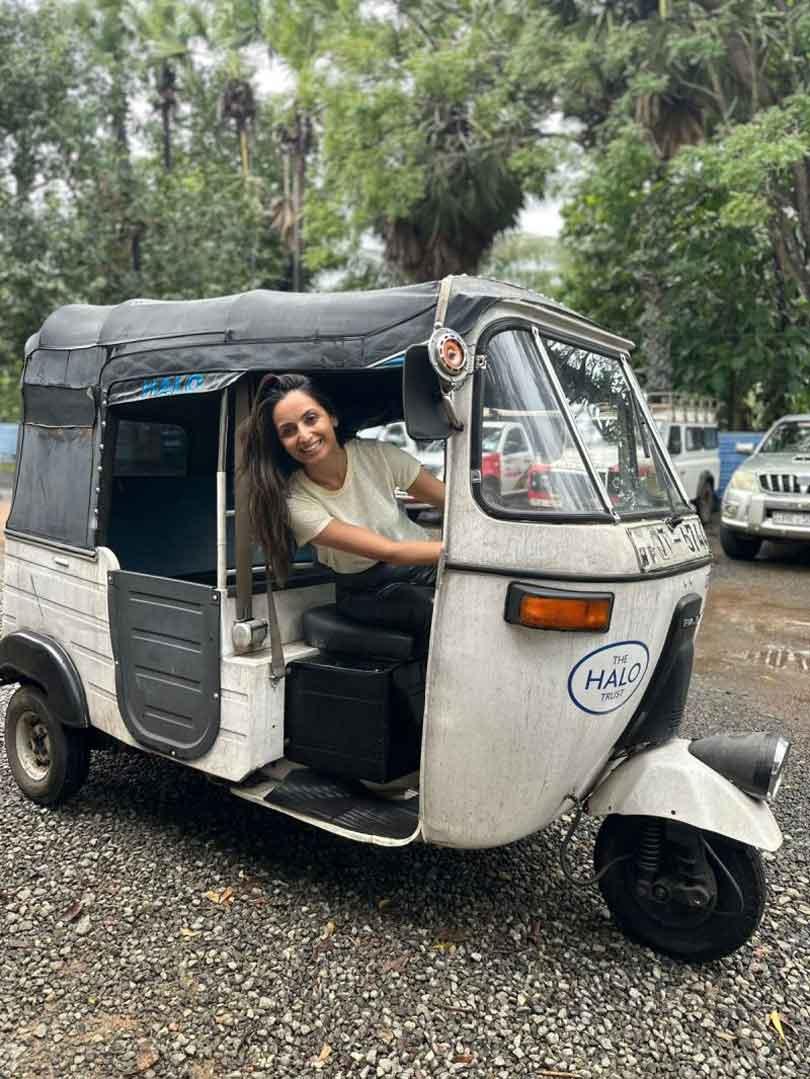
I joined the board in April 2025 and was encouraged to visit the field during my first year. Out of the 30 plus countries where HALO operates, I naturally chose Sri Lanka because my family is originally from Kashmir, so the region resonates deeply with me. The highlight of my visit was meeting an elderly beneficiary whose land had been returned after HALO cleared it of mines. He and his wife were living in a beautiful new home built by the Sri Lankan government on that land. That was an incredibly powerful moment. Stories like these demonstrate that healing and rebuilding are truly taking place.