
26/11 MUMBAI ATTACKS, THE NIGHT TERROR STRUCK AND CHANGED INDIA FOREVER.
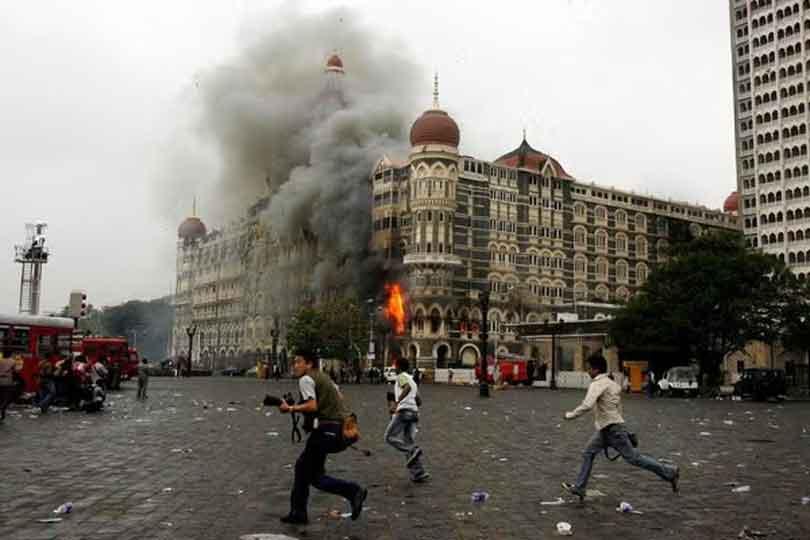
The Taj Mahal Palace Hotel became one of the defining images of the November 2008 terrorist attacks. Mumbai is a city that rarely sleeps. Its railway stations overflow with commuters, its streets remain crowded long after sunset, and its hotels welcome visitors from across the world. Yet, on the evening of November 26, 2008, the familiar rhythm of India's financial capital was shattered by gunfire, explosions and scenes of unimaginable terror. What began as an ordinary Wednesday became one of the darkest chapters in modern Indian history. Ten heavily armed terrorists launched coordinated attacks across South Mumbai, targeting railway passengers, hotel guests, restaurant customers and a Jewish community centre. By the time security forces ended the siege on November 29, 166 people had been killed and more than 300 injured. The attacks, remembered simply as 26/11, lasted approximately 60 hours. Their consequences, however, would extend far beyond those three days, transforming India's security policies, straining relations with Pakistan and leaving thousands of families and survivors carrying memories that time could never completely erase.
A DEADLY JOURNEY ACROSS THE ARABIAN SEA
The operation began hundreds of kilometres away from Mumbai. Investigations established that the attackers belonged to Lashkar-e-Taiba, a Pakistan-based terrorist organisation. They had undergone training and were dispatched from Karachi to carry out a carefully planned assault. On November 23, the group departed Pakistan by sea. During their journey, they hijacked an Indian fishing trawler named Kuber, killed members of its crew and forced its captain to navigate towards Mumbai. The captain was subsequently murdered. On the evening of November 26, the terrorists transferred into an inflatable boat and landed near the city's southern coastline. Carrying assault rifles, grenades and ammunition, they separated into smaller groups and moved towards their assigned targets. Their arrival exposed a dangerous weakness in India's coastal security. A small group had crossed international waters, entered one of the country's most important cities and prepared to attack without being intercepted. Within hours, Mumbai would become a battlefield.
THE NIGHT THE CITY CAME UNDER FIRE
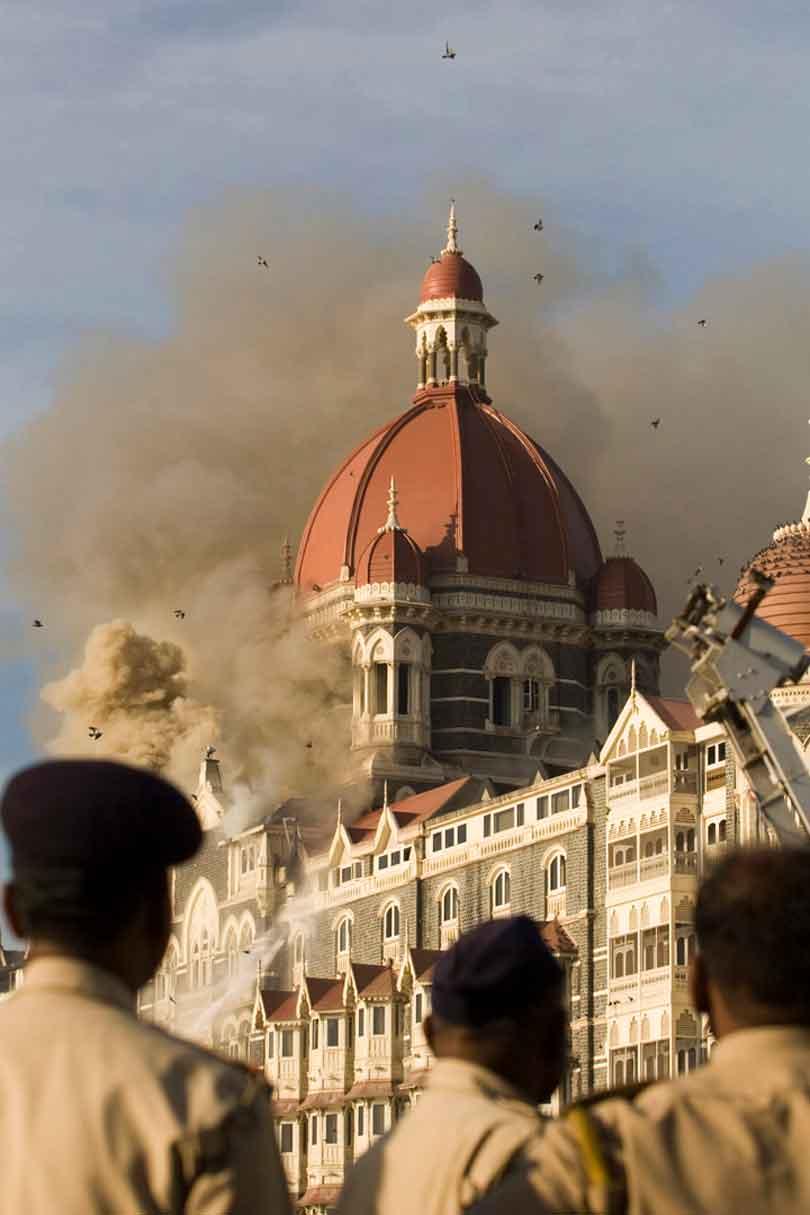
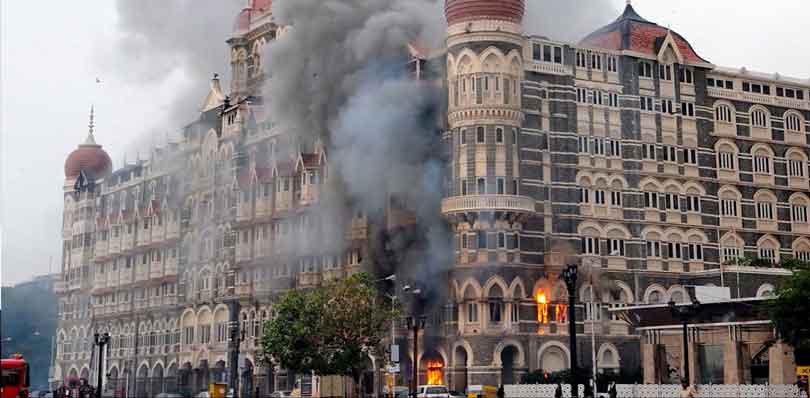
Shortly after 9:00 pm, gunmen entered Chhatrapati Shivaji Terminus, one of Mumbai's busiest railway stations. Hundreds of passengers were waiting for trains, returning from work or travelling with their families. The attackers opened fire indiscriminately, turning a crowded transport hub into a scene of panic. People ran towards exits, hid behind pillars and attempted to protect their loved ones. The station, normally filled with announcements and hurried footsteps, echoed with gunshots and desperate cries. Elsewhere, terrorists attacked Leopold Café, a popular restaurant frequented by locals and foreign tourists. Customers enjoying their evening meals suddenly found themselves caught in deadly gunfire. At the historic Taj Mahal Palace Hotel, armed attackers entered the premises, shooting guests and staff. Fires broke out as the siege developed, and smoke rose above the landmark building overlooking the Gateway of India. The Oberoi-Trident hotel complex was also attacked. Guests were trapped inside as gunmen moved through the building, while security personnel struggled to determine how many attackers were present.
At Nariman House, a Jewish outreach centre operated by the Chabad movement, terrorists took hostages. Rabbi Gavriel Holtzberg and his wife Rivka were among those murdered. Their young son, Moshe, survived after being carried to safety by his Indian nanny, Sandra Samuel. By midnight, multiple locations were under attack. Mumbai's emergency services faced a crisis of extraordinary scale, with limited information about the number of terrorists, their movements or their intentions.
HEROES WHO STOOD BETWEEN TERROR AND INNOCENT LIVES
Amid the chaos, extraordinary acts of courage emerged. Assistant Sub-Inspector Tukaram Omble became one of the defining heroes of 26/11. At Girgaum Chowpatty, he confronted terrorist Ajmal Kasab during a police operation. Despite being shot, Omble held onto Kasab's weapon, helping fellow officers capture him alive. Omble died from his injuries, but his sacrifice provided investigators with a surviving attacker whose testimony would become crucial to the case. Mumbai Police also suffered devastating losses. Anti-Terrorism Squad chief Hemant Karkare, Additional Commissioner Ashok Kamte and senior officer Vijay Salaskar were killed during an encounter near Cama Hospital. At the Taj, Major Sandeep Unnikrishnan of the National Security Guard led operations to rescue trapped guests. He was killed while confronting terrorists inside the hotel. NSG Havildar Gajender Singh Bisht also lost his life during the operation at Nariman House. Hotel employees, firefighters, doctors and ordinary citizens demonstrated remarkable bravery. Some hotel workers guided guests through emergency exits, while others remained inside to help those unable to escape. Their actions revealed another side of Mumbai's tragedy, one defined not by violence, but by humanity and sacrifice.
SIXTY HOURS THAT HELD A NATION HOSTAGE
As television channels broadcast images of burning buildings and heavily armed commandos, millions of Indians watched the unfolding crisis with fear and disbelief. The National Security Guard was mobilised from its base near Delhi. Commandos reached Mumbai and began operations to eliminate the terrorists and rescue hostages. The circumstances were exceptionally difficult. Attackers occupied large buildings with numerous rooms and corridors, while civilians remained trapped inside. Security personnel had to proceed cautiously to avoid further casualties. On November 28, operations at the Oberoi-Trident complex and Nariman House concluded. The Taj Mahal Palace Hotel remained the final major battleground. On the morning of November 29, security forces killed the remaining attackers at the Taj, ending the siege. Nine terrorists had been killed and one captured. The immediate danger was over, but the country was only beginning to understand the magnitude of the tragedy.
THE INVESTIGATION THAT CROSSED BORDERS
The capture of Ajmal Kasab became a major breakthrough. His interrogation, together with forensic evidence, communications intercepts and other investigative findings, helped authorities reconstruct the conspiracy. Kasab was prosecuted in India, convicted of multiple offences including murder and terrorism, and sentenced to death. After his legal appeals and mercy petition were rejected, he was executed at Pune's Yerwada Central Jail on November 21, 2012. Investigations also uncovered the role of David Coleman Headley, an American citizen of Pakistani origin who had conducted reconnaissance of potential targets in Mumbai before the attacks. Headley pleaded guilty to terrorism-related charges in the United States and was sentenced to 35 years in prison in January 2013.
The pursuit of alleged conspirators continued for years. In April 2025, the United States extradited Tahawwur Hussain Rana to India to face charges connected with the attacks. Rana's alleged involvement remains a matter for judicial determination in India. The investigation demonstrated how the conspiracy crossed national borders and required extensive international cooperation.
A NATION FORCED TO CONFRONT ITS FAILURES
The attacks triggered widespread anger over intelligence failures, inadequate equipment and delayed emergency responses. Union Home Minister Shivraj Patil resigned amid criticism of the government's handling of national security. Questions were raised about coastal surveillance, communication between intelligence agencies and the preparedness of local police. India subsequently introduced significant counterterrorism reforms. The National Investigation Agency was established in 2008 to investigate terrorism-related offences. Maritime security was strengthened, with greater responsibilities assigned to the Navy and Coast Guard. Regional National Security Guard hubs were created to improve response times, while police modernisation received renewed attention. Legislation was also strengthened through amendments to the Unlawful Activities (Prevention) Act. These measures addressed important vulnerabilities, although the continuing challenge of preventing terrorism requires constant vigilance, effective intelligence sharing and accountability.
THE DIPLOMATIC AFTERSHOCKS
Beyond India's borders, 26/11 severely damaged relations between New Delhi and Islamabad. India presented evidence linking the attackers to Lashkar-e-Taiba networks operating from Pakistan and demanded action against those responsible. Pakistan acknowledged in February 2009 that parts of the conspiracy had been planned on its territory. Nevertheless, disagreements over accountability, investigations and prosecution continued to trouble bilateral relations. The attacks also attracted international condemnation because victims included citizens of several countries. Foreign governments increased cooperation with India on counterterrorism investigations and intelligence sharing. For India, 26/11 became a reminder that terrorism was not merely a domestic security concern but a transnational threat requiring sustained diplomatic engagement.
THE CITY THAT REFUSED TO FORGET
In the days following the attacks, Mumbai began reopening its railway stations, restaurants, offices and hotels. The Taj Mahal Palace Hotel eventually restored its damaged sections, becoming a powerful symbol of recovery. Yet rebuilding structures proved easier than healing the emotional wounds. Families had lost parents, children, spouses and siblings. Survivors faced lasting physical injuries and psychological trauma. Police officers and hotel employees who had witnessed the violence carried memories that would remain with them for decades. Every November 26, memorial ceremonies honour the victims and security personnel who died. Flowers are placed, candles are lit and the names of the fallen are remembered. The anniversary is not simply an occasion to celebrate resilience. It is also an opportunity to examine whether lessons have been learned and whether institutions remain prepared to protect innocent lives.
EIGHTEEN YEARS LATER, A MEMORY THAT ENDURES
As India marks the eighteenth anniversary of 26/11 in 2026, the attacks remain a defining moment in its modern history. They exposed serious weaknesses in national security, led to institutional reforms and showed the devastating cost of organised terrorism. They also revealed the courage of people who put strangers' safety before their own. The images of flames rising from the Taj, passengers fleeing the railway station and commandos fighting to rescue hostages remain etched in the nation's memory. Yet the true legacy of 26/11 lies not only in the destruction it caused or the reforms it inspired. It lives in the families who still mourn, the survivors who rebuilt their lives and those who refused to abandon others in their darkest hours. Mumbai returned to work, its trains resumed and its streets filled with life again, yet one truth endures: the city moved forward, but it never forgot. Eighteen years on, our responsibility is unchanged: to remember the innocent, honour the courageous and ensure that the lessons of 26 November 2008 are never lost.